
- Release Year: 2016
- Platforms: Windows
- Publisher: Legend Studio
- Developer: Legend Studio
- Genre: Action
- Perspective: 1st-person
- Game Mode: Single-player
- Gameplay: Action combat, Dungeon-crawling, Looting, Permadeath, Randomly generated, Weapon Upgrades
- Setting: Fantasy
- Average Score: 70/100
- VR Support: Yes
Description
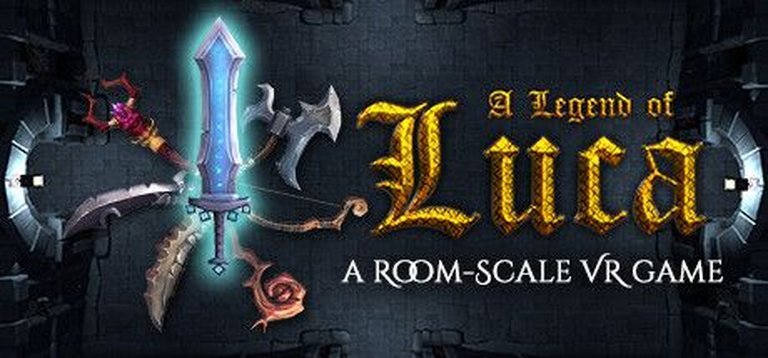
A Legend of Luca is a virtual-reality dungeon-crawler set in a fantasy world where players take on the role of Luca, tasked by the goddess Diana to find the Weapons of Virtue and liberate humanity from the clutches of Diana’s husband, the evil Vulcan. Featuring randomly generated dungeons, the game follows a pattern of entering rooms, engaging in action-based combat against enemies, looting useful items including health energy, armor, weapons, keys, and vials that charge secondary attacks. Despite its permadeath feature, permanent upgrades like increased health carry over between playthroughs. Utilizing motion controllers for interaction, the game presents a unique miniature perspective with floor height calibrated to waist level. Each dungeon floor presents progressively harder challenges culminating in boss battles that unlock the next level.
Where to Buy A Legend of Luca
PC
A Legend of Luca Cracks & Fixes
A Legend of Luca Mods
A Legend of Luca Reviews & Reception
vrnewsblog.wordpress.com : A Legend of Luca is a charming and engrossing VR RPG experience; a unique take on a well established formula.
A Legend of Luca: Review
Introduction
In the nascent days of commercial virtual reality, A Legend of Luca emerged as a bold experiment, blending the procedural chaos of rogue-likes with the immersive potential of room-scale VR. Released in April 2016 by indie studio Legend Studio, this HTC Vive exclusive tasked players with liberating humanity from a god’s corruption—not through epic cutscenes, but through visceral, tactile combat in miniature dungeons. Its legacy lies in being one of the first VR games to fully embrace locomotion mechanics, transforming standing into a strategic advantage. Yet, while its ambition was undeniable, Luca became a cautionary tale of technical promise hampered by design flaws. This review dissects its place in gaming history, examining its innovations, shortcomings, and the post-launch odyssey that reshaped it into a cult favorite for VR pioneers.
Development History & Context
Legend Studio operated as a small, passionate indie outfit during VR’s 2016 gold rush, when the HTC Vive’s room-scale capabilities sparked a wave of experimental titles. A Legend of Luca was conceived as the “first room-scale rogue-like,” a concept that seemed almost bananas in its ambition. Built on Unity, the game leveraged the Vive’s tracked motion controllers to create an intimate first-person experience where players calibrate their virtual waist height to their real-world waist, instantly framing dungeons as dioramas. This design choice was a brilliant workaround for limited physical space, but it also constrained movement.
The team’s vision, as articulated in interviews, prioritized replayability over narrative depth. They drew inspiration from The Binding of Isaac’s room-based exploration but injected VR’s physicality—swinging axes, firing bows, and dodging projectiles using actual hand movements. The 2016 gaming landscape was dominated by VR tech demos; Luca aimed to be a full-fledged “must-have” experience. However, technological constraints were stark: single-pass rendering was optimized to reduce CPU load, and collision detection often faltered against environmental geometry. Post-launch, the game became a case study in live development, with over a dozen major patches adding features like sliding locomotion, Oculus Touch support, and redesigned boss fights—proof of the studio’s commitment despite limited resources.
Narrative & Thematic Deep Dive
Luca’s narrative is a minimalist framework of divine conflict. Awakening as a freed slave, players receive a cryptic plea from Diana, goddess of the hunt, whose “Weapons of Virtue” were stolen and corrupted by her husband Vulcan, god of fire and malice. The quest to reclaim these weapons serves as a thin thread connecting dungeon runs, with Diana’s narration confined to introductory monologues. This narrative brevity is intentional, shifting focus to gameplay loops.
The seven Weapons of Virtue embody classical virtues, each with lore snippets tied to their abilities:
– Comitas (Staff of Humor): Unleashes chaotic projectiles symbolizing wit.
– Clementia (Axe of Mercy): Throws axes that summon healing orbs.
– Disciplina (Bow of Discipline): Fires arrows with pinpoint accuracy.
– Firmitas (Glaive of Tenacity): A glaive that shatters environmental blocks.
– Justitia (Staff of Justice): Channels lightning for ranged strikes.
– Veritas (Greatsword of Truth): Pierces enemies with ethereal blades.
– Virtus (Sword of Valor): Throws swords that ricochet.
Themes of liberation and perseverance permeate the game. Players start as “slaves” to vulgarity (Vulcan’s domain) and gradually transcend mortality through permanent upgrades, mirroring the journey from victim to savior. Diana’s exhortation to “be a slave no more” refracts each run as an act of defiance against cyclical failure—a thematic resonance rare in action-focused VR.
Gameplay Mechanics & Systems
Luca’s core loop is a distilled dungeon crawl: enter a procedurally generated room, dispatch enemies, loot, and repeat. Combat relies on motion-controlled strikes and parries, with weapons scaled for VR immersion. Early versions featured an ammo system, but post-launch patches replaced it with unlimited ammo and always-available secondary abilities, streamlining the action.
Key systems include:
– Permadeath & Progression: Runs end at death, but upgrades (e.g., health boosts, coin multipliers) persist, encouraging repeated attempts.
– Room Design: Dungeons link via “screen scrolling,” where players teleport to mirrored positions in adjacent rooms. Traps (spikes, nailboards) and destructible objects add tactical depth.
– Enemy Variety: Over 20 enemy types, from zombie “fatties” to skeleton archers, each with distinct behaviors like charge attacks or projectile spam.
– Character Classes: Added in September 2016, eight classes (e.g., the bomb-obsessed Grenadier, the dual-wielding Death Knight) introduce asymmetric playstyles.
Critics noted glaring flaws: collision detection often failed during melee combat, weapon clipping caused frustration, and enemy AI was rudimentary. The 60% review from 4Players.de highlighted unavoidable “nailboards” and weapon glitches, though the developer patched many issues. Despite these, combat remained satisfying when physics cooperated, especially with later additions like ceilings to enhance spatial presence.
World-Building, Art & Sound
Luca’s world is a high-fantasy dungeon crawler rendered in a stylized, miniature aesthetic. By scaling players to waist height, Legend Studio transformed living rooms into epic landscapes—treasure chests become towering structures, and candle flames loom like infernos. This choice amplified VR’s “presence,” but also limited environmental storytelling; rooms were often sparse, relying on enemy placement and loot to convey danger.
Visuals leaned into this minimalism: tile-based dungeons with stone walls, wooden barrels, and animated traps. Bosses like “Orcus, Punisher of Broken Oaths” were visually distinct, though textures were basic. Post-launch updates added particle effects for explosions and weapon glows, enhancing combat feedback.
Sound design was initially sparse but evolved with patches. Enemy taunts (e.g., zombie jumpers’ laughter) and weapon impacts provided spatial audio cues. The soundtrack shifted from ambient silence to thematic orchestration, with Norse-inspired battle music for boss fights. While not groundbreaking, these elements grounded the fantasy world, making each dungeon feel tactile and alive.
Reception & Legacy
At launch, Luca polarized critics. 4Players.de praised its VR innovation but docked points for technical issues, awarding 60%. Steam’s player base was kinder, with a “Mostly Positive” rating (78% from 178 reviews) lauding its replayability and VR uniqueness. Road to VR called it “a bunch of fun,” while VR News Blog noted its “charming” tabletop-like design.
Commercially, it found a niche in the Vive’s early library, selling for $19.99. Post-launch, its reputation grew through sustained updates: sliding locomotion (September 2016), 8 new classes (September 2016), and overhauled bosses (September 2016). By 2017, it had become a benchmark for VR rogue-likes, influencing titles like Zenith: The Last City. Its legacy endures as a testament to indie VR’s experimental spirit—flawed but foundational, proving that room-scale could support complex systems beyond tech demos.
Conclusion
A Legend of Luca stands as a fascinating artifact of VR’s dawn—a game that captured the medium’s potential while stumbling under its own ambition. Its room-scale dungeon crawling, motion-controlled combat, and relentless post-launch support were revolutionary for 2016, yet technical debt and uneven design prevented it from achieving greatness. For historians, it remains a vital case study in indie VR development; for players, a charming, if frustrating, relic of an era when every swing of a virtual axe felt like a leap into the unknown. In the end, Luca is not a masterpiece but a milestone—a flawed pioneer that laid groundwork for the immersive worlds we explore today.