
Description
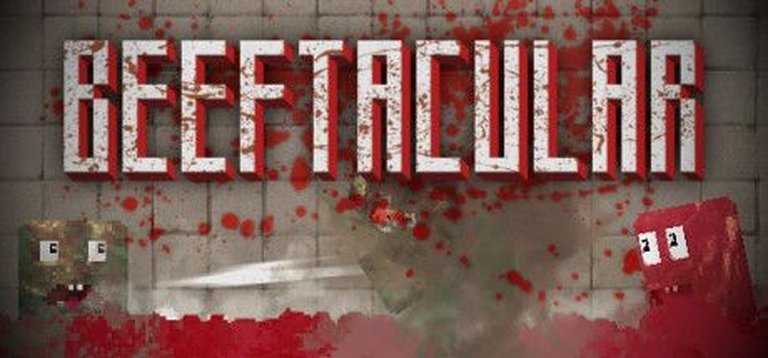
Beeftacular is a fast-paced 2D platformer where players control a sentient chunk of beef, racing to destroy all rotten meat chunks in levels before time runs out. Using melee slashes, ranged projectiles, and environmental hazards, players navigate side-scrolling stages in seconds, with a built-in level editor enabling custom creations and Steam Workshop sharing for endless replayability.
Gameplay Videos
Where to Buy Beeftacular
PC
Beeftacular Patches & Updates
Beeftacular Mods
Beeftacular Guides & Walkthroughs
Beeftacular Reviews & Reception
metacritic.com (70/100): Beeftacular will sate your appetite.
gamegrin.com (70/100): This game is good, with a few negatives.
Beeftacular: Review
Introduction
In the crowded landscape of indie platformers, few titles manage to carve out a niche as distinct as Beeftacular. Released in 2016, this fast-paced, meat-themed action-platformer tasks players with cleaning levels of “rotten meat chunks” in mere seconds. Inspired by the punishing precision of 10 Seconds Ninja and the fluid chaos of Super Meat Boy, Beeftacular presents a deceptively simple premise: control a sentient chunk of beef, destroy all enemies, and escape before time expires. Yet beneath this absurd premise lies a masterclass in mechanical design, where split-second decisions, environmental mastery, and obsessive speedrunning converge. This review deconstructs Beeftacular not merely as a game, but as a cultural artifact—a product of its era that distilled the essence of indie platforming into a concentrated, carnage-filled experience. Its legacy lies in proving that even the most grotesque concepts can birth gameplay perfection when executed with surgical precision.
Development History & Context
Beeftacular emerged from the solo efforts of developer Retrific, a studio whose prior work (Just Get Through) already explored time-trial mechanics. Released on August 26, 2016, for Windows, the game arrived during a golden age for indie platformers, where titans like Super Meat Boy (2010) had established high benchmarks for difficulty and design. Retrific’s vision was clear: distill the core appeal of its inspirations—10 Seconds Ninja’s time-limited combat and Super Meat Boy’s physics-based traversal—into a cohesive, meaty package. Technologically, the game leveraged 2D scrolling to sidestep 3D constraints, focusing instead on razor-sharp collision detection and fluid animations. Its development was lean, with Retrific emphasizing “juicy” particle effects and responsive controls as non-negotiable pillars. The gaming landscape of 2016 was ripe for such a title. Players, weary of AAA homogenization, craved accessible yet challenging experiences. Beeftacular filled this niche by offering a low barrier to entry (casual-friendly) but a punishing skill ceiling (hardcore speedrunners), mirroring the dichotomy of Super Meat Boy’s success. Its self-published nature via Steam underscored the era’s democratization of game distribution, allowing Retrific to own its vision without publisher interference.
Narrative & Thematic Deep Dive
Beeftacular wears its narrative ambitions lightly, if at all. The plot is distilled to a single, cryptic line delivered by the protagonist: “I must destroy rotten meat. Why? That’s a story for another time.” This intentional vagueness shifts focus from lore to gameplay, yet the thematic undertones are rich. The game operates on a metaphor of purification—cleansing levels of “rotten” meat—mirroring real-world acts of sanitization and renewal. The protagonist, a “fresh” chunk of beef, embodies order against the chaos of spoiled enemies. Dialogue is sparse, limited to in-game text and environmental storytelling (e.g., bloodstains that accumulate on paths), but this absence forces players to engage with the game’s visceral themes. Notably, Beeftacular subverts its violent premise through unlockable skins. A “sponge” mode replaces enemies with paint cans, transforming carnage into a playful act of creation—a subtle nod to inclusivity and vegan-friendly play. This duality—destruction vs. creation—elevates the game beyond simple slaughter, framing its challenges as metaphors for overcoming corruption or chaos. The lack of explicit narrative, however, remains its greatest thematic limitation, leaving players to ponder what lies beyond the “rotten meat” without textual reinforcement.
Gameplay Mechanics & Systems
Beeftacular’s brilliance lies in its deceptively simple yet deeply layered mechanics. Each level is a race against time, demanding players destroy all “rotten meat” chunks in seconds using three core actions: a melee slash, a ranged javelin throw, and environmental interaction (e.g., pushing enemies into traps). Controls are impeccably tuned, with near-zero input lag and support for both keyboard and gamepad. The latter is highly recommended, as keyboard controls can feel imprecise during complex maneuvers. The game’s loop is a masterclass in risk-reward: javelins can be retrieved if missed, but time constraints force players to prioritize speed over caution. Obstacles escalate gradually—from spikes and lasers to teleporters and crossbows—demanding mastery of wall-jumping and double-jump mechanics. Three difficulty levels (Noob, Beginner, Experienced) cater to diverse skill sets, though even “Beginner” becomes brutally challenging. The 100+ handcrafted levels are short (often 5-10 seconds) but dense, encouraging memorization and muscle memory.
Innovation emerges from its systems. A built-in level editor and Steam Workshop integration allow players to create and share stages, extending Beeftacular’s lifespan indefinitely. Speedrun mode, unlocked after completing the main campaign, strips away pauses for an unbroken test of endurance. Meanwhile, the “juicy” particle system—bloodsplatters that darken heavily traversed paths—adds tactile feedback, though it can obscure hazards. Flaws are few but notable: some late-game levels feel overtuned, and the javelin’s physics occasionally lead to frustrating near-misses. Yet these minor issues are mitigated by the game’s “restart at will” philosophy, where pressing “R” becomes second nature—a testament to its fair difficulty curve.
World-Building, Art & Sound
Beeftacular’s world is a surreal, meat-centric playground. Levels unfold in abstract, industrial environments (meat lockers, slaughterhouses) rendered in a stylized 2D aesthetic. The art prioritizes clarity over realism, with bold colors and clean sprites that ensure readability during frantic gameplay. Bloodstains serve as dynamic environmental storytelling, accumulating like scars on the level, while enemies—rotting, discolored meat chunks—contrast with the protagonist’s vibrant freshness. This visual dichotomy reinforces the game’s themes of purity vs. corruption. Particle effects are the star: gory splatters, shrapnel, and dismemberment feel weighty and satisfying, earning the “juicy” descriptor from developers. The inclusion of skins—such as a “sponge” mode that replaces gore with paint—adds whimsical variety, demonstrating the game’s playful spirit.
Sound design complements the art perfectly. A retro-chiptune soundtrack, with modern synthesizer twists, creates an upbeat, almost jaunty atmosphere that clashes humorously with the on-screen carnage. Sound effects are equally meticulous: the thwack of a melee strike, the thud of a javelin embedding, and the squelch of dismemberment form a visceral audio tapestry. This cohesion transforms Beeftacular from a mere platformer into a multisensory experience. The lack of ambient noise, however, occasionally levels feel sterile, but this is a minor quibble in an otherwise stellar audio-visual package.
Reception & Legacy
Upon release, Beeftacular garnered critical acclaim, cemented by a “Very Positive” Steam rating (81% of 111 reviews). Critics lauded its refined mechanics, with 3rd-strike awarding it a 9/10, calling it “one of the more fun indie titles of recent years.” Power Up Gaming praised its “balanced challenge” and fluid controls, though noted its difficulty might alienate casual players. Metacritic aggregated a score of 70 from GameGrin, which while positive, criticized its lack of originality, stating, “it’s hard to play the game and not stack it up against its inspirations.” Commercially, it found success as a budget title, frequently discounted to $1.94 (from $4.99), and bundled with Retrific’s other games.
Its legacy is twofold. As a gameplay innovator, it popularized the “time-limited platformer” subgenre, emphasizing precision over exploration. Its level editor and Workshop integration became a blueprint for community-driven content in indie games, predating the boom in user-generated content seen in titles like Geometry Dash. Culturally, it remains a niche darling among speedrunning communities, with leaderboards still active years post-launch. Yet it never achieved the mainstream fame of Super Meat Boy, partly due to its grotesque theme and limited narrative. Nevertheless, Beeftacular endures as a testament to the power of focused design—a game where every element, from its controls to its carnage, serves a singular, brilliant purpose.
Conclusion
Beeftacular is not merely a game; it is a distilled expression of indie platforming excellence. In a genre defined by its difficulty and creativity, Retrific’s masterpiece stands apart by marrying absurdity with artistry. Its gameplay loop—destroying rotten meat in seconds—evolves from a silly premise into a symphony of precision, where every jump and slash feels deliberate and rewarding. While its narrative thinness and reliance on established archetypes (Super Meat Boy, 10 Seconds Ninja) may limit its originality, its mechanical polish and community-centric features elevate it beyond mere imitation. The inclusion of a level editor, Steam Workshop support, and multiple difficulty levels ensure it remains relevant, a sandbox for both casual players and masochistic speedrunners.
In the annals of video game history, Beeftacular occupies a unique space: a cult classic that exemplifies the strengths of the indie renaissance. It proves that even the most outlandish concepts—sentient beef, for instance—can birth profound gameplay when backed by passion and technical prowess. For those seeking a challenge that is both fair and ferociously fun, Beeftacular remains an unmissable slice of gaming history. As a historian, I posit it as a vital artifact of the 2010s indie scene, a reminder that sometimes, the best games come from the most unexpected places. Verdict: Essential.