
- Release Year: 2014
- Platforms: Android, Macintosh, Windows
- Publisher: Konami Digital Entertainment Co., Ltd., NVIDIA Lightspeed Studios, TransGaming Technologies Inc.
- Developer: PlatinumGames Inc.
- Genre: Action
- Perspective: Behind view
- Game Mode: Single-player
- Gameplay: Hack and Slash, Quick Time Events (QTEs)
- Setting: Futuristic, Sci-fi
- Average Score: 81/100
Description
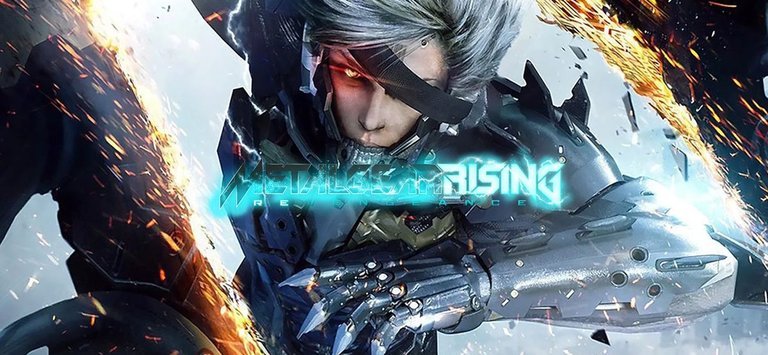
Metal Gear Rising: Revengeance is an action-packed hack and slash game set in a futuristic sci-fi world, featuring cyborg protagonist Raiden in a high-tech, war-torn environment. Players engage in intense combat with Quick Time Events, utilizing advanced swordplay and spectacular boss battles while navigating a gripping narrative that explores themes of technology, war, and humanity.
Gameplay Videos
Where to Buy Metal Gear Rising: Revengeance
Metal Gear Rising: Revengeance Free Download
Metal Gear Rising: Revengeance Cracks & Fixes
Metal Gear Rising: Revengeance Patches & Updates
Metal Gear Rising: Revengeance Mods
Metal Gear Rising: Revengeance Guides & Walkthroughs
Metal Gear Rising: Revengeance Reviews & Reception
metacritic.com (80/100): The Metal Gear myth has never before appeared so agile, fresh and youthful, but more than the setting its Platinum’s virtuoso coders that shine throughout, the object slicing a marvel of high-speed 3D manipulation. A technical masterpiece, Rising offers a funfair ride approximation of Konami’s brooding series, but one with more than enough capacity for the Bayonetta veteran to express their dexterous expertise.
opencritic.com (84/100): Few action games are as fast, rewarding, and exciting as the insane and imperfect Metal Gear Rising: Revengeance.
ign.com (85/100): Metal Gear Rising: Revengeance tries not to waste a moment of your time. In the 4-6 hours required to complete its campaign, you’ll cross the globe, have sword-fights with skyscraper-sized mechs, team up with an A.I. dog, explore a science facility with a remote-controlled robot, leap over missiles to chop up helicopters, and fight a metaphor for American evil.
sggaminginfo.com : Metal Gear Rising is an incredibly fun game; its combat is fast and fluid, and it comes with a great selection of music which works incredibly well with the game, especially during boss battles.
mrgameandsweat.com (78/100): METAL GEAR RISING: REVENGEANCE is a heart-pounding experience that immerses players in fast-paced, adrenaline-fueled action. The gameplay is dynamic, with a focus on skillful swordplay that keeps you on your toes.
Metal Gear Rising: Revengeance Cheats & Codes
PC
Enter the code at the title screen when ‘Press Start’ appears.
| Code | Effect |
|---|---|
| Up, Up, Down, Down, Left, Right, Left, Right, B, A | Unlocks all DLC content, missions, bosses, codecs and cutscenes |
PlayStation 3
Enter the code at the title screen.
| Code | Effect |
|---|---|
| Up, Up, Down, Down, Left, Right, Left, Right, Circle, X | Unlocks Revengeance difficulty setting |
Metal Gear Rising: Revengeance: A Definitive Retrospective
Introduction
In the pantheon of video game oddities, few titles stand as starkly as Metal Gear Rising: Revengeance. Born from the ashes of a canceled Kojima Productions project and reborn under the stewardship of PlatinumGames, this 2013 spin-off dared to transform Hideo Kojima’s stealth-centric universe into a high-octane, cyborg-slaying ballet. It was a gamble that defied franchise orthodoxy, swapping shadows for swords and subtlety for spectacle. Yet, against all odds, Revengeance emerged not just as a competent action game, but as a masterclass in kinetic design—a lightning bolt of cathartic, ultraviolent catharsis that carved its own niche in the Metal Gear legacy. This review dissects its origins, mechanics, narrative ambitions, and enduring impact, arguing that while it diverges sharply from the series’ roots, its ruthless focus on combat and philosophical depth makes it a singular achievement—a “love letter to the themes of nearly all MGS games,” as TVTropes aptly notes, wrapped in an unapologetically Japanese action package.
Development History & Context: From Rising to Revengeance
The genesis of Revengeance is a story of creative resurrection. Announced in 2009 as Metal Gear Solid: Rising at Kojima Productions, the project aimed to chronicle Raiden’s transformation into a cyborg ninja between Sons of Liberty and Guns of the Patriots. Initial concepts emphasized “Lightning Bolt Action,” with a hybrid of stealth and a revolutionary “cutting system” that allowed players to slice through geometry. However, Kojima’s team faced insurmountable hurdles: balancing swordplay with stealth proved mechanically intractable, and realistic dismemberment clashed with Japan’s censorship standards. By late 2010, the project was shelved, with Kojima lamenting the difficulty of making “a game based on swordplay” (Wikipedia).
Enter PlatinumGames. In early 2011, Kojima Productions approached Atsushi Inaba, Platinum’s producer, to salvage the game. Platinum’s mandate was clear: discard the stealth elements and craft a pure action experience. The game was retitled Revengeance—a portmanteau of “revenge” and “Raiden’s rising”—signaling a shift toward personal vendettas. Platinum re-engineered the core around a 60 FPS combat loop, discarding Kojima’s original plot in favor of a future-set narrative (2018) that allowed greater creative freedom. The studio’s expertise in stylish action (Bayonetta, Vanquish) was evident, with director Kenji Saito insisting on “heavy and fast music featuring lyrics” to underscore the game’s intensity. Kojima retained oversight, ensuring the plot remained accessible to newcomers and Raiden’s design honored his MGS4 incarnation. The result was a game that, despite its troubled birth, became a testament to collaborative resilience—a “rescued product” that “still has plenty to offer” (1UP.com).
Narrative & Thematic Deep Dive: Vengeance in a Post-War World
Set four years after Guns of the Patriots, Revengeance plunges players into a world fractured by the collapse of the Patriots’ war economy. Raiden, now a cyborg mercenary for Maverick Security, witnesses the assassination of an African prime minister by the PMC Desperado. This inciting trauma—Raiden’s failure to protect the innocent—triggers a descent into his “Jack the Ripper” persona, a child soldier past he’d sought to bury. The narrative spirals into a global conspiracy: Desperado, led by the fanatical Sundowner and the enigmatic Senator Steven Armstrong, abducts children to harvest their brains for VR training, molding them into cyborg soldiers. Raiden’s quest for vengeance evolves into a battle against systemic rot, culminating in a confrontation with Armstrong—a politician aiming to rekindle war to impose his social Darwinist ethos: “The weak will be purged, and the strongest will thrive.”
The script, penned by Etsu Tamari, is a dense tapestry of Metal Gear tropes and fresh introspection. Raiden’s arc is a deconstruction of heroism: he grapples with the morality of slaughtering cyborgs “still human inside,” as Jetstream Sam argues, culminating in a chilling embrace of his violent nature. The Winds of Destruction—Sundowner, Mistral, Monsoon—serve as philosophical foils: Sundowner glorifies war (“GIVE WAR A CHANCE!”), Mistral wields multiplicity arms as a metaphor for fragmented identity, and Monsoon’s magnetism embodies chaos. Yet, Armstrong is the centerpiece—a villain whose nanomachine-enhanced strength and anti-establishment rhetoric (“Fuck all these limpdick lawyers!”) eerily presaged real-world populism. His mantra, “Make America Great Again,” now reads as a chilling prophecy.
Thematic depth emerges through codec calls and environmental storytelling. Doktor’s ruminations on cyborg ethics (“The weak will be purged”) and Sunny’s lament that “science always ends up being used for war” echo MGS3’s nuclear anxieties. Raiden’s code of Bushido—”One sword keeps another in the sheath”—clashes with the brutal reality of his actions, forcing players to question vengeance’s cost. As TVTropes notes, the game interrogates free will and mimicry: Are Raiden’s ideals truly his, or were they “governed by others?” The bittersweet ending—Raiden rogue, the children salvaged but the war economy intact—cements the Metal Gear cycle of endless conflict.
Gameplay Mechanics & Systems: The Art of the Zandatsu
Revengeance’s gameplay is a symphony of steel, where every swing of Raiden’s high-frequency blade is a statement. At its core is the Blade Mode: a slow-motion targeting system that allows players to dissect enemies and environments along geometric planes. This isn’t mere spectacle; it’s a strategic tool. Severing support columns to crush foes, deflecting bullets, or exploiting armor gaps—Blade Mode turns slicing into a puzzle. Coupled with Zandatsu (“cut and take”), where Raiden rips out spines to replenish health, it creates a visceral risk-reward loop. As Wikipedia details, “virtually any object in the game can be cut,” yet environmental destruction is purposefully limited to structures to maintain combat focus.
Combat is a ballet of aggression and parry. Raiden’s moveset evolves through Battle Points, purchased post-mission, letting players tailor his style: from the “Bloodlust” combo string to the charged “Iaido” strike. Ripper Mode unleashes a flurry of blows at the cost of energy, turning bosses into pinatas. Stealth elements—cardboard boxes, stealth kills—offer optional finesse, but the game thrives on its action. Boss fights are operatic setpieces against the Winds of Destruction, each demanding mastery of Blade Mode and timing. Sundowner’s shield plates, Mistral’s whip arms, and Monsoon’s dismemberable torso require precision, culminating in Armstrong’s nanomachine-fueled onslaught. As IGN notes, “the number of subweapons improved the game’s variety,” though menu navigation for gear changes remains clunky.
Progression is tied to performance. Missions are graded (D to S), with higher ranks yielding more Battle Points. This encourages mastery, but the campaign’s brevity—around five hours—leaves players craving more. The PC port alleviates this with boss-rush modes and included DLC, but the core loop remains addictive. As GameSpot praises, “sophisticated cutting system” and “boss fights” are the game’s pillars, while the “lack of flow when changing weapons” (IGN) is a minor blemish on an otherwise sublime design.
World-Building, Art & Sound: A Neon-Drenched Cyberpunk Opera
Revengeance’s world is a cyberpunk fever dream, where privatized war zones and holographic billboards coexist. The game eschews Metal Gear’s grounded locales for striking contrasts: the sun-scorched African savannah, the rain-lashed Denver high-rises, and the desolate Pakistani airfield. This isn’t just backdrop; it’s a character. Abkhazia’s refinery collapse and Mexico’s underground lab reflect the collateral damage of unchecked PMC power, while World Marshal’s sterile Denver headquarters embody corporate rot. The use of real-world grounds the fantastical—Raiden’s motorcycle chase through Colorado’s badlands feels tangible despite the cyborgs.
Art direction is a fusion of Yoji Shinkawa’s gritty realism and Platinum’s flamboyant flair. Raiden’s design—black armor, glowing red optics—evokes his “Black Raiden” moniker, a darker evolution from MGS4. The Winds of Destruction are visually arresting: Sundowner’s reactive armor, Mistral’s serpentine limbs, and Monsoon’s segmented body blur the line between human and machine. Environments, though occasionally repetitive (as 4Players.de notes), burst with detail: shattered concrete, neon-lit sewers, and the colossal, hexapedal Metal Gear EXCELSUS. The camera, however, struggles with fast-paced combat, often obscuring targets—a flaw critics universally lament.
Sound design elevates the experience. Jamie Christopherson’s soundtrack is a heady mix of electric guitar riffs and industrial beats, with lyrics during boss fights that narrate the villains’ philosophies. Monsoon’s battle theme, “Rules of Nature,” has become an internet staple, its chorus (“Rules of nature!”) syncing perfectly with the fight’s choreography. Voice acting is stellar: Quinton Flynn’s Raiden balances anguish and fury, while Alastair Duncan’s Armstrong oozes charismatic menace. Sound effects—from the schlick of a blade slicing flesh to the metallic clang of parries—are tactile, making every encounter feel weighty. As Gamekult notes, “bruitages tout droit samplés d’une presse métallique” add to the game’s “brilliant, exhausting” appeal.
Reception & Legacy: From Spin-Off to Sensation
At launch, Revengeance polarized yet impressed. Critics lauded its combat and bosses, with Eurogame calling it “close to receiving a perfect 10” were it not for camera issues. Metacritic scores reflected this: 83 (PC), 82 (Xbox 360), 80 (PS3). Famitsu’s near-perfect 39/40 underscored its acclaim in Japan, while Western outlets like 411mania praised its “attractive price tag” and intensity. However, complaints about brevity and superficiality persisted. Game Informer lamented “style over substance,” and PC Games dismissed it as an “overproduced … blood orgy.” Yet, sales soared—over 2 million copies by 2024 (Steam Spy)—toppling Japanese charts and securing a Platinum Prize for PS3 sales.
Its legacy, however, transcended initial reviews. Revengeance became a cult phenomenon, celebrated for its unapologetic action and meme-worthy villains. Senator Armstrong, with his “Make America Great Again” rant, gained eerie relevance in the Trump era, as Alastair Duncan himself acknowledged. The game’s resurgence in 2022 saw player counts surge tenfold, fueled by YouTube lore and boss-rush highlights. Its influence permeates modern action games: FromSoftware’s Sekiro cites its parry system, while Platinum’s own Nier: Automata adopts its blend of philosophy and carnage. As Wikipedia notes, Hideo Kojima expressed interest in a sequel starring Gray Fox, but disputes with Konami shelved the idea. Still, Revengeance endures—not as a Metal Gear footnote, but as a standalone masterpiece that proved spin-offs could innovate.
Conclusion: The Ultimate Cyborg, the Ultimate Killer
Metal Gear Rising: Revengeance is a paradox: a game that defies its franchise’s identity while honoring its soul. It swaps stealth for swordplay, yet its meditations on war, identity, and the cost of power feel quintessentially Metal Gear. Platinum’s audacious design—Blade Mode, Zandatsu, the operatic boss fights—delivers an action experience as exhilarating as it is precise. Its narrative, though convoluted, offers a poignant character study in Raiden’s descent into vengeance, anchored by a villain whose prescient politics still resonate. Flaws like the camera and brevity are minor blemishes on a game that prioritizes impact over polish.
In the end, Revengeance’s greatness lies in its refusal to compromise. It’s a “super coup d’une nuit”—a brilliant, exhausting night of indulgence—as Gamekult described. It redefined what a Metal Gear game could be, proving that evolution, not stagnation, fuels legacy. As Raiden declares amid the flames, “Maybe I misjudged you,” but history has vindicated this cyberpunk opera. For all its blood and thunder, Revengeance is not just a game—it’s a testament to the power of reinvention. Verdict: Essential.