
- Release Year: 2018
- Platforms: PlayStation 4, Windows, Xbox One
- Publisher: Victory Lap Games Inc.
- Developer: Victory Lap Games Inc.
- Genre: Action
- Perspective: Top-down
- Average Score: 71/100
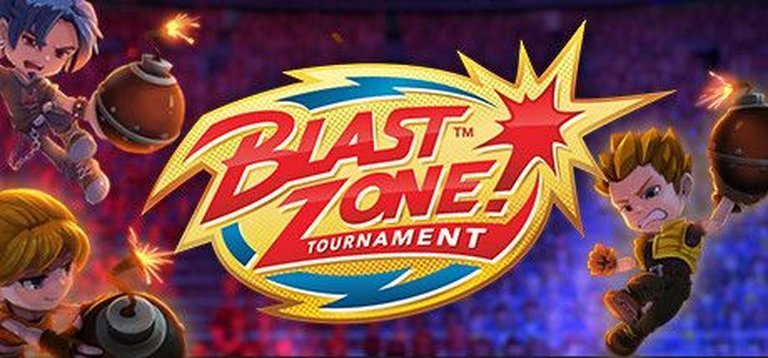
Description
Blast Zone! Tournament is a top-down arcade action game that revolves around bomb-based combat in competitive tournament formats. Players can experience a 240-level single-player campaign or engage in massive online battles with up to 32 competitors across 500 maps, enhanced by over 10 billion customization options for characters and strategies. Developed by Victory Lap Games Inc., it features fixed-screen visuals and direct controls, emphasizing fast-paced, strategic esport gameplay.
Gameplay Videos
Blast Zone! Tournament Reviews & Reception
lifeisxbox.eu : In general I had fun, I see it as a game to follow and I recommend it!
metacritic.com (71/100): Love the music. Themes are colorful and the gameplay is classic.
Blast Zone! Tournament: The Last Stand of the Casual Bomb-Arena
Introduction: A Fork in the Road for a Classic Formula
In the grand lineage of video game archetypes, few are as instantly recognizable and universally beloved as the “bomberman” formula. Born in the 1980s, it represents a perfect synthesis of tactical spatial awareness, risk-reward calculation, and pure, unadulterated chaos. Yet, by the late 2010s, the stewardship of this classic formula had grown uncertain. Hudson Soft’s iconic series had been absorbed into the Konami machine, with its modern iterations often met with mixed reception. Into this void stepped Blast Zone! Tournament, a title that wears its inspirations on its sleeve while aggressively carving its own identity through sheer volume and modern online sensibilities. Developed by Victory Lap Games, a studio founded by ex-Insomniac veterans, this is not merely a clone but a calculated evolution—a hyper-commodified, community-focused, and fiercely multiplayer take on a genre that had grown sedate. This review will argue that Blast Zone! Tournament is a fascinating, if flawed, time capsule of a specific moment in indie game development: one where the ethos of “games as a service,” the dream of grassroots esports, and the comfort of a beloved template collided with often hilarious, occasionally frustrating, but never boring results.
Development History & Context: From Facebook Fad to Console Contender
The genesis of Blast Zone! Tournament is a story of iterative survival, tracing a direct line through the shifting sands of platform trends. The core concept first emerged as Bomb Buddies in 2011, a Facebook game. This was the era of social gaming’s peak, where simple, browser-based mechanics could attract millions. Its success there provided a viable proof-of-concept. The pivot to mobile followed logically; Blast Zone arrived on iOS in 2014, adding a single-player campaign to its multiplayer core, adapting the control scheme for touchscreens while retaining the frantic essence.
The leap to consoles and PC with Blast Zone! Tournament in 2018 was the definitive statement. Victory Lap Games, founded by Chris Pfeiffer and Mike McManus (known for their work on Ratchet & Clank and Resistance at Insomniac), possessed the technical pedigree to build a robust Unity engine foundation. Their vision, as gleaned from interviews and the game’s feature set, was audacious: to create the ultimate Bomberman-style experience for the online, cross-platform generation. The technological constraints were less about raw power and more about network architecture. Supporting 32-player cross-platform multiplayer (combining local and online players) in 2018 was a significant technical hurdle, reflecting a design philosophy that prioritized maximal player count and accessibility over pristine, competitive balance. This placed the game firmly within the “party game” and emerging “battle royale” zeitgeist, attempting to fuse the tight, symmetrical arena combat of Bomberman with the large-scale, mode-varied chaos of titles like Fall Guys or early PUBG.
Narrative & Thematic Deep Dive: The Show Nobody Asked For
Blast Zone! Tournament presents a curious case study in narrative minimalism versus ludonarrative dissonance. The official description markets a “story-driven single-player campaign” with “240 unique challenges” set across locations like Pirate Ships, Jungles, and Military Bases. However, this “story” is almost entirely vestigial. As detailed in the LifeisXbox review, the campaign is framed by pre-level interactions between a host and NPCs meant to simulate “funny interaction behind the curtains of the show.” The execution, however, is starkly criticized: the dialogue is “in anything but funny or interesting,” providing “motivation doesn’t really motivate at all.” This isn’t a narrative failure in the traditional sense—there is no plot to speak of—but a thematic one. The game attempts to layer the spectacle of a gladiatorial game show (a theme resonant with Bomberman‘s own Tournament modes) onto its mechanics but fails to commit, offering a thin, unengaging veneer that does little to contextualize the mayhem.
The themes present are pure, unadulterated competition and customization. The relentless focus is on the leaderboard, the ranked match, the perfect run. The narrative, such as it is, serves only as a flimsy scaffold for the true goal: becoming “the greatest contestant in Blast Zone’s history.” This simplicity is arguably a strength for its target audience—players seeking pure mechanics with minimal story intrusion—but it highlights a lack of ambition beyond the immediate gameplay loop. The “world” is just a collection of arenas; the “characters” are customizable avatars with no inherent lore. It is a game purely of systems, a blank slate upon which player-driven conflict is inscribed.
Gameplay Mechanics & Systems: A Power-Up Disaster Waiting to Happen
The core gameplay is Bomberman through and through, and this is where the game shines with immediate, instinctual appeal. The core loop is sublime: spawn in an enclosed maze, destroy destructible blocks to find power-ups, and use your bombs to blow up opponents while avoiding their blasts. The top-down, fixed-screen perspective (sometimes flipping between rounds) keeps the action readable, a critical design choice for a game about pixel-perfect spatial prediction.
However, Blast Zone! Tournament makes several significant, contentious deviations from the classic formula that define its character:
-
The Power-Up Tsunami: This is the game’s most infamous systemic flaw. As the LifeisXbox review sharply notes, “the amount of powerups available in each level is way too much.” In classic Bomberman, power-ups were precious, game-altering rarities. Here, players can “quickly reach the maximum level of each one of your abilities in no time (even before killing your first enemy).” The stats—Speed, Power (blast radius), and Bomb Count—can all be maxed to 9. This transforms the strategic scarcity of the original into a simplistic overpowered arms race. A player who finds the “right” power-up path early can become nearly untouchable, removing the tension and comeback potential that defines the genre’s best entries. The system feels designed for short-term gratification at the expense of long-term tactical depth.
-
Mode Madness: The game’s strength is its sheer variety of modes. Beyond the expected Free-For-All and Team Deathmatch, it introduces:
- Bomb Blast / Team Bomb Blast: Where explosions permanently paint floor tiles, shifting victory from kills to territorial control.
- Coin Collect / Team Coin Collect: A scramble for a floating currency.
- King Mode: A protect-the-king team dynamic.
- Zombie Mode: A horror-themed variant where “infected” players spread upon death.
- FFA/TD Respawn: Infinite-lives frantic variants.
This catalog of modes is exhaustive and often inventive, clearly aiming to be the “Swiss Army Knife” of arena battle games. However, this breadth can dilute focus, with some modes (like Zombie) feeling like shallow mods rather than deeply integrated experiences.
-
Progression & Customization: Player progression is a dual-track system. The single-player campaign uses a star-based challenge system (240 challenges) to unlock harder stages. Multiplayer yields Experience Points (XP) for a purely cosmetic level system that unlocks “tickets” for loot boxes. This is where the game’s modern, free-to-play-adjacent design shines through, despite being a paid title. With “over 10 billion unlockable cosmetic and gear item combinations,” the focus is squarely on avatar expression—hats, outfits, emotes. As the LifeisXbox review criticizes, implementing “loot boxes as a rewards system” in a paid game is a “bad sign,” even if they are only cosmetic. This creates a slightly grindy, casino-adjacent loop that feels at odds with the pure, skill-based heart of the gameplay.
-
Match Customization: A standout feature is the deep mutator system. Players can tweak “handicaps, lives, starting items, bomber stats, overall match settings.” The option to create a “7 vs. 1 match where one person starts with Bomb 9, Speed 9, Power 9, and has 3 lives” is explicitly mentioned in the official description. This empowers players to create their own house rules and crazy scenarios, a fantastic tool for parties and content creators, but one that further destabilizes any notion of a “standard” competitive balance.
-
UI & Online Infrastructure: The Steam discussion hubs reveal persistent pain points: “Loading forever in Victory Lap Games logo screen” is a reported common bug. The quest to “cancel the queue?” and discussions on “Text chat / Voice chat” indicate an online infrastructure that, while functional, may be clunky or lacking in polish, a common issue for smaller studios tackling massive 32-player netcode.
World-Building, Art & Sound: A Festive, Anodyne Party
Visually, Blast Zone! Tournament presents a bright, colorful, and highly defined aesthetic. The Steam description emphasizes “colorful” graphics, and the screenshots confirm a vibrant, almost candy-coated art style. Characters are bouncy and expressive, explosions are large and satisfyingly pixelated, and the 283 multiplayer levels are spread across 7 distinct thematic groups (e.g., Pirate Ships, Dance Clubs). The arenas are generally well-designed, offering good readability for bomb arcs and enemy positions, a non-negotiable for this genre. The art direction is safe, child-friendly, and immediately comprehensible—it prioritizes clarity and cheer over artistic statement.
The sound design is explicitly praised as a “pulsating party soundtrack.” The LifeisXbox review notes the music has a “party vibe that makes it difficult to stay put in your couch,” suggesting an energetic, perhaps electronic or pop-infused score designed to amplify excitement. Sound effects for bombs, power-up collection, and character reactions are crisp and satisfying. The game also features full localization (the reviewer notes narration in their language), indicating an ambition for global accessibility that was relatively rare for a smaller indie title at the time.
Together, the audiovisual package creates a consistent, festive atmosphere. It’s not immersive in a narrative sense—the world isn’t worth exploring for its lore—but it is perfectly calibrated for short, intense bursts of multiplayer fun. The style says “casual party,” not “hardcore esport,” which creates a slight cognitive dissonance with the developers’ stated goal of “laying the foundations for esports tournaments.”
Reception & Legacy: A Cult Success in a Niche It Helped Define
Blast Zone! Tournament did not set the world on fire upon release. Its Steam user score sits at a “Mixed” 57/100 based on over 900 reviews as of recent data, with the ratio relatively stable (roughly 56% positive). Metacritic’s PC user score is 7.1, pulled from a tiny sample of 8 reviews, but leans positive. The LifeisXbox review awarded it a 70%, summarizing it as “funny, challenging and addictive” but acknowledging its derivative nature and flaws.
The reception pattern is telling. Positive reviews (e.g., on Metacritic and Steam) consistently praise it as the “Bomberman” alternative fans have been waiting for. Phrases like “Finally a great Bomberman game” and “best substitute for the fans of the series” are common. The large player counts, mode variety, and deep customization are celebrated. Negative reviews and mixed sentiments focus on the overpowered power-ups making matches feel cheap, the inclusion of loot boxes in a paid game, the absurd achievement requirements (“nearly absurd,” “tops Gears of War’s Seriously 3.0”), and persistent technical bugs like the infinite logo load screen.
Its legacy is that of a cult favorite and a cautionary tale. In the years after Hudson’s Bomberman faded from prominence, a space opened for a new king of the bomb-arena. Games like Bomb Party (2018) and Blast Rush (2017) competed for this throne. Blast Zone! Tournament distinguished itself through ambition—32-player cross-play was a major selling point—and by being a “complete package” at launch (campaign + multiplayer) rather than an episodic or pure-online experience. It did not achieve mainstream esports success, but it fostered a dedicated, if small, community. The Steam discussions, with threads like “Game Balance – Speed, Power, Bomb, Powerups” and “WHAT DO YOU WANT US TO IMPROVE MOST?”, show a developer (chrisoutrage) actively, if perhaps naively, engaging with a community trying to birth an esport from a game whose core balance was arguably broken by its own generosity with power-ups.
Its influence is subtle. It demonstrated that there was still an appetite for the classic formula if packaged with modern online features and extreme customization. However, its most significant impact may be as a proof-of-concept for the scaled-up, mode-heavy, social-focused party arena that would later see more refined execution in titles like the Fall Guys or Among Us boom. It stands as a sincere, messy, and passionate attempt to resurrect and hyper-charge a classic, compromised by the very monetization and power-creep trends its indie ethos sought to circumvent.
Conclusion: A Flawed Beacon for a Forgotten Genre
Blast Zone! Tournament is not a perfect game, nor is it a timeless classic. It is, however, an essential document in the history of a specific subgenre. It represents the moment when the tight, tactical purity of Bomberman collided head-on with the modern indie mandates of massive scale, endless customization, and live-service community management. The result is a game of profound contradictions: a paid title with loot boxes, a game aiming for esports where power-ups can be maxed in seconds, a festive party game where grinding for cosmetic tickets is the primary long-term goal.
Its strengths are undeniable: the core bombing mechanic remains a joy, the sheer volume of maps and modes is staggering, and the ability to hold a 32-player cross-platform brawl is a technical achievement worth noting. Its weaknesses—the broken power-up balance, the weak narrative shell, the grating achievement design—are equally glaring. Yet, for the player who can look past these flaws, Blast Zone! Tournament delivers what it promises: explosive, chaotic, customizable fun. It is the last, loud, and somewhat clumsy hurrah for the casual bomb-arena as a primary multiplayer focus before the genre’s aesthetics and DNA were diluted into broader battle royales and party packs.
In the canon of gaming, it will likely be remembered not as a peer to Hudson’s masterpieces, but as a fervent, flawed, and deeply human homage—a game made by clear fans who perhaps loved the idea of the genre more than its stringent competitive balance. It is a testament to the enduring appeal of dropping a bomb and watching the screen explode in a shower of pixels, even when the system behind that explosion is slightly, frustratingly, awry. For historians, it is a crucial case study; for players, it remains a uniquely bombastic party game, flaws and all.
Final Verdict: 7/10 – A爆炸 (Bàozhà) of Good Ideas Buried Under Too Many Power-Ups.