
- Release Year: 2024
- Platforms: Windows
- Publisher: iam8bit, Inc.
- Developer: Stoneskip
- Genre: Adventure
- Perspective: 1st-person
- Game Mode: Single-player
- Gameplay: Narrative, Puzzles
- Setting: Contemporary
- Average Score: 76/100
Description
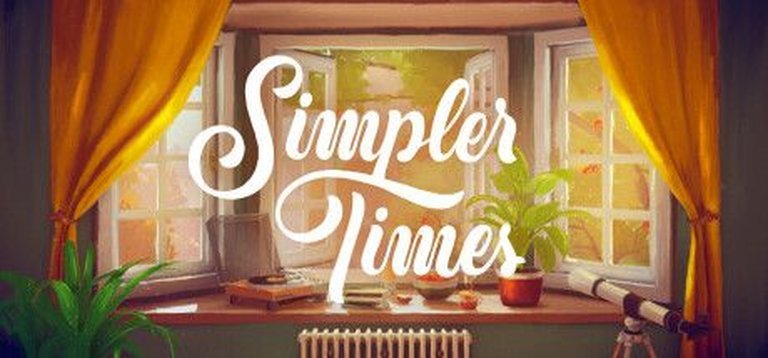
Simpler Times is a meditative first-person adventure game set in a contemporary bedroom, where players interact with everyday items to piece together the nostalgic story of a young girl named Taina. This short, narrative-driven experience emphasizes relaxation and introspection, offering a reflective journey akin to games like Unpacking and Gone Home.
Gameplay Videos
Where to Buy Simpler Times
PC
Simpler Times Free Download
Simpler Times Guides & Walkthroughs
Simpler Times Reviews & Reception
metacritic.com (80/100): Simpler Times from developer stoneskip. is a short narrative with simple interactive moments holding up a melancholy adventure.
comfycozygaming.com (70/100): Ultimately, I liked the idea of Simpler Times more than I liked the reality of it.
opencritic.com (80/100): Sometimes you just need to slow down, and Simpler Times is a great game for that.
Simpler Times: A Meditative Masterpiece Marred by Its Own Mechanics
In an era of relentless action and sensory overload, Simpler Times arrives as a deliberate, quiet gasp for air. Developed by the Romanian indie studio Stoneskip and published by iam8bit Presents, this 2024 release is not a game about doing, but about being. It is a digital diorama of memory, a first-person exploration of a single childhood bedroom across four seasons, each representing a pivotal year in the life of its protagonist, Taina. The premise is deceptively simple: as Taina prepares to move out for college, players sift through the artifacts of her past, unlocking memories by interacting with objects, spinning records on a vintage turntable, and completing small, tactile tasks. There is no health bar, no quest log withkill counts, no fail state. The promise, as stated in its official description, is pure: “This is a contemplative, cozy experience. There is no score, no timer, no combat, no failing, and no anxiety. Just vibes.”
Yet, to dismiss Simpler Times as merely a “vibes-based” game is to undersell its profound ambition. It is a meticulously crafted artifact that uses the language of interactive media—the ability to pick up, examine, and manipulate—to construct a poignant narrative about growth, change, and the bittersweet act of leaving home. It stands alongside titles like Unpacking and Gone Home as a vanguard of the “environmental narrative” subgenre, but carves its own niche through a singular, music-centric focus and a deeply personal, almost tactile, approach to its world. This review will argue that Simpler Times is a game of significant, albeit conflicted, importance: a technically flawed but thematically rich experience that captures a specific, universal human moment with remarkable sensitivity, and whose legacy will be defined by both its serene achievements and its frustrating missteps.
1. Development History & Context
The Studio and the Vision
Stoneskip, the developer behind Simpler Times, is a small, tight-knit team whose credits on MobyGames list 81 developers for this project. The game direction and environment art are helmed by Dragos Matkovski, with Laara Bonn serving as Creative Director. The project’s genesis is intimately tied to its themes. As detailed in a heartfelt developer blog post on the game’s Steam page, writer Andrei Alexandru described how the story of Taina—a tale about “the fear of change”—resonated deeply with his own recent move. The development was a personal journey: “Writing for Simpler Times felt easy, natural. I travelled back through my own past… So I poured a bit of myself into Taina’s personality.” This autofictional approach ensures the narrative avoids cliché, grounding the universal experience of leaving home in specific, heartfelt detail. The team’s stated goal was to create a game about “reminiscing, reflection, and moving on,” a direct counterpoint to the high-octane narratives dominating the industry.
Technological Constraints and Artistic Direction
Built in Unity, Simpler Times leverages the engine’s accessibility to create a stylized, mid-century-inspired aesthetic. The art team, led by 3D artist Andra Perju, made a conscious decision to prioritize “bold colors and shapes” and “timeless style” over photorealism. This is a game where objects are “simplified” and textures hold “just enough detail.” The constraints of an indie budget and a small team became a creative strength, forcing a focus on composition, lighting, and object storytelling over polygon count. The result is a world that feels like a living graphic design project—cohesive, warm, and intentionally nostalgic.
The 2024 Gaming Landscape
Simpler Times emerged in a crowded “cozy game” market, riding the wave popularized by Animal Crossing, Stardew Valley, and more recently, narrative-focused titles like Unpacking (2021) and Chicory: A Colorful Tale (2021). Its announcement at Day of the Devs (showcased in 2023 and 2024 editions) placed it among a crop of indie titles emphasizing mood and introspection over challenge. Its Summer Game Fest 2024 launch positioned it as a “palette cleanser” amidst blockbuster announcements. The game’s price point of $9.99 (with occasional 10-30% discounts) strategically placed it in the “impulse buy” range for players seeking a short, meaningful experience—cheaper, as Quest Daily noted, than a movie ticket.
2. Narrative & Thematic Deep Dive
Structure: Four Seasons, Ten Years
The narrative is deconstructed across four distinct chapters, each anchored by a season and a specific age: Autumn (age 8), Winter (age 10), Spring (age 14), and Summer (age 17). This structure is not arbitrary; it mirrors the cyclical yet progressive nature of memory and growing up. The Autumn chapter serves as the framing device—the present-day packing—while the other three are “memories” triggered by specific objects or records. The final return to Autumn in the epilogue shows a room mostly packed away, signifying the completion of the transition. This circular structure emphasizes that the past is a place we return to, but never quite the same way twice.
Character: Taina as a Silent Protagonist
Taina is never directly seen or heard as a present-day character. Players experience her through her belongings and the voiceover snippets that play when certain memories are triggered. Her voice, provided by Maeve Kroeger, is not a traditional narration but a series of poetic, fragmented reflections—lyrical snippets that accompany the lo-fi music. This design choice is crucial: Taina becomes an everyfigure. Her specific interests (painting, constellations, a plushie named Sir Inks-a-Lot, a rock with her name) are detailed enough to feel real but vague enough for players to project their own childhoods onto her. Her personality emerges not through dialogue choices but through the curated archaeology of her room.
Themes: The Anxiety of Change and the Ritual of Memory
The core antagonist, as the developer blog states, is “the fear of change.” This is not a villain to be defeated but a sensation to be understood and accepted. The game’s central mechanic—spinning a record to “travel” to a memory—frames nostalgia as an active, chosen ritual. Music is the key: as the Steam description states, it is “the soulful centerpiece.” Each record corresponds to a season and unlocks a specific memory sequence. This positions music not just as ambiance but as Proustian madeleine, a trigger for involuntary memory. The act of placing a needle on vinyl is a deliberate, physical pause—a stark contrast to the endless shuffle of modern streaming, mirroring Taina’s (and the player’s) need to slow down.
The room itself is the other main character. Its evolution is the story. Toys from childhood (like Sir Inks-a-Lot) are present in early seasons but packed away or absent in later ones. Books with hand-illustrated covers (designed by Laara Bonn) reflect changing intellectual interests. The apple tree outside the window serves as a persistent symbol of natural, cyclical growth, witness to Taina’s maturation. The game argues that we are not defined by our memories, but by our relationship to them—the act of packing is not an erasure but a curatorial selection of what to carry forward.
3. Gameplay Mechanics & Systems
The Core Loop: A-checklist Existence
Gameplay is structured around a simple, satisfying loop. Upon entering a seasonal memory, players are presented with a physical planner (a sticky note pad) listing small tasks: “Paint the constellation,” “Build the birdhouse,” “Take spring photos.” There is no mandatory order. The player freely roams the room (using a point-and-click interface to move between hotspots), picks up objects, and attempts to complete tasks. Success is often signaled by a gentle bell chime and a checkmark in the planner. This system is genius in its simplicity: it provides gentle direction without pressure, mimicking the unstructured yet purposeful exploration of a real childhood day.
Interaction: Physics, Puzzles, and Problems
The interaction model is where the game’s greatest strengths and most glaring weaknesses collide. On paper, it’s a physics-based sandbox. Nearly every object can be picked up, thrown, or placed. The tactile feedback is a primary goal: “We miss pushing buttons that make a click,” the developers admit. The cassette player, with its multiple buttons and tape slots, is a standout example of a “physical” interaction made digital.
However, this physics system is inconsistently implemented and leads to significant frustration. The most critical issue, highlighted by Comfy Cozy Gaming’s review, is the “level-lock” problem. Playing a specific vinyl record in the Autumn chapter’s turntable is the trigger to progress to the Winter memory. The game provides no warning that this action is irreversible. If a player, like the reviewer, picks up and plays that record accidentally or prematurely, they are transported to the next season, unable to return to the Autumn memory to complete its tasks or collect its items. There is no “load previous save” or “replay chapter” option; the only solution is to restart the entire game. This single design flaw fundamentally violates the game’s “no anxiety” ethos and is a catastrophic oversight.
Puzzles range from intuitively simple (matching star stickers to a constellation map) to obtusely frustrating. The birdhouse puzzle, criticized by Comfy Cozy Gaming and Quest Daily, requires untangling a web of string lines to match a diagram, with no clear tutorial. The lack of instruction is intentional—the game wants players to experiment—but the feedback for failure is nonexistent, leading to aimless frustration rather than “meditative” problem-solving.
UI and Menus: A Metaphor Made Real
The user interface is a highlight. Pausing the game does not bring up a standard menu. Instead, the player’s view pulls back to the turntable, where the play/pause button becomes the “resume” option, and other function buttons lead to settings, controls, and quit. This diegetic UI is a perfect embodiment of the game’s theme: even the system for managing the experience is part of the room’s world. It’s a creative, immersive touch that other games should emulate.
4. World-Building, Art & Sound
The Room: A Lived-In Universe
The environment is a masterclass in suggestive detail. The room is square, centered around a large south-facing window, a desk nook, and the turntable console. Every item’s placement is considered: “Is Taina left or right-handed? Where would the sun be?” This attention creates a believable space. The graphic design within the game is astonishing. Over 30 fictional books with titles and author names invented by writer Andrei Alexandru and covers illustrated by Laara Bonn fill the shelves. Brand logos for pencils, toys, and snacks are meticulously designed. These aren’t background textures; they are narrative layers. A player can spend minutes just reading book spines, absorbing a fictional literary history that adds profound depth to Taina’s intellectual world. As the developers state, these details answer the question: “Who made them?!” They make the world feel authentic and pre-populated.
The Apple Tree and Nature
The view through the window is not a static image but a dynamic, seasonal companion. The apple tree is the game’s most potent symbol. It witnesses the seasons, its branches bare in winter, blooming in spring, fruiting in summer. It is a constant, grounding the room in a larger natural cycle that parallels Taina’s own growth. The sound design complements this: rain on the rooftop, wind in the leaves, birdsong (or the lack thereof in winter). These ambient sounds, mixed with the lo-fi beats, create an immersive soundscape that defines the “vibe.”
Soundtrack: The Heartbeat of Memory
Composer George Pandrea’s lo-fi score is not merely background music; it is the game’s narrative engine. Each of the four “seasons” has a distinct record that plays when the memory is triggered. The tracks are melodic, nostalgic, and perfectly paced. The inclusion of Maeve Kroeger’s vocal samples—described as “lyrical poetry”—adds a haunting, personal layer. As Digital Chumps noted, the game’s value lies in its “translated experience,” where these tunes become the player’s own memories. The soundtrack’s availability as a separate purchase (on vinyl via iam8bit and streaming) is a testament to its standalone quality. Listening to it outside the game evokes the same calm it creates within.
5. Reception & Legacy
Critical Reception: A Tale of Two Experiences
Critics were largely positive but measured. Six critic scores aggregate to 73% on MobyGames, with four outlets (GameSpew, GamingTrend, Quest Daily, Digital Chumps) awarding 80% and one (Comfy Cozy Gaming) giving 70%. The consensus praises its atmosphere, narrative depth, and musical heart. GameSpew called it “short but sweet,” comparing it favorably to Unpacking. GamingTrend perfectly captured its intent: “Sometimes you just need to slow down.” Digital Chumps made the most nuanced argument, stating the game’s value is in its “interpretive structure,” where the minimal gameplay allows each player to project their own experiences onto Taina’s story.
The dissenting voice, Comfy Cozy Gaming, provides the essential counterpoint. Its review is a case study in how a single major flaw—the irreversible level-lock and “gummy” controls where “when you pick things up… it will just drop to the floor”—can undermine an entire design philosophy. For this reviewer, the lack of fail states became a source of anxiety due to the fear of soft-locking progress. The controls’ imprecision, especially in puzzle-solving, created friction where there should be flow.
User Reception: Overwhelmingly Positive
On Steam, user reviews are “Very Positive” (92% of 103 reviews). This stark contrast with the more mixed critic scores suggests that Simpler Times finds its core audience—players actively seeking a specific, stress-free experience—and delivers for them more reliably than it impresses generalist critics. The Steam community FAQ and discussions show players deeply engaged, sharing discoveries (like the hidden “Safe and Dreamy” cassette added in an October 2025 update) and expressing personal connections to Taina’s story.
Legacy and Influence
Simpler Times is unlikely to be a trendsetter in the way Myst was, but it is a definitive entry in the “cozy game” and “walking simulator” canon. Its influence will be subtle: in the prioritization of diegetic UI, in the treatment of music as narrative, and in the validation of short-form, emotionally resonant experiences. It demonstrates that a game set entirely in one room can tell a story spanning a decade, a lesson in efficiency. Its most significant legacy may be as a proof of concept for “vibes-based” game design executed with high production values in art, music, and environmental storytelling. However, its infamous progression lock will serve as a cautionary tale in game design courses about the importance of player autonomy and clear state management, even in “no-pressure” experiences.
6. Conclusion: A Flawed Gem in the Cozy Crown
Simpler Times is a game of profound contradictions. It is a meditative experience that induces anxiety. A game about freedom that locks you out of content. A narrative of deep personal detail told through a silent protagonist in a single room. Its brilliance lies in its conception: the idea to use a bedroom as a memory palace, the centrality of vinyl records as memory triggers, the exquisite blend of graphic design and 3D art to tell story without words. Its failure lies in execution, specifically the unpolished interaction model and the unforgiving, un-telegraphed progression lock.
Is it a success? By its own stated goals—to provide a “contemplative, cozy experience”—it largely succeeds for players who approach it with patience, who resist the urge to “complete” everything in a linear way, and who cherish its atmosphere over its mechanics. For them, the 1.5-2 hour journey with Taina will be a poignant, memorable meditation on growing up. For others, the technical hiccups will prove too jarring, breaking the delicate spell it tries to weave.
Its place in history is secured as a noble, heartfelt experiment in minimalist storytelling. It pushes the “environmental narrative” form further into the realm of pure emotion and sensory experience. While it may not reach the polished, universally accessible heights of Unpacking, it possesses a raw, personal quality that that game’s broader approach lacks. Simpler Times is not a perfect game, but it is a deeply human one. It reminds us that the simplest settings can hold the most complex feelings, and that sometimes, the most powerful interaction is not clicking on an object, but sitting quietly, listening to a record, and remembering. Its final verdict is that of a strong recommendation with a critical caveat: seek it out for its soul, but go in with eyes wide open to its seams.
Final Score: 7.5/10 – A flawed but essential experience for fans of narrative-driven, atmospheric indie games. Prioritize it for its artistry and themes, but be prepared to fight the interface.