
- Release Year: 2010
- Platforms: Android, Browser, Linux, Macintosh, Windows, Xbox 360
- Publisher: Merge the Memory Bit Studios
- Developer: Merge the Memory Bit Studios
- Genre: Action, Dual, Twin-stick shooter
- Perspective: Top-down
- Game Mode: Co-op, Single-player
- Gameplay: Shooter
- Setting: Futuristic, Sci-fi
Description
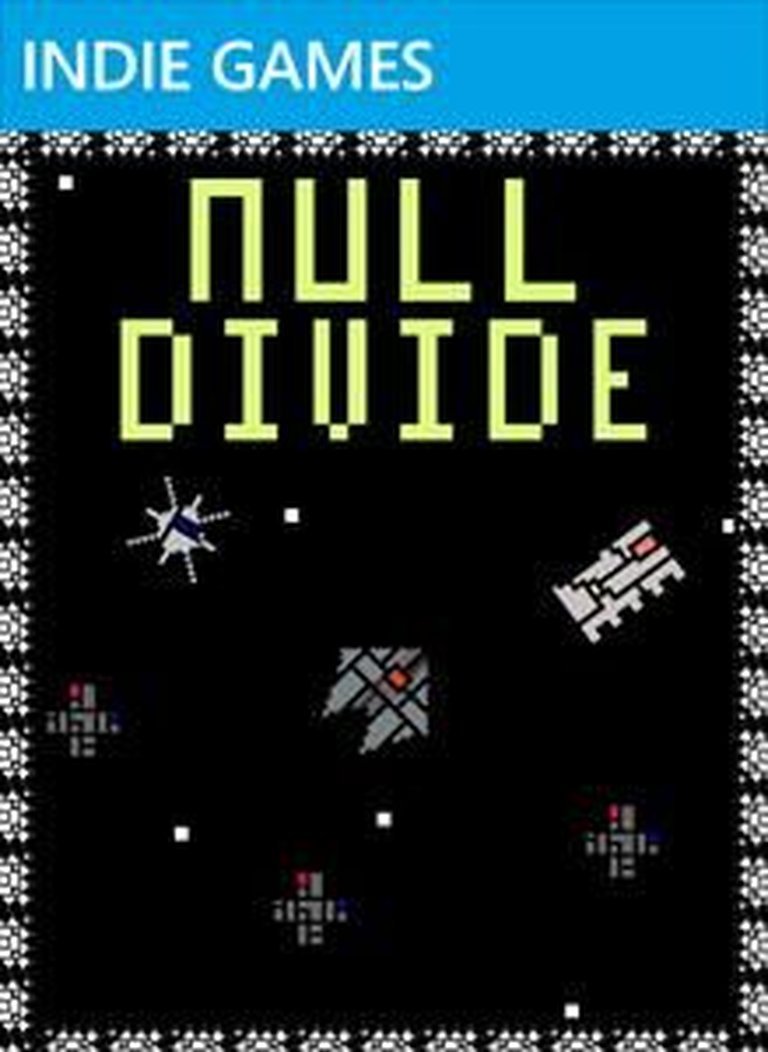
Null Divide is a twin-stick shooter set in a sci-fi futuristic universe, featuring top-down 2D scrolling gameplay where players engage in fast-paced, direct-control combat against enemies. Developed by Merge the Memory Bit Studios, it supports both single-player and local split-screen multiplayer for up to two players, with releases spanning Xbox 360, PC, and mobile platforms.
Null Divide: A Retrospective Analysis of an Obscure Indie Twin-Stick Shooter
Introduction: The Ghost in the Machine
In the vast digital archives of video game history, certain titles persist not as celebrated classics but as quiet testaments to the sheer volume of creative effort poured into the medium. Null Divide (also known as Null Divide+) is one such title—a 2010 top-down twin-stick shooter that flickered into existence on the Xbox 360 and subsequently drifted across PC platforms, leaving virtually no trace in the critical or cultural consciousness. Developed and published by the microscopic Merge the Memory Bit Studios, with core work attributed to a single individual, Patrick Derosby, the game is a ghost in the machine of the early 2010s indie boom. Its legacy is not one of acclaim but of obscurity, with MobyGames recording it as “collected by” only a single user as of early 2025, and no critic or user reviews extant on aggregators like Metacritic. This review does not resurrect a lost masterpiece; rather, it excavates a data point to explore the broader narratives of indie development, genre evolution, and the stark divide between games that capture the zeitgeist and those that quietly fulfill a vision for a handful of players. The thesis is this: Null Divide is a pure, unadorned example of gameplay-first design from an era when such an approach was both a necessity and a statement, embodying an embedded narrative philosophy in direct contrast to the emergent, story-driven indies that would soon dominate discourse.
Development History & Context: The Solitude of libGDX
The story of Null Divide is, in large part, the story of its tools and its creator. Emerging in 2010, the game was built using libGDX, an open-source, cross-platform Java game development framework that was (and remains) a favorite among small, resource-constrained indie teams for its flexibility and portability. The choice of libGDX immediately contextualizes the project: this was not a studio leveraging proprietary AAA engines but an individual or tiny team optimizing for efficiency and reach. The fact that the game saw releases as late as 2013 on Linux, Windows, Macintosh, Browser, and Android speaks to libGDX’s core strength—write once, deploy everywhere—allowing Derosby to extend the lifecycle of a niche Xbox 360 title into the burgeoning multi-platform indie ecosystem.
Merge the Memory Bit Studios leaves no other footprint on MobyGames beyond Null Divide and a single other, unlisted credit for Patrick Derosby. This suggests a “studio” that is essentially a solo developer or a very temporary collaboration. This was the reality for countless creators in the late 2000s/early 2010s, riding the wave of digital distribution (Xbox Live Arcade, Steam, Desura) that lowered barriers to entry but offered little guarantee of visibility. The gaming landscape of 2010 was a fascinating dichotomy: on one hand, blockbuster franchises like Call of Duty: Modern Warfare 2 and Red Dead Redemption (both 10/10 in Edge‘s canon) dominated sales and headlines. On the other, a quieter revolution was happening in downloadable and PC indie spaces, with titles like Super Meat Boy, Limbo, and Braid proving that small teams could achieve critical darling status. Null Divide was not among these darlings. Its release was a quiet entry into a crowded twin-stick shooter subgenre, a style popularized by arcade and console staples like Geometry Wars and Robotron: 2084, but by 2010 also seeing a surge in indie interpretations (e.g., Assault Android Cactus would come later). The game’s premise—a stranded pilot salvaging a hostile space station—was a timeless arcade hook, stripped of all pretense. There is no evidence of a Kickstarter campaign, a publisher relations struggle, or a lengthy gestation period. This was a game made to be made, released into the wild with the modest hope of finding its audience, a narrative of pure, unadorned craft in an era increasingly obsessed with narrative craft.
Narrative & Thematic Deep Dive: The Minimalist Embedded Narrative
The official ad blurb for Null Divide provides the entire narrative framework: “Your ship is out of fuel, and your only hope for getting home is to salvage a nearby abandoned space station. You’ll explore the station, do battle with the machines lurking within and find upgrades for your ship to aid you in your mission.” This is a masterclass in embedded narrative—a pre-generated, functional story that exists primarily to justify gameplay mechanics. As outlined in Chris Stone’s academic analysis of narrative evolution, this places Null Divide squarely in the lineage of early games like Donkey Kong or Crash Bandicoot, where the plot is a contextual veneer for action. There is no character development, no dialogue, no branching paths. The “story” is a single, immutable sentence: you are here, you must leave, obstacles impede you. The player’s goal is not to unravel a mystery or make moral choices but to overcome spatial and mechanical challenges.
This approach is not a failure of imagination but a deliberate, almost puritanical, design choice. In the context of the provided narrative design literature from Pixune, Null Divide prioritizes the “gameplay gestalt” over the “narrative gestalt.” The story serves one purpose: to anchor the core gameplay loop (move, shoot, explore, upgrade) in a coherent diegetic shell. The abandoned space station is not a character-rich environment like the desolate halls of Bloodborne or the story-soaked ruins of Dark Souls; it is a maze of enemy placement and upgrade caches. The “machines lurking within” are not characters with motives but obstacles, agents of the “change of state” required by Marie-Laure Ryan’s narrative definition. The theme, if one must be extracted, is the stark, solitary struggle for survival—a lone pilot versus relentless, impersonal machinery. It is a narrative of pure function, echoing the “damsel in distress” simplicity of early arcade games but transposed to a sci-fi survival context. There is no environmental storytelling hinted at in the descriptions; item descriptions, if they exist, are not documented. The world is a stage for action, not a text to be deciphered. In this, Null Divide represents a clear alternative to the emergent, player-driven narratives of titles like Skyrim or Life is Strange discussed by Stone. Its legacy is one of narrative minimalism, where the story’s sole job is to get the player to the next fight, and its success is measured entirely in how seamlessly it facilitates that transfer.
Gameplay Mechanics & Systems: The Twin-Stick Paradigm
As a dual/twin-stick shooter, Null Divide operates on a fundamental and beloved control scheme: one analog stick (or keyboard equivalent) controls the ship’s movement, the other controls the direction of fire. This inputs a state of constant, fluid engagement, the “gameplay gestalt” where spatial awareness and targeting merge. Based on its genre classification and ad blurb, we can deconstruct its core loops:
- Exploration & Navigation: The player pilots a ship through a nonlinear, 2D scrolling space station. The “nonlinear” aspect is key, suggesting a Metroidvania-lite or exploratory arcade structure where multiple paths may exist, and backtracking with new upgrades is likely required to access sealed areas. This contrasts with strictly linear levels and encourages a sense of discovery within a confined space.
- Combat: The core engagement. Enemies are “machines,” implying robotic, perhaps predictable, but varied enemy types (e.g., stationary turrets, swarming drones, charging elites). Combat is likely fast-paced, with a focus on dodging projectile patterns while returning fire. The twin-stick input is the purest expression of this chaos.
- Progression & Upgrades: The goal is to “find upgrades for your ship.” This could manifest as weapon power-ups (spread shot, laser, homing missiles), defensive boosts (extra health, shield), or utility upgrades (speed, map reveal). The system is likely arcade-style: temporary power-ups dropped by enemies or found in crates, rather than a permanent RPG-like skill tree. This fits the “authentic NES music” aesthetic, suggesting a retro power-up mentality.
- Boss Fights: The ad blurb explicitly mentions “bosses,” signaling a classic arcade structure of culminating challenges—likely large, complex mechanical adversaries that test the player’s mastery of the movement and weapon systems acquired up to that point.
- Cooperative Play: A significant feature is same-screen/split-screen co-op for 1-2 players. This is a crucial differentiator from purely single-player narrative indies or online-focused shooters. It anchors the game in a local multiplayer tradition (think Smash TV, Gauntlet), emphasizing shared physical space and camaraderie or competition over a modest TV screen. This design choice speaks to a specific kind of social gaming that was still viable on consoles in 2010.
- Medals & Replayability: The Metacritic detail mentions “medals to unlock,” suggesting a scoring or achievement system that incentivizes replaying levels for higher scores, faster times, or 100% completion. This is a hallmark of arcade-inspired design, extending playtime through mastery and competition (against oneself or a co-op partner).
Innovations or Flaws? Within its constraints, Null Divide likely offers a competent but not revolutionary take on the twin-stick formula. Its potential innovation lies in the integration of exploration and upgrade-based progression within a tightly controlled shooter framework—a hybrid of Geometry Wars‘ pure arena and Rogue Legacy‘s permanent progression (though permanent upgrades are unconfirmed). Potential flaws, by genre standards, could include a lack of weapon depth, repetitive enemy patterns, or a level layout that feels arbitrary rather than ingeniously designed. Without reviews, this remains speculative, but the game’s obscurity suggests it may not have achieved the polish or standout feature set needed to rise above the noise. It represents the median, not the peak, of what a small team could achieve with libGDX and a clear genre vision.
World-Building, Art & Sound: The Aesthetics of Efficiency
Null Divide‘s presentation is defined by two declared pillars: a “retro look” and “authentic NES music.” This is not a stylistic affectation born of limitless resources but a practical and artistic choice for a tiny team.
- Visual Direction (2D Scrolling, Sci-fi/Futuristic): The top-down, 2D perspective is inherently efficient. It avoids the complexity of 3D modeling, animation, and camera systems. The “retro look” suggests pixel art or simple vector-style graphics, likely with a limited color palette reminiscent of 8-bit and 16-bit era consoles. The sci-fi setting—abandoned space station, mechanical enemies—is conveyed through environmental tiles (corridors, ducts, reactor cores) and enemy sprite design (geometric shapes, minimal animation). This aesthetic serves multiple purposes: it reduces asset creation burden, it taps into a potent nostalgia market (especially on Xbox Live Arcade, which had a strong retro revival contingent), and it focuses the player’s attention on clarity of gameplay. Enemies and hazards must be immediately readable against the background—a necessity for a fast-paced shooter.
- Sound Design (NES Music): The commitment to “authentic NES music” is a profound statement. It means chiptune compositions generated with limitations: 2-4 audio channels, simple waveforms, no MP3s. This does more than evoke nostalgia; it establishes a auditory through-line that reinforces the retro visual aesthetic. The music likely consists of looping tracks that change with level progression or boss encounters, providing rhythmic cues for action. The “authenticity” implies a love for the technical constraints of the era, turning a limitation into a deliberate aesthetic signature. In a game with minimal narrative, the soundscape becomes a primary driver of atmosphere—the bleeps, bloops, and catchy arpeggios are the emotional context, selling the fantasy of piloting a fragile ship through a deadly, silent (save for the music) station.
- Contribution to Experience: Together, the art and sound create a cohesive, efficient, and nostalgic capsule. They lower the barrier to entry (you know what you’re getting: a game that looks and sounds like 1987, not 2010) and they channel the player’s cognitive resources into the gameplay loop. There is no cinematic spectacle to distract; the world is a schematic, and the music is its heartbeat. This is the antithesis of the lavish production values of AAA titles of the era (e.g., Halo: Reach, Mass Effect 2). Null Divide doesn’t aim to immerse you in a believable simulation; it aims to immerse you in a pure, distilled arcade moment, where the aesthetics are part of the rule set, not an overlay.
Reception & Legacy: The Quietest of Whimpers
The critical and commercial reception of Null Divide is, for all practical purposes, a void.
- At Launch (2010): There is no record of any critic reviews on Metacritic for the Xbox 360 version. The MobyGames page, a comprehensive database, had no user-collected entries for over a decade, only attracting its first “collector” in December 2024. The game’s presence on the “Related Games” tab—linked to titles like Zero Divide (1995) and Spectre Divide (2024)—is purely algorithmic, based on title string matching, not critical or fan discourse. It was not featured in any major outlet’s “best of” lists (as evidenced by its absence from the exhaustive Edge scores database). Its launch was, by all metrics, invisible.
- Evolving Reputation: There is no evolving reputation because there was no initial reputation to evolve. It exists in a state of perpetual obscurity. The few data points we have—its multi-platform ports in 2013, its listing on sites like Game Jolt (source of the ad blurb)—suggest it found a minuscule, sustained niche, likely through bundle sales or deep discounting on PC storefronts. It is the kind of title that appears in “hidden gem” YouTube videos with a few thousand views, if that.
- Influence on the Industry: Null Divide has had no discernible direct influence on subsequent game design. It did not pioneer a mechanic, define a subgenre, or inspire a wave of imitators. Its legacy is that of a data point in the democratization of development. It proves that, with a tool like libGDX and a focused vision, a single developer can produce and distribute a complete, multi-platform twin-stick shooter with co-op and multiple release dates. It is a testament to the “long tail” of indie development—a game that doesn’t need to be a hit to exist, to be played by a handful of people who stumble upon it. In the grand history of narrative evolution discussed by Stone, Null Divide is a living fossil of the “embedded narrative, gameplay-first” school. It stands in stark contrast to the narrative pioneers of the 2010s (The Walking Dead, The Last of Us, Her Story) not because it failed, but because it chose a different path: one where the story is a manual, not a novel. Its influence is therefore indirect, as part of the vast, unseen undergrowth of the indie ecosystem that allowed the standout narrative titles to eventually be noticed.
Conclusion: A Monument to the Unseen
Null Divide is not a forgotten classic. It is a functional, competent, and utterly anonymous artifact from the golden age of one-person game development. Its historical significance lies not in what it achieved but in what it represents: the sheer volume of work produced in the indie space with minimal resources, adhering to a purist gameplay philosophy that prioritizes mechanical purity over narrative complexity. It embodies the “embedded narrative” model in its most stripped-down form, using its retro aesthetic not as an ironic pose but as an engine of efficiency. The game’s world is a puzzle box with no hidden text inside, only better guns and hidden doors. Its sound is a nostalgic loop, its graphics a clear channel for action.
In the timeline of video game history, Null Divide is a single, unannotated tick mark on the axis of the twin-stick shooter genre. It has no place in the canon of narrative innovation; it contributes nothing to the discussion of environmental storytelling or player agency. And yet, its existence is important. It is evidence that the medium’s diversity is not just in its blockbusters and darlings, but in the hundreds of quiet projects that explore singular ideas—be it a control scheme, a visual style, or a pure arcade loop—without the pressure of being a “statement.” The game’s ultimate verdict is one of competent obscurity. It is a perfectly serviceable time-waster that accomplishes what it sets out to do with no pretension and, consequently, no resonance. For the historian, it is a reminder that for every Dark Souls (which Edge rightly scored a 9/10), there are dozens of Null Divides—games that build the diverse, messy, and vital bedrock upon which the celebrated monuments are eventually constructed. They are not lost; they were never widely found. And in that, they hold a quiet, dignified place in the tapestry of the medium.