
- Release Year: 2017
- Platforms: Nintendo Switch, Windows
- Publisher: Unepic Games
- Developer: Unepic Games
- Genre: Action
- Perspective: Side view
- Game Mode: Single-player
- Gameplay: Customization, Level editing, Metroidvania, Shooter
- Setting: Futuristic, Sci-fi
- Average Score: 81/100
Description
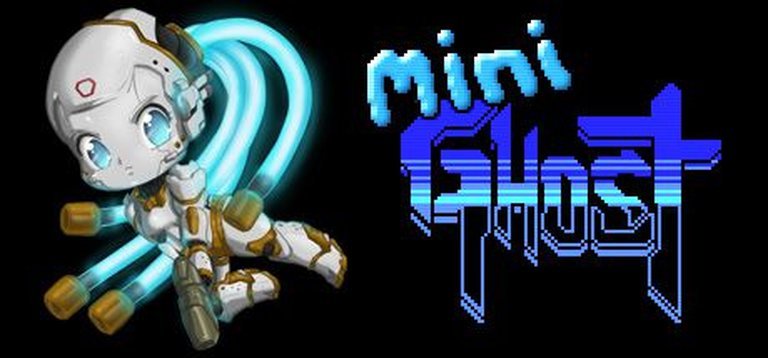
Mini Ghost is a compact 2D side-scrolling Metroidvania platformer set in a sci-fi universe, featuring retro MSX-style graphics and gameplay. Players explore interconnected futuristic environments, gain new abilities, and enjoy extensive customization options such as sprite editing and multiplayer trolling, all in a small, highly replayable package developed by Unepic Games.
Gameplay Videos
Where to Buy Mini Ghost
PC
Mini Ghost Guides & Walkthroughs
Mini Ghost Reviews & Reception
opencritic.com (70/100): Mini Ghost is a small game but with lots of possibilities.
metacritic.com (68/100): This is “Save Scum” the game.
Mini Ghost: A Microscopic Masterpiece of Retro Reinvention
Introduction: The “Mini” That Isn’t
In an era where “indie” often correlates with ambition scaled to the moon, Francisco Téllez de Meneses’s Mini Ghost (2017) presents a fascinating paradox. Its title, its $1.99 price tag, and its self-described “mini” features—”mini rooms,” “mini bosses,” “mini hours”—promise a trivial, disposable trifle. Yet, beneath this deliberately diminutive branding lies a game of remarkable depth, polish, and community-focused design that defies its modest stature. As a prequel to the acclaimed Ghost 1.0, Mini Ghost is not a mere footnote but a concentrated essence, a masterclass in distilling the Metroidvania genre to its core components while amplifying player creativity in ways its larger sibling could not. This review argues that Mini Ghost is a pivotal, if understated, artifact of 2010s indie game development: a proof-of-concept for lean, retro-styled design that prioritizes player agency and communal construction as much as completion, securing its legacy as a cult classic that redefined value in the digital storefront.
Development History & Context: The Solo Auteur’s Constraints as Catalyst
Mini Ghost emerges from the solitary workshop of Francisco Téllez de Meneses, operating under the moniker Unepic Games. Following the success of Unepic (2011) and Ghost 1.0 (2016), Téllez was not a first-time developer but a seasoned indie auteur with a distinct aesthetic: a deep affinity for the technical and artistic constraints of 8-bit and 16-bit eras, specifically the MSX computer standard. The technological constraints of the era were not a limitation for Téllez but a creative engine. Developing what he termed a “mini” game allowed for rapid iteration, a focused scope, and a direct channel to his personal design philosophy without the overhead of a large team or publisher.
The 2017 gaming landscape was saturated with retro-inspired indies, yet Mini Ghost distinguished itself through its almost academic purity of form. While many games used pixel art as a veneer for modern complexity, Téllez embraced the MSX’s limited color palette and spatial restrictions not as a handicap but as a deliberate aesthetic and gameplay framework. This was a conscious reaction against bloated AAA designs and even some feature-rich indie contemporaries. The decision to make it a prequel to Ghost 1.0 was also shrewd: it expanded the narrative universe of a game with a cult following while offering a distinct, more accessible entry point. Its subsequent port to the Nintendo Switch in 2024 speaks to its enduring design, which translates beautifully to handheld play.
Narrative & Thematic Deep Dive: Efficiency in Storytelling
The narrative of Mini Ghost is a masterclass in minimalist storytelling, serving the gameplay with surgical precision. The plot, as outlined in the Steam store description and echoed in reviews, is a direct prequel to Ghost 1.0. Viktor, Ghost’s profit-driven boss, engineers a crisis by releasing a virus on the Dallas Space Station, forcing its inhabitants to hire his services. He then dispatches Ghost (the android protagonist) and her operator, Jacker, to resolve the chaos he created.
This meta-narrative of manufactured conflict for profit is pure cyberpunk satire, a theme central to the Ghost series. However, Mini Ghost does not waste time with extensive dialogue. As the 3rd Strike review notes, the story “unfolds in about twenty seconds.” The true narrative vehicle is the “mini comic” introduction—a hand-drawn, chibi-style sequence that establishes the premise with whimsical visual flair, perfectly aligning with the game’s adorable yet lethal aesthetic. The themes are thus implied rather than stated: corporate mercenarism, the commodification of security, and the absurdity of a hero cleaning up her boss’s messes. Ghost herself remains a cipher, an efficient instrument of violence, her personality expressed only through her customizable sprite and her actions. The story’s brevity is its strength; it frames the ensuing exploration and combat as a logical, almost bureaucratic, extension of Viktor’s schemes, making the player’s journey feel like part of a larger, cynical economic system.
Gameplay Mechanics & Systems: The Loop, The Troll, The Toolkit
At its core, Mini Ghost is a Metroidvania stripped to its 8-bit bones. The gameplay loop is elegant: explore a non-linear space station comprising 100 “mini rooms,” acquire new abilities (like double jump or enhanced weapons) to access new areas, collect currency (“yellow cubes” and special ammo), and defeat four “mini” bosses. The combat is simple but satisfying—a responsive, direct-control shooter where precision matters. Progression is tied to two key systems: currency for purchasing upgrades and key items from scattered shops, and experience points, which raise Ghost’s maximum health.
However, the game’s true innovation lies in its meta-layers, which transform it from a short adventure into a platform. The most notorious is the “Troll Your Friends” mechanic. A unique asynchronous multiplayer feature allows players whose friends are also playing (via Steam integration) to interact negatively: dropping obstacles, spawning tougher enemies, or placing fake platforms in their friend’s game. This isn’t just a gimmick; it’s a commentary on shared gaming experiences and a precursor to modern “streamer interaction” features, embedding social rivalry directly into the single-player fabric.
The second, and more profound, innovation is the suite of three editors: a Level Editor, a Character Editor, and a Tileset Editor. These are not afterthoughts but fully integrated tools that allow players to deconstruct and reconstruct the entire game. The Steam Workshop support turns Mini Ghost into an endless supply of user-generated content. As Capsule Computers’ review astutely observed, the game is deceptive: “You first notice a small price tag and an achievement… implying how the game can be blazed through in less than an hour. Well, you would be wrong.” The editors ensure that the “playtime” metric is meaningless; the game’s true lifespan is determined by the community’s creativity. The inclusion of speedrun leaderboards further caters to the competitive metacommunity, cementing its status as a tool for players, not just a product to consume.
World-Building, Art & Sound: MSX as Philosophy
The setting—the Dallas Space Station—is a sci-fi labyrinth rendered in a meticulous MSX-inspired visual style. This is not generic “retro” but a specific, historically-informed homage. The MSX had severe graphical limitations (limited colors, simple sprites, blocky tiles), and Mini Ghost embraces these constraints as its visual language. The 2D scrolling world feels claustrophobic, dense, and deliberately archaic. This art direction achieves multiple goals: it creates a unique, instantly recognizable identity; it pays genuine tribute to a formative era of computing; and it lowers the barrier to entry for the level and tileset editors, as creating “authentic” MSX-style assets is a tangible, learnable craft for players.
The “mini comics” serve as a stark, beautiful contrast to the in-game pixel art, using a soft, hand-drawn anime-chibi style to deliver narrative beats with warmth and humor. This juxtaposition reinforces the “mini” theme—the story is presented as a cute, digestible vignette before the “real” (pixelated) business begins.
Sound design is purely functional 8-bit audio. A single, looping chiptune track accompanies exploration, while sound effects for shooting, jumping, and damage are sharp and satisfying. Some reviews, like 3rd Strike’s, noted the volume can be “low” and the soundtrack “one 8-bit tune loop,” which is accurate. Yet, this sparseness is part of the MSX aesthetic; the audio is not meant to be immersive but indicative, a sonic signature that reinforces the temporal dislocation. It is not a flaw but a feature of the retro simulation, though it may grate on modern listeners expecting dynamic scoring.
Reception & Legacy: Critical Darling, Cult Phenomenon
Mini Ghost received a strong critical reception at launch, with an MobyGames average critic score of 82% based on 8 reviews. Publications like BonusStage.co.uk and Brash Games awarded perfect scores, praising its fun, replayability, and incredible polish for a $1.99 product. The consensus on PC (Windows) was particularly warm (Moby Score 8.0, ranking #856), while the 2024 Nintendo Switch port received a more muted 60% from Video Chums, suggesting the game’s tightly-wound design may feel less revolutionary years later.
Commercially, data from sources like GameRebellion estimates sales of approximately 31,000 units—a significant figure for a niche, solo-developed title at a rock-bottom price. Its Steam user reviews are “Very Positive” (94% of 416 reviews), with a Steambase Player Score of 94/100, indicating exceptional community satisfaction. The Workshop is active, with custom characters (like Samus Aran, Haydee, Birdo), tilesets, and levels being shared, proving the editors’ lasting utility.
Its legacy is twofold. First, it stands as a prime example of the “micro-indie” potential in the Steam ecosystem: a complete, polished, and novel experience built on a shoestring. Second, and more importantly, it pioneered the integration of robust creation tools into a small-scale commercial title. While many larger games have level editors, few so deliberately positioned them as the game’s core value proposition. It anticipated the “UGC-as-a-service” model and the rise of creator-focused platforms like Roblox, but within a traditional, purchasable package. It did not influence blockbuster design, but it profoundly influenced a generation of solo and small-team indies, demonstrating that a game could be both a consumable product and a creative toolkit, extending its relevance indefinitely.
Conclusion: The Prequel That Outshines the Original?
Mini Ghost is a brilliant exercise in constraint. By embracing the “mini” moniker, Francisco Téllez de Meneses set expectations that he then systematically exceeded. It delivers a concise, expertly crafted Metroidvania experience that captures the feel of MSX-era gaming without the frustration of true period limitations. Its true genius, however, lies in its meta-features: the social “troll” mechanic and, most critically, the trio of editors that transform it from a game to be completed into a platform to be built upon.
Its narrative is wafer-thin but effective, its sound simplistic but authentic, and its core gameplay loop, while sometimes facing difficulty spikes (as some user reviews note), is tight and rewarding. The Switch port’s cooler reception is a testament to its original context; this was a game meant for the PC-centric, Steam Workshop-savvy audience of 2017.
In the canon of video game history, Mini Ghost will not be remembered as a genre-defining blockbuster. Instead, it deserves recognition as a pivotal case study in minimalist design, community empowerment, and the economics of indie development. It proved that “mini” does not mean “insubstantial,” and that a game’s lifespan can be infinitely extended not by DLC or sequels, but by putting the tools of creation directly into the players’ hands. For $1.99, it offers not just two hours of play, but a lifetime of possibility. That is not a mini achievement; it is a monumental one.
Final Verdict: 9/10 — A succinct, clever, and profoundly generous design that redefines what a “small” game can be. Essential for retro enthusiasts, Metroidvania devotees, and aspiring creators alike.