
- Release Year: 1996
- Platforms: Windows
- Publisher: Maxis Software Inc.
- Developer: Maxis Software Inc.
- Genre: Simulation, Strategy, Tactics
- Perspective: Diagonal-down
- Game Mode: Co-op, LAN, Online PVP, Single-player
- Gameplay: Business simulation, City building, construction simulation, Managerial
- Setting: Contemporary
- Average Score: 85/100
Description
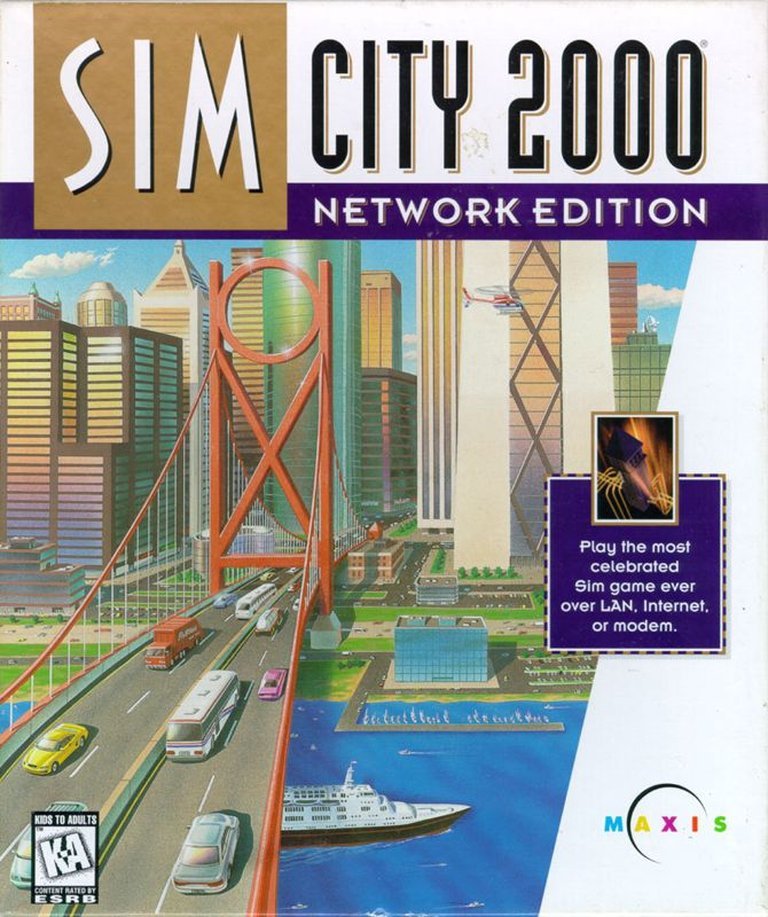
SimCity 2000: Network Edition is a Windows-based iteration of the iconic city-building simulation that integrates online multiplayer capabilities, enabling up to four players to collaborate on a single city or compete by developing separate urban centers. Set in a contemporary environment, it combines real-time management, strategic planning, and construction simulation, reflecting Maxis’ early attempt to bring the SimCity series online.
Gameplay Videos
SimCity 2000: Network Edition Free Download
SimCity 2000: Network Edition Patches & Updates
SimCity 2000: Network Edition Guides & Walkthroughs
SimCity 2000: Network Edition Reviews & Reception
homeoftheunderdogs.net (90.3/100): Highly recommended, and a definite entrant into our Hall of Belated Fame.
metacritic.com (80/100): The overwhelming dryness of this style of game, along with the portability issues that hang over it like a rather nasty storm mean that this game is best left to the PC if at all possible, which is a far better platform for the amazing depth, strategy and variety that this game offers.
SimCity 2000: Network Edition Cheats & Codes
PC
For cheat codes imacheat, gilmartin, joke., noah, moses: enter during gameplay. For Klatu Verata Nictu: open chat window and type to everyone. For Sim-Sim-Sim: subscribe to Courier newspaper, double click money icon in third issue, issue fund, and type.
| Code | Effect |
|---|---|
| imacheat | $500,000 and all rewards |
| gilmartin | Army base |
| joke. | Funny picture |
| noah | Start a flood |
| moses | End a flood |
| Klatu Verata Nictu | Cheat item appears on menu bar, allowing price changes and collection of special tiles and rewards. |
| Sim-Sim-Sim | Population grows and funds increase to almost $10 million. |
SimCity 2000: Network Edition: A Fractured Frontier in Online City-Building
Introduction: The Digital Town Square’s First, Faltering Step
In the pantheon of seminal simulation games, SimCity 2000 stands as a towering, isometric monument to systems-driven play—a game that traded the top-down blueprint of its predecessor for a dense, layered, and deeply systemic urban sandbox. Yet for all its solo grandeur, a fundamental question lingered in the mid-1990s: what would it mean to build a city together? SimCity 2000: Network Edition (SC2K:NE), released in June 1996, was Maxis’s audacious, if ultimately ill-fated, answer. It was not a sequel, but a profound and problematic mutation—the first official attempt to inject persistent multiplayer connectivity into the veins of a genre built on solitary, meditative control. This review argues that Network Edition is a fascinating historical artifact: a technically pioneering but commercially disastrous experiment that laid bare the inherent tensions between the deep, systemic simulation of city-building and the messy, unpredictable nature of human collaboration and competition. Its legacy is not one of mainstream influence, but of a cautionary tale and a cult curiosity that whispered of a multiplayer future for the genre long before Cities: Skylines mods or the always-online failures of the 2013 SimCity reboot.
Development History & Context: A Sequel to a Sequel, Forging a New Path
The development of SimCity 2000: Network Edition must be understood as a branch off a thriving tree. The base game, released in 1993, was a landmark success Developed primarily by Will Wright and Fred Haslam, it evolved the original’s concept with an isometric view, terrain elevation, underground infrastructure layers (water pipes, subways), an expanded suite of zones and buildings including arcologies, and its iconic, micro-simulated newspaper. By 1996, SimCity 2000 had already seen myriad ports (SNES, Saturn, PlayStation, N64) and expansions (Great Disasters Scenario Pack, SimCity Urban Renewal Kit). The Network Edition was built from the codebase of the CD Collection (which bundled the base game with the URK and scenarios), but with a singular, revolutionary goal: persistent online connectivity for up to four players.
Maxis, under the creative leadership of Wright, was then in a period of prolific “Sim” experimentation (SimPark, SimCopter, Streets of SimCity all followed or coincided). The studio was fascinated by interconnected systems and player agency. The technological context was the dawn of the consumer internet and the solidification of LAN gaming (enabled by Windows 95’s built-in TCP/IP stack and games like Warcraft: Orcs & Humans and Command & Conquer). The vision was to create a “SimCity Net”—a persistent world where mayors could trade resources, co-manage a metropolis, or compete for regional dominance. The team, credited with designers like Michael Perry and programmers Jason Shankel and James Turner, faced the monumental task of retrofitting a deeply single-player, turn-less simulation with real-time networking and shared state, all while adhering to the strict memory and bandwidth constraints of 1996 (the game still shipped on CD-ROM but was designed for 8-16MB RAM systems).
Narrative & Thematic Deep Dive: The Philosophy of the Mayor
SimCity 2000: Network Edition possesses no traditional narrative, plot, or characters. Its “story” is emergent, written by the invisible hand of the market and the visible hands of up to four human mayors. Yet, this absence of scripted narrative is its core thematic statement. The game’s philosophy is one of civic pragmatism versus ideological autonomy.
In single-player SimCity 2000, the mayor is an absolute monarch, balancing a budget against the demands of residential, commercial, and industrial sims. The newspaper—a stroke of genius from Fred Haslam—provides a chorus of simulated citizenry, with headlines ranging from the humorous (“Bald Radio Found”) to the dire (“Power Plant Near Meltdown”). This creates a soliloquy of governance. In Network Edition, this soliloquy becomes a dialogue. The primary narrative tools are:
1. The Land deed system: The single most critical mechanical change. All land must be explicitly purchased from the central “region” bank before zoning. This transforms the map from a freely editable canvas into a propertied commons. The thematic implication is stark: urban development is not agiven right, but a commodity subject to hoarding, speculation, and territorial conflict. Your city’s growth is visibly inscribed by the colored borders of player-owned territories.
2. The Proposal/Contract System: This is the game’s diplomatic engine. Players can propose contracts to buy/sell electricity, water, or sewage treatment, or to offer services like police or fire coverage for a fee. The negotiation is cold, numerical, and transactional. It embodies the theme of municipal interdependence versus mercantile self-interest. Will you sell power to a neighbor at a fair rate, or hold them hostage? Will you accept a garbage contract that pollutes your own territory?
3. The Server/Host God: The host player assumes a meta-role as “server administrator.” Through the server window, they can see all players’ funds, land holdings, populations, and last login. They can grant money, disconnect players, or wipe their cities. This creates an implicit narrative of hierarchical power vs. egalitarian cooperation. The host is not just another mayor; they are the region’s ultimate authority, capable of rewarding or punishing, introducing a layer of meta-game politics and potential for abuse absent from the solo experience.
4. The Chat Window: A simple text channel that becomes the town square, the negotiating table, and the battlefield. Taunts, deals, and pleas all flow here. It humanizes the abstract systems, turning trade negotiations into personal interactions and turning a collaborative city into a potential powder keg.
The underlying theme, therefore, is a brutal, systemic political economy. Network Edition asks: what happens when the rational actor model of SimCity (the mayor optimizing for desirability and budget) collides with the irrational, strategic, and social behavior of human players? The answer, as the reviews suggest, was often friction.
Gameplay Mechanics & Systems: Brilliant Architecture on Shaky Ground
Core Loop (Shared Foundation): The fundamental city-building loop is identical to its progenitor: zone residential/commercial/industrial, build infrastructure (roads, rails, power, water), manage budget and taxes, query tiles for data, and react to newspaper reports and disasters. The isometric view, tile-based grid, and microsimulations (traffic pathfinding, utility coverage) are all preserved. The inclusion of the Urban Renewal Kit means custom building graphics are available.
Revolutionary Network Systems:
* Land Ownership & Purchase: This is the master switch. Every tile must be bought from the “City Cash” pool before building. This creates a palpable sense of scarcity and strategy. Do you expand your borders aggressively to claim resources (water, coal), or hold a compact, dense core? It visually demarcates empires on the map and makes territorial disputes literal.
* Cooperative/Competitive Modes: Players can choose to “connect” their cities, linking road networks and enabling utility trade (if contracts are set). More radically, they can share control of a single city. This is a unique feature in the entire franchise, allowing four mayors to collaboratively micro-manage one sprawling metropolis—a potential recipe for either sublime coordination or catastrophic chaos.
* Server/Host Controls: The host’s dashboard is a powerful toolset. They control global speed (Turtle to Cheetah, plus “African Swallow”), can disable disasters (a crucial lag-reduction tool), and have administrative oversight over all players. This power dynamic is the game’s most significant unbalancing element.
Flaws and Frictions:
* The Join Lag: As noted in the Home of the Underdogs review, joining an in-progress game required transferring the entire city state, halting all gameplay. This could take “extraordinary long time[s],” making late joins impractical and encouraging all players to start together.
* Budget Display Error: Contract payments are set monthly but displayed yearly in the budget window, requiring players to mentally divide by twelve—a small but jarring break in the otherwise clean UI.
* Accidental Acceptance: The sudden pop-up of a chat window or proposal could cause a misclick, derailing a delicate construction plan. The interface, while cleaner than the original’s Mac-style toolbar (it uses cascading Windows 95-style menus), was not designed for the interruptions of multiplayer.
* Disaster Reduction: Only four disasters remained (Earthquake, Fire, Flood, Hurricane), likely to reduce network load. This gutted the chaotic fun of the base game’s Great Disasters expansion (no UFOs, volcanoes, riots, etc.).
* Ultimate Authority: The host’s power to wipe a player’s city or disconnect them introduces a non-gameplay, social risk. It transforms the game from a symmetrical contest into one where the host’s personality and fairness become part of the ruleset.
Innovation vs. Integrity: The brilliance of the land-buying system is that it solved the core problem of multiplayer city-building: simultaneous edits to the same tile. By making land a purchasable, ownable resource, it created a natural, systemic boundary. However, this also introduced a layer of capitalist friction that some found antithetical to the cooperative spirit of city-building. The game offered the tools for both utopian collaboration and ruthless, libertarian conquest. It did not dictate which path; it merely made both possible within its rules.
World-Building, Art & Sound: A Transitional UI in a Timeless Style
SimCity 2000: Network Edition exists in a graphical and sonic limbo.
* Visual Direction & UI: The isometric cityscape, with its distinctive building sets (3×3, 2×2, 1×1 tile structures), detailed query pop-ups, and vibrant palette, is identical to the acclaimed CD Collection. The major change is the user interface, which shed the original’s persistent, Macintosh-inspired toolbar for cascading menus on the right side of the screen. This was a conscious nod to Windows 95 aesthetics, freeing up screen real estate for the city view. While functional, it lacked the tactile charm of the original and felt less discoverable to veterans.
* Atmosphere & Setting: The “Contemporary” setting—a hybrid of 1990s aesthetics with futuristic arcologies and fusion plants—remains. The network edition does little to alter this timeless, slightly optimistic dystopia where cities gleam even as they teeter on bankruptcy.
* Sound Design & Music: Sue Kasper’s iconic, moody, Blade Runner-inspired MIDI soundtrack is preserved. The technical constraints noted in the Wikipedia source are critical: the 10-minute score exists in multiple optimized versions for different sound cards, occupying a mere 100KB versus the 100MB+ a CD-quality version would require. This is a masterclass in composition under constraint. The sound effects—the satisfying thunk of a zone, the wail of a disaster siren—are unchanged. The audio world is familiar and comforting, a stark contrast to the social anxiety of the multiplayer layer.
The art and sound, therefore, provide continuity and stability. They are the trusted, familiar instruments playing a new, discordant social score.
Reception & Legacy: The Ghost in the Machine
At Launch (1996):
* Critical Response: The three recorded critic scores on MobyGames tell a tale of extremes: PC Player (Germany) 80%, GameSpot 79%, and High Score (Sweden) 40%. The polarizing reception mirrors the gameplay. GameSpot‘s review captured the allure for the dedicated: “If you’re a SimFanatic… this new twist on SimCity 2000 will certainly appeal to you.” Conversely, High Score noted the limitations bluntly: “The restrictions in the network functions are still a bit too many, but the concept of SimCity over network is very good.” The German review was more positive but noted the multiplayer options were unimpressive. Metacritic, based on modern user re-reviews, shows a “Mixed or Average” score of 7.4, with a significant negative contingent (20%).
* Commercial Failure: The game was discontinued within a year due to poor sales. It is now, as Home of the Underdogs states, “probably the rarest Maxis game in existence.” It was never re-released in a compilation, existing in a strange limbo between the beloved SimCity 2000 and the later, different SimCity titles. Its sales were so poor it couldn’t sustain its own server infrastructure.
Evolution of Reputation & Influence:
* Cult Curiosity: For preservationists and hardcore SimCity historians, NE is a holy grail—the “what if” made flesh. Its rarity has fueled its legend. The fact that dedicated fans have created interoperability patches and server launchers (documented on PCGamingWiki) to make it run on modern Windows and function as a self-hosted LAN game is a testament to its enduring, if niche, appeal.
* Precedent, Not Prototype: Network Edition had no direct successors in the main SimCity line. The next multiplayer attempt was the social/mobile SimCity Social (2012) and the famously always-online SimCity (2013)—both conceptually and technically worlds away. Its true legacy lies in demonstrating both the possibility and the perils of multiplayer city-building.
* It proved that core simulation could, with clever systems (land ownership), be networked.
* It proved that the social dynamics (negotiation, territoriality, host power) could create as much conflict as collaboration, potentially undermining the “city as a system” fantasy.
* It served as a direct, conceptual precursor to the regional multiplayer in SimCity 4 (which allowed trading and commuting between separate, single-player cities via a region map) and, by inverse example, a lesson for the centralized server approach of the 2013 reboot.
* Academic & Critical Re-evaluation: Modern analyses (like those from Polygon cited in Wikipedia) often use SimCity to discuss urban theory. Network Edition adds a crucial layer: it transforms the city from a closed laboratory into a site of political economy among peers. It is studied as an early, awkward attempt at a “persistent world” simulation, a genre that would later see more success in MMOs and sandbox games like Minecraft.
Its influence is subtle, absorbed indirectly into the DNA of later design thinking about online cooperation and competition in complex systems. It is a ghost in the machine—a feature many wanted but Maxis itself couldn’t quite justify again until the landscape of networking and player expectations had changed utterly.
Conclusion: The Unfinished Metropolis
SimCity 2000: Network Edition is not a great game by conventional standards. Its multiplayer implementation is clunky, its features reduced, its commercial performance a failure, and its reputation fractured. Yet, to dismiss it as a mere curiosity is to miss its profound importance. It is the broken prototype of a dream—the dream of the shared, persistent city.
Its genius was in its systemic solution to the problem of multiplayer editing: land ownership. Its flaw was in assuming that the polite, micro-managing mayor of single-player mode would translate directly to a networked environment rife with strategic behavior, negotiation, and potential griefing. It asked players to be both civic planners and Machiavellian diplomats, a dual role that proved too complex and fraught for mainstream appeal in 1996.
Technologically, it was a brave first step, laying groundwork for IPX/SPX and TCP/IP multiplayer in a simulation genre. Culturally, it exists as a rare artifact of an alternative history for the SimCity series, one where mayors might have first fought over water tables and power grids before ever confronting the aliens of SimCity 3000 or the zombies of SimCity Societies.
Ultimately, SimCity 2000: Network Edition is a monument to ambition outpacing execution and market readiness. It remains a fascinating, deeply flawed, and critically important chapter in the history of online gaming—a town built on shaky foundations, where the citizens are real, the politics are immediate, and the eternal question is not “Can I build a thriving metropolis?” but “Can we?” For its valiant, if failed, attempt to answer that question, it earns its place not on a shelf of classics, but in a special wing of the museum dedicated to bold, beautiful, and bewildering experiments. It is the first, fragile blueprint for the online city, a city that, to this day, remains largely unbuilt.