
- Release Year: 2015
- Platforms: Android, iPad, iPhone, Macintosh, Windows
- Publisher: Big Fish Games, Inc, Casual Arts, Microvalue
- Developer: Virtual Playground Ltd.
- Genre: Puzzle
- Perspective: 1st-person
- Game Mode: Single-player
- Gameplay: Hidden object
- Setting: Halloween, Horror
- Average Score: 30/100
Description
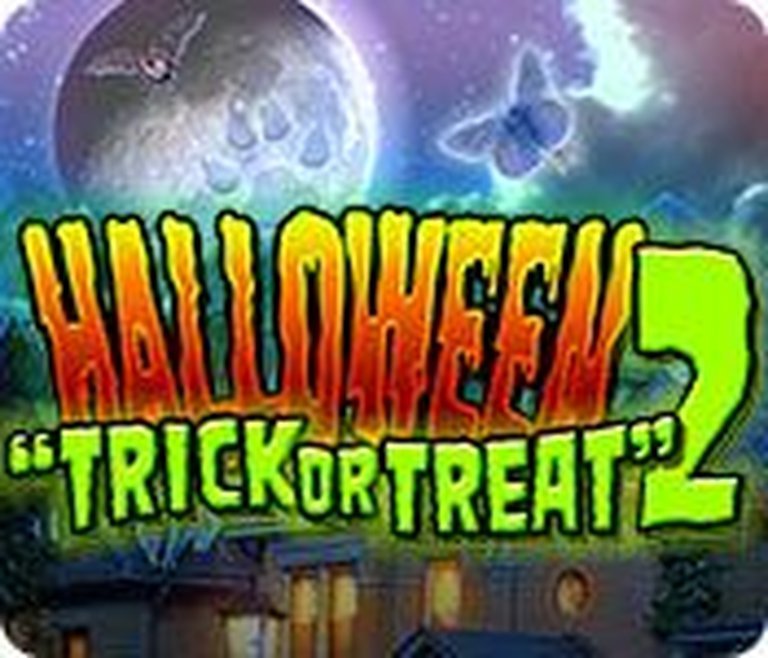
Halloween: Trick or Treat 2 is a hidden object puzzle game set in the whimsically spooky town of Springfield during Halloween. Players join characters Emma and Mike as they participate in festive activities like pumpkin carving, costume dressing, and trick-or-treating, exploring locations such as the Costume Parade, Spooky Museum, and Haunted Hotel. The game features gorgeous graphics, engaging mini-puzzles, and a kitschy horror aesthetic, providing hours of family-friendly fun with an original storyline.
Gameplay Videos
Where to Buy Halloween: Trick or Treat 2
PC
Halloween: Trick or Treat 2 Reviews & Reception
metacritic.com (30/100): dreadfully repetitive and just isn’t much fun to play.
nintendolife.com : it’s more of the same, it’s sloppy, and there’s little fun to be had.
Halloween: Trick or Treat 2: A Definitive Analysis of a Casual Horror Gem
Introduction: The Comfort of the Kitschy and Cosmetic
To label Halloween: Trick or Treat 2 a “guilty pleasure” is to miss the point entirely. As one devoted player eloquently stated, “If you like a thing, then you like it and that’s that.” This 2015 hidden object game from Casual Arts (developed by Virtual Playground) is not a masterpiece of interactive narrative or mechanical innovation. It is, however, a near-perfect execution of a narrow, deliberate vision: to wrap the player in the cozy, chaotic, and profoundly kitschy aesthetic of an American suburban Halloween night. Its legacy is not one of critical acclaim or commercial blockbuster status, but of cult adoration within a specific niche—the casual hidden object enthusiast with a deep, abiding love for plastic skeletons, glow-in-the-dark cobwebs, and the palpable scent of autumn leaves. This review will argue that Halloween: Trick or Treat 2 is a significant, if minor, artifact of the casual gaming boom of the 2010s. It represents the zenith of a specific subgenre’s formulaic yet comforting appeal, successfully translating the tactile, decorative joy of the holiday into a digital, click-based ritual. Its true horror is not in its scares, but in the terrifying possibility that its unique, unapologetically tacky charm might one day be forgotten.
Development History & Context: From Newcastle to a Fictional Springfield
The game’s development history is a study in the globalized, often anonymous, world of casual game production. The primary credited developer is Virtual Playground Ltd., a UK-based studio headquartered in Newcastle upon Tyne. This geographic detail is crucial, as it creates a fascinating cultural dissonance: an English team meticulously recreating an exaggerated, hyper-American vision of Halloween, saturated with imagery of “Support Our Troops” stickers, picket fences, and small-town parades. This was not an attempt at authentic Americana, but a filtered, affectionate parody built from stock photo aesthetics and catalog clippings—a “torn-up tin can” version of hobo chic, as one critic noted.
The game was published by Big Fish Games, Inc., Microvalue, and Casual Arts, the latter of which would become its most recognized custodian, rebranding and re-releasing it on platforms like Steam in 2023. Its initial release on October 8, 2015, placed it squarely in the peak era of the hidden object game (HOG). This was the time of Mystery Case Files, Hidden Expedition, and Nightmares from the Deep—a genre defined by low-stakes, high-density visual searches. Halloween: Trick or Treat 2 did not innovate on the core HOG loop but decided to double down on its thematic trappings. Where other HOGs used their mechanics to tell stories of mystery or adventure, this game used them to simulate the act of trick-or-treating itself: the wandering, the looking, the accumulation of trivial wonders.
Technologically, it was built for a multi-platform casual market (Windows, Mac, iOS, Android) using likely simple, scalable 2D graphics. The “fixed/flip-screen” perspective and “first-person” viewpoint mentioned on MobyGames denote the static, pan-and-scan nature of its scenes, a hallmark of the genre designed for low system requirements and touch-friendly play. The “pre-rendered, quasi-blurry images” criticized by Nintendo Life were likely a cost-effective choice, allowing for dense, detailed scenes without complex real-time rendering. The game’s existence is a testament to the viability of a hyper-specific, holiday-themed niche in the digital marketplace, where a loyal audience would return annually for seasonal comfort food.
Narrative & Thematic Deep Dive: A Plot as Simple as a Candy Corn
The narrative of Halloween: Trick or Treat 2 is not a story but a procession. The official description sets the stage: “Springfield has never been spookier!” The plot, such as it is, follows two children, Emma (a witch) and Mike (a pirate), as they are given vague parental permission to enjoy the holiday and then proceed to wander their town. The “story” is a episodic tour of Halloween-themed locations: Bill’s Pumpkin Farm, the Costume Parade, the Spooky Museum, the Mall (which houses Dracula’s Castle), the Haunted Hotel, and finally, “Trunk or Treat” at a church, before they return home to sort their candy.
There is no conflict, no antagonist (beyond the occasional devious hidden object placement), and no character arc. The thematic core is pure, unadulterated Halloween as participatory spectacle. Themes explored include:
* Commercialized Wholesomeness: Springfield is a town that has utterly commodified and sanitized the macabre. Dracula is a mall attraction; the museum’s dinosaur skeletons wear saddles; a “Halloween Queen” is crowned on a tractor trailer. This is horror as family-friendly festival.
* The Joy of Accumulation: The primary goal is collection—of candy, of Gold Pumpkins (for in-game coins), of “Halloween Items” (cheap tat). The gameplay loop mirror the trick-or-treater’s haul.
* Nostalgic Kitsch: The entire experience is an exercise in nostalgic tactile memory—the feel of a vinyl pumpkin bucket, the scratch of a paper costume, the sight of plastic spiders in a fake cobweb. The game’s art is a digital archive of this low-rent spookiness.
The characters are archetypes. Emma is the standard-issue excited child. Mike, with his “disturbingly-proportioned” CG model and “mad, staring eyes,” is a fascinating failure of the uncanny valley, yet this only adds to his quirky charm for some players. Their dialogue is minimal, functional, and often charmingly amateur (“they’ve spooked up the museum”). The true “narrative” is delivered through the environment itself—each scene is a diorama of Halloween obsession, telling the story of a town that has given itself over completely to the season.
Gameplay Mechanics & Systems: The Soothing Click of Collection
The core gameplay is the classic hidden object search, presented with remarkable consistency. The player is shown a static, cluttered scene and a list of items to find. Clicking an item removes it from the list and awards points. This loop is punctuated by brief, simple minigames between scenes.
Core Loop & Systems:
* Item Lists: Items are color-coded. Standard items are in black. Red items are hidden within or behind another interactive element (e.g., keys in a pocket). Blue items are “tasks” requiring a drag-and-drop action (e.g., bringing a knife to a pumpkin to carve it). This system is functional but inconsistently signposted, as noted by critics.
* Secondary Collectibles:
* Gold Pumpkins: Scattered in each scene, these earn Bonus Coins.
* Halloween Items: Represented by silhouettes in a pumpkin icon, these are specific, often garish pieces of holiday tat (a bleeding bum bag, a skull-print wellie). They are not shown by hints, adding a layer of pure visual scavenging.
* Hint System: Two tiers: “Hints” reveal one item’s location; “Mega Hints” reveal all remaining items. Both have recharge timers, with “Casual” mode offering faster refills than “Challenge” mode.
* Minigames: These are almost universally simple:
* Jigsaw Puzzles: Rotate or drag pieces to form a picture (often a map or poster).
* Spot-the-Difference: Compare two nearly identical scenes, often with 20-25 differences. These are notoriously difficult, described as “vicious.”
* Other Brief Diversions: Number pad puzzles (entering a code), “find the cats/dogs in a handheld picture,” ring-sorting puzzles to make a jack-o’-lantern.
* Notably Absent: As praised by the VGJunk reviewer, there are zero sliding block puzzles, a notorious HOG trope. This is a deliberate, player-friendly omission.
Innovation vs. Flaw:
* Innovation: The consistent integration of the holiday theme into every mechanic is its primary strength. Finding a “vampire” that is actually a reflection in a mirror is a clever, thematic twist, even if it’s an exception that proves the rule of generally straightforward hides. The “Trunk or Treat” location directly translates a modern Halloween tradition into a game scene.
* Flaws: The hidden object detection can be “spotty,” especially in Challenge mode. Some placements feel “arbitrary” and “cheap,” like finding the number “1” hidden as a vertical window shape. The interactive “red item” zones sometimes lack visual cues, forcing trial-and-error or hint use. The minigames, while simple, range from pleasant (easy puzzles) to frustrating (the bat-pathfinding maze described as “confusing, trial-and-error”).
The overall design philosophy is one of low friction, high density. The game wants you to find things, not be blocked. The abundance of hints and the forgiving Casual mode ensure a relaxing, almost meditative experience. The difficulty spike in Challenge mode feels artificial and punitive rather than genuinely challenging, exposing the fragility of the core mechanic.
World-Building, Art & Sound: The Springfield Americana Paradox
The world of Halloween: Trick or Treat 2 is its most celebrated and criticized element. It depicts the fictional town of Springfield as a place of overwhelming, almost pathological, Halloween obsession.
Visual Direction:
* Style: The scenes are a pastiche of American suburbia and small-town Americana, rendered in bright, saturated colors. It is deliberately “down-home, aww-shucks.” Think white picket fences, porches with hanging ghosts, and barns overflowing with pumpkins.
* Asset Sourcing: As the VGJunk review keenly observes, the images appear sourced from stock photo sites, costume catalogues, and shopping websites. This gives the game a unique, “found object” aesthetic—less a unified artistic vision and more a curated exhibit of Halloween paraphernalia. It can look “ugly and muddy” (Nintendo Life) or “gorgeous” (GameHouse ad blurb) depending on one’s tolerance for digital kitsch.
* Character Models: The CG models for Emma and Mike are a point of contention. They are undeniably “uncanny,” with Mike specifically described as resembling “Damien from a low budget CG remake of The Omen.” This weirdness adds a layer of unintentional, low-grade horror that some find endearing and others find off-putting.
* Scene Composition: Each location is densely packed with thematic clutter—spider webs, cauldrons, tombstones, candy bowls, skeletons, and countless novelty items. The “Halloween Items” are often the most garish and specific examples of this clutter.
Sound Design:
* Music: The soundtrack features twangy, cheerful banjo and bluegrass tunes. This is a key part of the “wholesome” Americana facade, creating a bizarre contrast with the spooky themes. The VGJunk review wistfully notes the absence of “Oingo Boingo tracks,” highlighting how the audio could have leaned into a more gothic or new-wave Halloween vibe but chose country instead.
* Sound Effects: Functional clicks and chimes for finding items, with perhaps one or two spooky ambient tones. The sound design is entirely serviceable, not atmospheric.
The combined effect is a world that feels simultaneously sinister and sweet. It’s a Halloween without menace, where Dracula sells furniture and the scariest thing is a poorly-hidden object. This is not a horror game; it is a Halloween theme park in game form. The art and sound work tirelessly to sell this specific, sanitized, and wildly decorative fantasy.
Reception & Legacy: The Great Divide
Halloween: Trick or Treat 2 exists in a rare state of polarizing reception, with its legacy defined entirely by the audience’s predisposition to its core appeal.
Critical Reception at Launch:
* VGJunk (Retrovania): A 10/10 masterpiece of “simple, soothing gameplay.” The review is a love letter to its kitschy aesthetic, calling it “a perfect game for me.” It acknowledges flaws (arbitrary hides, maths puzzles) but finds them irrelevant against the sheer, unadulterated Halloween joy.
* Nintendo Life (3DS): A scathing 3/10. It calls the game “sloppy,” “dreadfully repetitive,” and “just isn’t much fun to play.” It criticizes arbitrary object placement, poor detection, and confusing minigames, concluding it should “sink into the darkest corner of the eShop.”
* Metacritic: Illustrates this divide. For the 3DS version, it lists the one Nintendo Life review (30/100). The PC version shows no critic score but has a single 100% user review from “Retrovania.”
* IGN: Offers a generic, positive blurb (“a superb HOG full of highly original scenes”) without a scored review, suggesting a low-priority or affiliate-type listing.
Commercial & Cult Legacy:
Commercially, it was likely a modest success within the crowded casual market, enough to warrant ports to nearly every platform (Windows, Mac, iOS, Android, 3DS) and a direct sequel (Halloween: The Pirate’s Curse). Its true legacy is cult classic status within the hidden object genre community. The passionate VGJunk review exemplifies a dedicated subset of players for whom this game is an annual ritual. Its influence is not on game design at large, but on the template for hyper-themed, holiday-specific casual games. It proved that a game could be 90% aesthetic and 10% gameplay and still find a devoted audience if the aesthetic was potent and specific enough. It sits in the lineage of games like Christmas Wonderland (also by Casual Arts) that prioritize seasonal atmosphere over mechanical depth.
Its reputation has evolved into a litmus test. For critics and genre-weary players, it is the epitome of a low-effort, low-reward cash-in. For its fans, it is a pure, unpretentious vessel for seasonal affect, a digital jack-o’-lantern to be revisited each October. The disparity between a 10/10 and a 3/10 for the same product is rare and speaks to a fundamental schism in what we demand from games: meaningful challenge vs. comforting spectacle.
Conclusion: A Perfectly Imperfect Autumn Ritual
Halloween: Trick or Treat 2 is not a great video game by any conventional metric. Its narrative is nonexistent, its mechanics are thin and occasionally frustrating, its art is a patchwork of stock assets, and its characters are unsettling. To judge it by these standards is to fundamentally misunderstand its purpose.
It is a masterclass in thematic delivery within extreme constraints. It takes the simple, repetitive act of clicking on objects and imbues it with the specific, nostalgic feeling of a childhood Halloween night. It succeeds because every system, from the coin-collecting “Halloween Store” to the “Trunk or Treat” location, reinforces this central fantasy. It is a game that knows exactly what it is and who it is for.
Its place in video game history is not in the canon of influential design, but in the archaeology of casual culture. It is a pristine fossil from the peak of the hidden object boom, capturing a moment when digital storefronts were filled with games that were less about “playing” and more about experiencing a curated, decorative theme. For the player who finds solace in the kitsch, who relishes the hunt for a tiny plastic spider in a digital web, and who wants their screen to smell like autumn (figuratively), Halloween: Trick or Treat 2 is an indispensable seasonal treasure. For everyone else, it is a baffling, ugly, repetitive relic. This profound duality is its true, unintended genius. It is, ultimately, the digital equivalent of a perfectly carved but slightly lopsided pumpkin: charming, homemade, and lit from within by a very simple, very warm bulb.