
- Release Year: 2015
- Platforms: Windows
- Publisher: OnHand Software, Inc.
- Genre: Compilation
- Game Mode: Single-player
- Gameplay: Hidden object
Description
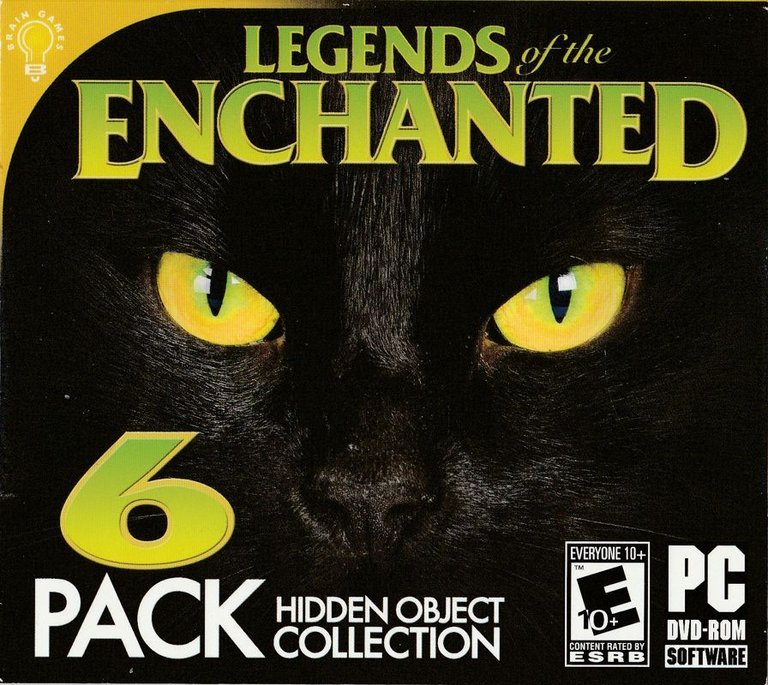
Legends of the Enchanted is a 2015 Windows compilation DVD that bundles six hidden object games, offering players a variety of themed adventures from mystical realms and detective cases to historical epics, all centered around the core gameplay of finding hidden items in intricately designed scenes.
Legends of the Enchanted Free Download
Legends of the Enchanted: A Time Capsule of Casual Gaming’s Golden Age
Introduction: The Quiet Giant of the Shelf
To understand Legends of the Enchanted, one must first understand the world it emerged into: a 2015 PC gaming landscape dominated by the rising tide of digital distribution (Steam sales, Humble Bundles), the consolidation of AAA franchises, and a thriving, often overlooked, ecosystem of casual and “hidden object” games. While the literal giants of the industry were polishing their open-world epics, a quieter, more steadfast revolution was occurring in the realm of puzzle-adventure games. Legends of the Enchanted, a compilation DVD published by OnHand Software, Inc., is not a seminal title that redefined its genre. It is, instead, a perfect, humble artifact of a specific moment—a physical-media last stand for a genre peaking in digital obscurity. This review argues that the game’s historical significance lies not in its individual components but in its form: a retail-boxed anthology of six separate hidden object titles, representing the final practical gasp of a distribution model being rendered obsolete by the very digital storefronts that now host its descendants. It is a monument to accessibility, compilation, and the unassuming, enduring appeal of the hunt.
Development History & Context: OnHand’s Legacy and the DVD compilation Era
The Studio and Its Vision: OnHand Software, Inc. was a prolific but low-profile publisher specializing in casual and hidden object games (HOGs) for Windows and, later, mobile platforms. They were not a developer but a curator and packager, often acquiring existing titles or commissioning smaller studios to create content under their “Legends” brand. The Legends of the Enchanted compilation, subtitled “6 Pack Hidden Object Collection,” epitomizes their business model: aggregate six previously released (or slightly modified) games into a single, value-priced physical product for big-box retailers like Walmart or Target, targeting an audience less connected to digital marketplaces.
Technological & Market Constraints: The year 2015 was pivotal. The Xbox One and PlayStation 4 were in their second year, pushing photorealism. Meanwhile, the hidden object genre operated on a different technological plane. These games were built on lightweight, often proprietary 2D engines (like the one likely used by the developers of the included titles— studios such as Lazy Gnome Studios or creators of the “Between the Worlds” series). Their constraints were not graphical but economic: low development costs, reliance on stock art assets and photobashing, and simple point-and-click interfaces optimized for mouse use, as the game’s specs confirm. The physical DVD-ROM medium was itself a constraint-turned-feature: it bypassed the need for a robust digital storefront account, appealing to an older demographic or those with limited internet access.
The Gaming Landscape: The mid-2010s was the peak of the “casual games” boom that began in the early 2000s. Big Fish Games, iWin, and OnHand Software dominated the “free trial to purchase” model on their own portals. A compilation like Legends was a retail cash-grab, a way to capture impulse buys from shoppers browsing the “$9.99 PC Games” bin. It existed in the same commercial echo as World Exploration Hidden Object Collection (2009) and The Hidden Object Show: Season 2 (2008), mentioned in the related games. Its direct competition was not The Witcher 3, but the endless rows of similarly packaged mysteries and fantasy-themed puzzle packs.
Narrative & Thematic Deep Dive: A Patchwork of Minor Myths
Here, the review must acknowledge a fundamental truth: the “narrative” of Legends of the Enchanted is an administrative fiction. It is six distinct stories bundled together, sharing only a faint “enchanted” and “legend” branding. There is no overarching plot. We must, therefore, analyze the constituent parts as representative of early-2010s HOG storytelling.
1. Between the Worlds III: The Heart of the World: Likely a sequel, this title suggests a multiverse or dimension-hopping plot. HOG narratives of this era often used portal fantasy as a justification for varied visual themes (medieval castle, steampunk city, etc.) within a single game. The “Heart of the World” implies a MacGuffin quest, a common trope where the player must restore balance by finding magical artifacts across disparate realms.
2. Dog Unit New York: Detective Max: This is a rare foray into a contemporary, non-fantasy setting for the compilation. The narrative is pure detective procedural: a canine (or possibly human-named) detective solves crimes in New York. The hidden object gameplay is diegeticized as “searching crime scenes for clues.” Themes are straightforward: justice, order vs. chaos, and the intellectual triumph of observation. It represents the genre’s attempt to branch into “mystery” subgenres.
3. Tales from the Dragon Mountain: The Strix: A classic high-fantasy setup. “Strix” (a mythical owl-like creature or, in some lore, a vampire) hints at a dark fairy tale. The plot likely involves a village threatened by a monster, requiring the player to uncover ancient lore and weaknesses through object hunting. Themes of folklore, humanity vs. monster, and the power of ancient knowledge are central.
4. The Witch’s Green Amulet: A direct, potent title promising a story of curses, magic, and redemption. The amulet is likely a corrupting force or a source of power that must be neutralized. The narrative would follow a witch (protagonist or antagonist) and involve themes of persecution, the danger of forbidden power, and environmental decay (the “green” suggesting nature gone awry).
5. The Secrets of Power: Alexander the Great: A fascinating historical-fantasy hybrid. This game likely uses the framework of Alexander’s conquests as a backdrop for a supernatural mystery—perhaps searching for artifacts of power he supposedly encountered (like the Gordian Knot, oracles, etc.). It blends historical figure with legendary myth, a common HOG tactic to lend a sense of gravitas and educational pretense.
6. Judge Dee: The City God Case: Based on Robert van Gulik’s famous fictionalized Judge Dee (Dee Goong An) novels, which are historical Chinese detective stories. This is the compilation’s most sophisticated narrative nod. Judge Dee is a magistrate who solves supernatural and human crimes in Tang Dynasty China. The “City God Case” involves a local deity. Themes include justice, social harmony, Confucian ethics vs. supernatural disruption, and the magistrate as a bridge between mortal and divine law. It’s a notable attempt to import non-Western, literary mystery templates into the HOG format.
Underlying Genre Themes: Synthesizing these, the compilation showcases the genre’s narrative raison d’être: diegeticized searching. Every plot is an excuse to explain why the player is scrutinizing cluttered scenes. The themes are universally accessible: restoring balance, solving a mystery, defeating an evil, uncovering a truth. The writing (unseen in these sources but standard for the genre) would be functional, delivered via text boxes or minimal voiceover, designed to be ignored by players focused on the task. The “lore” is superficial world-dressing, not the deep, emergent systems lauded in sources like Den of Geek’s best-of list or The Gamer’s lore-heavy RPGs. There are no moral choices like Spec Ops: The Line, no character arcs like Mass Effect 2, and no environmental storytelling akin to Shadow of the Colossus. The story is a scaffold; the gameplay is the cathedral.
Gameplay Mechanics & Systems: The Refined Grind
As a compilation of hidden object games, Legends of the Enchanted presents a unified but shallow mechanical experience.
Core Loop: The primary loop is identical across all six titles: enter a scene (static, beautifully illustrated 2D art), find a list of objects (often 10-15) hidden within the clutter, click to collect them. This is repeated across 10-15 scenes per “chapter,” with a narrative cutscene or dialogue advance after each. It is a pure, meditative pattern of attention and reward. The ESRB’s “Everyone 10+” rating speaks to its stress-free, non-violent nature—the only “conflict” is with visual noise.
Secondary Mechanics & Innovation: Most modern HOGs of this era included secondary puzzles to break up the searching: jigsaw puzzles, slider puzzles, “find the differences” between two images, or silhouette-based searches. The compilation likely standardizes these across its titles, offering a consistent but predictable interlude. There is no character progression in an RPG sense. “Progression” is linear chapter advancement. There may be a scoring system based on speed and accuracy, and perhaps a “hint” system that recharges over time, but these are minor meta-game layers.
UI and Quality of Life: The interface would be minimalist: a list of items to find, a timer (optional), a hint button, and a magnifying glass cursor. The genius of the format is its immediate comprehensibility. The “innovative” aspect of such a compilation is not in gameplay but in aggregation. It provides a massive volume of content (hundreds of scenes) in a single package, eliminating the “what’s next?” anxiety of individual purchases. The flaw is homogeneity; after two games, the core loop feels identically processed, regardless of whether the art theme is “Dragon Mountain” or “Judge Dee’s Court.”
The Compilation as a System: The true “game” is the compilation itself: a buffet of themed content. A player might jump from a fantasy quest to a detective story to a historical mystery, providing narrative variety that masks mechanical repetition. This is the compilation’s primary design strength.
World-Building, Art & Sound: Where the Magic Resides
In the hidden object genre, the “world” is the art asset. This is where Legends of the Enchanted derives all its value.
Visual Direction: Each sub-game would have a distinct, cohesive art style reflecting its theme. Tales from the Dragon Mountain would feature towering, intricate fantasy architecture and warm, earthy tones. Judge Dee would strive for a meticulous, historically-inspired palette of imperial reds, blacks, and golds, with detailed period props. Dog Unit New York would use a grittier, more photographic urban palette. The art is not generated but hand-crafted (or painstakingly photobashed), with hundreds of meticulously placed objects per scene. The quality varies by original developer, but the compilation’s success depends on maintaining a baseline of high-detail, “hard” hidden objects—items that are logically placed within the scene, not arbitrarily pixel-hunted.
Atmosphere & Environmental Storytelling: Atmosphere is conjured through lighting (moody shadows in The Witch’s Green Amulet, bright clarity in Alexander the Great), particle effects (floating dust motes, magical glows), and sound design. Since the player’s view is static, environmental storytelling is confined to the scene’s contents. A littered scroll here, a broken statue there—these tiny vignettes imply a larger story, but the player is not incentivized to piece them together. The “world” is a beautiful, intricate stage set, not a living space. This aligns with the article “How to Make Lore for a Game?” which notes that lore should provide “context” and “a framework for consistent characters.” In HOGs, the lore is the visual context itself; the consistency is thematic.
Sound Design: Typically, these games feature: a low, ambient soundtrack (often orchestral or new-age for fantasy, jazz or traditional Chinese for Judge Dee) that loops gently; crisp, satisfying sound effects for finding objects (a chime, a magical ping); and occasional, sparse voice acting for key cutscenes (likely of variable quality). The sound design’s goal is to be non-intrusive, supporting the puzzle-solving focus. It creates mood but never commands attention.
Synthesis: The experience is one of aesthetic tourism. You are not in the world; you are looking at it. The artistry lies in the creation of these densely packed, visually stunning still lifes. The compilation offers six such tours, which is its main draw.
Reception & Legacy: The Ghost in the Machine
Critical & Commercial Reception at Launch: There is no critic review on MobyGames, and user reviews are absent on Metacritic. This is definitive. Legends of the Encharted was not reviewed by mainstream or niche gaming press. It was a catalogue item, a shelf-filler. Its commercial success is implied only by its physical distribution and the “Collected By 1 players” stat on MobyGames (a starkly low number that speaks to its obscurity even among collectors). Its price point ($9.99-$19.99) and placement meant it sold to a non-annotated, non-forum-posting audience: likely older casual players, gift shoppers, or parents.
Evolution of Reputation: Its reputation is nonexistent in the discourse of “great game stories” (as per Den of Geek’s list) or “deepest lore” (per The Gamer’s list). It represents the vast, silent majority of games that are played, enjoyed, and forgotten. Its legacy is purely industrial and cultural:
1. The Physical Compilation as a dying format: It is a snapshot of the transition from physical retail casual games to digital storefront bundles (like those on Big Fish Games or Steam). Within a few years, the “6 Pack DVD” would be an artifact.
2. Genre Archetype: It perfectly encapsulates the “Fantasy/Mystery/History” trifecta that defined the HOG market’s thematic range. It is a textbook example of the genre’s mechanical and narrative constraints.
3. Accessibility: It lowered the barrier to entry for six different game experiences without requiring downloads, accounts, or technical savvy. This was a genuine value proposition for its target market.
Influence: It had none. It did not innovate. It did not inspire. It did not spawn a fandom. Its influence is in its sheer normalcy. Tens of thousands of similar compilations existed (Mystery Case Files collections, Awakening packs, Enchanted Kingdom bundles). Legends of the Enchanted is one such node in a vast, unremarkable network that sustained a multimillion-dollar segment of the industry for a decade. It is the gaming equivalent of a value-brand mixed vegetable pack—functional, nutritious in its own way, but leaving no culinary memory.
Conclusion: The Case for the Unprestigious
To judge Legends of the Enchanted by the metrics of The Last of Us or Disco Elysium is to fundamentally misunderstand its purpose. It was never meant to be a narrative masterpiece or a mechanical innovator. Its thesis is simple: offer a large quantity of competent, aesthetically pleasing, stress-free puzzle experiences at a low price, wrapped in a convenient physical package.
Final Verdict: As a game composition, it is a 6/10—repetitive and superficial. As a historical artifact, it is an 8/10—a pristine example of a bygone commercial and design paradigm. It earns its place in video game history not in a hall of fame, but in a museum of gaming commerce. It demonstrates the mature, industrialized state of the hidden object genre circa 2015, where craft (the art) had become a refined commodity, and risk was mitigated through compendium. Its true “enchanted legend” is that of the mundane, the mass-produced, and the quietly played—a testament to the vast, unseen ocean of gaming that exists beyond the headlines of critical acclaim. To dismiss it is to dismiss a significant chapter of how games reached, and were consumed by, a mainstream audience that might never have heard of a “Zelda” or a “Geralt.” In that, Legends of the Enchanted is not just a game; it is a document.