
- Release Year: 2022
- Platforms: Windows
- Publisher: Milpitians
- Developer: Tired Moon Studios
- Genre: Action, Adventure
- Perspective: Side view
- Setting: Classical antiquity, Fantasy
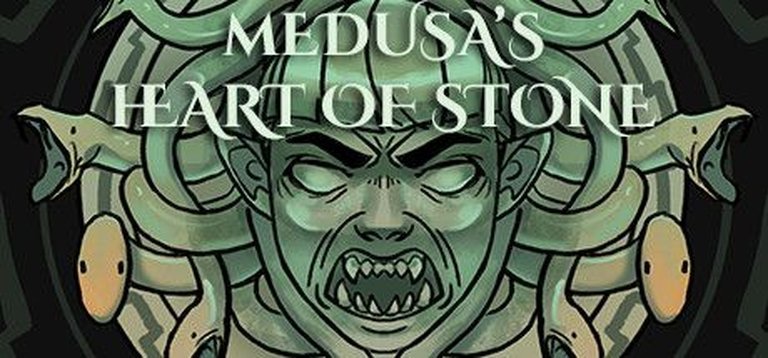
Description
Medusa’s Heart of Stone Chapter 01 is a 2D narrative-driven adventure game set in Classical antiquity, drawing from Greek mythology. Players control Medusa, a gorgon exiled to a distant isle after being transformed by Athena, as she embarks on a quest to find a soulmate and prove that even a monster can be loved. The game blends action sequences, puzzles, and quests with a lighthearted yet emotional storyline, featuring interactions with gods and mythological characters while using Medusa’s petrifying powers to navigate challenges and defy both mortals and deities.
Gameplay Videos
Where to Buy Medusa’s Heart of Stone Chapter 01
PC
Medusa’s Heart of Stone Chapter 01 Guides & Walkthroughs
Medusa’s Heart of Stone Chapter 01: A Fractured Myth of Loneliness and longing
Introduction: A Gorgon’s Quest for Connection in a Crowded Digital Landscape
In the vast, often-saturated ecosystem of indie games, few premises are as instantly compelling yet historically underexplored as that of Medusa’s Heart of Stone Chapter 01. Here is a game that dares to center its narrative on one of mythology’s most iconic monsters, not as a boss to be slain, but as a protagonist yearning for a love that her very form seems to forbid. Released in March 2022 by the enigmatic Tired Moon Studios and published by Milpitians, this title presents itself as a “2D narrative driven game with action sequences, puzzles and quest interspersed throughout.” Our thesis is this: Medusa’s Heart of Stone is a fascinating, deeply flawed, and ultimately poignant artifact of a specific indie development ethos—one that prioritizes a subversive, character-centric mythological retelling over technical polish and structural completeness. It is a game that achieves emotional resonance through its core concept and tonal ambition, even as its systems and execution reveal the significant constraints under which it was created. Its legacy is not one of widespread influence, but as a case study in the challenges of delivering a promised “narrative-driven” experience when foundational gameplay loops and project scope remain unstable.
Development History & Context: The “Changing Circumstances” of a One-Man (or Small Team) Vision
The studio behind the game, Tired Moon Studios, is virtually invisible in the broader industry landscape. No other credited titles appear in major databases, suggesting this is either a nascent solo developer or a very small collective working under a pseudonym. This context is crucial. The game was developed and released on Windows with minimal fanfare, a free-to-play model on Steam, and a stated release date of March 15, 2022.
The most telling piece of development history is not a technical milestone but a caveat buried in the Steam store description: “NOTE: Originally, we planned to make this game three chapters long. Due to changing circumstances, we have decided to release the first chapter as a stand alone game. We hope you enjoy what we were able to finish.” This admission is the key to understanding the title. It frames the entire experience as an unfinished fragment, a first act cleaved from a larger, now-shelved vision. The “changing circumstances” are left deliberately vague—they could encompass anything from funding shortages, developer burnout, shifts in personal life, or a reassessment of the project’s viability. What is clear is that the game exists in a state of narrative and structural incompleteness.
Technologically, the game operates within the common constraints of the modern 2D indie space. It uses a side-view perspective and direct control interface. The art direction, as described by user tags and screenshots, employs a hand-drawn, cartoon, comic book, and anime aesthetic—a style that is accessible, expressive, and relatively achievable for a small team without 3D modeling resources. The choice of Classical antiquity / Fantasy setting is both a narrative strength and a potential pitfall; it leverages familiar mythological iconography while attempting a deeply personal reinterpretation. The gaming landscape of 2022 was crowded with narrative indies (Night in the Woods, Disco Elysium veterans, a boom in visual novels). Medusa’s Heart of Stone entered this arena not with a mechanical innovation, but with a premise that promised a fresh emotional lens on an ancient story.
Narrative & Thematic Deep Dive: The Monster as Heartbroken Heroine
The narrative premise, as delivered in the official blurb, is deceptively simple yet potent: “Medusa was transformed into a gorgon for defiling Athena’s temple while serving as a priestess there. Condemned to spend the rest of her life on a distant isle, she is determined to find a soulmate even though most of her visitors wish to chop off her head!” This immediately subverts the traditional hero’s journey. Instead of Perseus, we get the monster. The central theme is redemption and the longing for intimacy despite monstrousness.
The plot of Chapter 01 is, by necessity of its truncated status, a prologue. It follows Medusa’s initial steps off her cursed isle, embarking on a quest to “prove that even a gorgon can be loved.” The narrative is marketed as “both deep and lighthearted,” suggesting a tonal balancing act between the tragic weight of her curse and moments of humor or whimsy. The famous, bizarre directive to “Talk to your hair” is a profound narrative and thematic choice. It personifies her serpents, turning them from a monstrous feature into companions, confidants, or perhaps facets of her own psyche. This internalization of the “monster” is a brilliant stroke—it externalizes her loneliness and gives her someone (or something) to talk to on her isolated isle, immediately establishing a unique character dynamic.
The quest structure implies interaction with “other strange and interesting characters from Greek mythology,” but the provided sources do not name them. We can infer encounters with gods (Athena, perhaps Poseidon?), heroes, and mundane mortals. The core conflict is twofold: external (mortals who want her dead, gods who may be indifferent or hostile) and internal (her own创伤, her desire for connection vs. her defensive, petrifying nature). The phrase “Your actions will determine your fate” points to a branching narrative or at least a morality/relationship system, aligning the game with visual novel and dating sim tags. This suggests the “quests” are less about combat and more about conversation choices, building (or destroying) potential relationships. Thematically, the game explores otherness, the social construction of monstrosity, and the vulnerability required for love. It asks: can a being defined by her power to turn others to stone ever be seen as soft, as worthy of love? The “heart of stone” becomes a metaphor both for her literal curse and the emotional armor she may need to shed.
Gameplay Mechanics & Systems: Promise, Glitches, and the Weight of Incompletion
Gameplay is described as a mix of action, puzzle, and quest elements within a 2D side-scroller framework. The primary mechanical hook is the use of your gorgon powers to turn things into stone. This petrification ability is presumably used for both combat (turning enemies to stone) and puzzles (turning objects into stone to create platforms, weigh down mechanisms, etc.). However, the Steam community discussions reveal significant friction with these systems.
- Combat: User “Gummie.Shark” asks for “combat” tips”, stating “I can’t get anywhere in the game because i keep dying to the soldiers in the beginning, i try to turn them to stone but i’m way too slow, even if i move while doing it, am i missing something that makes this easier?” This is a critical data point. It suggests the combat implementation is slow, unresponsive, or poorly telegraphed. The petrification mechanic, which should be a signature power, feels unwieldy and insufficient against basic foes, creating a frustrating difficulty spike early on. This points to a lack of balancing, unclear UI feedback (is the power charging? what’s its range?), or poor enemy encounter design.
- Quest Progression & UI: The most detailed critique comes from user “PHOBIE” in a “Demo Feedback” post: “Quest transitions are iffy in that we need to deplete all conversation options, by clicking on people repeatedly to see if they still have something to say, otherwise the quest will not progress. This happened for dialogue with Oracle where I had to walk to the chest supposedly containing an item multiple times only to find an empty inventory. This also happens with milk farmer…” This describes a fundamental flaw in the quest/item log and dialogue system. It indicates a poorly implemented state-tracking system where NPCs do not properly flag dialogue as complete, forcing tedious, non-intuitive player behavior (click-spamming) to advance. The “empty inventory” bug points to issues with inventory management and quest item spawning/persistence. These are not minor polish issues; they are core systems failures that break the fundamental “action → consequence” loop of an adventure game.
- Progression & Character Systems: Beyond the petrification power, there is no mention in the sources of traditional RPG stats, skill trees, or equipment. This aligns with a narrative-first, interactive fiction design. “Character progression” is likely tied to relationship meters with various mythological figures (romance paths hinted by the “Dating Sim” tag) or “fate” choices that alter the story branch. The “Story Rich” and “Conversation” tags reinforce this.
- Puzzles: Mentioned in the blurb but undetailed in sources. They are presumably environmental puzzles requiring the strategic use of petrification.
In summary, the gameplay systems appear to be a jumble of ambitious ideas executed with significant technical roughness. The petrification power is conceptually strong but mechanically flawed in combat. The quest and dialogue systems, the lifeblood of a narrative game, are described as broken and illogical. This creates a dissonance: a game deeply invested in story and relationships is hampered by the very interfaces meant to deliver that story.
World-Building, Art & Sound: Aesthetic Cohesion Amidst Technical Sparsity
The game’s world is Greek mythology, reimagined through a personal, emotional lens. The setting is a “distant isle” (presumably the real-life location of Medusa’s exile, often cited as Sarpedon or an island near the Hellespont) and the surrounding classical landscape. The world-building is conveyed not through sprawling exploration, but likely through dialogue, character interactions, and the occasional environmental storytelling as Medusa journeys.
Visually, the game commits to a specific, cohesive style: hand-drawn, cartoon, anime, comic book. This is a smart choice for an indie project. It allows for expressive character animation (especially for Medusa’s serpentine hair), a clear visual language, and an aesthetic that can sidestep the uncanny valley of 3D realism. The art likely emphasizes Medusa’s design—balancing the monstrous (snakes, scales, eyes) with a poignant, humanized expressiveness. The “cartoon” and “anime” tags suggest a degree of stylization, perhaps with large emotional eyes for Medusa when her snakes are not obscuring them, or exaggerated reactions from other characters. The screenshots available on various store pages (though not embedded here) would show this flat, 2D, likely color-rich aesthetic. The world is probably less about epic scale and more about intimate, vignette-like locations: a village square, a god’s temple, a forest path.
Sound design is the great unknown. The store page claims “Full Audio” and English subtitles/interface, implying voice acting and a soundtrack. For a small indie, full voice acting is a significant undertaking. If present, its quality is unreviewed in the sources. The soundtrack would be crucial in setting the “deep and lighthearted” tone—perhaps using traditional Greek instruments (lyre, pan flute) for a mythic feel, mixed with more modern, emotional melodic lines for Medusa’s personal moments. The lack of any comment on audio in user reviews might suggest it is functional but unremarkable, or simply that gameplay issues overshadowed auditory impressions.
The atmospheric contribution is likely one of contrast: the beautiful, serene world of classical antiquity versus the tragic, isolated figure at its center. The art style softens the mythology, making it approachable, which supports the game’s goal of eliciting empathy for the monster.
Reception & Legacy: A Cultish Curiosity with Critical Pans and Devoted Followers
At launch and in the years since, Medusa’s Heart of Stone Chapter 01 has existed in a state of extreme obscurity. The MobyGames entry shows it is “Collected By 3 players” and has no MobyScore due to an absence of critic reviews. Major outlets like IGN and Kotaku have listings but no reviews or news, merely metadata scrapes. This is the reality for thousands of Steam indies.
Its user reception on Steam is its primary (and almost sole) metric: a “Player Score of 88/100” from 43 total reviews, with 38 positive and 5 negative. This is a strongly positive ratio, but the absolute sample size is microscopic. The “88% of 43 user reviews… are positive” metric is promising but cannot be extrapolated to indicate broad success. The positive reviews almost certainly praise the premise, the heart of the narrative concept, the characterization of Medusa, and the unique “talk to your hair” idea. They likely celebrate seeing a sympathetic Medusa.
The negative reviews and community discussions reveal the cracks. The persistent “Has the game been abandoned?” thread (as of August 2024) is a damning indicator. The lack of activity on the Discord and Twitter, combined with the admitted truncation of the project, leads players to believe development has ceased. This transforms the game from an “unfinished Chapter 1” to a permanently incomplete artifact. The combat frustration and quest-glitch reports from early 2022 and 2024 show that even the existing content is marred by broken systems, poisoning the experience for a portion of its player base.
Its legacy is primarily as a cautionary tale and a curio:
1. The “Truncated Narrative” Precedent: It joins the ranks of games like King’s Quest: Mask of Eternity (unfinished story) or episodic projects that collapsed after one episode (The Black Mirror 3 was completed, but many episodic models fail). It illustrates the danger of selling a “Chapter 01” without a guaranteed path to completion.
2. Narrative Ambition vs. Mechanical Execution: It exemplifies the indie struggle where a brilliant story premise cannot compensate for clunky, frustrating gameplay systems. A “narrative-driven” game is still a game; if interacting with its systems is a chore, the narrative cannot land.
3. Mythological Reclamation: While not influential in a mainstream sense, it is part of a small wave of works (like the God of War reboot’s more nuanced take, or novels like Circe) that seek to humanize mythological monsters. Its specific focus on Medusa’s romantic loneliness is unique.
4. The “Curator’s Curse”: Its presence on MobyGames, Steam, and IGN databases ensures it will be digitally preserved as a historical footnote—a free, weird, heartfelt, and broken love letter to a gorgon.
Conclusion: A Statue of Unfulfilled Potential
Medusa’s Heart of Stone Chapter 01 is a game of profound dichotomies. It is a game with a heart of gold and a mechanics of stone. Its greatest strength—a deeply empathetic, revisionist take on Medusa as a lonely soul seeking love—is almost entirely undermined by its greatest weaknesses: unpolished combat, broken quest logic, and the permanent shadow of its own incompleteness.
From a historian’s perspective, its value lies not in its execution, but in its conceptual bravery and its transparent failure. It tells us about an indie developer’s dream: to take a classic myth, flip its perspective, and craft an interactive story about vulnerability. It also tells us about the brutal realities of scope, resource management, and the critical importance of robust, intuitive systems in a narrative game. The “changing circumstances” that birthed this standalone chapter are the unspoken protagonist of its own story.
Its place in video game history is secure, but it is a niche one. It is a cult artifact for those fascinated by mythological retellings and the behind-the-scenes struggles of indie dev. It is a warning about the perils of episodic release without contingency plans. And it is a tragic “what could have been”—a first chapter that, with proper refinement and completion, might have been remembered as a small, essential classic in the subgenre of myth-based visual novels. As it stands, it is a broken, beautiful statue of a game: recognizably human in its yearning, but cracked and incomplete in its form. We can only hope the developers find peace with their “changing circumstances,” and that Medusa, in some digital afterlife, eventually finds the soulmate she sought. For the player, the journey is poignant but ultimately frustrating, a testament to the fact that even a heart full of stone-cold love can’t compensate for a game that doesn’t quite work.