
- Release Year: 2018
- Platforms: Macintosh, Windows
- Publisher: Anawiki Games
- Developer: Anawiki Games
- Genre: Puzzle
- Perspective: 1st-person
- Game Mode: Single-player
- Gameplay: Cards, Tiles
- Setting: Fantasy
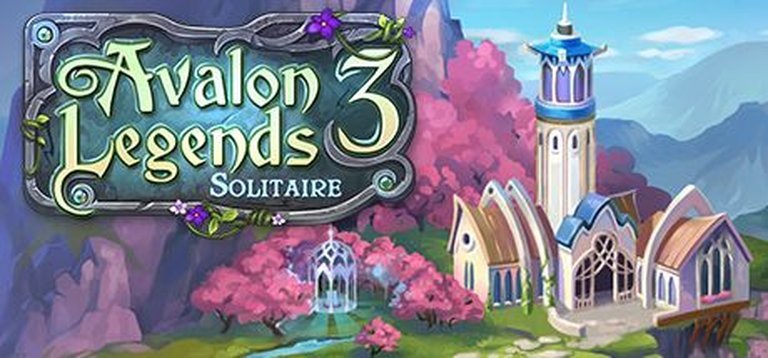
Description
In ‘Avalon Legends Solitaire 3,’ you play as Royal Druid Mallard in a fantasy rendition of Avalon and Camelot. Tasked with securing a lasting alliance between King Arthur and the Queen of the Elves, you must use the Druids’ magical card-weaving to solve challenging solitaire puzzles. By placing cards in the correct sequence, you cast spells of growth and healing to gradually construct a magnificent City of the Elves, all while navigating a great storyline across 250 levels, utilizing numerous power-ups, and building 39 different structures to protect both realms.
Gameplay Videos
Where to Buy Avalon Legends Solitaire 3
PC
Avalon Legends Solitaire 3 Cracks & Fixes
Avalon Legends Solitaire 3 Mods
Avalon Legends Solitaire 3: A Casual Card Odyssey Through Arthurian Legend
Introduction: The Solitaire Standard-Bearer in a Crowded Market
In the vast ecosystem of digital gaming, where blockbuster AAA titles and innovative indie darlings often command the spotlight, there exists a quiet, persistent cornerstone: the casual solitaire game. Within this niche, Anawiki Games’ Avalon Legends Solitaire 3 (2018) represents the apotheosis of a specific, enduring formula—a polished, content-rich, and mechanically iterative entry in a long-running series. This review posits that Solitaire 3 is not merely another card game but a significant artifact of the “casual puzzle” genre’s maturation in the late 2010s. It exemplifies a design philosophy that prioritizes extensive, accessible content wrapped in a cohesive, if lightly sketched, fantasy narrative, serving as a benchmark for what a premium, no-nonsense solitaire experience can offer. To evaluate it is to examine the successful execution of a well-established template and to consider its role as a bridge between classic PC casual games and the modern digital storefront era.
Development History & Context: The Polish Puzzle Vanguard’s Refined Approach
-
The Studio and Its Vision: Anawiki Games, identified through MobyGames credits as a Polish developer, is not a household name but a consistent purveyor of polished casual and puzzle titles. The credits for Avalon Legends Solitaire 3—listing Roman Budzowski as Team Leader and Designer, alongside Michał Rawdanowicz (Programming) and Oskar Smokowski (Design/Additional Programming)—reveal a tight-knit, multi-disciplinary core team. This structure is typical of small studios that value direct creative control and iterative design. The decision to create a third mainline entry (following 2011’s Avalon Legends Solitaire and 2015’s Avalon Legends Solitaire 2) signals a commitment to a profitable franchise, refining rather than reinventing the core loop based on player feedback and technological allowance.
-
Technological Constraints and Artistic Direction: The game’s specifications are tellingly modest: a 156MB download size, support for Windows XP/Vista/7/8/10 and macOS, and requirements of a mere 1 GHz processor and 1GB RAM. This places it firmly in the “accessible to almost any PC” category, a deliberate choice to maximize its potential audience. The “high-res graphics” touted in marketing are thus relative; they represent clean, professionally rendered 2D assets (credited to Sebastian Brzuszczak, Francisco Etchart, and RetroStyle Games) optimized for performance over spectacle. The fixed/flip-screen perspective and point-and-select interface are genre staples, chosen for their intuitive clarity and minimal input friction.
-
The Gaming Landscape of 2018: Released in June 2018, Solitaire 3 entered a casual gaming market that had largely migrated to mobile and browser platforms, but where a robust PC market for premium, ad-free puzzle experiences persisted on Steam and direct sites like itch.io. It competed not with narrative RPGs but with other “Solitaire Plus” titles like those from Big Fish Games. Its positioning was clear: a substantial, story-lite, mechanically deep solitaire game for players who had outgrown Microsoft Solitaire Collection but desired a focused, premium product without free-to-play monetization. The price point of $9.99 (or local equivalents like 8,19€ on Steam) was standard for a mid-tier casual game, promising dozens of hours of content.
Narrative & Thematic Deep Dive: Magic, Diplomacy, and City-Building as Metaphor
The narrative of Avalon Legends Solitaire 3 is not a driving force but a functional, atmospheric scaffold. It is delivered via brief text interludes and character portraits, serving primarily to contextualize the player’s actions and provide a sense of progression.
-
Plot Synopsis: The game is set in a post-Camelot period of “peace” that is inherently fragile. The player assumes the role of the Royal Druid Mallard, a canonical or newly invented figure tasked with a diplomatic mission: to secure a mutual defense pact between King Arthur’s Camelot and the reclusive Queen of the Elves. The core obstacle is the elves’ nomadic nature; to establish reliable communication and alliance, they must be persuaded to build a permanent city—the “Elven City” central to the gameplay meta-progression.
-
Characters and Dialogue: Character depth is minimal. Mallard is a blank-slate protagonist, a conduit for the player. King Arthur and the Elven Queen are idealized archetypes—the noble human king and the elusive fey sovereign—mentioned more than seen. The “great characters” promised in the store blurb likely refer to various elven citizens or hero units the player can “recruit” (as seen in achievement titles like “Guild Master” and “Recruiter”), who provide small bonuses but lack individual narrative arcs. Dialogue is utilitarian, advancing the plot from one building milestone to the next.
-
Underlying Themes: Thematically, the game explores order versus chaos, growth versus stasis, and the fusion of disparate cultures. The solitaire card-play represents the “magic” of the druids—a systematic, rule-based process (placing cards in the correct order) that channels natural forces (growth, healing) to achieve a structured outcome (building the city). The elves, representing wild, untamed nature, must be “civilized” through this structured magic. This is a subtle commentary on the player’s own activity: engaging in the orderly, repetitive task of solitaire to create something permanent and complex (the city). The theme of “protection” is dual-layered: protecting Avalon’s wilds from future threats and protecting the delicate social order of Camelot through proactive diplomacy.
Gameplay Mechanics & Systems: The Engine of Engagement
This is the game’s core strength and primary innovation within its subgenre. The systems are layered, creating a compelling “one-more-level” loop.
-
Core Solitaire Loop: At its heart is a variant of classic solitaire (likely a golf or pyramid-style game, based on achievement terminology like “combo,” “perfect finishes,” and card colors). The player must clear a tableau of cards by matching them to a foundation, with specific rules governing valid moves. The challenge comes from managing the draw pile, using special cards wisely, and achieving perfect clears for bonuses.
-
The City-Building Meta-Game: This is the defining feature that elevates Solitaire 3 above a simple card game. Each successfully completed solitaire level awards resources: Gold Coins, Food, and Building Materials (as evidenced by achievements like “Pot Scrubber,” “Tradesman,” “Tax Collector”). These resources are spent on constructing 39 distinct buildings in a separate city view. Each building provides a permanent, passive benefit—for example, increasing resource yield per level, unlocking new power-ups, or providing other strategic advantages. This transforms each solitaire session from an isolated puzzle into a productive step toward a larger, visible goal. The act of “persuading elves to settle” is perfectly mirrored in the player’s investment of resources into city structures.
-
Power-Ups and Special Cards: The “32 unique power-ups” are crucial for managing difficulty and providing player agency. Achievements reference specific types: Magic Wand, Sword, Sickle, Shuffle, Hourglass, Color Changer, Blessing, Talisman, Shield. This suggests a toolkit for direct intervention (e.g., Sword to remove obstacles, Sickle to harvest resources instantly, Hourglass for extra time, Color Changer to alter a card’s suit). Their acquisition is tied to city-building and in-level resource gathering, creating a satisfying economy where strategic use of power-ups fuels long-term progression.
-
Progression and Difficulty: The “250 levels” are the raw content. The “two difficulty modes” (Normal and Hard) cater to different player appetites. The achievement “Challenge Seeker” for completing the game on hard mode confirms its significance. Progression is gated not just by level completion but by resource accumulation for city construction, creating a multi-axis progression curve that prevents blatant grinding—you must play well to earn resources efficiently.
-
UI and Innovation/Flaws: The interface is described as “point and select,” indicating a traditional, accessible design. The major innovative system is the seamless integration of the solitaire economy with the city-building progression. A potential flaw, hinted at in a Steam Community post asking about a “mini-game” for achievements (“Friend of the Elves”), is the possible inclusion of a separate, less-integrated mini-game as a late-game unlock, which could feel tacked-on. Another community-reported issue is the potential for a repetitive “annoying pop-up for settings” (itch.io comment by BarbaraKW), suggesting minor UX polish issues.
World-Building, Art & Sound: An Efficient, Evocative Package
-
Setting and Atmosphere: The world is “Avalon,” a term deeply embedded in Arthurian and Celtic mythos, repurposed here as a magical realm protected by druids and elves. The atmosphere is one of serene, mystical woodland and elven architecture. The narrative’s focus on diplomacy and protection, rather than epic war, sets a tone of cautious optimism and stewardship. The setting effectively supports the relaxing core gameplay; there is no grimdark urgency, only a calm, persistent task.
-
Visual Direction: “High-res graphics” likely means clean, vector-style or high-quality painted 2D art for cards, backgrounds, and building sprites. The “fixed/flip-screen” perspective suggests static, beautifully illustrated backgrounds for each level, changing as the player progresses through different regions of Avalon. The city-building view provides a visual payoff: watching the empty plot fill with elven structures is a key dopamine trigger. The art direction prioritizes clarity (card faces must be readable) and cohesive fantasy aesthetics over realism or technical showmanship, perfectly suiting its purpose.
-
Sound Design: Music by Matthew Pablo (a prolific composer for casual games) and sound effects by Pablo and Roman Budzowski indicate a focused, integrated audio experience. The description “immerse you in Avalon’s mysteries” suggests a soundtrack of gentle, melodic Celtic-inspired tunes using harps, flutes, and soft choirs, with subtle, satisfying sound cues for card moves, resource collection, and building completion. The audio design’s primary function is to reinforce the game’s calming, rewarding loop without becoming intrusive.
Reception & Legacy: A Quiet Success in a Quiet Genre
-
Critical and Commercial Reception at Launch: Critical coverage of Avalon Legends Solitaire 3 appears virtually non-existent in traditional outlets (Metacritic lists “no user reviews yet” as of the source data). This is typical for a game in its niche. Its commercial reception is better gauged through storefront data. On Steam, it holds a “Very Positive” rating with 80% of 26 reviews being positive (Steambase data). The price has fluctuated between ~$4.09 and $8.19, indicating standard sale cycles. Being part of multiple “Solitaire Legends” and “Avalon” bundles (offering -17% to -30% discounts) shows Anawiki’s strategy to leverage its back catalog.
-
Player Community and Feedback: The Steam Community Hub is lightly used, with discussions focusing on practical concerns: inability to find a mini-game achievement (“where is the mini game?”), game launch issues on some systems (“Game doesn’t run”), and questions about difficulty modes. One particularly vivid user review (translated from Korean) lambasts a mandatory “brick-breaking” mini-game as a frustrating interruption, calling it a “hostage” minigame. This is a critical data point, suggesting a design misstep where a bonus feature felt punitive rather than optional. The overall positive score indicates these issues did not overwhelm the core experience for most players.
-
Evolution of Reputation: The game’s reputation has likely stabilized as a solid, if unspectacular, entry in a player’s casual library. Its “Must-play for solitaire fans!” claim is an aspirational marketing line; its more accurate position is as a “must-try” for enthusiasts of the solitaire-plus genre, specifically those who enjoy progression meta-games. Its longevity is tied to its content volume (250 levels) and the replayability offered by the city-building and two difficulty modes.
-
Influence on the Industry: Avalon Legends Solitaire 3 did not revolutionize the genre. Instead, it represents the refinement and package-deal apex of a sub-trend: the premium, narrative-dressed, progression-heavy solitaire game. Its influence is indirect, demonstrating that a small studio could sustain a trilogy by consistently delivering expanded versions of a proven concept. It shares DNA with titles like Royal Solitaire or Fairway Solitaire, but its city-building layer is a more direct predecessor to the extensive meta-progression systems now common in mobile match-3 games. It stands as evidence that there was a steadfast market for this model on PC in the late 2010s.
Conclusion: A Niche Perfected, But Not Transformed
Avalon Legends Solitaire 3 is a masterclass in competent, confident niche game development. It takes the timeless appeal of solitaire and buttresses it with a compelling, if simple, resource-management meta-game that provides a tangible sense of growth and accomplishment over hundreds of levels. Its Arthurian-fantasy shell is serviceable and pleasant, its presentation clean and functional, and its value proposition—250 levels, 39 buildings, 32 power-ups for $10—is exceptionally strong.
However, its historical significance lies not in innovation but in execution and consolidation. It does not challenge the player’s conception of what a card game can be; it instead perfects a specific, beloved formula. The minor UX flaws and the divisive mandatory mini-game are blemishes on an otherwise smooth surface. For historians, it is a snapshot of the casual PC puzzle genre in a transitional period—too complex and large for mobile casuals, too simple and unassuming for core gamers, but perfectly pitched for a dedicated audience seeking a relaxing, lengthy, and mentally engaging diversion.
Final Verdict: Avalon Legends Solitaire 3 is an excellent, if safe, entry in its series and genre. It succeeds as a premium solitaire experience by virtue of its sheer, deliberate content volume and its clever city-building progression hook. While it lacks the narrative depth or mechanical daring to claim a spot among gaming’s greats, within the specific domain of puzzle games, it stands as a well-crafted, satisfying, and representative benchmark of a enduring design philosophy: that sometimes, the most powerful magic is found in the simple, satisfying act of placing one card on top of another, again and again, to build something beautiful.