
- Release Year: 2021
- Platforms: Linux, Macintosh, Windows
- Publisher: GameRealmMadness
- Developer: GameRealmMadness
- Genre: Action
- Perspective: Top-down
- Gameplay: Shooter
- Setting: Fantasy
Description
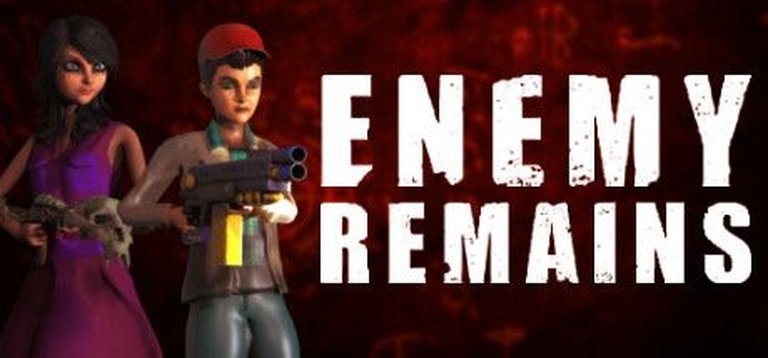
Enemy Remains is a top-down horror shooter set in a dark fantasy world, where players engage in fast-paced, frantic combat against eerie enemies. Developed by GameRealmMadness, the game features modern 3D visual effects such as real-time lighting, physics simulations, and particle effects to enhance the creepy atmosphere, with a focus on polished gameplay and intense action in survival-style scenarios.
Gameplay Videos
Where to Buy Enemy Remains
PC
Enemy Remains Free Download
Enemy Remains Guides & Walkthroughs
Enemy Remains: A Cult Indie Horror Shooter Forged in the Fires of Pragmatism
Introduction: The Ghost in the Machine
In the vast, overcrowded graveyard of Steam’s Early Access library, certain titles stand out not for blockbuster sales or metacritic scores, but for the raw, unfiltered devotion of their creators. Enemy Remains, the 2021 release from the sole pseudonymous developer Harri Jokinen under the GameRealmMadness banner, is one such title. It is a game that wears its struggles on its sleeve—a top-down horror shooter that announced its arrival not with a cinematic trailer but with a series of earnest, meticulously detailed dev diaries. These posts, more than any critic’s words, form the backbone of its legacy. This review argues that Enemy Remains is a fascinating, deeply flawed, and ultimately honest artifact of indie development: a game that sacrificed expansive narrative and polish for the sake of a singular, brutally focused gameplay loop, embodying a specific late-2010s/early-2020s ethos of “just get it done.” Its value lies less in revolutionary mechanics and more in its transparent documentation of the compromises, breakthroughs, and sheer tenacity required to build a 3D game almost entirely alone.
Development History & Context: From 2D Dreams to 3D Reality
The Studio & The Vision: GameRealmMadness is, for all intents and purposes, Harri Jokinen. The studio is a one-person operation (with crucial freelance art support) stemming from a lineage of smaller, often 2D titles like Kalaban (a top-down horror game) and Area 51 Defense. The explicit vision for Enemy Remains was a “Diablo with guns” experience—a loot-driven, top-down, isometric perspective adventure fused with survival horror. This ambition immediately collided with reality.
Technological & Resource Constraints: Jokinen’s dev diaries are masterclasses in constraint management. He began learning Unity in 2017 with zero C# experience. The initial goal was a solo project, but he quickly realized the scope was untenable. His key insight, articulated in the January 2021 “Polishing the Game” diary, is crucial: “developing a full 3D experience in Unity would take at least twice, if not three times as long as making a 2D game with Clickteam Fusion.” Faced with a projected 2023 completion date for a full RPG-lite experience and uncertain personal funding, he made a pivotal decision: kill the darlings. Quest systems, inventory screens, friendly NPCs, and heavy narrative integration were jettisoned. The game became a pure “exploration shooter.” This wasn’t a failure of vision but a brutal, necessary course correction—a move from ambitious to completable.
The Gaming Landscape: Enemy Remains entered Early Access in February 2021, during a peak period for top-down co-op horror shooters. Titles like Ready or Not (though different in perspective) and a wave of twin-stick survival games were popular. Its direct predecessor, Kalaban, had a cult following but was a 2D pixel-art game. Enemy Remains represented a significant, risky leap into fully 3D environments with real-time lighting and physics, all on an indie budget. Its closest conceptual siblings were games like The Escapists (for its simple, direct UI ethos) or older Doom clones, but with a atmosphere-first design.
Narrative & Thematic Deep Dive: The Story in the Margins
The official Steam description provides the sole canonical plot: a protagonist returns to their childhood hometown, now plagued by animal mutilations, unholy rituals, and mutant wildlife, to investigate and stop a cult. This is a B-movie horror plot through and through—a competent but unremarkable framework.
Thematic Execution: Where the narrative reveals itself isn’t through cutscenes or dialogue trees (which are explicitly absent as per design) but through environmental storytelling and item descriptions. The game’s world—locations like the “Corruption Plant,” “Forsaken Forest,” “Slaughterfarm,” and “Research Lab”—tells a story of a mundane, decaying Americana corrupted by a surreal, Lovecraftian force. Notes, logs, and the grotesque visuals of enemies (Mole Mutants, Manglers, Thinkers) imply a ritualistic transformation of the town and its inhabitants.
The Absence of Convention: The decision to forgo traditional narrative delivery is the game’s most defining thematic choice. Jokinen states: “Nothing comes between you and the action; no unskippable cutscenes, dialogue windows, inventory screens or menus.” The story is not told; it is inferred from the world’s decay. This creates a sense of eerie isolation, aligning with survival horror’s “lone wolf” tension, but it also renders the narrative thread incredibly thin. The player is a vector of violence moving through set pieces with minimal motivation beyond “clear the area.” This will be a major point of critique in the Gameplay section, but as a narrative device, it reinforces the game’s punk, no-frills ethos: The story is the carnage. The remains are the message.
Gameplay Mechanics & Systems: Punishing Simplicity
Core Loop: Enemy Remains is a top-down twin-stick shooter (though mouse/keyboard is primary) with a survival horror bent. The loop is: enter a large, arena-like map -> locate key objective (often a lever or switch) -> fight waves of enemies -> activate objective -> survive exit sequence -> repeat. There is a light “skill tree” system unlocked by gaining XP, allowing minor upgrades to health, stamina, or weapon proficiency, but it is functional, not transformative.
Combat & Enemy Design: The combat is the undeniable star, built on the principles of pressure and positioning. Enemies are aggressive, with fast movement and predictable but punishing attack patterns.
* Mole Mutants: The grunts, numerous and fast, designed to overwhelm.
* Manglers: Tough, shielded foes that require focused fire or environmental traps.
* Thinkers: Stationary, firing-projectile enemies that control space.
* Fiends & Bosses: Variants that introduce new mechanics (explosions, summoning).
The weapon sandbox is lean: pistol, shotgun, SMG, rifle, flamethrower, and tools like mines and a laser trap. Ammo is scarce, forcing tactical switching. The environment is a weapon: physics-enabled objects can be pushed, barrels explode, and laser traps/mines can be used to funnel or eliminate groups. This interactive space is the game’s most successful systemic feature.
Flaws of Focus: The dedication to simplicity exposes weaknesses.
1. Repetition: Maps recycle assets and enemy placements. The “carnage” becomes homogenous.
2. Difficulty Spike: As documented in the patch notes, the original difficulty was brutal. A patch (1.1, March 2022) was needed because “only 4.1% of players on Normal difficulty in single-player have been able to finish the game.” The fix made basic enemies far weaker, a tacit admission that the initial balance was skewed towards masocore players at the expense of accessibility.
3. UI & Progression: The UI is minimalist to a fault. The “update” (skill point allocation) menu is clunky, and the lack of an inventory or log system means story context is easily missed. The XP/leveling system feels inconsequential, a veneer of RPG mechanics on a pure action game.
4. Boss Fights: Early boss AI was “hurried,” requiring post-launch patches to make them tougher and fix sequence-breaking bugs (e.g., killing a boss with a pistol vs. gibbing it). They remain simple “dance and shoot” affairs, lacking the strategic depth suggested by the environmental traps.
World-Building, Art & Sound: The Atmosphere of Limitations
This is where Enemy Remains transcends its mechanical simplicity, largely due to focused environmental artistry and sound design.
Visual Direction & Setting: Using Unity, the team creates a distinct “mundane vs. surreal” aesthetic. Ordinary locations—a small town, a farm, a purification plant—are invaded by grotesque生物 mechanical hybrid creatures and eerie lighting. The color palette is muddy, with oppressive use of greens, browns, and sickly yellows. The Forsaken Forest and Corruption Plant are standout environments, dense with detail meshes (rocks, grass, industrial signage) added in the 0.7.1 update to combat early “emptiness.” The low-poly character models for enemies (especially the revised Mole Mutant) are effective in their crudeness, enhancing the body-horror feel. The visual style is not “pretty” but texturally convincing.
Sound Design: This is a transformative element. The journey from Jokinen’s “shoddy” placeholder tracks to the work of professional composer Tuukka Kuusisto (Arctic Sounds) is the single biggest upgrade the game received. The soundtrack is a blend of droning, atmospheric ambient tracks and pounding, rhythmic combat music that perfectly underscores the tension and release of gameplay. Gun sounds are “punchy” (as the dev strove for), and enemy roars, environmental creaks, and the devastating crunch of a successful shotgun blast are all crisp and satisfying. The soundscape does heavy lifting in creating a sense of dread and weight.
Reception & Legacy: The Quiet After the Storm
Critical & Commercial Reception: There are no professional critic reviews on Metacritic. Its reception is purely that of a small indie on Steam and Itch.io. On Steam, it holds a “Mostly Positive” rating (71/100 on Steambase from ~21 reviews as of 2025), a solid but not spectacular score. Common praise in user reviews highlights the intense, satisfying combat, good atmosphere, and value for a solo/couch co-op experience. Common criticisms point to repetition, a thin “story,” and occasionally frustrating enemy spawns or difficulty.
Commercial Performance: Exact sales figures are unknown, but the game’s status is that of a slow-burn cult title. It was briefly discounted to 75% during the Steam Remote Play Together event. Its continued presence on Itch.io (with a “name your own price” tier) and Humble Bundle suggests modest, sustainable sales rather than a breakout hit. The developer’s own update history—spanning from Early Access in Feb 2021 to the final 1.0 version in Feb 2022, and a security patch as late as Oct 2025—indicates a dedicated, if small, player base providing feedback that warranted sustained support.
Influence & Industry Place: Enemy Remains will not be cited in GDC talks or cited in academic papers. Its influence is hyper-local, within the niche of solo-deviloped Unity horror shooters. It serves as a proof-of-concept for a specific development philosophy: strip the RPG/Inventory/Complex Narrative elements down to their skeletal frame and pour all resources into making the moment-to-moment action and environmental interaction as tight and visceral as possible. It is a direct descendant of the arcade sensibility of Kalaban, stripped of 2D constraints. Its legacy is as a cautionary tale about scope and a celebratory case study in perseverance. The dev diaries themselves are a more significant contribution to game dev discourse than the final game, offering a transparent look at the grind of polishing, the pain of balancing, and the hard truths of self-publishing (“most publishers… have turned out to be literal scam artists”).
Conclusion: A Defiant, Imperfect Gem
Enemy Remains is not a great game by conventional metrics. Its narrative is skeletal, its repetition evident, and its systems sometimes feel thin. Yet, to dismiss it would be to miss its profound integrity. It is a game that knew exactly what it was and what it was not. It is not Diablo with guns; it is “a fast-paced and frantic action title” where “nothing comes between you and the action.” This laser focus on the core combat-loop, supported by surprisingly potent environmental interaction and a masterfully upgraded audiovisual presentation, creates an experience that is often genuinely thrilling in short bursts, especially with a partner in its excellent couch co-op mode.
Its true significance is historical and pedagogical. It stands as a monument to the “just build it” mentality of solo and micro-team indies in the 2020s. It demonstrates the painful but necessary act of feature culling in service of shipability. It shows the dramatic difference a single professional composer or artist can make. And it provides an unvarnished record of the post-launch grind—balancing difficulty, fixing physics bugs, adding “bells and whistles” like ragdolls—that is the unsexy reality of game maintenance.
For the historian, Enemy Remains is a vital document. For the player seeking a pure, no-fat, horror-themed shooter with a friend, it is a rewarding, if repetitive, 10-15 hour romp through a grimy, monster-infested nowhere. It is the virtual equivalent of a well-worn, homemade weapon: imperfectly balanced, maybe a little crude, but forged with such clear-eyed intent and care that you can’t help but respect it. It remains, quite literally, the game Harri Jokinen set out to make—a punishing, maximal-carnage shooter that chose to remain lean in every other sense.
Final Score: 7/10 – A cult classic forged in pragmatism, rewarding for its focused action and atmospheric grit, but limited by repetitive design and a deliberately minimal narrative shell. An essential case study in indie development, a good game for co-op sessions, and a testament to finishing what you start.