
- Release Year: 2010
- Platforms: PlayStation 3, Windows, Xbox 360
- Publisher: Electronic Arts, Inc.
- Developer: Danger Close, EA Digital Illusions CE AB
- Genre: Action
- Perspective: 1st-person
- Game Mode: Online PVP, Single-player
- Gameplay: Class-based, Leveling up, Night-vision, Shooter, Stealth, Target marking, Vehicle driving
- Setting: Contemporary, Middle East
- Average Score: 75/100
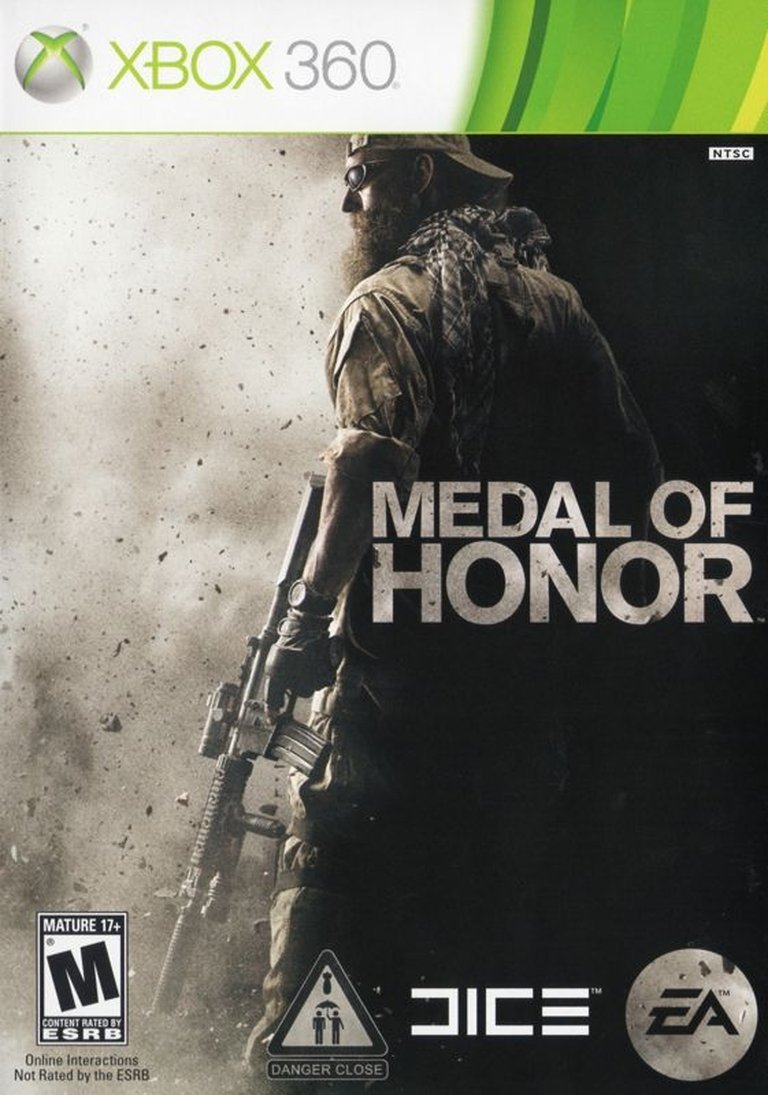
Description
Medal of Honor (2010) is a first-person shooter that shifts the iconic series from World War II to the contemporary War in Afghanistan, where players join NATO forces as elite soldiers in squad-based missions against the Taliban. The game features realistic combat scenarios, including stealth, air support coordination, and diverse gameplay set in the Afghan terrain, with single-player developed by Danger Close and class-based multiplayer by DICE.
Gameplay Videos
Where to Buy Medal of Honor
PC
Medal of Honor Cracks & Fixes
Medal of Honor Mods
Medal of Honor Guides & Walkthroughs
Medal of Honor Reviews & Reception
metacritic.com (91/100): Medal of Honor is more than just a reboot of a storied franchise. It takes the FPS genre to a whole new level.
metacritic.com (84/100): A solid FPS, but not the masterpiece that EA promised to the gamers.
metacritic.com (80/100): Really, the biggest thing letting down Medal of Honor is its lack of originality.
metacritic.com (75/100): In the end I was satisfied, but this could have been so much more.
metacritic.com (70/100): Good solid action, but the singleplayer campaign is way too short and the multiplayer just doesn’t live up to EA’s previous Battlefield: Bad Company 2.
metacritic.com (65/100): Medal of Honor is just another average shooter.
metacritic.com (55/100): A new candidate for the most disappointing game of 2010, Medal of
metacritic.com (100/100): This game is very good, man, its campaign especially
metacritic.com (100/100): This is the most realistic war shooter I have ever played.
reddit.com : I was surprised how emotionally engaging the storyline was.
ign.com : Medal of Honor walks into a quagmire it never really escapes from.
imdb.com (60/100): Medal of Honor manages to be a competent military shooter and nothing else.
imdb.com (70/100): If you want an immersive war on terrorism experience in Afghanistan you should buy this game.
imdb.com (60/100): A good shot, but a bit buggy.
Medal of Honor (2010): A Reboot Caught Between Realism and Spectacle
Introduction: The Weight of a Title
The Medal of Honor name carries immense historical and emotional gravity. Born from Steven Spielberg’s desire to create an “educational and entertaining” WWII experience, the series became synonymous with reverent, often严谨 depictions of Allied heroism. By 2010, after a string of diminishing WWII returns, Electronic Arts made a bold and perilous decision: to reboot the franchise in the contemporary, volatile setting of the War in Afghanistan. This was not just a genre shift; it was an attempt to transplant the series’ hallowed legacy into a conflict that was, at the time, actively unfolding—a move fraught with ethical, artistic, and commercial hurdles. This review argues that Medal of Honor (2010) is a fascinating, deeply conflicted artifact. It is a game fundamentally torn between two poles: a single-player campaign striving for gritty, somber realism and a multiplayer mode engineered for the fast-paced, reward-driven loops of its competitors. Its legacy is that of a competent, beautifully crafted, but ultimately derivative title that failed to define a new standard, instead highlighting the immense challenge of adapting a historic franchise to a modern, controversial war.
Development History & Context: From DreamWorks to Danger Close
The journey to the 2010 reboot began long before its announcement. The Medal of Honor series, created under Spielberg’s oversight at DreamWorks Interactive (later EA Los Angeles), had established its identity on World War II battlefields. By the late 2000s, the landscape had shifted. Call of Duty: Modern Warfare (2007) had redefined the FPS genre, while EA’s own Battlefield: Bad Company offered a more destructible, team-focused counterpoint. EA Los Angeles, developers of recent, poorly received entries like Airborne and Vanguard, sought a reset.
Development officially began in 2007. The pivotal decision was to leave WWII behind. As noted in the sources, the game was initially known as Medal of Honor: Operation Anaconda, directly referencing the 2002 battle. To helm this new direction, EA restructured the team. In July 2010, EA Los Angeles was rebranded Danger Close Games, a studio explicitly focused on Medal of Honor titles, signaling a renewed commitment. For the critical multiplayer component, EA recruited its most prized asset: DICE (EA Digital Illusions CE), the Swedish studio behind the acclaimed Battlefield series. This created a unique dual-development structure: Danger Close crafted the single-player campaign using a modified Unreal Engine 3, while DICE built the multiplayer on its proprietary Frostbite Engine 1.5, renowned for its destruction and large-scale warfare.
A key part of the development ethos was authenticity. Danger Close consulted extensively with real U.S. Tier 1 Special Operations Forces (DEVGRU/SEALs and Delta Force). This informed everything from firearm handling and tactical movement to mission objectives. The goal was not just spectacle, but to immerse players in the “feel” of modern special ops. This consultative approach was a double-edged sword: it lent credibility to the campaign’s tone but also intensified scrutiny, especially regarding the portrayal of a ongoing war.
Technologically, the game was a showcase. The PS3 was the lead development platform, a significant declaration from EA. The campaign pushed graphical fidelity with detailed Afghan terrain, weather effects (like dust and fog), and character models. The Frostbite-powered multiplayer promised robust destruction and expansive maps. However, this ambition came with constraints. The need to support three platforms (PS3, Xbox 360, PC) led to compromises, noted in reviews citing “shaky framerate” and “lackluster texture work” in the single-player portion.
The marketing campaign was high-voltage, anchored by a partnership with Linkin Park. Their songs “New Divide” (E3 trailer) and “The Catalyst” (final trailer and end credits) provided a meteoric, anthemic sound that contrasted sharply with the game’s attempted gravitas. Bundles like the Limited Edition (which included a Battlefield 3 beta and the classic Medal of Honor: Frontline) and the European Tier 1 Edition were designed to hook fans of EA’s competing shooter franchises, revealing the internal corporate dynamics at play.
Narrative & Thematic Deep Dive: The Fog of a Modern War
The narrative of Medal of Honor is its most conceptually ambitious and most criticized element. It attempts to tell a grounded, character-driven story within the framework of Operation Anaconda (March 2002), specifically focusing on the brutal Battle of Takur Ghar (Roberts Ridge). The plot is not a straightforward retelling but a fictionalized composite, following several AFO (Advanced Force Operations) teams and conventional Rangers.
Structure and Pacing: The campaign is structured around three narrative threads, switching player perspectives:
1. AFO Neptune: Players primarily control “Rabbit” (Devon Bostick), a young DEVGRU operator. This segment focuses on stealth, reconnaissance, and the bond within the Tier 1 team (Mother, Voodoo, Preacher).
2. AFO Wolfpack: Players become “Deuce” (Kevin Kilner), a Delta Force sniper. These missions involve long-range support, ATV traversals, and overwatch for Neptune, emphasizing patience and precision.
3. 75th Ranger Regiment: Players take the role of Specialist Dante Adams (Carter MacIntyre). This is the “big military” perspective—linear assaults, chaotic firefights, and reliance on conventional air support, highlighting the gulf between Special Ops and conventional forces.
The story’s central conflict is not merely against the Taliban/Al-Qaeda, but between two American commanders: the cautious, competent Colonel Drucker (Adrian Holmes) and the impatient, bureaucratic General Flagg (Doug Abrahams). Flagg’s demand for a quick, conventional assault against Drucker’s plan for a methodical, AFO-led operation directly leads to disaster—the friendly fire incident on the Northern Alliance convoy and the subsequent, rushed Ranger insertion that sparks the main firefight.
Themes and Execution:
* The Cost of Disobedience: The narrative’s emotional core is the sacrifice of Rabbit. After disobeying orders to re-insert and rescue his teammates (Voodoo and Preacher), he is captured, severely wounded, and ultimately dies before evacuation. His death is portrayed not as a glorious sacrifice but as a gut-wrenching failure of command (Flagg’s refusal to commit resources) and the brutal randomness of combat. The final scene, where Preacher (Yuri Lowenthal) retrieves Rabbit’s rabbit’s foot charm, is a hollow, somber moment, underscored by the line, “This isn’t how this ends.” The epilogue, with Preacher and a CIA asset speaking Pashto in a Pakistani town, hints at the endless, shadowy continuation of the fight, a thematic nod to the war’s unresolved nature.
* “Tier 1” Mythology: The game heavily romanticizes the Tier 1 operator ethos—calm professionalism, unmatched skill, and an almost mystical bond. The contrast with the Rangers (who are portrayed as brave but outmatched without AFO support) is stark. The Tier 1 Mode (unlocked post-campaign) reinforces this, imposing strict “Par Time” challenges that demand perfect execution, appealing to a hardcore fantasy of elite performance.
* Ambivalence and Avoidance: Critics, most notably Eurogamer, accused the game of being “a shooting gallery spliced with a fairground ride” that “does its absolute utmost to avoid being about the Afghanistan war.” The narrative avoids almost all political and geopolitical context. There is no discussion of why NATO is there, the complexities of the Northern Alliance, or civilian casualties. The Taliban are faceless, efficient enemies. This “apolitical” stance was likely a marketing and ethical decision to avoid controversy, but it results in a story that feels detached from the real conflict’s tragic complexity, reducing it to a pure tactical exercise. As one player review noted, it lacks the “educational value” of the WWII games that provided historical context.
* Character Depth: The campaign’s greatest weakness is its underdeveloped characters. With the exception of the brief, poignant arc of Rabbit and Mother’s grief, the squadmates remain ciphers defined by call signs and appearances. Sergeant Patterson, the Ranger leader, is particularly thin. The reliance on voice acting (often excellent, from actors like Jeffrey Pierce and Yuri Lowenthal) cannot compensate for the lack of scripted moments that build genuine relationships. Players are told they are a brotherhood but rarely feel it until the final, tragic sequence.
Gameplay Mechanics & Systems: Two Games in One
Medal of Honor’s design is schizophrenic, reflecting its two development studios.
Single-Player Campaign (Danger Close / Unreal Engine 3):
The core loop is linear, scripted set-piece combat. Gameplay emphasizes:
* Tactical Maneuvers: The modified Unreal Engine 3 introduced slide-to-cover, allowing for dynamic transitions between positions. A health system based on resilience (screen edges glow red when damaged, recovery out of fire) replaces health packs.
* Squad Dependence: Teammates are present but have limited AI. Their primary utility is providing ammunition resupply—a deliberate design choice to force players to fall back and manage resources, enhancing the “realism” of limited ammo. They also offer occasional suppressing fire.
* Mission Variety: The campaign includes a commendable variety of scenarios: stealthy village infiltrations, checkpoint assaults, Close Air Support (CAS) sequences where the player designates targets for an AC-130 or drone (a highlight), a thrilling quad bike chase, and the standout AH-64 Apache gunner mission (“Gunfighters”), providing a “modernized Desert Strike” vibe as one reviewer noted.
* Criticisms: The AI is frequently dumb (enemies will stand in the open) and scripted events can be clumsy, with reports of characters getting stuck in geometry. The campaign is shockingly short (5-6 hours for 9 missions), feeling more like a vertical slice than a full experience. The linearity is extreme; there is no exploration, only the prescribed path. The HUD (minimap, ammo count) is optional, requiring a manual button press (H) to toggle—an unintuitive choice that many found obnoxious.
Multiplayer (DICE / Frostbite Engine 1.5):
This is where the game found its most consistent praise. DICE applied its Battlefield expertise to create a class-based, objective-oriented shooter that tried to carve a middle ground between Call of Duty’s fast time-to-kill and Battlefield’s larger-scale teamwork.
* Three Classes:
* Rifleman: Versatile, medium-range backbone.
* Special Ops: Close-quarters, suppressor-friendly, uses SMGs.
* Sniper: Long-range precision. (Progression needed to unlock proper scopes).
* Progression & Unlocks: Players earn experience points for kills, objectives, assists, etc. Leveling up unlocks weapon attachments (sights, silencers, ammo types) and, eventually, weapon swaps that allow using enemy guns. The “Tier 1” prestige level (reached at Rank 8 in a class) changed the player’s appearance and awarded bonus points to the killer.
* Support Actions: This was a key differentiator from Call of Duty‘s killstreaks. Instead of rewards based solely on consecutive kills, MoH used a point-based “score chain” earned for any positive team action (capturing a point, assisting a teammate). This could be spent on offensive (mortar strike, missile) or defensive (ammo, intel) support, theoretically encouraging objective play and teamwork over lone-wolf rampages.
* Game Modes: Included standard Team Deathmatch (“Team Assault”), Sector Control (domination), Objective Raid (attack/defend), and the DLC modes Hot Zone (king of the hill) and Clean Sweep (last man standing).
* The “OpFor” Controversy: The multiplayer’s most defining (and infamous) feature was the ability to play as the Taliban (later euphemistically renamed “Opposing Force” or “OpFor” after backlash). This wasn’t cosmetic; the Taliban team used distinct weapons (AK-47, RPG-7) and was visually separate from the Coalition (“Python 1”). This decision was defended by DICE/Gordon Van Dyke as a necessity for realism: “someone’s gotta be the Taliban.” It sparked international condemnation from politicians (UK’s Liam Fox, Canada’s Peter MacKay) and led to the game being banned from sale on all U.S. military bases (AAFES) out of “respect.” The change to “OpFor” was a damage control measure, but the stigma remained.
* Shortcomings: While fun and tight, the multiplayer was seen as a hybrid that pleased neither BFBC2 nor MW2 purists. It lacked the destruction of Battlefield and the perk/customization depth of Call of Duty. Spawns were often problematic, and the class balance, while solid, wasn’t revolutionary. The Tier 1 system was a clear aesthetic and mechanical nod to the campaign, but the disconnect between the gritty, slow-paced single-player and the arcadey multiplayer feel was jarring.
World-Building, Art & Sound: Capturing the Afghan Theaters
The game’s sensory presentation was its most universally acclaimed aspect, successfully evoking the harsh, beautiful, and terrifying landscapes of Afghanistan.
* Visual Direction: The environments are the star. Using the Frostbite (multiplayer) and enhanced Unreal Engine 3 (campaign), DICE and Danger Close crafted vast, sun-baked valleys, crumbling villages, rocky outcrops, and imposing mountains like Takur Ghar. The use of atmospheric effects—blinding dust storms, haze that obscures long-distance visibility, the sharp contrast of light and shadow—was frequently praised. One player review noted the “immense quality of the graphics… cool weather effects and depth in the high altitude and far distance.” The art team avoided the saturated, hyper-real look of Call of Duty for a more muted, earthy palette that felt authentic, if occasionally drab.
* Sound Design: This is where the game won its most prestigious accolades. The sound design earned 4Players’ #2 Best Sound Effects of 2010 award. Every weapon has a distinct, powerful report. The crunch of gravel underfoot, the whump of helicopter rotors, the distant chatter of machine guns, and the bone-rattling thud of a nearby explosion are meticulously crafted and spatially localized. The voice acting, particularly from the Special Ops teams, is low, tense, and professional, reinforcing the “operator” vibe. The use of Pashto radio chatter and ambient sounds in villages added crucial cultural texture.
* Music: Composed by Ramin Djawadi (famed for Game of Thrones), the score uses ethnic instruments, sparse electronics, and a string orchestra. It’s often minimalist and brooding, underscoring tension rather than dictating emotion. The Linkin Park songs, while effective for marketing, feel tonally incongruous with the in-game experience, representing the competing agendas of gritty realism and mass-market appeal.
* Atmosphere vs. Gameplay: The world feels lived-in and dangerous. However, as Eurogamer noted, this atmosphere is sometimes undermined by “artificial blockages” and “theme park ride” linearity. You are constantly funneled, despite the expansive vistas, breaking the immersion the visuals create.
Reception & Legacy: A Qualified Success, A Missed Opportunity
Critical Reception:
Aggregate scores on Metacritic settled at a solid but unspectacular 72-75/100 across platforms. The critical consensus, reflected in dozens of reviews, was consistent:
* Praised: Multiplayer engagement and depth, exceptional sound design and voice acting, gritty and explosive single-player moments, strong visual spectacle, authentic weapon feel.
* Criticized: Extremely short campaign (5-6 hours), minor technical issues (framerate, texture pop-in), AI shortcomings, lack of narrative depth or character development, reliance on familiar CoD/BF formulas, and the jarring disconnect between campaign tone and multiplayer ethos.
The Taliban controversy dominated pre-release discourse and left a permanent stain. While the gameplay itself was defended, the mere association was deemed “tasteless” by officials and led to the AAFES ban—a significant symbolic blow for a game celebrating military service.
Commercially, it was a clear success. EA reported over 5 million copies sold by November 2010, making it a high-performer in a crowded Q4. This proved the Medal of Honor brand still had pull and that a modern shooter with an M-rating could find a mass audience.
Legacy and Influence:
Medal of Honor (2010) did not redefine the genre. Its legacy is one of a competent but derivative entry that highlighted the maturation of the modern military shooter market.
1. The Realism Arcade Dichotomy: It solidified the internal conflict within the genre. The campaign’s attempt at “authentic” special ops gameplay (limited ammo, squad reliance, slower pacing) was overshadowed by the multiplayer’s need for fast, addictive loops. Future shooters would continue to struggle with this balance.
2. A Template for Reboots: It demonstrated the perils of rebooting a beloved franchise into a current, sensitive conflict. The avoidance of politics resulted in a narrative vacuum. Future military shooters would either double down on over-the-top spectacle (later Call of Duty) or attempt more nuanced, story-driven approaches (Spec Ops: The Line, 2012) with varying success.
3. The DICE Partnership: The success of DICE’s multiplayer (despite its hybrid nature) showcased their versatility. It directly paved the way for their development of Battlefield 3, which would refine the Frostbite multiplayer experience and become a genre pillar.
4. The Series’ Fate: The direct sequel, Medal of Honor: Warfighter (2012), developed entirely by Danger Close, was a critical and commercial failure. Its poor reception, combined with the mixed but solid performance of the 2010 reboot, led EA to put the series on hiatus in 2013. The franchise would not return until the VR-exclusive Above and Beyond (2020), a fascinating but niche epilogue. The 2010 game thus became the last mainline, console/PC Medal of Honor for a decade.
5. Cultural Footnote: Its most lasting cultural impact is the Taliban controversy, a case study in the ethics of representing contemporary conflict in interactive media. It forced a industry-wide conversation about player agency, representation of real-world enemies, and the responsibilities of developers.
Conclusion: A Medal Tarnished, But Not Forged
Medal of Honor (2010) is a game of profound contradictions. It is a reboot that embraced a contemporary war but refused to engage with its politics. It sought the authenticity of Tier 1 operators but packaged it in a linear, corridor-shooter campaign. It leveraged the prestige of a historic franchise while outsourcing its multiplayer to the studio behind its biggest competitor. The result is a title that is technically proficient, often thrilling in the moment, and sonically magnificent, yet fundamentally hollow.
Its single-player campaign is a short, visually stunning, but emotionally shallow rollercoaster that peaks with Rabbit’s death and then fizzles into a vague epilogue. Its multiplayer is a robust, enjoyable, but ultimately unoriginal hybrid that couldn’t escape the long shadows of Call of Duty and Battlefield. The Taliban controversy wasn’t just a PR nightmare; it was a symptom of the game’s core identity crisis—wanting to be a serious tribute to modern soldiers while employing mechanics that trivialized the very conflict it depicted.
In the grand timeline of the FPS genre and the Medal of Honor series, this 2010 entry is a pivotal but flawed waypoint. It proved the brand could sell in a modern setting, but its failure to offer a compelling, unique vision beyond “realistic Call of Duty” or “accessible Battlefield” sealed its fate. It demonstrated that the gravity of the Medal of Honor name could not be transferred simply by changing the setting and hiring consultants. The spirit of the original—a thoughtful, historical, often educational experience—was lost in the translation to the high-octane, multiplayer-driven market of 2010. For all its polish and ambition, Medal of Honor (2010) remains a game that played it too safe, tried to be too many things to too many people, and ultimately earned its place not as a classic, but as a curious, well-made, and commercially successful footnote in the ongoing saga of the modern military shooter.