
- Release Year: 2018
- Platforms: Android, iPad, iPhone, Windows Apps, Windows
- Publisher: Playwing Ltd
- Developer: Playwing Sofia Studio
- Genre: Strategy, Tactics
- Perspective: Diagonal-down
- Gameplay: Point and select, Real-time
- Setting: Futuristic, Sci-fi
- Average Score: 69/100
Description
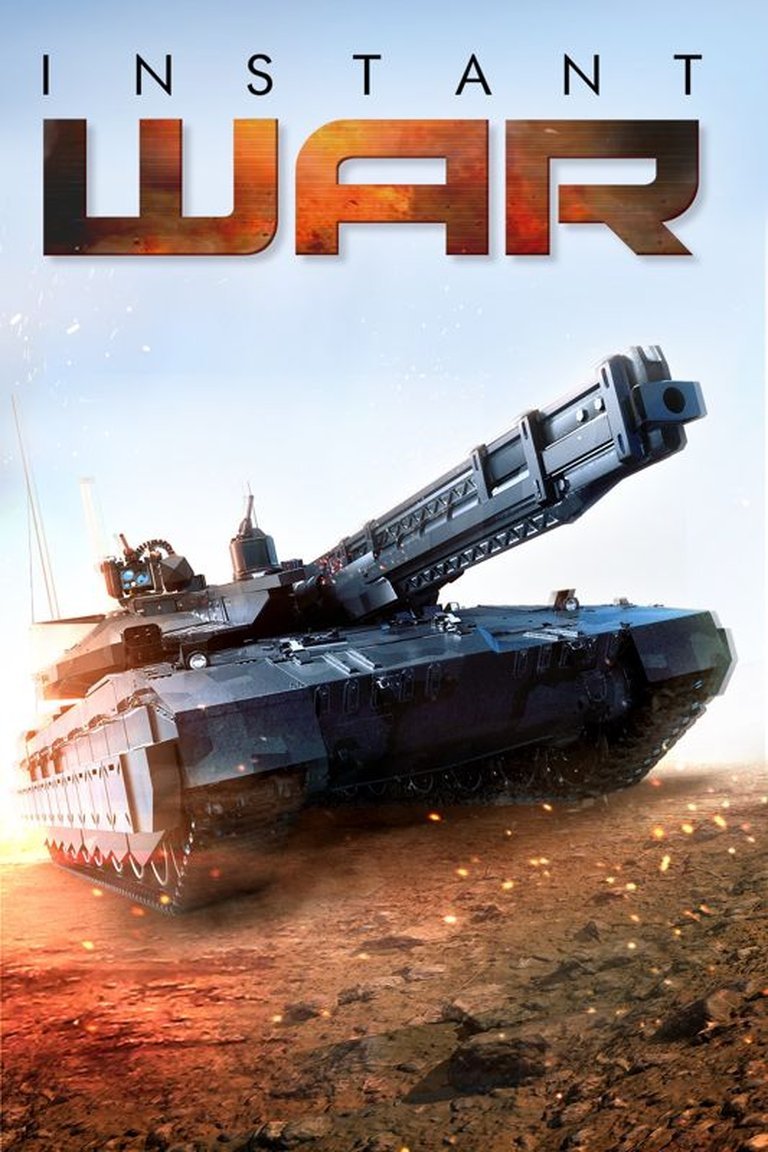
Instant War is a real-time strategy game set in a sci-fi future, where players engage in tactical warfare through fast-paced combat and strategic decision-making. With a diagonal-down perspective and point-and-select interface, the game focuses on commanding forces in a futuristic war narrative across multiple platforms.
Where to Buy Instant War
PC
Instant War Guides & Walkthroughs
Instant War: A Casualty of the Free-to-Play Tsunami
In the crowded annals of mobile-to-PC strategy game adaptations, few titles embody the lofty promises and crushing realities of the “mobile MMORTS” model quite like Instant War. Released initially for mobile platforms in April 2018 and later ported to PC (Steam) in July 2022, this game from Playwing Sofia Studio stands as a fascinating, if flawed, artifact of a specific moment in gaming history. It was an era defined by the aggressive migration of complex PC genres onto smartphones, followed by a reverse migration back to PC, often with uneasy results. Instant War attempted to marry the deep, interconnected warfare of a 4X grand strategy with the bite-sized, always-online demands of a free-to-play mobile experience. This review will argue that while the game showcased genuine technical ambition—most notably its “unified world map” concept—it ultimately succumbed to the endemic pressures of its chosen business model, resulting in a reception that was at best mixed and at worst, dismissive. Its legacy is not one of influence on the strategy genre’s evolution, but rather as a cautionary tale about the perils of prioritizing monetization and accessibility over sustainable gameplay depth in the competitive post-2015 market.
Development History & Context: A Bulgarian Studio’s Ambitious Pivot
Instant War was developed by Playwing Sofia Studio, a subsidiary of the Cyprus-based publisher Playwing Ltd. The studio, credited with 79 individuals on the MobyGames entry, was part of a broader trend of Eastern European development houses leveraging their technical skill to service the booming mobile free-to-play market. The parent company, Playwing, had a portfolio spanning casual and mid-core titles, suggesting a strategic push into the more lucrative strategy genre around 2017-2018.
The game’s genesis must be understood within the technological and market constraints of its time. By 2018, the mobile gaming landscape was dominated by hyper-casual titles and “clash clones”—simplified, build-and-brawl strategy games like Clash of Clans. The leap to a true real-time strategy (RTS) and 4X (eXplore, eXpand, eXploit, eXterminate) experience on a phone was a significant technical hurdle. The central advertised feature, a “unified world map” where building, resource gathering, and combat all occurred on a single persistent globe, was a direct answer to the segmented screen interfaces common in mobile strategy games. This was an attempt to bring a sense of epic, continuous scale to a device defined by its small screen and intermittent play sessions.
The decision to later port the game to PC (Windows) in 2022, via platforms like Steam, is a critical chapter in its history. This move, timed years after its mobile launch, suggests a recognition of the game’s scale not fitting the mobile paradigm, or perhaps an attempt to tap into the PC strategy audience that had been denied a proper version. However, this port arrived without significant reworking, bringing the game’s mobile-first design (touch-centric UI, free-to-play loops) directly to a platform with notoriously high expectations for depth, balance, and fair monetization. The context is one of ambition constrained: a studio trying to build a PC-scale strategy game for mobile economics, then trying to retrofit that experience for PC audiences without abandoning the revenue model that sustained it.
Narrative & Thematic Deep Dive: The Skeleton of a Setting
The narrative and thematic elements of Instant War are, by all available evidence, its most underdeveloped and generic component. The official sources provide a single, stark paragraph:
“Year 2040: States have collapsed and war rages on, unleashed technology has created a new generation of warfare. Discover secret weapons, grow your empire and become the one and only true Commander of this new order! From the ashes of the Old World, new nations have risen and become geopolitical superpowers. The arms race is back and fiercer than ever. Extensive budgets are poured to develop new tactical weapons powered by AI.”
The Campaign mode offered in-game provides slightly more context, framing the player’s struggle against the Delta Syndicate, a faction that seized power after a government collapse. The Syndicate uses “force and intimidation” to consolidate control, and its lieutenants must be defeated to uncover a “sinister hand” pulling the strings.
This framework is profoundly thin. There is no named protagonist, no memorable antagonist beyond a syndicate label, and no exploration of the “collapsed states” scenario beyond the need for more territory and resources. The themes are rudimentary: post-apocalyptic power vacuums, the ethics of AI warfare, and the cyclical nature of conflict. The “sinister hand” is a narrative MacGuffin with no payoff or description in the provided materials. Characters, when they appear in the form of recruitable Heroes, are defined solely by their statistical perks and skills—”Skills and Perks” that are “upgraded”—with no backstory, dialogue, or personality. They are tactical tools, not narrative agents.
Compared to the rich historical tapestries listed in the Wikipedia source—games like Total War: Pharaoh with its specific Late Bronze Age collapse, or Assassin’s Creed Odyssey with its Peloponnesian War framework—Instant War‘s setting is a void. Its 2040 timeline is not used to speculate on plausible geopolitical shifts, technological singularities, or societal fractures. It simply provides a “near-future sci-fi” backdrop for generic military units (tanks, infantry, “UGVs,” “LSVs,” “Artillery”). The “unleashed technology” and “AI-powered tactical weapons” are not narrative devices but gameplay buzzwords. In this sense, the game’s story is not a deep dive but a shallow trench, serving only to contextualize the player’s endless expansion and combat in the MMO sandbox. It embodies the “Narrative: War” tag on MobyGames with almost satirical literalism.
Gameplay Mechanics & Systems: The 4X Facade
Instant War presents itself as a 4X RTS (Real-Time Strategy) with MMO (Massively Multiplayer Online) elements, but a close analysis reveals a game heavily simplified to accommodate mobile play and free-to-play monetization. Its core loop is a hybrid of base-building, army management, and territorial PvP/PvE conflict on a shared world map.
1. The Unified World Map & Geographic Gameplay: The game’s marquee feature is its single, persistent 3D world map. Unlike many mobile strategy games that separate the “home base” from the “battlefield,” here all development and combat occur in the same space. Players place buildings, harvest resources (implied to be for “farming empire” and “resource points”), and march armies across a contiguous terrain featuring mountains, rivers, and other obstacles. The marketing explicitly states: “You can finally use mountains and rivers to funnel your enemies right into a trap, or to protect your base from flanking attacks.” This is a genuine attempt to bring classic RTS terrain manipulation to a persistent world, a feature often missing in asynchronous mobile strategy. However, the strategic depth is limited by the scale and unit pathfinding. The “3D terrain” is primarily an obstacle for routing rather than a vertically layered battlefield.
2. Base Building & Progression: Players develop a personalized Headquarters. The expansion is linear, tied to research trees in “military, medical, technical or A.I. research.” Progress is gated by player level, resource stockpiles, and building/unit queue times—standard free-to-play timers. The “farming empire” mention suggests resource generation buildings, but details are scant. The core progression is not narrative-driven but about increasing numerical capacity: more unit types, stronger armies, higher-level heroes.
3. Army Composition & Heroes: The game boasts “more than 50 different units” across categories like Infantry, UGV (Unmanned Ground Vehicle), Armored, LSV (Light Strike Vehicle), and Artillery. Each has “specialties, strengths, and weaknesses.” The critical twist is the Hero system. Heroes can be assigned to marching armies, providing significant combat bonuses. They have Skills and Perks that are upgradable and can increase Rank Stars to unlock new abilities. This is a classic RPG-lite mechanic common in free-to-play strategy games, designed to create long-term goals and monetization hooks (e.g., obtaining rare heroes, leveling materials). Heroes are the primary “collectible” element, driving engagement beyond mere resource accumulation.
4. Campaign & Mastery System: The single-player Campaign is structured in Chapters with multiple Missions. Completing missions earns Stars (1-3 for basic completion). A key innovation, the Mastery Star (4th Star), unlocks “Mastery Challenges”—variants with specific constraints (e.g., “defeat with limited troops”). Earning all stars in a chapter unlocks the Main Reward and the next Chapter. Crucially, obtaining the Mastery Star also unlocks the Daily Reward for that chapter. This is a masterclass in operant conditioning scheduling: it rewards initial completion (Main Reward), encourages replay with constraints (Mastery for Daily access), and creates a daily login habit (Daily Reward). It seamlessly blends solo PvE progression with the daily engagement metrics vital for a live-service game.
5. Multiplayer & Alliances: The MMO aspect centers on Alliances. Players are expected to team up for “night raids,” coordinated “real-time battles,” and “claiming hard-won territories.” The “large action panel” includes reinforcements, tactics, drones, and airstrikes—special abilities that likely have cooldowns or resource costs, and are prime candidates for monetization or alliance-level progression. The Cross-server warfare and special events (Halloween, Christmas) mentioned are standard live-service tactics to refresh the meta and provide limited-time content.
6. Monetization & “Pay-to-Win” Dynamics: As a free-to-play title with in-app purchases, the game’s balance is its Achilles’ heel. The Steam review analysis from Niklas Notes is stark: ~14% of reviews directly cite “pay-to-win” as a major flaw. This is not surprising. In such systems, the most desirable Heroes, fastest research/build speeds, strongest unit types, and most powerful special abilities (drones, airstrikes) are almost certainly gated behind premium currency or loot boxes. The “Mastery” and “Daily Reward” loops can be accelerated with spending. The “Pay to Win” sentiment is compounded by the ~3% of reviews mentioning a “toxic community” and ~4% citing poor “Community and Support,” suggesting a player base fractured between whales (high spenders) and free players, with the latter feeling permanently disadvantaged. This dynamic is the logical endpoint of the game’s design: its deepest strategic layer (hero collection and upgrade) is inextricably linked to the monetization engine.
Flaws & Innovations: The most innovative system is the unified map geography, which is more than a gimmick. However, it is undercut by the simplistic real-time combat—likely a “tap-to-attack” or auto-resolve system judging by the mobile origins, where hero stats and unit counts override tactical nuance. The Mastery/Star system for chapter progression is clever engagement design. The greatest flaw is the asymmetry created by monetization. In a strategy game where victory is binary (win/lose a battle), selling permanent power advantages destroys competitive integrity. The control issues (~3% of reviews) also point to a port that didn’t fully adapt the touch-based interface for mouse/keyboard precision.
World-Building, Art & Sound: A Catalogue of Absence
The visual and auditory presentation of Instant War is its most poorly documented aspect in the provided sources, and what little is said is contradictory.
Art Direction & Graphics: Official marketing boasts “stunning 3D graphics with fully animated characters, high resolution terrain, dynamic lighting and beautiful VFXs.” The Steam store page and other listings reiterate a “3D world map” with “high resolution terrain.” However, this is almost certainly standard marketing hyperbole for a 2018 mobile title. The Steam review score of 69/100 (Mixed) and specific user criticisms (though not detailed in our snippets) typically for such games include dated textures, simple geometric unit designs, repetitive animations, and a utilitarian UI. The “diagonal-down” perspective noted on MobyGames is a common default for top-down strategy games, allowing for a clear view of units and terrain. The “futuristic/sci-fi” setting is delivered through a bland palette of grays, greens, and browns for vehicles and bases, lacking the distinct visual identity of a StarCraft or Supreme Commander. The world itself, a generic post-apocalyptic Earth, shows no unique landmarks or artistic flair in any provided screenshots (of which MobyGames has none). The art is functional, not memorable.
Sound Design & Music: There is zero mention of sound design, music, or voice acting in any of the source material. The official website, store pages, and help sections are silent. This is a glaring omission. For a game claiming to deliver an “epic” experience with “massive real-time battles,” the absence of a distinctive soundtrack or impactful sound effects (tank treads, artillery fire, unit chatter) suggests a minimal or placeholder audio implementation, common in low-budget free-to-play launches. It is a missed opportunity to build atmosphere in an otherwise thin narrative world.
Atmosphere & Cohesion: The combination of a generic “2040” setting, a storytelling vacuum, and functional (at best) graphics results in a profound lack of atmosphere. There is no emergent narrative from the world design. No ruined cities tell stories of the “collapse.” No unique factions have distinct architectural or unit styles (all are just “new nations”). The “geography matters” claim is a mechanical one, not an aesthetic or narrative one. The world is a battleground sandbox in the most literal, unadorned sense. It fails to create the immersion of a World of Tanks (which has historical fascination) or the speculative depth of a Company of Heroes scenario. The experience is purely transactional: land = resources = armies = victory.
Reception & Legacy: The Mixed Tsunami
Instant War‘s reception is a study in the perils of its chosen platform and business model.
- Critical Reception: There are no professional critic reviews aggregated on MobyGames. This immediate silence is telling. The game did not register on the radar of established PC strategy journalism, likely because its initial mobile launch and subsequent Steam port were seen as a niche, derivative free-to-play title not worth dedicated coverage.
- User Reception (Steam): The data from Steam (and aggregated by sites like Steambase and Niklas Notes) is clear and brutal:
- Overall Score: 69/100.
- Review Count: 81 reviews (as of early 2026).
- Sentiment: Mixed (67% positive, 33% negative).
- Key Complaints: The Niklas Notes analysis provides the most granular breakdown, with ~14% of reviews specifically calling out “Pay to Win” as the primary issue. This is the dominant theme. Secondary issues include ~4% citing “Repetitiveness”, ~3% citing “Control Issues”, ~4% citing “Community and Support” (likely related to cheating, server problems), and ~3% describing a “Toxic Community.” The positive notes (~10% for “Graphics,” ~10% for “Engagement” as a casual time-killer) are vastly overshadowed by the negatives.
- Playtime: The estimated playthrough is ~23 hours, with most players (60%) falling between 24 minutes and 117 hours. This distribution suggests a large cohort of players who tried it and quit quickly, dissatisfied, and a smaller group of hardened (likely spending) players who engage deeply.
Legacy and Influence: Instant War has no discernible influence on the strategy genre or the broader industry. It did not popularize the “unified world map” concept in a meaningful way; more significant titles like The Settlers series or Civilization‘s city placement on a single map predate it, and its specific implementation was too tied to its monetization model to be emulated. It does not appear in any “best of” lists for 4X or RTS games. Its legacy is purely as a data point in the ongoing critique of free-to-play monetization in competitive strategy games. It demonstrates how the 4X “Expand/Exterminate” loop can be weaponized into a “spend-to-advance treadmill.” Furthermore, its mobile-to-PC port is an example of the “asymmetrical conversion” problem, where a game designed for one platform’s input and session length is sold to another without adaptation.
In the grand taxonomy provided by the Wikipedia list of historical games, Instant War occupies no space. It is not historical, nor is it significant enough to be listed as a notable futuristic or sci-fi strategy title. It is, in the context of game history, anonymous. Its true context is within the long tail of mobile-strategy-to-Steam ports that flooded the store in the late 2010s and early 2020s, a wave that has largely receded, leaving games like this as ghost ships populated by a dwindling, often disillusioned crew.
Conclusion: Victory at What Cost?
Instant War is a game of profound contradictions. It was built on an innovative core concept—the unified, geography-focused world map for an MMORTS—that promised a fresh take on persistent-strategy warfare. Its “Mastery” and campaign structure showed understanding of live-service engagement loops. Yet, every potentially promising system was fundamentally compromised by the inescapable logic of free-to-play monetization. The hero collection, the unit upgrades, the territory claims, the timers—all were funneled into a storefront. The result was a game that could not foster the fair, strategic competition essential to a great 4X or RTS title.
The narrative vacuum and artistic anonymity ensured there was no emotional or aesthetic investment to compensate for the mechanical shortcomings. Players were not fighting for a cause, a faction with identity, or a beautifully rendered world. They were fighting for digital stars, daily rewards, and the statistical edge that could be purchased.
Its reception—a silent critical community and a mixed, pay-to-win-obsessed player base—is the exact outcome such a design invites. Instant War did not fail because it was poorly made, but because it was perfectly made for a predatory model. It stands as a stark reminder that in the fusion of complex strategy genres and free-to-play economics, the genre’s soul—deep, emergent strategy and meaningful competition—is often the first thing sacrificed on the altar of retention metrics and microtransaction revenue. In the history of video games, Instant War will not be remembered as a classic, a masterpiece, or even a notable failure. It will be remembered, if at all, as a textbook case: the moment a playerbase collectively realized that in a world of instant war, the only true casualty was fair play.