
- Release Year: 2020
- Platforms: Macintosh, Windows
- Publisher: Big Fish Games, Inc
- Developer: Seven Sails Comunicacao e Desenvolvimento Ltda.
- Genre: Puzzle
- Game Mode: Single-player
- Gameplay: Nonograms, Picross
- Setting: Fairy tale
Description
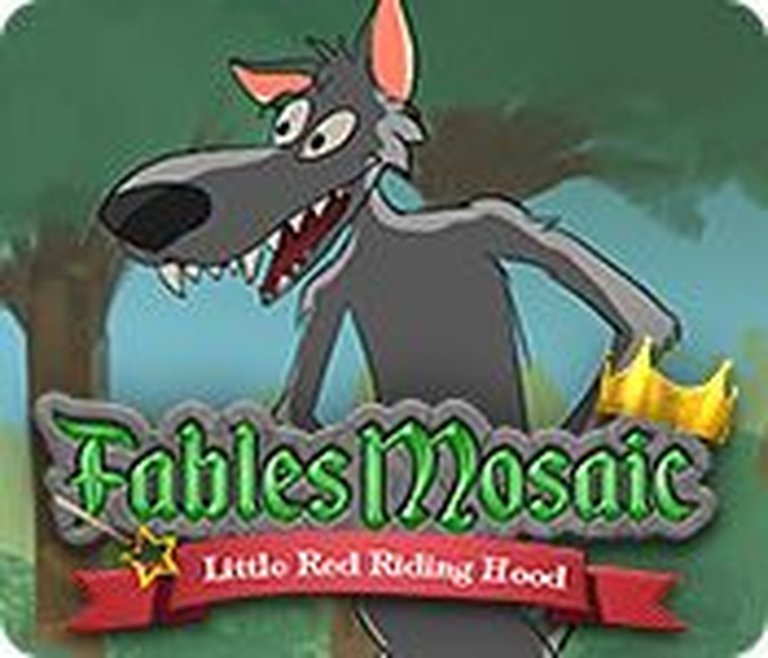
Fables Mosaic: Little Red Riding Hood is a puzzle game that intertwines the classic fairy tale with engaging nonogram mosaic challenges. Players solve logic-based colored puzzles to progress through a reimagined story of Little Red Riding Hood’s journey, featuring 100 unique levels and a captivating twist on the familiar narrative.
Where to Buy Fables Mosaic: Little Red Riding Hood
PC
Fables Mosaic: Little Red Riding Hood: A Threadbare but Charming Foray into Narrative Nonograms
Introduction: A Fairy Tale in Pixels and Logic
In the vast ecosystem of video game adaptations of classic fairy tales—from the atmospheric horror of Dark Parables to the whimsical platforming of the Once Upon a Time series—the modest Fables Mosaic: Little Red Riding Hood occupies a peculiarly quiet cul-de-sac. Released in April 2020 by Brazilian studio Seven Sails Comunicacao e Desenvolvimento Ltda. and published by casual gaming mainstay Big Fish Games, this title represents a deliberate, if minimalist, fusion of two enduring passions: the archetypal power of folklore and the cerebral satisfaction of the nonogram puzzle. Its thesis is straightforward yet ambitious for its scale: to retell the journey of Little Red Riding Hood not through action or dialogue trees, but through the patient, logical construction of mosaic images. This review will argue that Fables Mosaic is a game of stark contrasts—between narrative aspiration and mechanical simplicity, between artistic charm and technical sparseness—and that its true value lies not in groundbreaking innovation but in its steadfast, almost meditative, commitment to a niche intersection of gameplay and story.
Development History & Context: The Quiet Labor of a Casual Specialist
Seven Sails Games, the developer behind Fables Mosaic, is a studio whose public profile is as contained as its game design philosophy. Based in Brazil, the company has carved out a consistent niche in the “casual” and “hidden object” markets, often partnering with publishers like Big Fish Games and WildTangent to distribute titles that prioritize accessibility over spectacle. The development of Fables Mosaic: Little Red Riding Hood thus must be understood within the context of this specialized pipeline: low-to-moderate budgets, tight development cycles, and a target audience seeking stress-free, pick-up-and-play experiences.
Technologically, the game was built in Unity, a choice emblematic of its pragmatic ethos. Unity’s flexibility allowed Seven Sails to efficiently render 2D grids and simple colored sprites without demanding high-end hardware. This is reflected in the system requirements, which call for a mere 200 MHz Pentium processor, 256 MB RAM, and Direct3D 9 support—specifications that make it runnable on virtually any PC from the early 2000s onward. The game’s release in April 2020 placed it at a fascinating juncture in gaming history. As the COVID-19 pandemic drove millions to seek solitary, home-based entertainment, the casual and puzzle genres saw a significant resurgence. Fables Mosaic arrived not as a blockbuster but as a quiet participant in this boom, offering a familiar mechanic (nonograms) wrapped in a familiar story, providing comfort through predictable patterns during an era of global uncertainty.
An intriguing discrepancy exists in its publication timeline. While MobyGames and several databases list the original Windows/macOS release as April 20, 2020, its appearance on Steam occurred much later, on July 22, 2024. This suggests a classic pattern for Big Fish Games titles: an initial release through their own proprietary portal and partner sites like GameHouse and WildTangent, followed by a belated Steam port to capture a wider, platform-loyal audience. The Steam version, priced at €4.99 (approximately $4.99), represents the game’s second life, though its late arrival on the platform likely limited its cultural footprint.
Narrative & Thematic Deep Dive: Story as Scaffolding
The game’s narrative is presented as a direct, almost breezy, retelling of the Little Red Riding Hood fable, but with the promised “twist.” The source material is coy on specifics—the official blurbs from MobyGames and Steam merely state: “Follow the classic story of Little Red Riding Hood!” and “It features a collection of colored puzzles solved by logic, while following the Little Red Riding Hood Story.” This lack of explicit detail is itself telling. The narrative is not meant to be the primary draw; it is scaffolding, a familiar sequence of beats (Red leaving home, encountering the wolf, the granny deception, the huntsman’s intervention) upon which to hang the puzzle levels.
What “twist” might exist? Given the genre and developer’s portfolio, it is likely a superficial alteration—perhaps a slightly more empowered Red, a comedic rather than menacing wolf, or a focus on the candy-delivery premise mentioned in the GameHouse description (“Help Little Red Riding Hood bring candies to her Granny!”). There is no evidence of deep mythological deconstruction or psychological horror (unlike, say, The Path). Instead, the “twist” is structural: the story does not progress despite the puzzles; it progresses because of them. Each completed nonogram reveals a segment of text or a simple illustration, making the player’s logical acts the very engine of narrative consumption. This creates a unique, if unidirectional, relationship: the player is not in the story so much as they are turning its pages through deduction.
Dialogue and character depth are minimal, as expected from a title with a 100-level puzzle focus. The characters (Red, the Wolf, Granny, the Huntsman) are archetypal silhouettes, their personalities conveyed through brief textual interludes. The underlying themes of innocence, predation, and redemption are present only as faint echoes. The game’s thematic depth is therefore entirely subservient to its gameplay loop, a common trait in the “narrative puzzle” subgenre pioneered by games like Myst but here stripped to its barest form. It is less an exploration of the fairy tale’s darkness and more a gentle, logic-based pageant of its most well-known moments.
Gameplay Mechanics & Systems: The Zen of the Nonogram
At its core, Fables Mosaic is a nonogram (also known as picross or griddlers) game. For the uninitiated, nonograms are logic puzzles where a blank grid must be filled cell-by-cell based on numerical clues on the rows and columns, which indicate the length of contiguous filled (or in this case, colored) blocks. The objective is to reveal a hidden pixel-art image.
Seven Sails’ implementation is standard but polished. The core gameplay loop is as follows:
1. A level begins with a black grid and numerical clues. A short narrative snippet or title related to the story (e.g., “Red Leaves Home,” “The Wolf in the Woods”) sets the scene.
2. The player uses logic to deduce which cells to fill with a specific color (the game uses multiple colors, adding a layer of complexity over traditional black-and-white nonograms).
3. As the image emerges, it is a simple, mosaic-style depiction of a story element—a basket, a wolf, a cottage.
4. Upon completion, the level is “unlocked” in a gallery, and the story advances to the next textual segment.
The progression system is purely linear. The 100 levels are presented in a fixed order, mirroring the story’s chronology. There are no character stats, skill trees, or alternative paths. Difficulty ostensibly escalates, with larger grids and more complex color patterns, though the jump between levels is often gentle, encouraging a steady, meditative pace rather than punitive challenge. The user interface (UI) is deliberately sparse: a clean grid, clear numeric indicators, basic tools for marking empty cells (a crucial feature for complex puzzles), and a hint system that is either absent or very limited (a common trait in these pure logic titles, forcing players to rely on deduction). The innovation, if it can be called that, is the seamless narrative integration. Solving puzzle “A” literally enables the reading of story segment “B,” creating a direct, tangible link between mental effort and narrative reward.
However, the system is not without potential flaws, especially from a modern perspective. The repetition risk in a 100-level nonogram game is high; while the images change, the core logical process is identical. For players not already enamored with the nonogram format, this could become monotonous. The lack of a robust hint system or a “mistake checker” (some modern nonograms flag incorrect fills automatically) might frustrate newcomers. Furthermore, the “story with a twist” promise feels underdelivered; the narrative is an accessory, not an active participant. The gameplay does not meaningfully alter based on story events—Red is never “chased” by a puzzle timer or hindered by a “wolf” mechanic. It is pure, untrammeled logic in a fairy tale coat.
World-Building, Art & Sound: A Pastel-Painted Stage
The world-building of Fables Mosaic exists almost entirely in the realm of implication. The setting is the archetypal European forest and cottage, but it is never explored. The player never walks through the woods; they merely assemble mosaic portraits of trees and paths. The atmosphere is therefore not one of immersive exploration but of illustrative recollection. The world is a gallery of moments, not a contiguous space.
The visual direction is simple and functional. The completed puzzle mosaics use a limited, pastel-heavy color palette—soft reds for Red’s cloak, muted greens and browns for the forest, warm yellows for the cottage interior. The art is not detailed but suggestive, relying on the player’s brain to fill in the gaps from the recognizable pixel silhouettes. This aligns perfectly with the casual, low-stress ethos. There is no attempt at realistic lighting or complex animation. The “twist” in the title may also refer to this colorful take on the often-darker source material. The UI is clean, with a white/grey background that reduces eye strain, and the puzzle grids are crisp.
Sound design is equally minimalist and utilitarian. The game features soothing, looped background music—typically light piano or acoustic guitar melodies—that maintains a calm, focused mood. Sound effects are sparse: a soft chime for a correctly filled cell, a gentle error buzz for a misstep (if the game even includes one), and perhaps a cheerful jingle upon level completion. There is no voice acting; all narrative text is displayed on screen. This audio design does not aim for immersion but for cognitive support, providing a non-intrusive auditory cushion for the logical work. It succeeds in this aim but leaves no memorable aural imprint.
Together, these elements create a consistent, if unremarkable, aesthetic experience. They do not elevate the game into a artistic statement but serve their purpose: to facilitate prolonged, comfortable puzzle-solving with a faintly storybook flavor.
Reception & Legacy: A Whisper in the Casual Crowd
The critical and commercial reception for Fables Mosaic: Little Red Riding Hood is, to be blunt, nearly non-existent. On MobyGames, it holds a “n/a” MobyScore, with zero critic reviews and, as of the latest database update, zero player reviews. On Metacritic, it has no critic aggregation for any platform. On Steam, it has a single user review, which is negative, citing a technical issue: “Game unplayable if fullscreen mode is turned off” (from a December 2024 Steam discussion thread). This dearth of feedback is not unusual for a low-budget casual title distributed primarily through non-Steam channels initially, but it underscores the game’s marginal position in the critical conversation.
Commercially, its performance is opaque. Its pricing—$1.49-$4.99—places it firmly in the impulse-buy range. Its presence on aggregators like GameHouse and WildTangent suggests it was designed for the “downloadable casual games” market of the late 2010s/early 2020s, a space dominated by time management, hidden object, and match-3 games. Nonograms are a persistent but smaller niche within that ecosystem. Its later Steam release was likely a low-effort port to capture any residual demand, but the single, negative review indicates it failed to find a significant audience there.
Its legacy is twofold and modest:
1. Series Inauguration: It is the first entry in the Fables Mosaic series, followed almost immediately by Fables Mosaic: Rapunzel in 2020. This indicates a successful, if tiny, business model: reuse the nonogram engine, swap the fairy tale IP, and release sequels in quick succession. It confirms a modest commercial viability for this specific formula.
2. Niche Contribution: It stands as one of countless games in the “fairy tale puzzle” subgenre, joining titles like Dark Parables: The Red Riding Hood Sisters (2012) and various Fairytale Solitaire entries. Its influence is negligible; it neither innovated the nonogram format nor deepened the narrative adaptation of Little Red Riding Hood. Instead, it exemplifies a safe, low-risk application of a proven gameplay loop to a public domain story. Its legacy is that of a competent product, not an influential one.
Conclusion: A Quiet, Quotidian Achievement
Fables Mosaic: Little Red Riding Hood is not a game that seeks to be remembered. It is a game that seeks to be played—quietly, perhaps on a lunch break or during a moment of idle relaxation. Developed with clear-eyed pragmatism by Seven Sails and marketed by Big Fish Games to an audience that already understands and appreciates the nonogram format, it achieves what it sets out to do with efficient, unshowalby competence.
Its strengths are its stability, its gentle aesthetic, and the timeless satisfaction of completing a logic puzzle. Its weaknesses are a profound lack of ambition beyond that core loop and a narrative integration that feels more like a subtitle than a true fusion. In the grand canon of video game history, it is a forgettable footnote. Yet, within the crowded aisles of the casual puzzle section, it represents a perfectly functional, harmless, and occasionally charming way to spend an hour with a familiar story. For the nonogram aficionado who also loves fairy tales, it is a perfectly adequate, if unessential, addition to a library. For everyone else, it is a quiet testament to the fact that not every game must strive for greatness; some exist simply to offer a modest, logical path through an old, well-trodden wood.
Final Verdict: 2.5 out of 5 Stars. A technically sound but artistically and mechanically unambitious entry in the nonogram genre, saved from total anonymity only by its soothing demeanor and the enduring goodwill of its source material. Its place in history is that of a minor, functional artifact from the casual gaming boom’s quieter corridors.