
- Release Year: 2004
- Platforms: Windows
- Developer: Brendon Chung
- Genre: Adventure
- Perspective: First-person
- Game Mode: Single-player
- Gameplay: Exploration, Interaction, Puzzle
- Setting: Futuristic, Sci-fi
- Average Score: 72/100
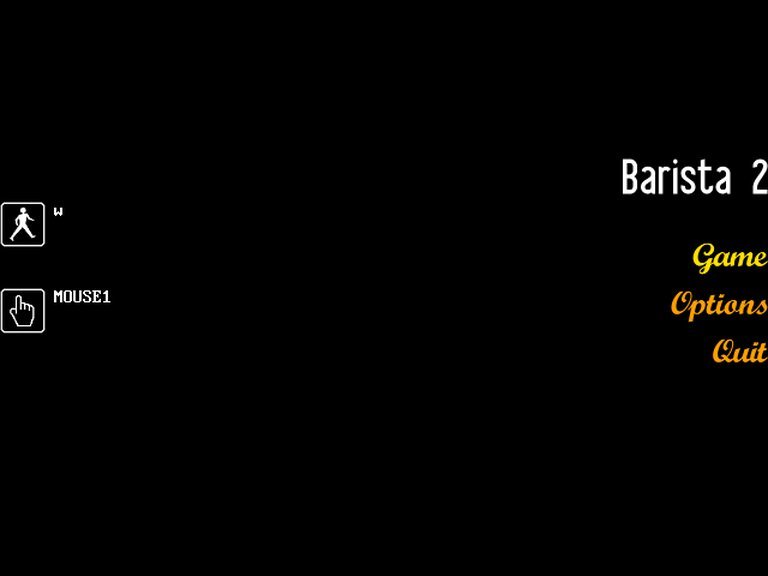
Description
Barista 2 is a free, standalone adventure game that reimagines the Quake II engine as an interactive story experience. Players take on the role of a spaceship pilot who crashes onto a surreal, face-shaped planet and must explore its environments, interact with objects, and engage in text-based dialogues with NPCs to gradually uncover a sci-fi narrative through puzzle-solving, all without any combat elements. The game is intentionally brief, offering a concise yet immersive journey that can be completed in just a few minutes.
Barista 2 Reviews & Reception
caiman.us (72/100): A very short but good 3D puzzle game
Barista 2: A Phantom Limb of the Indie Renaissance—An Exhaustive Historical Review
Introduction: The Ghost in the Machine
In the vast, player-carved catacombs of video game history, certain titles exist not as celebrated monuments but as spectral footnotes—games known more by rumor and fragmentary evidence than by widespread play. Barista 2 (2004) is one such phantom. Created by a then-college student, Brendon Chung, as an independent study project, it represents a fascinating and almost entirely obscured pivot point in game design: a total conversion of id Software’s Quake II, a seminal first-person shooter engine, into a non-violent, text-driven narrative exploration game. This review posits that Barista 2 is not merely a curiosity but a pivotal, if miniature, prototype. It anticipates the potent fusion of environmental storytelling and player-driven discovery that would, over a decade later, come to define a golden age of indie narrative games like Chung’s own Gravity Bone (2012) and Thirty Flights of Loving (2012), as well as contemporaries like The Stanley Parable. To study Barista 2 is to see the genetic code of a movement being written in a language—QuakeC for the Quake II engine—that was never meant to express such sentiments. Its thesis is a quiet rebellion: that the most profound stories can emerge from the dismantling of a genre’s core mechanic, repurposing its technical skeleton for a wholly different philosophical end.
Development History & Context: Modding as Avant-Garde Laboratory
The Studio & The Creator’s Vision
Barista 2 was not developed by a studio in any conventional sense, but by Brendon Chung as a collegiate independent study project. This context is everything. The mid-2000s were a liminal period for independent game development. The “indie scene” as a commercial force was nascent, buoyed by the rise of digital storefronts like Steam (which launched in 2003) and the cultural cachet of modding. Chung’s work, later compiled under the banner Blendo Games, existed within this vibrant modding ecosystem. His credits on Barista 2—a “Thousand Thanks” list that includes luminaries from the Quake and Star Wars Quake communities, as well as seminal studios like Looking Glass Studios and Valve—map the social network of an era where game creation was a communal, often free, act of love and technical one-upmanship.
The creator’s stated vision, as per the MobyGames description, was explicitly “an interactive story.” This ambition, in 2004, was radical when applied to the Quake II engine, an engine synonymous with fast-paced, alien carnage. The very act of stripping away combat—the engine’s raison d’être—was a declarative act. It was a statement that the tools of spatial navigation, environmental rendering, and player movement could serve a contemplative, puzzle-based experience. This approach aligns with the “games as art” discourse of the time, influenced by the environmental puzzle-game Myst (1993) and the narrative ambitions of the Ultima series, but filtered through the gritty, industrial aesthetic of a 1997 FPS engine.
Technological Constraints & The Quake II Engine
Understanding Barista 2 requires understanding the Quake II engine (id Tech 2) not as a limitation but as a creative catalyst. Released in 1997, the engine was a powerhouse of real-time 3D rendering, featuring a dynamic lighting system (albeit basic by modern standards), a BSP (Binary Space Partitioning) system for efficient level geometry, and a networked codebase for multiplayer. Its tools (GtkRadiant for level design, QuakeC for gameplay scripting) were publicly available, inviting modification.
Chung’s constraint was to make this engine, built for “shoot the barrel, then the monster” logic, communicate a story through non-shooting. This demanded a complete reprogramming of the entity system. Instead of info_player_deathmatch spawns, he would need func_conversation or trigger_look entities. The engine’s limitations—low-polygon models, texture-based lighting, simple sound propagation—became aesthetic virtues. The “giant face” planet described in the source material isn’t a cinematic reveal; it’s a texture-mapped architectural joke, a colossal, static visage looming over a corridor, its meaning derived from player interpretation, not scripted cutscenes. The text-based NPC interaction (“all done by entering text”) is a necessity born of modding limitations; implementing a complex dialogue tree system in QuakeC was non-trivial, so a minimalist, parser-like approach was adopted, forcing narrative economy.
The 2004 Gaming Landscape
In August 2004, the PC gaming landscape was dominated by a few key trends:
1. The CRPG Renaissance: As detailed in the provided Gamasutra article, the “Platinum Age” of CRPGs was in full swing, with titles like Baldur’s Gate II: Throne of Bhaal (2001), Arcanum: Of Steamworks and Magick Obscura (2001), and The Elder Scrolls III: Morrowind (2002) championing deep, open-ended worlds and complex systems.
2. The FPS Hegemony: The “modern military shooter” was solidifying (Call of Duty launched in 2003). The engine wars were intense, with the Unreal Engine 2 and id Tech 3 (from Quake III Arena) powering visually spectacular action games.
3. The Modding Crucible: This was the peak of major modding scenes. Counter-Strike (1999) and Team Fortress Classic (1999) had already become standalone commercial successes. The idea that a mod could be a complete, artistically distinct game was proven but still niche. Barista 2 sits squarely in this tradition of total conversions that reject their parent engine’s genre—like They Hunger (a horror total conversion for Half-Life)—but goes further by rejecting interactivity itself in favor of pure narrative exploration.
In this context, Barista 2 was an outlier. While Morrowind offered a world to get lost in, Barista 2 offered a world to read. It was more aligned with the European adventure game tradition (e.g., Realms of Arkania) or the parser interactive fiction of the 1980s, but transplanted into a fully navigable 3D space. It was a game that asked, “What if walking was the primary mechanic?”
Narrative & Thematic Deep Dive: A Crash Course in Existentialism
Plot Architecture: The K-stranded Narrative
The plot, as distilled from the source material, is a classic science-fiction trope with a philosophical twist: a spaceship pilot, on a mission, crashes on a planet that is literally a giant face. Stranded, he must explore this surreal world to understand his predicament. The narrative is not delivered through cutscenes or exposition dumps, but is unearthed through environmental examination and sparse, text-based NPC interaction. This is a “mystery box” structure avant la lettre. The player is dropped into a scenario with zero context and must become an archaeologist of their own situation.
The “giant face” planet is the key symbolic element. It immediately raises ontological questions: Is this a natural formation? A megastructure? A god? A corpse? The game’s brevity (“can be completed in a few minutes”) suggests a tightly focused allegory rather than an epic. The player’s journey is less about saving the world and more about comprehending it. This aligns with a tradition of “strange journey” sci-fi, from Solaris to Stalker, where the environment itself is the antagonist and the subject of inquiry.
Character & Dialogue: The Economy of Text
With no traditional NPCs and interaction reduced to typed commands, character is conveyed entirely through environmental storytelling and the player’s own projections. The “other” is the planet itself, and any entities encountered are fragments of its nature or the pilot’s psyche. The dialogue system, described as “entering text,” implies a minimal parser. This forces extreme concision in writing. Every item description, every response from the world, must carry weight. There is no room for filler quests or verbose lore dumps. The theme here is isolation and communion through limitation. The pilot is alone, but through the act of interacting—of “speaking” to the world via commands—he forges a connection, however monosyllabic.
Underpinning Themes: The Archaeology of Self
Given the minimalist framework, the themes are necessarily abstract but powerfully evocative:
1. The Anthropocene of the Mind: The planet is a face. The pilot, a human, instinctively seeks the familiar pattern—a visage—to relate to the alien. The narrative becomes an investigation into how consciousness imposes narrative on chaos.
2. Legacy and Obsolescence: The game is a total conversion of Quake II. The pilot has crashed; his ship is “wrecked.” Both are metaphors for technological failure and the transition from one paradigm (FPS action) to another (narrative exploration). The game itself enacts this: it uses a “dead” engine (by 2004, Quake II was superseded) for a new purpose.
3. The Interactive Story as a Puzzle: The game’s billing is key: it is an “interactive story,” but one where the interaction is primarily cognitive and exploratory, not agentive. The player’s role is not to change the story but to reveal it. This is a profound shift from the power fantasies of its engine siblings. The thesis is that discovery, not domination, is the core pleasure.
Gameplay Mechanics & Systems: Deconstructing the FPS
Core Loop: Explore > Examine > Text-Command > Revelate
The gameplay loop is a deliberate, almost meditative rhythm. The first-person perspective (inherited intact from Quake II) provides the spatial orientation. Movement is the primary verb. The player navigates the bizarre, face-planet geometry. Interaction is context-sensitive, likely bound to a key (e.g., E in modern terms) which, when pressed on an object, triggers a text parser input or a pre-scripted response.
This is a “narrative exploration” loop, later perfected in games like The Stanley Parable or Everything. Progress is gated not by combat prowess or puzzle logic (in the traditional sense), but by the player’s curiosity and willingness to engage with the environment textually. There is no inventory, no health, no resources. The only “state” is the player’s collected understanding.
Systems: The Quake II Exoskeleton
The brilliance lies in what is removed and what is repurposed:
* Movement & Physics: The snappy, responsive, strafe-jump-capable movement of Quake II is retained. This creates a fascinating dissonance. The player can move like a Quake player but has nothing to shoot. This physical potential unspent becomes a backdrop for contemplation. The engine’s collision system is used for navigating tight spaces and discovering hidden areas, making exploration inherently spatial.
* Level Design as Narrative: The BSP-based geometry is not for arena combat but for architectural storytelling. Corridors imply journey; dead ends imply dead thoughts; grand chambers imply significance. The “giant face” is a colossal, non-interactive brush model—a piece of level geometry that transcends its function to become a symbol.
* The Text Parser as Legacy Interface: The use of typed commands (take, look, examine, use) is a direct callback to the adventure games of the 1980s (Sierra, LucasArts) and MUDs. It’s an interface stripped to its logical extreme. In an era increasingly dominated by context-sensitive “E” prompts and radial menus, this is a bold, almost reactionary, choice. It makes interaction an act of deliberate, mental engagement, not physical reflex.
Innovation vs. Flaw: The Paradox of Shortness
The stated brevity (“a few minutes”) is both the game’s greatest flaw and its most potent innovation.
* As Flaw: It limits depth. There is no room for complex branching, character arcs, or systemic world simulation. It is a vignette, a proof-of-concept.
* As Innovation: It enforces absolute thematic integrity. Every second, every line of text, every polygon must serve the core idea. There is no filler. This is the essence of ludonarrative harmony: the form (short, focused, deterministic) perfectly matches the content (a brief, strange, existential encounter). It is a “complete thought” in game form.
World-Building, Art & Sound: The Aesthetics of Limitation
Setting & Atmosphere: The Face of God (or Geometry)
The setting is a planet that is a giant face. This is a concept that could be kitschy or profound. In the low-poly, texture-mapped world of Quake II, it is inevitably abstract. The “face” is suggested by repeating patterns, symmetry, and colossal geometry. The atmosphere is one of cosmic loneliness and architectural absurdity. The sterile, grayish tech-base textures of the Quake II engine are repurposed to create a sterile, geometrical purgatory. There is no skybox in the traditional sense; the player is always inside or on the face. The world is simultaneously impossibly large (a planet) and claustrophobically confining (a series of connected rooms).
Visual Direction: Modding Aesthetic
The visual style is pure “2004 modder.” It uses stock Quake II textures (metal floors, computer panels, technological crates) but arranges them in surreal, non-functional ways. A corridor might be lined with monitors displaying static; a cavern might be formed by interlocking hexagonal segments. The aesthetic is biomechanical surrealism. The fidelity is low, but the composition is intentional. The lack ofmodern lighting models (no dynamic shadows) means mood is created through texture choice and brushwork. Walls are either fully lit or dark; there is no gradient. This starkness enhances the uncanny, ritualistic feel.
Sound Design: The Sound of Empty Spaces
The MobyGames entry specifies nothing about sound, but context is revealing. Quake II’s sound system was basic, supporting mono .wav files for effects and CD-quality tracks for music. A creative modder could replace all sounds. For Barista 2, one can infer a minimalist approach. The default engine sounds—the crunch of feet on metal, the hum of machinery—would either be retained to maintain a sense of technological place, or stripped entirely to create profound silence, broken only by the player’s actions (a door creak, a console beep) and, crucially, the text parser’s synthesized voice or typewriter effect.
This soundscape would be essential to the experience. In the absence of music (common in such focused mods), the audio would be diegetic and sparse, emphasizing the player’s solitude. Every sound would be an event, a punctuation mark in the quiet exploration. This is the aural equivalent of the text parser: functional, immediate, and devoid of emotional manipulation.
Reception & Legacy: The Quiet That Roared
Critical & Commercial Reception: A Whisper in the Storm
Barista 2 was released as freeware on sites like Blendo Games’ own “Older Projects” page. It existed in the vast, uncataloged depths of the early-2000s mod scene. There is no record of a professional critic review on aggregators like MobyGames (where its score is n/a and only 4 users have “collected” it). It was not on Steam, not on major retail shelves. Its reception was, by all measurable metrics, negligible. It was a drop in the ocean of Quake II total conversions.
Evolution of Reputation: The Appreciation of a Prototype
Barista 2’s reputation has not so much “evolved” as it has been retrospectively excavated and contextualized by those who know what to look for. Its legacy is not in sales or awards, but in its DNA. The path is clear:
1. Brendon Chung’s Oeuvre: After Barista 2, Chung created the Citizen Abel series (1999-2001), more traditional (though quirky) Half-Life mods. Then, with Gravity Bone (2012) and Thirty Flights of Loving (2012), he created masterpiece-level, short-form, first-person narrative vignettes that use the Source engine with the same spirit Chung applied to Quake II: stripping it of combat, focusing on surreal environments, environmental storytelling, and precise pacing. Critics and scholars now cite these later works as landmarks. Looking back, Barista 2 is seen as the embryonic version of this signature style—the same philosophy, executed with a cruder toolset.
2. The “Walking Simulator” and Narrative Exploration Boom: The 2010s saw the rise of the “walking simulator” (The Stanley Parable, Dear Esther, Firewatch). These games validate Barista 2’s core premise: that first-person navigation can be a narrative vehicle. Barista 2 predates this movement by nearly a decade, making it a forgotten pioneer.
3. Modding as a Training Ground: For scholars of game development, Barista 2 is a case study in how the modding scene served as a university. The tools were free, the community was present, and the constraint was the engine. This is where designers learned by destroying and rebuilding. Chung’s journey from Barista 2 to commercial, critically acclaimed indie titles is a perfect arc of this pipeline.
Influence on the Industry: The Uncredited Prototype
Barista 2 did not directly influence major studios. Its circulation was too limited. Its influence is indirect and philosophical, passed through the hands of developers who, like Chung, grew up in the modding scene. It is part of the collective unconscious of indie game design—a proof that you can do this. When a developer today decides to use Unity or Godot to make a non-violent, exploratory game, they are operating in a space Barista 2 helped demarcate. It is an ancestor of the “game as a place to be” philosophy, a corrective to the “game as a problem to solve” paradigm that dominated its engine’s origin.
Conclusion: The Importance of Being Brief
Barista 2 is not a “great” game by conventional metrics. It is short, simplistic by modern standards, and visually dated. But it is a great act of game design. It is a deliberate, thoughtful, and intellectually rigorous repurposing of a violent tool for a peaceful end. In its stark minimalism, it achieves a purity of vision that its more polished descendants sometimes sacrifice in pursuit of scope or complexity.
Its place in history is that of the precursor prototype. It is the sketch in the margin that hints at the finished painting. It demonstrates that the desire to use game engines for non-traditional, contemplative purposes existed in the modding scene long before it became a marketable indie trend. Brendon Chung didn’t just make a game in 2004; he planted a seed. That seed, watered by a decade of changing tastes and technological accessibility, bore fruit in the 2010s with a harvest of narrative masterpieces.
To play Barista 2 today is to engage in an act of archaeological reconstruction. You are handling a rough, hand-hewn artifact that contains the fundamental blueprint for a later, more refined craft. It is a testament to the idea that the most significant innovations in game design often come not from adding features, but from the courageous, almost violent, act of subtraction. It asks us to consider: what is the Quake II engine without the Quake? Barista 2 answers: a stage, a text box, and a universe of possibility, waiting for the player to simply look and understand.
Final Verdict: Culturally, Essential. As a playable experience, Historically Significant & Academically Interesting. It is a missing link in the evolution of narrative-driven, non-violent first-person games, and its obscurity is a reminder that the history of our medium is still being written, and many of its first drafts lie hidden in plain sight on forgotten download pages. Seek it out not for entertainment, but for education—a masterclass in how constraints breed creativity, and how a single developer’s curiosity can forecast an industry’s future.