
- Release Year: 2022
- Platforms: Windows, Xbox One, Xbox Series
- Publisher: Bonus Stage Publishing
- Developer: Korpus
- Genre: Adventure
- Perspective: 1st-person
- Game Mode: Single-player
- Gameplay: Puzzle
- Setting: Fantasy
- Average Score: 84/100
Description
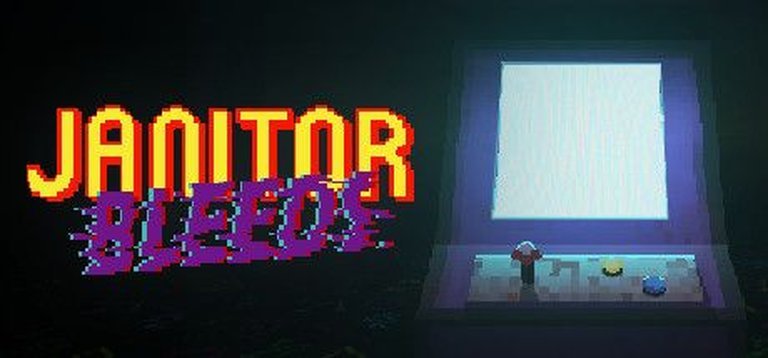
Janitor Bleeds is a horror adventure game set in a mysterious abandoned arcade. After a car accident strands the player inside, they must explore the arcade, collect tokens, and play the JANITOR arcade cabinet—a puzzle game that provides tools to unlock new areas—while constantly evading a terrifying entity known as The Entity, which hunts them throughout the environment, creating a tense blend of exploration, puzzle-solving, and survival horror.
Gameplay Videos
Where to Buy Janitor Bleeds
Janitor Bleeds Mods
Janitor Bleeds Guides & Walkthroughs
Janitor Bleeds Reviews & Reception
metacritic.com (80/100): There’s so much good going for Janitor Bleeds, creating plenty of scares with its well-executed main concept of having to play an arcade game while stalked by a mysterious entity.
monstercritic.com (88/100): Low-poly horror is all the rage it seems, but few titles pull it off as well as Janitor Bleeds. Smart pacing, clever use of mechanics, and an excellently crafted atmosphere combine to make a great indie horror title.
keengamer.com : Janitor Bleeds is a retro first person survival horror game where you are trying to escape from an arcade while pursued by an entity.
Janitor Bleeds: A Retro-Fueled Descent into Arcade Horror
Introduction: The Allure of the Glitch
In the contemporary landscape of horror gaming, where hyper-realistic graphics and convoluted narratives often dominate, Janitor Bleeds emerges as a deliberate, almost defiant, anachronism. Released in April 2022 by the Finnish indie studio Korpus, this first-person adventure-horror title does not merely wear its 1990s inspiration on its sleeve; it anatomizes the era’s aesthetic and design philosophies to construct a uniquely unsettling experience. At its core lies a brilliantly simple, high-concept premise: you are trapped in a decrepit arcade, stalked by a monstrous entity, and the only means of survival is to repeatedly play a strange, cursed cabinet game called JANITOR. This review will argue that Janitor Bleeds is a fascinating, if deeply flawed, case study in minimalist horror design. It succeeds brilliantly in crafting an atmosphere of pervasive dread and leveraging its “game-within-a-game” mechanic for relentless tension, yet it is equally held back by a disappointingly thin narrative framework and several underdeveloped systems that prevent it from achieving classic status. Its legacy is that of a potent proof-of-concept—a “cabinet of spooks” that demonstrates the enduring power of constrained, idea-driven horror.
Development History & Context: From Demo Disc Darling to Full Release
The Studio and the Vision:
Korpus, the development team behind Janitor Bleeds, is a Finnish collective whose prior work includes titles like Buried over the Black Soil. Their stated aim for Janitor Bleeds was to create a game “inspired by the video games of the 90s,” but not as a carbon copy. Instead, they sought to capture the visual and tactile essence of that era—the low-poly models, the limited color palettes, the grain of the texture—and recontextualize it within a modern, streamlined horror framework. The game was built in Unity, a common engine for indie projects due to its accessibility, which both enabled and constrained the final product. The technological constraints were not a limitation but a deliberate aesthetic choice, aligning the game with the “PS1-era horror” or “haunted PS1” movement, a subgenre characterized by its retro, low-fidelity visuals that paradoxically enhance psychological horror by leaving more to the imagination.
The Haunted PS1 Demo Disc and Path to Release:
Janitor Bleeds’ crucial origin story lies within the Haunted PS1 Demo Disc series, a curated compilation of horror demos organized by Irish developer Breogán Hackett. The 2021 iteration included an early version of Janitor Bleeds. This context is vital: the game was born not in a vacuum, but as part of a grassroots, community-focused movement celebrating experimental, lo-fi horror. Its inclusion provided immediate validation and a built-in audience of horror aficionados attuned to its specific aesthetic. The positive reception to the demo led to a publishing deal with Bonus Stage Publishing, and the full version was released on April 7, 2022, for Windows (via Steam, GOG, itch.io) and Xbox platforms. This trajectory—from a free demo in a compilation to a commercial release—explains some of the game’s idiosyncrasies; certain mechanics and the overall structure feel polished and intentional, while others, particularly regarding narrative detail and the token economy, seem like missed opportunities that may have been present in a longer, more fully realized development cycle.
Narrative & Thematic Deep Dive: A Story Told in Environmental Traces
The Plot: A Vignette of Predation
The narrative of Janitor Bleeds is skeletal, delivered primarily through environmental storytelling and a scatter of collectible notes. The protagonist (a silent, player-insert character) suffers a car accident in a forest and, disoriented, stumbles upon Hemo’s Arcade—a seemingly abandoned but powered building. Inside, the only functional machine is the JANITOR cabinet, which exerts a powerful, unnatural pull. Upon playing it, the player inadvertently releases “The Entity,” a glitching, pixelated monstrosity that begins hunting them through the arcade’s halls. The goal becomes to explore the facility, use the JANITOR game to obtain tools and keys (by completing its simple cleaning-based puzzles), and ultimately confront the source of the haunting.
The plot offers two endings based on a final choice:
* Ending A (GAME OVER): If the player achieves a high score (16,000 points) and destroys the final “boils” of the Source entity, the arcade’s illusion shatters. The player awakens in the genuinely derelict, decades-ruined building as police arrive, having survived the ordeal.
* Ending B (JANITOR BLEEDS): If the player touches the final JANITOR cabinet, they are absorbed. Their blood is drained, and their consciousness is trapped within the machine, becoming the new “JANITOR” entity. The game loops as another unsuspecting driver pulls up outside.
Themes: The Predatory Arcade and The Game That Plays You
Thematically, Janitor Bleeds is most effective when interpreted through the lens of genius loci (the spirit of a place) and “The Most Dangerous Video Game” trope. Hemo’s Arcade itself is a predatory entity, its very geography and signage (“Hemo” as a play on hemoglobin, later renamed “Blood Arcade”) hinting at a vampiric, sacrificial purpose. The JANITOR cabinet is not merely haunted; it is a sentient, parasitic system. Its puzzle game is a literal “feeding” mechanism—each token inserted, each puddle mopped, fuels its power and its captive entity. This embodies the potent horror idea of “The Game Plays You.” The player, seeking escape, is forced to feed the very thing hunting them, creating a profound sense of complicity and inevitable doom.
The notes scattered around—from a previous victim and from arcade staff—hint at a cyclical tragedy: the arcade acquired the cursed cabinet, staff disappeared, and now it lures new victims from the nearby road. This creates a closed loop of predation, emphasized by Ending B’s cyclical return. The game thus explores themes of inescapable fate, consumption, and digital entrapment. The player’s ultimate victory (Ending A) is a temporary, external reprieve (police rescue), while the “loss” (Ending B) is a seamless integration into the horror’s machinery—a far more existentially terrifying fate that aligns with the “And I Must Scream” trope.
However, the narrative’s profound weakness is its lack of motivational grounding. As critic Zoey Handley noted, there is virtually no in-game reason for the protagonist’s actions beyond “pressing the next button.” Why explore a dark, monster-infested arcade for help when you’re injured from a crash? Why trust the only working game? The notes provide context but not personal stakes. This omission drains potential immersion and turns the experience into a pure mechanics-driven thriller rather than a story-rich horror, a critical point of divergence among reviewers.
Gameplay Mechanics & Systems: The Tense Dance of Mopping and Hiding
Core Loop and Structure:
The gameplay is a masterclass in taut,循环 design. The loop is: Explore Arcade → Find Tokens (up to 10) → Play JANITOR Cabinet → Receive Tool/Key → Use Tool/Key to Unlock New Arcade Area → Repeat, while evading The Entity. This cycle is relentlessly punctuated by the threat of pursuit. Areas are gated behind items obtained from the JANITOR game (a screwdriver for vents, a fire hose for toxic sludge, keys for locked doors), creating a clear progression path.
The JANITOR Mini-Game:
This is the game’s ingenious centerpiece. It’s a simplistic, 2D, Atari-era puzzle game where a pixelated janitor character mops up puddles of water and blood in a top-down maze. Completing a room unlocks the next and occasionally grants an item. Its charm and simplicity are a stark, unsettling contrast to the 3D horror surrounding it. The mechanic ties the two realities together: mopping a bloody puddle in the game might clear a toxic sludge patch in the arcade. Items can also be “sent” into the JANITOR world to solve obstacles there, creating a bidirectional link that feels clever and integral.
The Entity and Pursuit:
The Entity is the game’s relentless heartbeat. Its AI, while not flawless, is effectively aggressive (Artificial Brilliance combined with Artificial Stupidity). It patrols systematically, is attracted to light (the player’s flashlight), and can drag the player from hiding spots if it suspects they are there. Its presence is brilliantly telegraphed through audio/visual distortion: the screen develops static, blurs, and takes on a red tinge; the JANITOR cabinet’s screen glitches; the ambient soundtrack fades, replaced by the Entity’s footsteps and a terrifying, rising yell when it spots you. This creates an unparalleled “Jaws” tension—you often know it’s near before you see it, forcing constant, panicked checks over your shoulder.
Systems: Token Economy and Inventory
The token system is the game’s most criticized mechanic. Each JANITOR playthrough costs 3 tokens. Tokens are scattered around the arcade, but finding them requires exploration—exploration that is dangerous with the Entity nearby. Critics like Cory Clark (Hey Poor Player) called it “woefully underused.” The potential for clever resource management—hoarding tokens for a long play session, racing to find more when stranded—is present but rarely stressed by the game’s design or pacing. It feels like a systemic idea that wasn’t fully leveraged to create meaningful scarcity.
The inventory system is simple, accessed via number keys or mouse wheel, but suffers from a quirk highlighted in the Keengamer review: the flashlight often auto-equips after finishing a puzzle or using an item, potentially shining a beacon and giving away the player’s position at the worst moment. This breaks player agency and can feel like a punitive, unfair mechanic rather than a tense gamble.
Progression and Endings:
Progression is linear and puzzle-based, with environmental keys and tool use forming the core challenge. The difficulty spikes not from puzzle complexity, but from the Entity’s increased aggression in later areas. The two endings are determined by a single, late-game choice (shoot vs. touch) gated by a score threshold, which feels abrupt after a ~1-2 hour experience. This brevity is a double-edged sword: the game is tightly paced and doesn’t overstay its welcome, but it also means world-building and plot remain skeletal.
World-Building, Art & Sound: The Haunting of Hemo’s
Visual Design and Setting:
Hemo’s Arcade is the star. The environment is a masterwork of retro-inspired lo-fi horror. Using low-poly 3D models with harsh, pixelated textures, Korpus creates a space that feels simultaneously nostalgic and deeply wrong. The carpet is a dizzying pattern, the wallpaper is peeling with grotesque designs, and fake arcade cabinets (like “Whac-A-Mole” with malformed moles) populate the halls, adding layers of unsettling detail. The lighting is dim, with primary light sources coming from the neon signs of cabinets and the player’s flashlight, casting long, paranoia-inducing shadows. The shift from the “normal” arcade to the “Blood Arcade” (with redder lighting and more visceral decor) is a subtle but effective narrative beat.
The JANITOR cabinet itself is a visual and thematic keystone. Its CRT screen flickers, its artwork is crude and ominous, and its “attract mode” plays a catchy yet deeply unsettling jingle—a perfect execution of the “Attract Mode” trope that draws the player in even as it warns them.
Sound Design:
The audio is arguably the game’s most consistently praised element. The soundtrack and sound design work in tandem to build a soundscape of dread. The ambient noise in the arcade is a low, oppressive hum, broken by the tinny, cheerful music of non-functional cabinets—a disorienting contrast. The JANITOR game has its own bouncy, 8-bit tune that becomes a cagey, ironic companion. The true horror comes from the diegetic sounds: the crunch of footsteps on the carpet, the splash of mop in the mini-game, and most terrifyingly, the Entity’s audio cues. The distant thud of its approach, the wet, glitching sounds as it nears, and that piercing, digital yell when it gives chase are perfectly timed to induce panic. The sound design doesn’t just accompany the horror; it is the primary vector for it.
Reception & Legacy: A Polarizing Gem
Critical Reception:
Upon release, Janitor Bleeds received “mixed or average reviews,” with a Metacritic score of 60/100 based on four critic reviews. The consensus split neatly along two axes:
1. Atmosphere & Concept: Nearly all critics praised the setting, the retro art style, and the core “play-a-game-while-hunted” premise. PC Gamer called the art “really appealing,” Horror Obsessive found the atmosphere “perfectly creepy,” and Hey Poor Player lauded the “well-executed main concept.”
2. Depth & Detail: This is where the game was savaged. Destructoid’s Zoey Handley called it “mediocre” and “linear,” criticizing its failure to build a compelling narrative or justify player actions. Keengamer noted “graphical issues” (long loading times, freezes) and a “weak story.” The token system and underdeveloped environmental storytelling were common points of critique.
The positive reviews, like Hey Poor Player’s 80/100, conceded flaws—short length (~1 hour), weak ending, underused systems—but argued that the game’s simplicity and focused execution of its core idea were significant strengths.
Player Reception and Cult Status:
On Steam, user reviews are “Very Positive” (83% of 144 reviews at the time of writing), indicating a strong disconnect from some critical pans. Players seem more forgiving of the thin plot and more enchanted by the game’s vibe and tense gameplay loop. The game’s journey from a standout demo in the Haunted PS1 Demo Disc to a commercial release gave it a pre-existing fanbase. Community feedback on Steam and itch.io during development shows an engaged audience offering bug reports and enthusiasm, particularly for the atmosphere and “spooky” feel.
Legacy and Influence:
Janitor Bleeds is unlikely to be remembered as a genre-defining masterpiece, but its legacy is secure within the haunted PS1/retro-horror niche. It demonstrates a potent formula: a single, brilliant mechanic (the intertwined realities) can carry an entire experience if executed with atmospheric confidence. It sits alongside titles like Dread Delusion or Sauna2000 as an example of how constraints (low budget, short dev cycle) can breed creativity. It also serves as a cautionary tale about the importance of narrative scaffolding; a compelling world needs reasons for the player to care beyond immediate survival. Its influence can be seen in subsequent indie horrors that embrace a “contained” setting and a game-like mechanic as the central threat, though few have matched its specific synth of arcade nostalgia and visceral pursuit.
Conclusion: A Fascinating Flawed Relic
Janitor Bleeds is a game of exquisite tensions—between retro and modern, between simplicity and depth, between a genius premise and undercooked execution. It is a short, sharp shock of a game that understands the primal fear of being hunted in a liminal space. Its strengths are monumental: the JANITOR cabinet is a stroke of design genius, the Entity’s pursuit is flawlessly telegraphed and terrifying, and the arcade’s aesthetic is a love letter to a bygone era of gaming that feels authentically haunted. These elements combine to create moments of genuine, sweat-inducing terror.
Yet, these strengths are shackled to glaring weaknesses. The narrative is a skeleton, lacking the motivational flesh to make the world feel consequential beyond its function as a hunting ground. Key systems, like the token economy, hint at deeper resource management strategies that the game never fully commits to. Technical hiccups like loading freezes can break the fragile tension it works so hard to build.
Ultimately, Janitor Bleeds earns its place not as a classic, but as a cult curio and a vital case study. It proves that a powerful central metaphor—a game that literally consumes its player—can create an unforgettable horror experience even when wrapped in a thin narrative shell. For the price of a few dollars, it offers a concentrated dose of its unique, retro-flavored dread. It is a game you play for the brilliant, running adrenaline of its core loop, not for the story you uncover. In the end, it is less about why you are in Hemo’s Arcade, and entirely about the sheer, glitching terror of what is stalking you as you try to mop up one last puddle. It is a flawed, fascinating, and often frightening cabinet that, even with its “out of order” signs, is absolutely worth inserting a coin to play.