
- Release Year: 2001
- Platforms: Windows
- Publisher: Pointsoft S.A.
- Developer: TAMDEM EDITIONS
- Genre: Educational
- Game Mode: Single-player
- Gameplay: Game show, quiz, trivia
- Setting: Europe
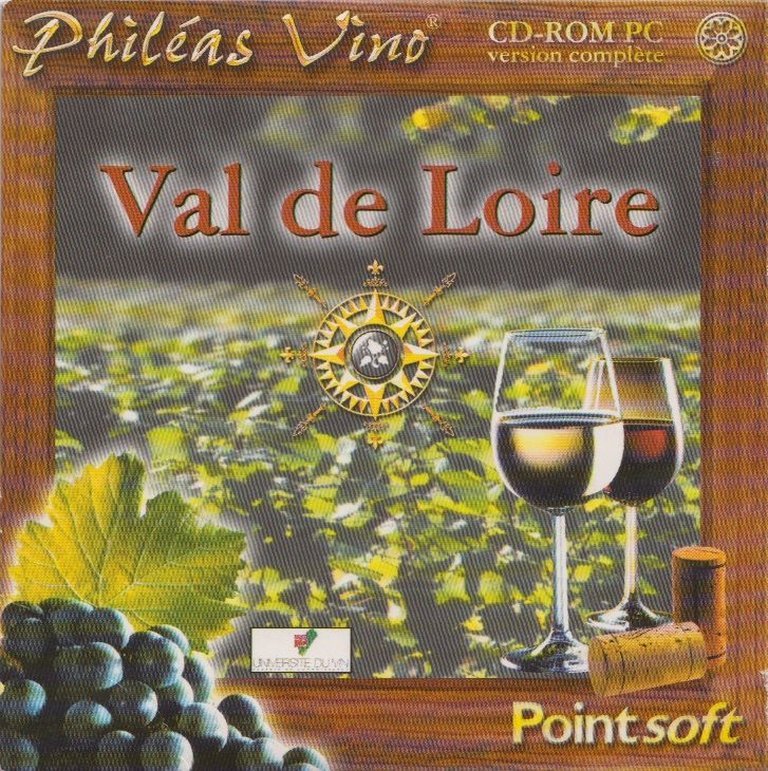
Description
An in-depth look at Philéas Vino: Val de Loire.
Philéas Vino: Val de Loire: A Digital Oenological Time Capsule
Introduction: A Toast to a Forgotten Genre
In the vast library of video game history, certain titles exist not as pillars of innovation or cultural milestones, but as fascinating artifacts—snapshots of a specific technological moment and a niche, earnest ambition. Philéas Vino: Val de Loire (2001) is precisely such an artifact. Endorsed by the official l’Université du Vin and developed by the French studio TAMDEM EDITIONS, this title represents the last gasps of the CD-ROM encyclopedia era, a period where interactive learning was synonymous with hyperlinked text, low-resolution images, and clunky Java applets masquerading as games. Its legacy is not one of commercial success or critical acclaim—data on both are virtually nonexistent—but as a dedicated, if technologically constrained, vessel for oenological education. This review argues that Philéas Vino is a significant historical document, not for its gameplay, but for its pure, unadulterated embodiment of the early 2000s “edutainment” paradigm: a well-intentioned, academically sanctioned knowledge repository grafted onto the barest possible framework of interactive quiz mechanics, ultimately revealing the profound limitations of its medium.
Development History & Context: The Last Hurrah of the CD-ROM Academy
The game’s genesis lies firmly within the context of the late-1990s/early-2000s edutainment boom. Following the success of titles like The Oregon Trail and Myst, publishers sought to capitalize on the CD-ROM’s capacity for storing vast amounts of text and imagery. The year 2001 was a pivotaltransition point: Windows 95/98 remained dominant, but high-speed internet was beginning to erode the necessity for massive offline encyclopedias. Java applets were a common, cross-platform solution for embedding interactive content within a desktop environment, explaining the game’s reliance on a “Java-enabled Web browser” architecture—a fascinating detail that blurs the line between local application and nascent web technology.
TAMDEM EDITIONS, the developer, remains an obscure entity, a footnote in MobyGames’ database with this title as its sole listed credit. This suggests a small, specialized studio or possibly a contracted team, likely working directly with wine experts from the l’Université du Vin to ensure content accuracy. The publisher, Pointsoft S.A., was a French software house known for utility and educational software, perfectly aligning with the target market. The technological constraints are starkly defined by the “Minimum System Requirements”: an Intel Pentium CPU, 16MB of RAM, and Windows 95. This places it firmly in the era of 800×600 resolution, limited color palettes, and performance heavily dependent on system resources for what is essentially a series of static pages and forms. The choice of the CD-ROM as the “Media Type” is the ultimate signifier of its time; it was a physical object sold in stores, a tangible encyclopedia, at the exact moment digital distribution and online learning platforms were beginning their ascent.
Narrative & Thematic Deep Dive: The Story of the Soil
Philéas Vino possesses no traditional narrative. There are no characters, no plot, no dialogue in a dramatic sense. Its “story” is the story of the Loire Valley itself, presented as an academic, linear exposition. The thematic core is unequivocally terroir—the French concept that a wine’s character is expressively shaped by its specific geography, geology, climate, and human cultivation. The game’s structure implicitly argues for a holistic understanding: one cannot simply taste a wine; one must understand the schist soils of the Côte Roannaise, the tuffeau limestone caves used for aging, the microclimates differentiating Anjou from Touraine, and the historical practices of the vignerons.
The thematic depth is delivered through its encyclopedic sections:
1. Terroirs: A geological and climatological survey of the Loire’s sub-regions (Nantes, Anjou, Saumur, Touraine, Orléans, etc.). This is the foundational theme, establishing that wine is a product of place