
- Release Year: 2014
- Platforms: Windows
- Publisher: Electronic Arts, Inc.
- Genre: Compilation
- Average Score: 79/100
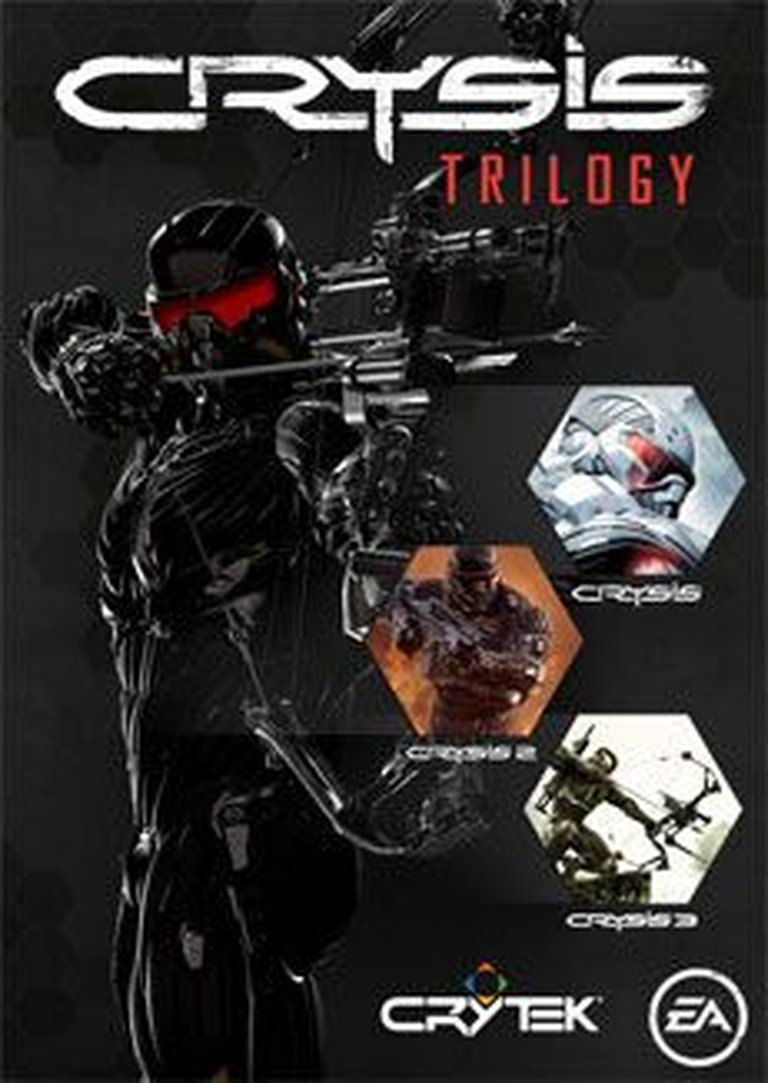
Description
The Crysis Trilogy is a comprehensive digital compilation featuring all main games and expansions from the Crysis series, set in a near-future world where players assume the role of elite soldiers equipped with adaptable Nanosuits. The narrative spans diverse environments, from the tropical Lingshan Islands to the ruins of New York City, as they battle North Korean forces and extraterrestrial threats stemming from the discovery of a powerful ancient alien structure.
Gameplay Videos
Crysis Trilogy Reviews & Reception
metacritic.com (87/100): Crysis Remastered Trilogy is a must-have for any fan of the games or of the FPS genre in general. This release represents the best way to play three of the best shooters from the mid-2000s.
metacritic.com (80/100): The Crysis Remastered Trilogy is not just for purists but is a series that can now be played perfectly on the PlayStation 5 for anyone. Unlike some of the more recent remastered games, The Crysis Remastered Trilogy is a true remastered experience that delivers an almost next-gen experience with some stunning graphical improvements.
metacritic.com (80/100): The whole Crysis saga can now be played with enhanced visuals, especially on next-gen consoles: while the gameplay is somewhat frozen in time and show the limits of games developed in another era, there’s much to enjoy and the games are still fun to play.
metacritic.com (75/100): The Crysis Remastered Trilogy is a great blast from the past. Fans of the series will have a great time replaying these classics, or maybe introducing younger gamers to one of the late aught’s can’t-miss franchises.
metacritic.com (100/100): Шикарный выход ремастера на новое поколение платформы! Стоит хоть один раз пройти для хороших эмоций
reddit.com (70/100): A game that stays halfway to what could have been. It promises hours of fun at a competitive price considering that this is a compilation of three games. Once the three of them have passed, I doubt very much that I will get hooked on the saga again but who knows… There’s something inside me that tells me that the best of this saga hasn’t happened yet.
reddit.com (80/100): Even without a multiplayer component here it’s hard to dismiss the value of the Crysis Remastered Trilogy. For those who have already played these games there’s nothing new and spectacular that’s going to blow your mind. But if you want to jump into it once again, this time with better and more refined graphics, you won’t regret it.
reddit.com (75/100): The Crysis Remastered Trilogy allows you to relive a product that at the time had traits to say the least pioneering for the industry and that perhaps for this reason still had ample room for improvement. While returning at times an impression of a brake pulled, the story remains enjoyable and the approach chosen allows you to relive an experience updated to the parameters of current consoles.
reddit.com (80/100): Sporting two of the best FPS experiences of the early 2010s and the original, mindblowing graphical powerhouse that busted many a rig in 2007, the Crysis Remastered Trilogy offers hours of solid, smooth and satisfying FPS action. Not all of the improvements hit the mark, but the core of these titles is left intact.
reddit.com (70/100): Crysis Remastered released last year to mostly disappointing reviews. While the game itself isn’t that much better in this trilogy, what does come to life is the evolution of the game space across iterations. What was missing from Crysis Remastered is corrected in the Crysis Remastered Trilogy, and it’s not gameplay or glitches, it’s context. Context to understand that no matter how you re-texture an outdated game, it might look modern on a screenshot but it will still feel outdated with your hands at the controls. It does, however deserve its place in history, and this is an opportunity to both experience that history, and move beyond into a trilogy that improves with each iteration. The end result is an average overall package by today’s standards, but three games plucked from a decade or more ago should be proud to land safely average in the middle of today’s pack and standards.
reddit.com (70/100): Even with the missing multiplayer, Crysis’ sci-fi single player campaigns provide a decent experience.
opencritic.com : I might be easily pleased these days, but I think Crysis Remastered Trilogy is an easy recommendation for anyone who loves a bit of first-person gunplay. All three campaigns are good to great, visually they look the part, and it can already be bought at a smashing price. Not the definitive package, at least on consoles, but it’s very good all the same.
opencritic.com (80/100): The Crysis trilogy gained fame for its presentation more than anything else, which is a shame because underneath all the high-quality textures, models and environments lurked fun shooters.
opencritic.com (80/100): Crysis 2 Remastered is a super solid port of an excellent FPS that looks and plays fantastically well on Switch. Yes, you lose out on multiplayer, but there’s still a generous single player campaign to get stuck into here that does a great job of funnelling you through its blockbuster setpieces whilst ensuring you get plenty of opportunity to tool around and experiment with your crazy Nanosuit powers.
opencritic.com (70/100): Crysis 3 Remastered stealths its way onto Switch in a fantastic port that delivers super solid gameplay and very little in the way of noticeable technical issues. However, with its mutliplayer aspects completely excised, this is now a fairly slim package that ends up being the hardest to recommend of the three Crysis titles available on Nintendo’s console, especially if you’re considering picking it up as a standalone title. What’s here is still top-notch stuff, it’s just a little too short-lived.
opencritic.com (80/100): The Crysis Remastered Trilogy arrives on Switch in a fantastic set of ports that deliver the full-fat super soldier experience with very little in the way of stutters, bugs or other technical failings. If you’re picking this one up as a complete set, you’ve got a ton of excellent shooter action to blaze your way through in a trilogy of games that’s aged remarkably well over the years and looks and plays great on Nintendo’s hybrid console. Individually, however, things get a little more complicated, with the first two games easy recommendations, whilst number three is a little on the short side and feels rather threadbare without its multiplayer aspects to beef things up.
opencritic.com (80/100): Crysis Remastered Trilogy will give plenty of players a chance to revisit three classic games, with improved visuals all round.
opencritic.com (80/100): Some movies work better in theaters. Some games work better on bleeding-edge hardware. The stars have aligned and a premium Crysis experience is available for the masses. There’s never been a better time to put on the NanoSuit than right now. 8/10 8K roach shaders
opencritic.com (70/100): A game that stays halfway to what could have been. It promises hours of fun at a competitive price considering that this is a compilation of three games. Once the three of them have passed, I doubt very much that I will get hooked on the saga again but who knows… There’s something inside me that tells me that the best of this saga hasn’t happened yet.
gamingbolt.com : The results are overall very positive, as these games deserved a revival.
Crysis Trilogy Cheats & Codes
PC
Start the game with the -DEVMODE command line parameter. For console cheats, set con_restricted=0 in config files and press ~ to open console. For dev mode functions, press F1, F2, or F3.
| Code | Effect |
|---|---|
| time_scale = 1 (any number) | Affects the rate at which time passes in the game. |
| ai_IgnorePlayer = 1 | AI ignores player |
| g_suitSpeedEnergyConsumption = 110 (any number) | Amount of energy consumed in speed mode while sprinting. |
| v_goliathmode = [0, 1] | Disables or enables infinite health for all vehicles in the game. |
| g_meleeWhileSprinting = [0, 1] | Disables or enables melee attacks while sprinting. |
| g_playerSuitEnergyRechargeDelay = 0 | Do not wait until energy regen starts |
| g_playerHealthValue = 900.0 | Extra health |
| pl_fallDamage_SpeedFatal = 13.7 (any number) | Fall speed in meters/second at which you die. |
| g_godMode = 1 | God mode |
| pl_swimBaseSpeed = 4 (any number) | How fast you can swim. |
| g_suitarmorhealthvalue = 200 (any number) | How much damage armor mode energy shields can take. |
| pl_swimJumpSpeedBaseMul = 1 (any number) | How quickly you jump out of the water. |
| g_playerSuitEnergyRechargeTimeArmor = 0 | Instant energy |
| g_playerSuitEnergyRechargeTimeArmorMoving = 0 | Instant energy while moving |
| g_playerSuitArmorModeHealthRegenTime = 0 | Instant health regen |
| g_playerSuitArmorModeHealthRegenTimeMoving = 0 | Instant health regen while moving |
| ai_UseAlternativeReadability = 0 | Koreans Speak Korean |
| pl_fallDamage_SpeedSafe = 8 (any number) | Maximum speed in meters/second at which you take no damage. |
| g_suitSpeedMult = 1.85 (any number) | Movement speed in speed mode is multiplied by this number. |
| g_suitCloakEnergyDrainAdjuster = 1 (any number) | Multiplies energy consumption of cloaking by this number. |
| g_suitRecoilEnergyCost = 15 (any number) | Multiplies energy consumption of each shot fired in strength mode. |
| cl_strengthscale = 1 (any number) | Multiplies punch strength by this factor. |
| g_walkmultiplier = 1 (any number, but if too high, you can’t move) | Multiply player movement speed by this factor. |
| g_playerSuitHealthRegenDelay = 0 | No waiting until regen starts |
| i_noweaponlimit = 1 | No weapon limit |
| r_displayinfo = 0 | Remove Debug/Devmode Info from Screen |
| g_difficultyLevel = 1 | Set difficulty; “1” is easy “4” is most difficult |
| g_playerSuitEnergyRechargeTime = 0 | Set energy regen time to zero |
| g_playerSuitHealthRegenTime = 0 | Set health regen time to zero |
| g_playerSuitHealthRegenTimeMoving = 0 | Set regen time while walking to zero |
| r_displayinfo=1 | Show frames per second |
| i_unlimitedammo = 1 | Unlimited ammunition |
| hud_nightVisionConsumption = 0 | Unlimited NightVision |
| F1 | Toggle first and third-person view |
| F2 | Jump to next checkpoint |
| F3 | Toggle fly and use ghost modes |
PlayStation 4
Start the game with the -DEVMODE command line parameter and press F1, F2, or F3 for cheat functions.
| Code | Effect |
|---|---|
| F1 | Toggle first and third-person view |
| F2 | Jump to next checkpoint |
| F3 | Toggle fly and use ghost modes |
Xbox One
Start the game with the -DEVMODE command line parameter and press F1, F2, or F3 for cheat functions.
| Code | Effect |
|---|---|
| F1 | Toggle first and third-person view |
| F2 | Jump to next checkpoint |
| F3 | Toggle fly and use ghost modes |
Crysis Trilogy: Review
Introduction
To speak of Crysis is to speak of a watershed moment in PC gaming history—a title so monumentally demanding that it birthed an enduring internet meme: “But can it run Crysis?” More than a technical benchmark, the Crysis trilogy represents a bold, if imperfect, evolution of the first-person shooter. It married a groundbreaking,power-armor sandbox with a sprawling, pulp-science-fiction saga about humanity’s brush with an ancient alien threat. As a compilation, the Crysis Remastered Trilogy offers a curated passage through this ambitious project, allowing a new generation to experience the series’ iconic visual spectacle, its innovative Nanosuit gameplay, and its surprisingly cohesive, if convoluted, narrative. This review argues that the trilogy’s legacy is dualistic: it stands as a testament to Crytek’s visionary, if sometimes flawed, design philosophy, pushing graphical boundaries and player agency to extremes, while its narrative ambition often outstripped its execution, leaving a story more memorable for its scope and iconic moments than for its depth. The trilogy remains a fascinating case study in how technical prowess can both elevate and overshadow fundamental game design.
Development History & Context
The Crysis series was the brainchild of German developer Crytek, founded by brothers Avni and Cevat Yerli. Having burst onto the scene with the critically acclaimed Far Cry (2004), Crytek established a reputation for lush, open environments and a “play your way” ethos. With Crysis (2007), they sought to create the definitive next-generation experience, exclusively for PC. The centerpiece was the proprietary CryEngine 2, a technological titan. As noted, it boasted over a million lines of code, 1 GB of texture data, and 85,000 shaders. It was one of the first engines built for DirectX 10 on Windows Vista, though it primarily targeted DirectX 9. This architectural choice, combined with unprecedented asset density, created hardware requirements so severe they became legendary. The phrase “Can it run Crysis?” transcended gaming circles, becoming a cultural shorthand for any system’s ultimate test.
Cevat Yerli’s vision was clear: Crysis was to be “the next step in FPS.” This manifested in the Nanosuit—a direct nod to real-world military concepts like the Future Force Warrior—and a sandbox design that encouraged tactical creativity. However, the exclusive PC focus and staggering system demands severely limited its commercial reach. Piracy rates were reportedly high, and Cevat Yerli famously stated the game would have sold 4-5 times more copies on consoles. This realization directly shaped the series’ future. Crysis Warhead (2008), developed by Crytek Budapest, was a parallel campaign from Psycho’s perspective but did little to expand the core audience.
The true pivot came with Crysis 2 (2011). Shifted to multiplatform (PC, PS3, Xbox 360) from the start and built in CryEngine 3, the sequel consciously adopted a more cinematic, linear structure, moving from the Lingshan jungles to a devastated New York City. This was a direct response to the rising popularity of corridor shooters like Call of Duty and the practicalities of console development. While praised for its refine gameplay, it was criticized for losing the sandbox spirit. Crysis 3 (2013) attempted a synthesis, using a “nanodome” over NYC to create semi-open, jungle-choked urban zones. By the trilogy’s end, Crytek’s financial struggles and pivot to free-to-play models (like Warface) put Crysis 4 on hold, only for it to be announced in 2022 before being suspended again in 2024.
The Crysis Remastered Trilogy (2021), developed with Saber Interactive, aimed to bring the series to modern platforms (Switch, PS4, Xbox One, PC). Its development was fraught; the initial Crysis Remastered trailer was panned for lacking visual improvement, leading to delays. Critically, the remasters are based on the console versions of the originals (PS3/X360), not the high-end PC masters. This meant missing content—most notably the “Ascension” mission from the first game and all multiplayer modes (Crysis Wars). The remasters are thus a compromise: accessible, stable, and visually enhanced in many ways (ray tracing, 4K textures), but inherently a “downgraded” experience compared to the 2007 PC pinnacle for purists.
Narrative & Thematic Deep Dive
The Crysis saga is a sprawling, millennia-spanning sci-fi epic, anchored by the intimate fates of its nanosuited soldiers. Its core narrative is a “ancient astronauts” thriller, pitting humanity against the Ceph, a hyper-advanced, plant-like alien race that seeded Earth 65 million years ago and periodically observes/terraforms.
- Crysis (2007): Set in August 2020 on the fictional Lingshan Islands. Dr. David Rosenthal’s archaeological team discovers Ceph artifacts. North Korea, under General Ri-Chan Kyong, invades to seize the technology. The U.S. deploys Raptor Team (Prophet, Nomad, Psycho, Aztec, Jester), soldiers in prototype Nanosuits. The plot swiftly escalates from a hostage rescue to an alien apocalypse. The Ceph are revealed not as invaders, but as planetary “caretakers” who view humanity as an infestation to be eradicated. Key themes: the hubris of human militarism (the U.S. and Korea both want the tech), the insignificance of humanity in a cosmic scale, and the suit as a bridge between species. The game ends on a cliffhanger: the U.S. nuclear strike fails, the Ceph counterattack destroys the U.S. fleet, and Prophet, alive inside the frozen “ice sphere,” calls the survivors back.
- Crysis Warhead (2008): A parallel retelling from Psycho’s perspective. It fleshes out his character, showing his guilt over a Marine’s death and his mission to secure a Ceph artifact. It confirms the artifact is Ceph technology and adds emotional depth to Psycho, who becomes the most consistently grounded character. It does not advance the main plot.
- Crysis 2 (2011): Set in 2023. The Ceph, having awakened globally, unleash the Manhattan Virus—a biological weapon that liquefies humans—as a prelude to full invasion. The protagonist is Alcatraz, a U.S. Marine. After his team is wiped out, the dying Prophet transfers his Nanosuit (now Nanosuit 2, more streamlined) and his consciousness/memories to Alcatraz. The narrative introduces C.E.L.L., the private military arm of the Crynet corporation, and Jacob Hargreave, the reclusive genius who reverse-engineered the first suit from Ceph tech. Themes shift to corporate tyranny and transhumanism. Alcatraz, as a “vessel” for Prophet, grapples with identity. The climax sees him using a Hargreave-designed upgrade to transform the Ceph core spire and the virus itself into a weapon, purging NYC of Ceph. The ending reveals Prophet’s DNA is merged with Alcatraz’s, foreshadowing a consciousness merge.
- Crysis 3 (2013): Set in 2047. C.E.L.L., having monopolized Ceph-derived energy with System X, has encased NYC in a nanodome for experiments. Prophet (now Laurence Barnes) returns, freed by Psycho and a resistance group. The goal is revenge against C.E.L.L. and to stop the Alpha Ceph, the last, most powerful Ceph consciousness. The nanodome brilliantly merges the series’ environmental motifs: urban decay overgrown with alien jungle. Prophet disables System X, accidentally releasing the Alpha Ceph, which opens a wormhole to the Ceph homeworld. The finale is cosmic: Prophet, using the orbital Archangel weapon, destroys a Ceph warship and closes the wormhole, but is pulled into space. The Nanosuit reconstructs him, and he shed his “Prophet” identity, leaving his dog tags on Lingshan. A post-credits scene shows Psycho hunting down C.E.L.L. executives.
Character Arcs: The trilogy’s true protagonist is arguably Prophet/Laurence Barnes. He evolves from a capable team leader to a guilt-ridden, Ceph-infected hybrid, and finally to a transcendent, almost mythical savior figure who sacrifices his identity to save Earth. Nomad and Psycho serve as stable, human anchors, but Prophet’s arc is the emotional through-line. Alcatraz is the closest to a traditional protagonist, but his story is one of assimilation and sacrifice, ending with him ceding control to Prophet.
Themes: The series explores transhumanism (the Nanosuit as both tool and prison), corporate dystopia (C.E.L.L.’s fascistic energy monopoly), military-industrial critique, and cosmic horror (the Ceph as indifferent, ancient gardeners). The lore, expanded in novels (Legion, Escalation) and comics, reveals the Ceph see Earth as a farm and humanity as a virus—a compelling but occasionally clumsy analogy for ecological and social critique.
Gameplay Mechanics & Systems
The Nanosuit is the trilogy’s defining mechanic, but its implementation evolves significantly.
- Crysis (2007): The pinnacle of sandbox shooter design. The Nanosuit has four discrete, toggleable modes:
- Armor: Absorbs damage, slowly drains suit energy.
- Strength: Superhuman melee, object throwing, higher jumps, reduced recoil.
- Speed: Superhuman sprint, faster swimming/reloading.
- Cloak: Near-invisibility, suppressed movement noise.
The player juggles a single energy meter across these modes. The genius is in contextual freedom: any weapon can be customized on-the-fly (scopes, suppressors, ammo types), and vehicles (tanks, hovercraft, VTOLs) are readily available. The AI is sophisticated, responding to noise, using flares for reinforcements, and exhibiting relaxed vs. alert states. The Power Struggle multiplayer mode is a brilliant, objective-based FPS metagame with RTS-like elements (capturing facilities to build superweapons). Flaws: the sandbox could feel empty (“vegetative” as one critic noted), with long stretches between battles.
- Crysis 2 (2011): A deliberate pivot. The Nanosuit 2 removes separate Strength and Speed modes, replacing them with context-sensitive abilities (auto-jump, auto-sprint, auto-melee boost) when the player holds a button. Armor and Cloak remain separate. This streamlines control but reduces tactical depth. The game becomes linear-sandbox hybrid: large, open-ended urban combat zones with a critical path. The K-Volt (stun) and Gauss Rifle (sniper) return, alongside new Ceph weapons. The C.E.L.L. enemy force is less tactically sophisticated than the KPA. The multiplayer, while solid, was seen as generic.
- Crysis 3 (2013): The synthesis. Prophet’s Nanosuit is a refined version of 2, with the Hunter Bow (silent, explosive arrows), hacking tool, and alien weapons like the Pin (the “Finger”). The nanodome allows for medium-sized, foliage-filled arenas that encourage verticality and predator-style gameplay. The Rip Stick (a magnetic disc launcher) adds fantastic mobility. The game refines the “tactical playground” feel of 1 within more curated spaces. However, the campaign is notably shorter (~5 hours), and its linear final act was divisive.
Common Threads: All three feature real-time weapon customization, destructible environments (tires, fuel cans), and a first-person view that includes visible legs/arms. The Nanosuit HUD is iconic. Stealth (cloak + melee) is viable and powerful, but “Rambo” play (constant armor mode) is punished by energy drain and enemy resilience—a deliberate design to favor tactical play. The AI is the series’ unsung hero: flanking, suppressing, reacting to noise, and using the environment.
Flaws: The original’s pacing was slow. The sequels’ linearity disappointed some. The jump to consoles inevitably reduced scale and complexity (e.g., fewer vehicles, simpler AI in later games). The energy management system can feel punishing.
World-Building, Art & Sound
Crysis is a masterclass in environmental storytelling and atmosphere.
- Crysis (2007): The Lingshan Islands are a character. The transition from pristine beaches through dense, humid jungles, to frozen alien landscapes (from the ice sphere) is jarring and spectacular. The art direction is “photorealistic” for its time, with volumetric lighting, lush vegetation, and water that feels tangible. The alien architecture is biomechanical, organic, and unsettling. Sound design is immersive: jungle ambience, the crunch of foliage, the alien screeches, and the suit’s iconic power-up/down sounds. The score by Inon Zur is sweeping and military, with a main theme that evokes awe.
- Crysis 2 (2011): Post-9/11 NYC is a reverent, devastated landscape. Flooded streets, collapsed buildings, smoke-filled skies, and the eerie, silent “zero-day” zones create a palpable sense of dread andScale. The Ceph corruption turns the city into a disease-ridden hellscape. The art is grittier, more urban, but retains a beauty in its decay. The introduction of C.E.L.L.’s sleek, corporate aesthetic provides a visual contrast to the organic Ceph and the military KPA.
- Crysis 3 (2013): The NYC Nanodome is the trilogy’s visual and thematic peak. A hyper-dense, vertical jungle growing over skyscrapers, with bioluminescent flora, cascading waterfalls inside buildings, and constant rain. It perfectly merges the first game’s naturalism with the second’s urban decay. The Alpha Ceph’s core is a terrifying, pulsating, organic nexus. The soundscape is richer, with more alien biological noises and the haunting, resonant drone of the Ceph.
The Nanosuit Aesthetic is crucial: it’s not clunky power armor but a second skin, black and sleek, with glowing blue circuits. Its HUD is diegetic, appearing as part of the suit’s faceplate with boot sequences and distortion effects. This makes the player feel not just powerful, but integrated with the technology.
Reception & Legacy
Initial Reception (2007-2013):
* Crysis (PC): Universal Acclaim (91/100 MC). Hailed as a graphical god, a genre revolution. Praised for its freedom, physics, and spectacle. Criticized for a weak story, underpopulated sandboxes, and a multiplayer mode lacking Team Deathmatch (a major omission). Its sales were strong ($22M budget recouped) but disappointing relative to its hype, largely due to the exclusionary PC-exclusive, high-end requirements. It won numerous “Best Shooter” and “Best Graphics” awards.
* Crysis Warhead: Positive (84/100 MC). Seen as a tighter, more focused experience than the original, with better pacing and a more compelling protagonist (Psycho). Criticized for being too short and not innovative enough.
* Crysis 2: Great (85-86/100 MC). Acclaimed for its spectacular set-pieces, refined gameplay, and stunning NYC. Criticized for abandoning the sandbox, feeling too similar to Call of Duty in structure, and a slightly convoluted story. A commercial success.
* Crysis 3: Good (76-77/100 MC). Praised for its beautiful nanodome, excellent weapon/tool variety, and satisfying conclusion. Criticized for a short campaign, a predictable final act, and a feeling of “been there, done that.” Sales were below expectations, contributing to Crytek’s financial woes.
Long-Term Legacy:
1. The Benchmark Meme: “Can it run Crysis?” became the single most enduring cultural artifact of the series, cementing its place in tech and gaming lore. It represented the cutting edge, the unattainable ideal.
2. Nanosuit DNA: The contextual power suit inspired later games. Destiny‘s class abilities, * Titanfall‘s Titans, and the mobility tools in *Apex Legends all owe a debt to the freedom and fantasy of the Nanosuit.
3. Environmental Design: The series championed “playground” levels. While Far Cry perfected this later, Crysis proved an FPS could be both a linear narrative delivery system and a systemic sandbox.
4. The Visual Standard: CryEngine set a bar for lighting, water, and foliage. Its techniques were studied and emulated for years. The “Very High” DX9 settings trick became legendary among enthusiasts.
5. Narrative Ambition: The saga of Prophet, the Ceph lore, and the blend of military thriller with cosmic horror was more ambitious than most FPS stories of the era. It created a dedicated fanbase that followed the comics and novels.
The Remastered Trilogy (2021) Reception:
* Metacritic/OpenCritic: Mixed/Average (~73-77 MC). Critics universally praised the improved performance (60fps), visual upgrades (ray tracing, 4K textures), and the value of three campaigns. The core gameplay was deemed “still fun.”
* Major Criticisms:
* Missing Content: The absence of multiplayer (Crysis Wars) and Crysis Warhead is a glaring omission, reducing the package’s completeness and longevity.
* Source Material: Being based on console ports means the remasters are inherently a graphical step down from the original PC “Very High” settings. Purists cried foul.
* Gameplay Stiffness: The control schemes (especially vehicle controls) feel dated. Lack of full button remapping was noted.
* Technical Issues: Checkpoint stuttering, some inconsistent graphical options across titles, and in some ports (notably early Switch), performance dips.
* Dated Design: The linearity of 2 & 3 and the sometimes-empty sandbox of 1 feel antiquated. Enemy AI is clever but not revolutionary by 2021 standards.
* Verdict from Critics: A “must-play for newcomers” and a “solid nostalgia trip for veterans,” but not the definitive experience. The value proposition (three games for $49.99) is strong, but it’s a flawed homage, not a full modernization. As one reviewer put it, it “stays halfway to what could have been.”
Conclusion
The Crysis Trilogy is a monument to a specific, audacious moment in game development. It was a series that constantly tried to one-up itself technologically and narratively, sometimes at the expense of polish and playability. The original Crysis remains a landmark: a breathtaking, if sometimes hollow, sandbox that defined a generation of PC hardware aspirations. Crysis 2 refined the experience into a more focused, cinematic, and mechanically satisfying shooter, arguably the peak of the series’ gameplay. Crysis 3 delivered a visually stunning and narratively conclusive finale, though its shorter length and linear end left some wanting more.
As a compiled experience, the Crysis Remastered Trilogy is a good, not great, modern port. It successfully makes these games accessible and stable on contemporary hardware, preserving their core appeal: the power fantasy of the Nanosuit, the spectacle of their set-pieces, and the satisfaction of tactical, open-ended combat. However, it cannot escape the compromises of its source material (console ports) or the omissions (multiplayer, Warhead). For the first-time player, this is the easiest entry point and offers immense value. For the veteran, it’s a serviceable but inferior way to revisit these classics compared to chasing down the original PC versions.
Its ultimate place in history is secure, if nuanced. Crysis was the graphical benchmark that captured the world’s imagination. Its gameplay mechanics pioneered the “tactical super-soldier” archetype. Its story, while often maligned as B-movie schlock, was surprisingly coherent and epic in scope. The trilogy is a testament to Crytek’s relentless, if economically fraught, ambition. It asked: “What if a soldier could do anything?” and built a world to answer it. The answer, like the trilogy itself, was dazzling, flawed, and unforgettable. The Nanosuit’s legacy—the promise of absolute freedom within a structured confrontation—echoes in shooters today. It may not have been the best-written or most polished series, but for a brief, shining moment, it was the most powerful.