
- Release Year: 2016
- Platforms: Macintosh, Nintendo 3DS, Nintendo Switch, PlayStation 4, PS Vita, Wii U, Windows, Xbox One
- Publisher: COSEN Co., Ltd., Dolores Entertainment S.L., Hidden Trap, Kinto Games LLC
- Developer: Dolores Entertainment S.L., Kinto Games LLC
- Genre: Action, Role-playing (RPG)
- Perspective: Diagonal-down
- Game Mode: Co-op, Single-player
- Gameplay: Arena-based, Dungeon crawler, Hack and Slash, Roguelike
- Average Score: 55/100
Description
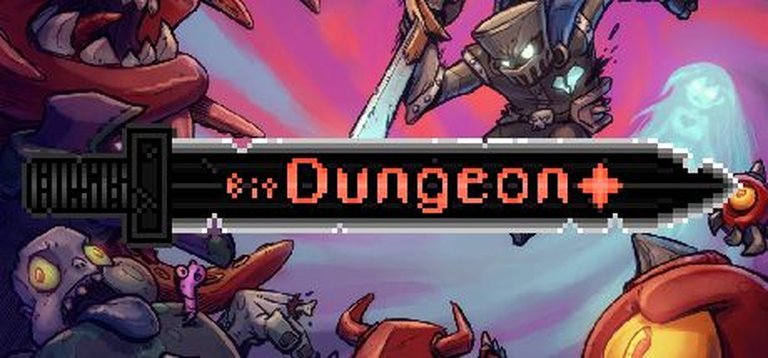
bit Dungeon+ is a 2D top-down arena-based hack’n’slash RPG that updates the original Flash game with cooperative multiplayer and the new Babel’s Tower mode. Players dive into retro-styled, fixed-screen dungeons, engaging in fast-paced combat and strategic gear upgrades in a challenging roguelike cycle designed for high replayability and pick-up-and-play accessibility.
Where to Buy bit Dungeon+
PC
bit Dungeon+ Free Download
bit Dungeon+ Guides & Walkthroughs
bit Dungeon+ Reviews & Reception
infinitefrontiers.org.uk : Despite its simplicity, I found Bit Dungeon Plus to be astonishingly addictive.
metacritic.com (55/100): Bit Dungeon Plus does exactly what it says on the tin and it does it fairly well.
nintendolife.com : It’s these smaller features that bring Bit Dungeon+ to life.
bit Dungeon+ Cheats & Codes
Nintendo Switch
| Code | Effect |
|---|---|
| 580F0000 01ECC768 580F1000 00000008 580F1000 00000028 580F1000 00000008 580F1000 00000010 580F1000 00000028 780F0000 00000024 640F0000 00000000 00000064 |
Inf Hp Jericoss |
| 580F0000 01ECC768 580F1000 00000008 580F1000 00000028 580F1000 00000008 580F1000 00000010 580F1000 00000028 780F0000 00000030 640F0000 00000000 00000001 |
Invencible |
| 580F0000 01ECC768 580F1000 00000008 580F1000 00000028 580F1000 00000008 580F1000 00000010 580F1000 00000028 780F0000 00000030 640F0000 00000000 00000000 |
Invencible OFF |
bit Dungeon+: A Retro-Roguelike’s Tense Dance Between Brilliance and Brutality
Introduction: The Pixelated Pit of Perseverance
In the vast, ever-expanding cosmos of indie roguelikes, few titles wear their inspirations as plainly—and as honestly—as bit Dungeon+. Emerging from the fertile soil of browser-based Flash gaming, this title represents a specific, deliberate strand of game design philosophy: one that values compulsive, “pick-up-and-play” immediacy over narrative complexity, and punitive, skill-based challenge over hand-holding. It is a game that asks a simple, brutal question of the player: “Can you survive the infinite dungeon?” The answer, more often than not, is a resounding, bloody “no.” Yet, it is this very cycle of inevitable failure and tantalizingly close victory that forms the core of bit Dungeon+‘s addictive, if flawed, identity. This review will argue that bit Dungeon+ is a fascinating case study in minimalist design executed with both passionate fervor and noticeable technical shortcomings, a game whose legacy is cleaved between its potent, arcade-core gameplay loop and the patchy, inconsistent execution of its various platform ports.
Development History & Context: From Flash Freeware to Multi-Platform Misfit
The genesis of bit Dungeon+ lies in the original 2012 Flash game bit Dungeon, created by Kinto Games. This origin is fundamental to understanding its DNA: a compact, brutally simple arena-based hack-and-slash born from the constraints and rapid-iteration culture of the web. By 2016, the roguelike genre was experiencing a golden age, propelled by titans like The Binding of Isaac and Faster Than Light. bit Dungeon+, developed by Kinto Games in collaboration with Dolores Entertainment S.L., was an attempt to translate that Flash-era ethos into a premium, console-friendly package for the burgeoning digital storefront era (Wii U, PS4, Vita, Switch, Xbox One, 3DS).
The technological context was one of accessible unity development and the decline of Flash. The team’s vision was clear: take the “distilled essence” of 8-bit action RPGs (as Kotaku noted), specifically the top-down dungeon crawling of The Legend of Zelda and the loot-driven obsession of Diablo, and compress it into a endlessly replayable, co-op capable arcade romp. However, this ambition ran into the realities of multi-platform porting. As detailed by the delisting on Steam in 2018, the partnership between Kinto Games and Dolores Entertainment on the PC version was fraught. Players and Kinto Games themselves were reportedly unhappy with the quality of Dolores Entertainment’s port, leading to its removal. Kinto Games later re-released a revised version simply titled bit Dungeon in 2019, creating a confusing trilogy nomenclatural situation (bit Dungeon, bit Dungeon+, bit Dungeon II, bit Dungeon III). This fractured release history speaks to a development process stretched across studios and platforms, resulting in a game with a solid core but a patchwork of technical implementations.
Narrative & Thematic Deep Dive: A Vessel for the Gameplay
To call the narrative of bit Dungeon+ “thin” would be generous; it is a skeletal scaffold upon which the gameplay is hung. The plot, as summarized by Infinite Frontiers, is a cliché of the highest order: the protagonist and their “loved one” (or friend, or wife—sources vary slightly) are captured by demons, imprisoned for a thousand years, and separated. Upon waking in a cell with a single sword, the quest is to fight through infinite dungeon levels, defeat “the God of the souls,” and rescue the captive. There is no world-building, no dialogue beyond the initial setup, and no character development.
Thematically, the game operates on a pure, almost existential, level of struggle against overwhelming odds. The “thousand years asleep” motif frames the entire endeavor as a timeless, purgatorial test of endurance. The randomized nature of every run reinforces a theme of chaotic, indifferent adversity—the dungeon is not a designed challenge but a malignant organism. The presence of the shopkeeper, described humorously by Infinite Frontiers as resembling Yoda, introduces a faint, absurdist glimmer of aid in the bleakness, but he remains a functional merchant, not a narrative element. The “multiple endings” mentioned in official descriptions suggest some variability in the rescue’s outcome, but without any story beats to contextualize them, they feel like mechanical rewards rather than narrative conclusions. The story exists solely to justify the gameplay loop, and in that, it is functionally perfect: it provides just enough motivation to pick up the sword again.
Gameplay Mechanics & Systems: The Constant Carrot and the Relentless Stick
bit Dungeon+’s brilliance and its frustration are inextricably linked to its mechanics. It is a masterclass in tight, compulsive loop design wrapped in a layer of impenetrable opacity and occasional jank.
Core Loop & Progression: The primary loop is brutally simple: clear a room of all enemies to spawn a key, choose a locked door to progress. This repeats until a red door is found, leading to a boss fight. There is no map in the traditional sense; navigation is room-by-room. Progression is twofold: equipment-based (finding randomly generated weapons and armor in crates with stats that visibly alter your character model) and stat-based. Upon clearing certain rooms, a stat orb (Health, Attack, or Critical Chance) may drop, and the player must choose one. This creates constant, tactical trade-offs. As Nintendo Life notes, in co-op, this becomes a social calculus: who needs the health boost more?
Combat & Risk: Combat is real-time, top-down, and demanding. The player has an attack (with a charged spin attack), a block (crucial for deflecting projectiles), a magic wand (with a chargeable circle attack, powered by collected elemental gems), and a key to open doors. There is no auto-attack (as listed in features), demanding active engagement. The difficulty is “harsh,” as multiple critics stated. Enemies hit hard, and death is permanent (permadeath), stripping you of all gear and progress. This creates a high-stakes atmosphere where every encounter is a calculation of risk versus reward. The ability to return to previous rooms to grind off “dog-like monsters” (Infinite Frontiers) for coins and health potions provides a necessary safety valve, preventing the game from being completely merciless.
Systems & Flaws: The innovation is in the economy of simplicity. The “Babel’s Tower” mode (mentioned in the MobyGames description) offers an infinite, score-attack variant. However, the systems are not without flaws. The skill/stat upgrade system is noted as “quite difficult to understand” by FNintendo, a significant criticism for a game with such a straightforward surface. Technical issues are a recurring theme: Wizard Dojo explicitly cited “lack of polish and technical issues,” and a Wii U user on Nintendo Life’s comments reported bugs that could prevent reaching the final stage. The save system is also obtuse; as Infinite Frontiers observed, it’s “not particularly clear from the menus,” relying on an automatic save upon exiting via the pause menu. This lack of UI clarity contradicts the “pick-up-and-play” ethos it supposedly champions.
World-Building, Art & Sound: A Cohesive, Chirpy Hell
The aesthetic of bit Dungeon+ is a deliberate and effective throwback. It utilizes a “bold, colourful pixelised” style (Infinite Frontiers) that sits between the NES (8-bit) and SNES (16-bit) eras. This isn’t a gritty, dark dungeon crawler like Darkest Dungeon; instead, it opts for a chirpy, almost Saturday morning cartoon version of hell. The visual clarity is paramount—enemy types (skeletons, mages, knights), environmental hazards, and loot are all instantly readable against the blood-stained but bright dungeon floors. The “grotesque” element is present (blood splatters, bloody footprints) but within a cartoony framework.
The sound design follows this template. It employs “chip tunes and sound effects” (Infinite Frontiers) with an “upbeat” tempo that actively encourages forward momentum, a stark contrast to the oppressive soundscapes of many horror-tinged roguelikes. The music loops frequently but is described as “catchy rather than annoying,” with unique tracks for different dungeon levels providing auditory variety. The sound effects for sword clashes, shield blocks, and magic casts are “crisp” and satisfying, providing crucial audio feedback for combat. This audio-visual package is cohesive and intentionally retro, successfully evoking a specific era while feeling modern in its responsiveness. It does not try to be Binding of Isaac; it confidently wears its simpler, brighter influences on its sleeve.
Reception & Legacy: A Cult Classic with a Checkered Past
bit Dungeon+‘s reception has been consistently mixed-to-positive, but with a notable platform disparity and a troubled PC history.
Critical Reception: MobyGames aggregates a 64% critic score (5 reviews). The Wii U version received the highest score (80% from Nintendo Life), which praised its “absolute blast” co-op, “accessible modern touches,” and “replay value.” Nintendo Life’s Switch port review (70%) similarly highlighted its “highly rewarding” and “simple” nature for the price. However, other outlets were less kind: Video Chums (65%) found it “simplistic” with unimpressive gameplay, graphics, and sound; Wizard Dojo on 3DS gave it 50%, citing “lack of polish and technical issues”; Switch Player (60%) called it “bland and standard.” Metacritic’s aggregated 55 for the Switch aligns with this split.
Player Reception: The Steam player score, tracked by Steambase, sits at a mixed 41/100 based on nearly 200 reviews, indicating significant player dissatisfaction, almost certainly tied to the porting issues that led to the original delisting. The sole MobyGames player rating is 3.0/5, reflecting ambivalence.
Legacy & Influence: bit Dungeon+ is not a genre-defining title like Spelunky or The Binding of Isaac. Its influence is more subtle, serving as a successful—if imperfect—proof of concept for translating a specific, stripped-down Flash game design into a multiplatform indie product. Its most significant legacy may be in its delisting incident. The removal of the 2016 Steam version due to poor port quality is a cautionary tale about development partnerships and quality control in the digital distribution age. It underscores the importance of the “Kinto Games” brand, as their direct 2019 re-release (bit Dungeon) suggests an effort to reclaim the intended product. Furthermore, its consistent presence on numerous indie-friendly platforms (Switch, Vita, 3DS) shows the enduring appeal of its “pick-up-and-play” philosophy for handheld and console audiences seeking a quick, hard dungeon fix. It sits in the lineage of arcade-focused roguelikes like Ziggurat but lacks the polish and systemic depth to stand alongside the greats.
Conclusion: A Flawed Gem of the Roguelike Rough
bit Dungeon+ is a game of stark contradictions. It is a brutally simple game with an inexplicably confusing stat system. It is a compulsive “one more run” experience hampered by technical bugs that can break a run. It is a game that successfully channels the spirit of 8-bit action RPGs but feels more like a prolonged minigame than a sprawling adventure. Its narrative is nonexistent, yet its gameplay loop is narratively compelling—a story of incremental progress and catastrophic failure written by the player’s skills.
Its place in video game history is not that of a revolutionary landmark, but as a significant case study in niche execution. It demonstrates the viability—and the pitfalls—of scaling a minimalist Flash-era design for modern multiplatform distribution. The core combat and loot loops are excellent, delivering that primal hack-and-slash satisfaction paired with the agonizing weight of permadeath. The co-op mode adds a fantastic social dimension that elevates the whole package. However, these strengths are consistently undermined by a lack of polish, UI clarity issues, and platform-specific technical problems.
For the dedicated fan of arcade roguelikes with a high tolerance for jank, bit Dungeon+ is a rewarding, addictive experience. For the more general audience, its rough edges will likely prove too frustrating. Its legacy is secured not by universal acclaim, but by its testament to a specific design philosophy and the very real business realities that can shape—and sometimes fracture—an indie game’s lifespan. It is, in the end, a bit dungeon: a tense, painful, and strangely memorable hole in the wall of gaming history.