
- Release Year: 2023
- Platforms: Windows
- Publisher: Age of Games
- Developer: Age of Games
- Genre: Action, Role-playing (RPG)
- Perspective: Diagonal-down
- Gameplay: Action RPG, Point and select
- Setting: Fantasy
- Average Score: 86/100
Description
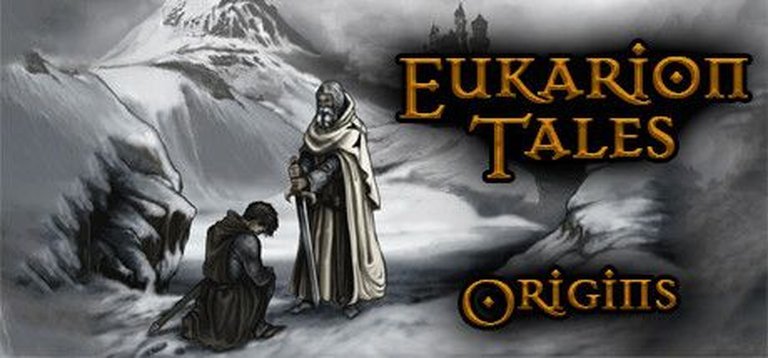
Eukarion Tales: Origins is a retro-flash, isometric action RPG set in a medieval fantasy world inspired by European Middle Ages. Players embark on the origins story of Marcus, following his transformation from a humble squire to the valiant Knight of Adamantia, through a rich, fantasy-filled narrative. Engage in intense hack-and-slash combat against hordes of enemies, from bandits to mythical creatures, while upgrading abilities and exploring picturesque settings like castles, forests, and ancient ruins, all with point-and-click controls and optional auto-attack for a nostalgic RPG experience.
Gameplay Videos
Where to Buy Eukarion Tales: Origins
PC
Eukarion Tales: Origins: Review
Introduction: A Digital Artifact from the Flash Era Resurfaces
In the vast and ever-expanding museum of video game history, few titles embody the concept of a “digital artifact” quite like Eukarion Tales: Origins. Unearthed and formally released on Steam in August 2023 by the Italian indie studio Age of Games, this title is not a new creation but a meticulously preserved relic from the early 2000s Flash gaming boom. Its existence is a deliberate act of historical salvage, a bridge connecting the niche, browser-based RPGs of yesteryear to today’s modern distribution platforms. This review argues that Eukarion Tales: Origins must be evaluated not by the standards of 2023’s AAA releases, but through the dual lens of its original technological constraints and its contemporary role as a curated piece of interactive nostalgia. It is a flawed, charming, and historically significant window into a formative era for indie game development, offering a pure, if dated, hack-and-slash RPG experience that quietly resonates with a specific generation of players while standing as a testament to the enduring passion of its small development team.
Development History & Context: The Ghost in the Flash Machine
The Studio: Age of Games and a Legacy of Retro Revival
Age of Games is not a mainstream publisher but a dedicated independent studio with a distinct creative philosophy: the resurrection and modernization of classic, often Flash-born, game genres. Their catalog, as seen on their official website, is a curated museum of 1990s and early 2000s-inspired design, encompassing titles like Fantasy Kommander, Chroma Wars, Etrom, and the later Eukarion Tales 2 (released on Steam prior to Origins). Eukarion Tales: Origins is positioned explicitly as the narrative prequel to Eukarion Tales 2, filling in the backstory of a central character. This context is vital; the game was not designed in a vacuum in 2023 but is a product of a studio whose very identity is tied to retro-aesthetic preservation, often re-releasing or completing projects conceived in the Flash era.
The Technological Crucible: Flash’s Potential and Its Chains
The single most defining piece of information comes from the developer’s own note on the Steam store page: “This game is an artifact, a title developed by a small indie team using the full potential and limitations of flash technology back in the early 2000s.” This is the key to understanding Origins. It was built during the golden age of browser games, when Adobe Flash (formerly Macromedia Flash) democratized game development but imposed severe constraints: limited color palettes, performance tied to CPU speed rather than GPU, restrictive memory caps, and the ever-present need for lightweight, compact file sizes (the entire game requiring only 50-100MB on Steam speaks to this heritage). These constraints dictated a 2D, isometric, scrolling visual style and a streamlined, point-and-click interface. The 2023 release is essentially the same codebase, now packaged in a standalone executable via technologies like Flashpoint or proprietary wrappers to survive the death of the Flash Player plugin in 2020. Any “technical problems” or “inconveniences” are not bugs in a modern port but inherent traits of its original architecture, now exposed to contemporary operating systems.
The Gaming Landscape: From Browser Ditch to Steam Mainstream
When Eukarion Tales: Origins was likely first developed (circa early-mid 2000s), the RPG landscape was dominated by Diablo II‘s legacy and the rise of MMORPGs like World of Warcraft. Browser RPGs were simplistic but beloved for their accessibility. By its official 2023 Steam launch, the “retro revival” genre was already established, fueled by nostalgia and the preservation efforts of communities like Flashpoint. Origins entered a market saturated with polished roguelites and action-RPGs (e.g., Hades, Baldur’s Gate 3). Its positioning as a free-to-play (“Free” on Steam) historical curiosity is a direct response to this crowded field—it cannot compete on graphics or systems depth, so it competes on authenticity and historical value.
Narrative & Thematic Deep Dive: The Making of a Knight of Adamantia
Plot Structure and Pacing
The narrative of Eukarion Tales: Origins is straightforward and functional, serving as a classic hero’s journey. Players follow Marcus, beginning as a “humble squire” and progressing to a “legendary Knight of Adamantia.” The central conflict revolves around the fate of the Diamond Order, a chivalric/military order, against a looming “darkness.” The Steam description promises that “the fate of Marcus and the Diamond Order hangs in the balance” and that players can “make impactful choices.” However, the available source material provides no granular plot details, specific villains, or branching narrative paths. This suggests a primarily linear, quest-driven plot common to early 2000s action-RPGs, where “choices” likely manifest in moral decisions during dialogues or quest resolutions that may alter minor story beats or endings, rather than a sprawling narrative web.
Characters and Dialogue
Beyond the protagonist Marcus, no other characters are named in the provided materials. The world is populated by archetypes: “vicious bandits,” “awe-inspiring mythical creatures,” and the hierarchical structure of the Diamond Order (implying knights, masters, perhaps scribes or blacksmiths). The setting is explicitly “European Middle Age-inspired,” a generic fantasy template drawing from medieval European tropes—castles, forests, ruins, and likely a pseudo-Christian monastic/military order motif. Dialogue is presumably delivered through text boxes, a staple of its era, aiming for a “rich, fantasy-filled storyline” but likely constrained by the writing scope of a small indie team.
Underlying Themes
Despite the sparse description, several thematic threads are evident:
1. Legacy and Transformation: The core theme is Marcus’s metamorphosis from a squire (a learner, a subordinate) to a legendary knight (a leader, a symbol). This taps into the classic fantasy theme of earning one’s name and title through deed and trial.
2. Order vs. Chaos/Darkness: The “Diamond Order” represents structured civilization, light, and protection, pitted against a world “teetering on the edge of darkness.” This Manichean struggle is a staple of medieval-inspired fantasy.
3. Nostalgia as a Theme: Unintentionally, the game itself becomes a meditation on its own format. The “retro-flash” aesthetic and the developer’s apologetic note frame the experience as one of appreciating a bygone digital era, making the act of playing a historically-conscious choice.
Gameplay Mechanics & Systems: The Heart of the Retro Experience
Core Gameplay Loop
The loop is quintessential early 2000s ARPG: explore isometric environments -> engage in real-time combat with groups of enemies (horde-based) -> gain experience and loot -> upgrade abilities and equipment -> repeat. The “picturesque castles, lush forests, and ancient ruins” suggest a zone-based progression system. The “Mystery Dungeon” user tag on Steam implies the possible inclusion of procedurally generated or randomized dungeon layouts, a feature more common in roguelikes but could be adapted here for replayability within a larger campaign.
Combat System
Combat is real-time, point-and-click. Players click to move Marcus and click on enemies to attack. The inclusion of an “auto-attack feature available to be switched on and off” is a critical detail. This mirrors the “click-to-move, auto-attack when enemy in range” mechanics of games like Diablo or early World of Warcraft, but implemented as a toggle to cater to both arcade-style clicking and more passive, nostalgic playstyles. The “Hack and Slash” and “Action Roguelike” tags suggest a fluid, combo-oriented combat system with a focus on maneuvering through crowds (“Battle hordes of enemies”). Ability “upgrades” imply a skill tree or point-based system where players can specialize Marcus’s combat style.
Character Progression
Progression follows the standard ARPG model: leveling up (gaining stats/ability points) and loot-driven equipment upgrades (weapons, armor). The phrase “unlock and upgrade a multitude of unique abilities” hints at a diverse spell/skill set, possibly tied to class-like specializations within the Knight framework (e.g., holy powers, martial techniques, defensive auras).
User Interface (UI) and Innovations/Flaws
The Interface is “Point and select”, typical for its era. The UI would be minimalist: a health/mana bar, a small action bar for abilities, and inventory screens. The auto-attack toggle is the primary “innovative” (for its time) quality-of-life feature for a retro title, acknowledging that modern players may find constant clicking tedious. The major “flaw” is inherent in its artifact status: the UI will feel clunky by modern standards, tooltips may be sparse, tooltips may be sparse, and the isometric pathfinding (a classic Flash/early 3D struggle) may lead to the community-reported issue of getting “stuck on a chest” or geometry, as seen in a Steam discussion post. These are not design failures but period-accurate behaviors.
World-Building, Art & Sound: Aesthetic of Constraint
Setting and Atmosphere
The world is a “European Middle Age-inspired” fantasy realm, specifically tied to the “Empire of Adamantia” (mentioned in related game Fantasy Kommander: Eukarion Wars). This establishes a cohesive, if familiar, geopolitical backdrop. The atmosphere is “Dark Fantasy” per user tags, suggesting a grittier, more somber tone than high fantasy, with elements like zombies and mystery implying supernatural horror undertones infiltrating the medieval setting.
Visual Direction
The game is “2D scrolling” with a “diagonal-down” perspective (a 2:1 isometric projection). The official description calls it “retro-flash” and “nostalgic,” while the studio’s site for Fantasy Kommander mentions “90s style pre-rendered graphics.” This is the crucial artistic clue. The graphics are likely pre-rendered 3D models or detailed 2D sprites painted to look 3D, a common technique in the 90s (e.g., Age of Empires II, Diablo II) used to achieve a pseudo-3D look within the limits of 2D game engines like Flash. The visual style prioritizes a painted, slightly stylized look over realism, constrained by resolution and color depth. The “picturesque” descriptors suggest an art team aiming for atmospheric beauty within these limits.
Sound Design
The source material provides absolutely no specific information on sound design or music. Given the era and engine (Flash), the audio was almost certainly compressed MIDI tracks or low-bitrate sampled audio for music and simple, generated sound effects for attacks, spells, and UI feedback. The “Full Audio” listed on Steam for English implies voice acting, but for a Flash-era title, this would have been exceptionally rare and likely limited to grunts, spell incantations, or short barks, not full dialogue. The sound design’s primary goal would have been functional clarity and mood-setting within severe file size constraints.
Reception & Legacy: Niche Reverence and Historical Footprint
Critical and Commercial Reception at Launch
Eukarion Tales: Origins had no mainstream critical launch. Metacritic lists “Critic reviews are not available.” Its “release” in 2023 was more of a digital preservation event than a commercial splash. Commercially, it is free on Steam, with no price history to track. Its visibility is minimal, buried within Steam’s massive library.
Player Reception and Contemporary Reputation
Player reception is decidedly positive but incredibly small-scale. From Steam data (as of the latest scrape): 86% of 37 user reviews are positive. This is a “Very Positive” rating but from a tiny sample size, indicating a niche but satisfied audience. Community discussions are sparse but revealing: one user reports a game-breaking bug (“stuck on a chest”), validating the developer’s warning about “technical problems.” Other posts express interest in the broader “Fantasy Kommander” series and general appreciation for the studio’s catalog. The player base appears to be retro enthusiasts, fans of Age of Games’ other titles, and curious preservationists.
Evolution of Reputation and Influence
The game’s reputation is static; it is a curated historical object. Its influence on the industry is negligible due to its late release, limited distribution, and derivative design. However, its cultural significance lies in its role as a preserved Flash artifact. It represents the thousands of small-scale, passion-project RPGs that sprouted on sites like Newgrounds, Kongregate, and amateur forums in the 2000s, most of which are now lost. By officially packaging and distributing Origins, Age of Games participates in the crucial work of digital archaeology, ensuring a specific strand of game design history—the isometric Flash RPG—is not erased. It also strengthens the studio’s brand as a curator of retro experiences, linking Origins to their other revivals (Etrom 20th Anniversary Edition) and building a loyal, if small, community.
Conclusion: A Curious Relic for the Dedicated Historian
Eukarion Tales: Origins is unequivocally a product of its intended time and place: the creative, constrained, democratized world of early 2000s Flash game development. Evaluated as a 2023 title, it is graphically primitive, mechanically simple, and technically fragile. Evaluated as a preserved artifact, it is a fascinating and authentic specimen. Its narrative is a competent but unoriginal hero’s journey, its combat is satisfyingly visceral in a Diablo-lite way, and its world is a familiar but competently rendered medieval fantasy setting.
The final verdict must balance these scales. For the mainstream gamer seeking the next compelling RPG, Origins is an obscure, bug-prone, and dated experience with little to offer. For the video game historian, the retro enthusiast, or the student of indie development, it is an invaluable and highly accessible case study. It demonstrates how aesthetic ambition (pre-rendered isometric art) and design patterns (horde combat, loot progression) were executed under the duress of technological limitation. Its free price tag removes financial barrier to entry, making it a perfect educational tool.
In the grand tapestry of video game history, Eukarion Tales: Origins is a minor, single-threaded weave. But its very existence, championed by a studio that understands its value, proves that even the smallest, most technically obsolete games hold stories worth preserving. It earns its place not as a classic, but as a crucial document—a playable time capsule that reminds us of the vast, diverse, and often forgotten ecosystem that flourished in the shadow of the major publishers, long before “indie” became a marketing label. Its legacy is that of a faithful ghost, haunting the Steam library as a reminder of the Flash era’s creative spirit.