
- Release Year: 2013
- Platforms: PlayStation 3, Windows, Xbox 360
- Publisher: Index Corporation, Index Digital Media, Inc.
- Developer: Old School Games
- Genre: Action
- Perspective: Third-person
- Game Mode: Online Co-op
- Gameplay: Shooter
- Setting: Western
- Average Score: 60/100
Description
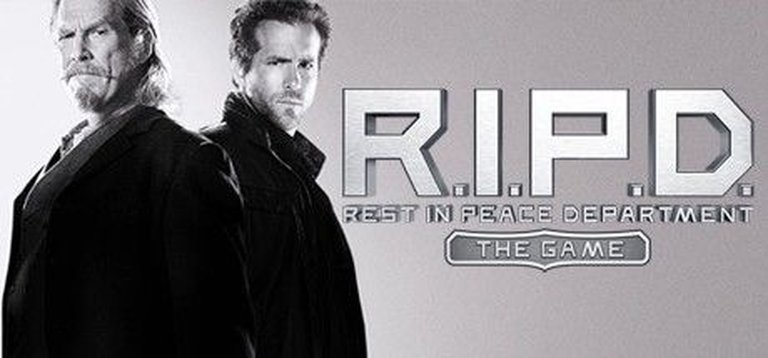
R.I.P.D.: Rest in Peace Department – The Game is a third-person action shooter set in a Western-themed afterlife, based on the R.I.P.D. franchise. Players assume the roles of deceased lawmen in the Rest in Peace Department, teaming up to hunt down and eliminate malicious spirits across frontier-inspired environments in a co-op multiplayer format.
Gameplay Videos
R.I.P.D.: Rest in Peace Department – The Game Reviews & Reception
metacritic.com (60/100): R.I.P.D. is not a bad game, just a simple one.
R.I.P.D.: Rest in Peace Department – The Game: Review
Introduction: The Soulless Sheriff of Licensed Gaming
In the pantheon of video game adaptations of major motion pictures, there exists a special,尤其是 ignominious circle reserved for titles so devoid of passion, craftsmanship, or basic功能性 that they transcend mere disappointment to become archaeological artifacts of industry cynicism. R.I.P.D.: The Game does not merely occupy this circle; it is the rotting, spectral cornerstone upon which it is built. Released in July 2013 to coincide with the theatrical launch of its already doomed cinematic namesake, this cooperative third-person shooter stands as a stark, brutal monument to the worst excesses of the licensed cash-in. It is a game that, despite its premise of hunting wayward souls, manages to be more inert and lifeless than the deadoes it tasks you with eradicating. This review will dissect R.I.P.D.: The Game not just as a failed product, but as a perfect storm of creative bankruptcy, technical negligence, and a blatant disregard for both the source material and the player, cementing its legacy as one of the most inept major studio tie-ins ever conceived.
Development History & Context: A Template for Failure
The game’s origins are a masterclass in expedient, low-risk development. It was crafted by Old School Games, a studio with a niche but notable reputation for competent, if unspectacular, arcade-style shooters. Their immediately preceding title, God Mode (2012), was a similarly structured four-player cooperative horde-mode shooter built on the Saber3D Engine. R.I.P.D.: The Game is, in essence, a direct and thinly-veiled reskin of God Mode, a fact repeatedly and devastatingly noted by critics. The development context is key: this was not a passion project born from a love of the R.I.P.D. comics or film, but a contractual obligation. Publisher Atlus USA (via Index Corporation) secured the license and contracted Old School Games to produce a product on an aggressive timeline to match the film’s release. The technological constraints were not a limitation of the era—the Saber3D Engine was capable of competent visuals—but a limitation of budget, time, and, evidently, ambition. The 2013 summer gaming landscape was crowded with blockbuster releases, making a $9.99 digital tie-in a high-risk, low-reward proposition that the developers approached with all the enthusiasm of a debtor settling a bill. The result was a game that feels less like a new creation and more like a last-minute, automated asset-swap, with “deadoes” replacing God Mode‘s Greek mythologic enemies and two specific character skins standing in for a full roster.
Narrative & Thematic Deep Dive: The Absence of Story
Where the 2013 film, for all its faults, attempted a narrative structure with character arcs and a plot about a mystical artifact (the Staff of Jericho), the game abandons any pretense of storytelling after a single, perfunctory introductory cinematic. This slideshow—the only piece of “plot” presented—summarizes the film’s setup: Nick Walker’s death, recruitment into the R.I.P.D., and partnership with Roy Pulsipher. It informs the player of the “deadoes” and their gold-stealing motives but explicitly leaves their ulterior motives a mystery. This is the last narrative gesture the game makes. There are no cutscenes featuring the film’s actors (Ryan Reynolds and Jeff Bridges), no voice acting beyond generic, repetitive one-liners from sound-alike actors, and no progression through the film’s locations or plot points. The seven maps—an abandoned meth lab, a bank, a library, etc.—are generic arenas with no environmental storytelling connecting them to the film’s Boston setting or the Staff of Jericho plot. The thematic core of the R.I.P.D., a supernatural police force where officers are disguised in absurd avatars (Nick as an elderly Asian man, Roy as a blonde woman), is completely ignored. Players simply choose between Roy or Nick models that are visually identical save for a cowboy hat, stripping away the fundamental irony and character dynamic that defined the property. The game’s world is not an “afterworld” or a haunting, stylized version of Boston; it is a series of empty, poorly-textured boxes. The thematic statement, therefore, is one of utter vacuity: the game argues that a universe about cosmic law enforcement and hidden identities has no story worth telling, reducing its license to a mere aesthetic skin.
Gameplay Mechanics & Systems: A Hollow Core
The core gameplay loop is lifted wholesale from God Mode and other horde-mode titles like Gears of War‘sHorde mode: two players (online co-op only) are placed in a small arena and must survive five increasingly difficult waves of enemies (“deadoes”) to progress. Success earns gold, which is used between rounds to purchase and upgrade weapons from a limited arsenal.
The Arrest Mechanic: The one nominal innovation is the “arrest” system. Certain tougher enemies are marked, and players must stand near them for a brief duration to “arrest” them, granting bonus points and loot. However, this mechanic is fundamentally flawed. Given the chaotic, swarming nature of the waves, attempting an arrest is a high-risk, low-reward gambit that usually results in being overwhelmed. It is functionally irrelevant to survival and feels like a tacked-on, underdeveloped idea.
Progression & Economy: Weapon upgrades are linear (Pistol -> Upgrade 1 -> Upgrade 2 -> Upgrade 3). The most exciting unlocks are novelty weapons like the banana (Nick’s weapon from the film) and a hairdryer (Roy’s), but these are astronomically expensive and require grinding through the same repetitive waves for hours to afford. The economy is punishing and unrewarding, with failure to complete all five waves yielding absolutely nothing—no partial gold, no consolation. This creates a brutal difficulty cliff, especially on “Hot” difficulty, which is nigh-impossible without a coordinated partner.
The Co-op & Betting Farce: The game is designed exclusively for two-player co-op. There is no AI for solo players; the only way to play alone is to create a private match, which is pointless. The matchmaking system is famously “broken” (IGM, Worth Playing). Finding a random partner online at launch was a futile exercise, and the community vanished almost instantly. This design choice makes the game literally unplayable for the vast majority of its potential audience post-launch. The touted “unique in-game betting system,” where players wager gold on who will get more points or survive longer, is a hollow feature. It adds a layer of petty competition to a foundation that is already crumbling under the weight of its own incompetence.
Controls & Feel: Controls are universally described as “stiff,” “imprecise,” and plagued by input lag or mouse acceleration issues (PlayStation Lifestyle, Metacritic user reviews). Movement lacks weight, aiming feels unsatisfying, and the cover system is frustratingly unresponsive. The game feels archaic, as if ripped from a mid-2000s budget title.
World-Building, Art & Sound: A Bleak, Uninspired Vista
The game’s aesthetic is a generic, muddy Western-tinged ghost town motif that fails to evoke either the film’s supernatural buddy-cop tone or the gritty comic book source material. Environments are small, boxy arenas (library, bank, meth lab) with atrocious texture pop-in. As noted by multiple reviewers, textures on levels, characters, and weapons take several seconds to load in, often appearing as blurry low-resolution messes before snapping into barely-passable detail. Character models for the “deadoes” are few, repetitive, and lack any visual flair or menace. The art direction is non-existent; there is no cohesive visual identity.
Sound design is equally impoverished. The soundtrack is described as “very generic” (BioGamerGirl), failing to capture any of the film’s quirky, supernatural western energy. Weapon sounds are weak and disappointing. The sound-alike voice actors for Roy and Nick deliver a tiny handful of grating, repeated one-liners that loop endlessly during gameplay, becoming an irritant rather than a charm. The total lack of audio presence from the actual film’s stars (Bridges and Reynolds) is a profound failure of license utilization, making the game feel even more disconnected from its nominal inspiration. The only audio highlight, perhaps accidentally, is the potential for the “Woody Woodpecker laugh” easter egg discovered by Steam users—a bizarre, out-of-place detail that underscores the game’s complete lack of tonal coherence.
Reception & Legacy: A Paradigm of Neglect
The critical reception was universally scorching, and the commercial fate was oblivion.
* Aggregate Scores: Metacritic scores range from 26/100 (PC) to 39/100 (Xbox 360), categorizing the game as “Generally Unfavorable.”
* Critic Consensus: Reviews were merciless. IGN (4.5/10) called it a game that “refuses to let itself be a fun co-op shooter,” criticizing the lack of tutorials, broken matchmaking, and sheer mediocrity. GameSpot (2.5/10) declared it “dead on arrival,” a soulless product that “somehow manages to pull off” being uninteresting despite a premise about hunting souls. Electronic Gaming Monthly (3/10) labeled it “a crappy movie tie-in game in the longstanding tradition of crappy movie tie-in games.” Gaming Age delivered a rare 0%, comparing it to infamous disasters like E.T. and Fight Club, calling it “a rushed, lazy, poorly developed game.”
* The “God Mode” Reskin: The most consistent and damning critique was that R.I.P.D. is an inferior, stripped-down version of Old School Games’ own God Mode. It reduced player count from 4 to 2, slowed movement, worsened shooting feel, and removed content, all while applying a thin licensed veneer. It was pilloried as God Mode‘s “neglected younger brother” (EGM).
* Player Reception: User scores are marginally higher but still dismal (around 2.1/5 on MobyGames, 2.9/10 on Metacritic). Player reviews echo the critics: complaints about broken matchmaking, terrible controls, repetitive gameplay, and a complete lack of content. Steam forums from 2019 through 2025 are filled with users asking how to find players, reporting crashes, and universally wondering why the game exists. The community is functionally dead.
* Legacy: R.I.P.D.: The Game has not faded into obscurity; it has been crystallized as a cautionary tale. It is frequently cited in discussions about the worst movie tie-in games, alongside titles like Superman 64 and E.T. Its legacy is not one of influence—it influenced nothing—but of proof of concept for maximum cynicism. It demonstrates how a license can be used not to enrich a game, but to completely circumvent any need for creativity, narrative, or technical polish, banking entirely on the desperation of fans and the obliviousness of casual digital storefront shoppers. It is a “shovelware” title that achieved the rare feat of being so bad it became a cultural reference point for failure.
Conclusion: A Definitive Verdict
R.I.P.D.: The Game is not merely a bad game; it is an act of fiscal and artistic vandalism disguised as a product. It takes a franchise with inherent comedic and visual potential—the mismatched, avatar-swapped duo of a curmudgeonly Old West sheriff and a modern Boston detective—and reduces it to a mindless, repetitive, and technically shoddy wave shooter. Every single system—narrative, gameplay, multiplayer, presentation—fails on a fundamental level. It offers no reason to exist beyond the contractual necessity of attaching a logo to a product meeting the absolute minimum threshold of functionality.
Historically, its place is secure as one of the most effectively realized expressions of the “movie tie-in game” stereotype. It is the logical, horrifying endpoint of a pipeline that values synergy over quality, where a game is an afterthought to a marketing plan rather than a creative endeavor. It argues, successfully, that in an era of digital distribution, a publisher can release a game with no single-player mode, broken online components, a four-hour development cycle (metaphorically speaking), and a complete absence of the voices or spirit of its own license, and still find a diminishing audience willing to spend $9.99. It is a game that should have been euthanized in pre-production and serves as a permanent black mark on the records of Old School Games and Atlus USA. For historians, it is an indispensable case study. For players, it is a gravestone bearing the epitaph: “Here lies something that was never alive to begin with.” Rest in peace? It never was at peace. It was, and remains, a profound and unsettling failure.