
- Release Year: 2023
- Platforms: Linux, Windows
- Publisher: Nelset
- Developer: Nelset
- Genre: Adventure
- Perspective: 1st-person
- Game Mode: Single-player
- Gameplay: Puzzle
- Setting: 1980s, Asia, Chernobyl Exclusion Zone
- Average Score: 60/100
Description
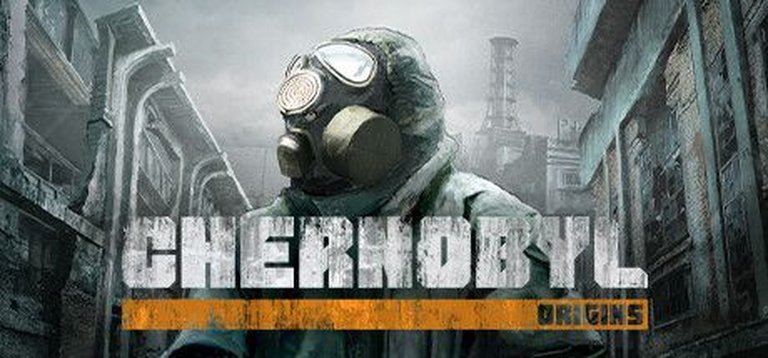
Chernobyl: Origins is a first-person adventure game set in the 1980s Chernobyl Exclusion Zone, where players embody a survivor from a secret scientific laboratory who must escape the hazardous post-accident environment. Facing deadly threats like radiation, mutants, and intricate puzzles with no manual saves, the game features a stylized visual approach inspired by Soviet animation and emphasizes hardcore difficulty through permadeath and dynamic puzzle elements.
Gameplay Videos
Where to Buy Chernobyl: Origins
PC
Chernobyl: Origins Cracks & Fixes
Chernobyl: Origins Reviews & Reception
eshopperreviews.com (60/100): The result is a game that’s far too frustrating to be worthwhile.
Chernobyl: Origins: A Descent into Calculated Cruelty and Atmospheric Brilliance
Introduction: The Allure of the Forbidden Zone
In the vast, often derivative landscape of Chernobyl-themed video games, Chernobyl: Origins emerges not as a historical simulator but as a deliberate, punishing artifact of psychological horror and puzzle-centric adversity. Released in 2023 by the obscure Stavropol-based Nelset Studios, this title seeks to carve a unique niche by marrying a grim, fictionalized narrative of the 1986 disaster with an almost sadistically demanding adventure game framework. Its thesis is clear: the Chernobyl Exclusion Zone is not a place for exploration or casual storytelling, but a lethal maze where every decision, every misstep, is a potential terminus. This review will argue that while Chernobyl: Origins is fundamentally flawed by its often arbitrary and frustrating design, it achieves a perverse mastery of atmosphere and tension, securing its place as a cult classic for a specific, masochistically-inclined breed of adventure game player.
Development History & Context: The Indie Post-Soviet Perspective
Chernobyl: Origins is the product of Nelset Studios, a small Russian developer with a clear thematic preoccupation: the post-Soviet experience. Their prior and subsequent works (as evidenced by the “Related Games” list on MobyGames, including titles like Chernobyl Commando and Chernobyl Again) suggest a studio fascinated by this specific historical and geographical trauma. Developed in Unity, the game’s technical constraints are evident. The visual style—described by reviewers as resembling “Soviet animation or school notebook drawings”—is not a high-fidelity rendering but a chosen aesthetic of hand-drawn, static 2D art, minimizing costly animations and leveraging a stark, graphic novel-like presentation. This was a conscious, budget-conscious choice that aligns with the “old school” and “hand-drawn” tags frequently applied by its Steam community. Released on April 28, 2023, for Windows, Linux, and later Nintendo Switch, it entered a market saturated with more mainstream survival horror (S.T.A.L.K.E.R., Metro) and documentary-leaning experiences. Nelset’s vision was to subvert the adventure genre, injecting it with a “hardcore” difficulty that was rare for point-and-click puzzles, directly targeting a niche audience weary of forgiving meditative quests.
Narrative & Thematic Deep Dive: Fiction Over Fact, Madness Over Memory
The game’s narrative is a conscious divergence from history. Players assume the role of an unnamed scientist employed at a secret laboratory hidden within the Chernobyl Nuclear Power Plant itself—a fictional element that immediately divorces the game from documentary realism. The lab’s purpose, as per the Steam description, was researching the environmental impact of the plant and conducting experiments for a “potential nuclear conflict,” framing the disaster not as a catastrophic accident but as a context for pre-existing secret, morally dubious science. After the meltdown, the protagonist is one of the few survivors, and the primary objective becomes a desperate escape from the doomed, labyrinthine station.
The plot unfolds across six chapters, tasking the player with uncovering the “terrible secret” behind the catastrophe. Themes explored are standard for the genre: scientific hubris, the haunting of past sins, and the degradation of the human mind under extreme stress (manifested as “scientists driven insane”). However, the game’s most significant thematic tension is its tonal whiplash. As noted by eShopperReviews, it spends time establishing historical details of the real Chernobyl meltdown only to throw mutants, anomalies, and hostile madmen into the mix. This hybridization—part historical fiction, part supernatural horror—undermines any serious commentary on the real tragedy but successfully grounds the experience in a fever-dream logic where the Zone’s radiation has tangible, monstrous consequences. The promise of “three unique endings” suggests a narrative structure responsive to player choices, though the nature of those choices (likely puzzle solutions or interaction outcomes) is not deeply elaborated in sources.
Gameplay Mechanics & Systems: The Architecture of Failure
This is the game’s defining and most contentious core. Chernobyl: Origins is a first-person, fixed-screen point-and-click adventure where death is the default state, and success is the fragile exception. Its systems are built on three brutal pillars:
- Ubiquitous Permadeath: There is no manual saving. Progress is only saved upon completing a chapter. Death—from radiation, electrical shock, mutant attacks, or even “accidental amputation from touching a wire”—relegates the player to restart the entire chapter from scratch. This is not a “game over” screen; it is a total reset, enforcing meticulous, memory-based play.
- Opaque and Dynamic Hazards: Many threats are not telegraphed. Simply entering the wrong room can trigger an instant death, as eShopperReviews venomously notes. The game revels in this lack of clear feedback. Furthermore, puzzles are not static. As reported by List23, “with each new passage, many of them alter the conditions, for example, access codes, or shift positions.” This means players cannot rely on external guides or brute-force repetition; they must understand the puzzle’s logic anew each time. One infamous example from Steam discussions is the “electrical panel” puzzle, where the correct combination of buttons must be deduced from a schematic, with a single wrong press resulting in electrocution.
- Puzzle Design: Logic Over Trial-and-Error: The puzzles themselves are a mix of classic adventure tasks (finding items, using them in correct locations) and logic-based challenges (setting switches in sequence, decoding numbers). The List23 review highlights a safe puzzle that references the famous “Pilot Brothers” cartoon—a deep-cut Soviet cultural nod indicating the developers’ target audience. However, the lack of “meta” solutions and the changing parameters elevate these from simple object hunts to stressful memory tests. In one chapter, an unmarked time limit adds another layer of panic.
The game’s UI is minimal, a necessity of the static screen format, but this minimalism contributes to the feeling of isolation and lack of hand-holding. The “unique game design” touted in its store description is, in essence, this entire architecture of punitive, knowledge-driven progression, which List23 explicitly compares to the infamous difficulty and trial-based learning of Dark Souls.
World-Building, Art & Sound: A Brilliantly Oppressive Atmosphere
Where the gameplay may alienate, the presentation consistently impresses. The game’s world is rendered in a distinctive, hand-drawn 2D style that effectively evokes the aesthetic of bleak Soviet-era animation or grim graphic novels. This isn’t high-resolution realism; it’s a choice that amplifies the uncanny and the oppressive. The static nature of the screens, though criticized for minimal animations, actually enhances the claustrophobic, frozen-in-time horror of the disaster zone. Backgrounds are detailed with dilapidated control rooms, overgrown outdoor areas, and the iconic, looming silhouette of the reactor—all rendered with a palette of grays, sickly greens, and rust.
The audio experience is its supreme counterbalance to the frustrating gameplay. The soundtrack is described as “spooky,” “somber,” and “subdued,” using ambient drones, industrial creaks, and melancholic melodies to build an unrelenting sense of dread. The voice acting, specifically by Valery Storozhnik and Sergey Ponomarev, is praised (List23) for its gravitas and for evoking a classic Hollywood or Russian radio-play tone, selling the desperation of the protagonist and the madness of encountered figures. This audio-visual synergy creates an atmosphere of profound unease that makes the lethal environment feel genuinely threatening, not just mechanically punishing.
Reception & Legacy: A Fractured But Loyal Following
Reception to Chernobyl: Origins is a study in stark contrast.
* Critical Reception: Professional critics have been largely negative. eShopperReviews issued a scathing D-, condemning the “terrible game design” and “sadistic” punishment for unknown mistakes, calling the tonal clash between historical setup and fantastical elements “odd” and undermining. This perspective highlights the game’s fundamental barrier to entry: its difficulty is perceived as unfair, not as a deliberate challenge.
* Player Reception: In stark contrast, Steam user reviews are “Very Positive” (85% of 75 reviews at the time of writing), earning a Player Score of 85/100 on aggregate sites like Steambase. This dichotomy reveals its cult status. Players who persevere praise its “brutal but fair” logic, the intense satisfaction of solving a puzzle after repeated failures, and the unparalleled atmosphere. The many Steam achievements tied to “ways to die” and “failed attempts” are embraced as badges of honor by this community.
* Legacy: Its legacy is therefore niche but potent. It has not influenced the mainstream, but within the indie adventure and “hardcore puzzle” space, it is cited as a reference point for uncompromising design. It shares DNA with older, punishing adventure games and modern “souls-like” difficulty transplants into non-action genres. Its existence proves a market for games that prioritize tension and memory over convenience. Furthermore, it stands as a notable example of Eastern European indie studios using regional trauma (Chernobyl) as a backdrop for genre innovation, however flawed.
Conclusion: A Flawed Masterpiece of Misery
Chernobyl: Origins is not a game for everyone. Its lack of forgiveness, its obscure puzzle logic, and its occasionally baffling design choices will frustrate and alienate the vast majority of players seeking a narrative adventure. From a traditional game design standpoint, its failure to provide clear feedback and its reliance on chapter-restarting permadeath is questionable at best. However, to dismiss it entirely is to ignore its undeniable achievements. It constructs one of the most viscerally oppressive atmospheres in gaming, using a unique visual language and a masterful soundscape to make the Chernobyl Exclusion Zone feel authentically lethal. It creates a gameplay experience where tension is constant and success is earned through genuine intellectual perseverance, not pattern recognition.
Its place in video game history is secure as a cult artifact of punitive design. It is a deliberate counter-proposal to the hand-holding trends of modern gaming, a rough, unpolished gem that asks players to engage with it on its own brutally demanding terms. For those who accept that challenge, Chernobyl: Origins offers a short, intensely memorable, and horrifically satisfying descent into a meticulously crafted hell. For the rest, it remains a frustrating what-if—a brilliant atmosphere tragically shackled to an often-broken gameplay loop. Its ultimate verdict is one of compelling, problematic brilliance.