
- Release Year: 2023
- Platforms: Linux, Macintosh, Windows
- Publisher: Sprouting Potato
- Developer: Sprouting Potato
- Genre: Simulation
- Perspective: Top-down
- Game Mode: Single-player
- Gameplay: Business simulation, Cards, Managerial, Tiles
Description
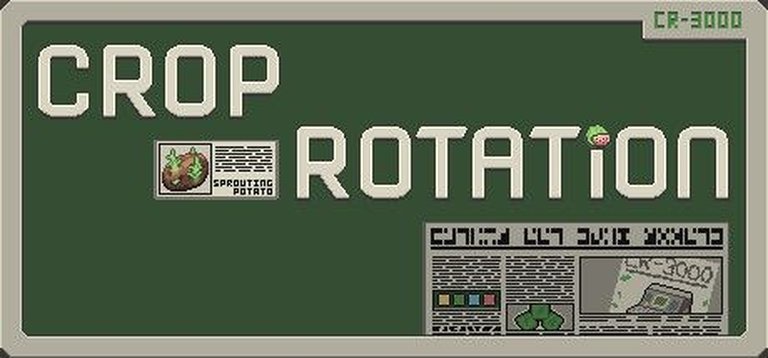
Crop Rotation is a top-down simulation game featuring card and tile-based mechanics, where players manage agricultural crop rotation in a managerial business simulation. Set on a farm, it challenges players to optimize resource management—balancing tools like sprinklers and fertilizer—within a time-limited year, emphasizing strategic decision-making under constraints.
Where to Buy Crop Rotation
PC
Crop Rotation Mods
Crop Rotation Guides & Walkthroughs
Crop Rotation Reviews & Reception
gamevalio.com : Worth keeping an eye on. Currently sitting in a decent spot, but not quite a must-buy just yet.
steamcommunity.com : you have a lot of agency when it comes to planning out your run and are not at the mercy of what RNG gives you.
Crop Rotation: A Harvest of Systemic Depth and Iterative Brilliance
Introduction: The Seeds of a Cult Classic
In the bustling, overcrowded field of roguelike deckbuilders, Crop Rotation (2023) emerges not with a thunderous claim to innovation, but with a quiet, profound understanding of the genre’s core satisfactions. Developed and published solo by the enigmatic Sprouting Potato, this farming-themed card drafter subverts expectations by automating the combat/play phase, forcing the player’s entire cognitive energy onto the deckbuilding puzzle itself. Its premise—a deeply indebted soul purchasing an “automated farm” only to realize the loan is crushing—is a dryly humorous, almost philosophical framing for a game about systemic optimization. This review argues that Crop Rotation is a masterclass in focused, iterative design, a game whose apparent simplicity belies a ruthless, elegant systemic depth. It is a cult phenomenon born from transparent developer communication and a relentless focus on a singular, brilliant core loop, even as it grapples with the inherent tensions between player freedom and intended challenge.
Development History & Context: A Solo Venture in Transparency
Sprouting Potato is a one-person studio, a fact that permeates every aspect of Crop Rotation’s identity. There is no corporate mandate, no publisher-driven feature creep; instead, there is a singular, clear-eyed vision executed with technical competence using the Heaps game engine. The development story is uniquely modern and transparent, played out publicly on the Steam Community Discussions and via pinned Roadmap posts.
Released on September 15, 2023, for Windows, macOS, and Linux, the game arrived in a crowded marketplace following the explosive popularity of Slay the Spire and its countless descendants. Its key differentiator—the fully automatic card play—was a brave design choice. Instead of managing timing and tactical placement, the player acts as a holistic farm manager, drafting a synergistic deck of crops, tools, animals, and permits that will play out over eight weekly turns. The post-launch period has been a continuous, public iteration process. The developer’s own words from the Roadmap reveal the journey: initial concerns about “mono-cropping” (spamming a single, overpowering crop type) invalidating other strategies, leading to the major 1.1/1.2 rebalancing patch and the introduction of the “Limited” modifier, which restricts the copies of powerful T4 animals and permits to one per run. This openness—discussing balance changes, beta branches, and rationales for design decisions (e.g., why weeds spawn at end of day in Fall to not punish small farms)—is integral to the game’s legacy. It cultivated a dedicated, analytical community that provided the feedback necessary to refine a promising prototype into a polished, deep strategy game.
Narrative & Thematic Deep Dive: Debt as the Ultimate antagonist
Crop Rotation possesses no traditional narrative with characters or dialogue. Its “story” is a metaphorical and mechanical imperative: “You have taken a loan to buy an automated farm. The loan is huge but the farm should pay for itself right ??? RIGHT ???” This repeated, anxious questioning is the game’s thesis. The narrative is the inescapable cycle of systemic debt and optimization.
The player is not a hero on a quest but a functionary within a capitalist machine. The Weekly Mail system, which the developer notes players can now hide via a settings.json tweak ("hideMail": true), provides flavor text about loan payments, interest, and the grim futility of the endeavor. Themes of automation vs. agency, nature vs. system, and the illusory promise of self-sufficiency are central. Your farm is a literal engine of production, a grid of tiles where cards play themselves. You are not a farmer tending to crops; you are an architect designing a self-replicating economic engine to stave off financial ruin. The “win” condition—paying off the loan—feels less like a triumph and more like a release from a system designed to keep you running. The thematic depth is subtle, emerging from the relentless pressure of the weekly loan payment and the cold optimization of card synergies, mirroring the alienation of modern gig or system-management work.
Gameplay Mechanics & Systems: The Elegance of the Automatic Play
The genius of Crop Rotation lies in its radical simplification of the moment-to-moment gameplay. The core loop is bifurcated:
1. The Drafting Phase (Strategic Layer): Each week, the player drafts a hand of cards from a rotating “contract” (store). Cards include Crops (played on farm tiles for income), Tools (equipped for global effects), Animals & Permits (passive bonuses), and Upgrades (for existing cards). The strategic depth is immense: managing a tight inventory (card slots), a finite farm grid (tile slots), and critical resources like Water and Fertilizer, all while planning for future seasonal bonuses (Spring gives extra water, Fall spawns bonus weeds).
2. The Resolution Phase (Automatic Play): Once drafted, the player’s turn ends. The game then automatically resolves all card effects in a deterministic order. Crops are harvested based on their rules (e.g., “Harvest 1 per day,” “Harvest all adjacent crops”), tools trigger, bonuses apply. The player watches their engine run, their only input being to re-roll the contract for more desirable cards—spending precious gold that could have been used for farm expansion or loan payment.
This structure creates a unique genre hybrid: a “Auto-Battler Deckbuilder” or a “Deckbuilder Simulation”. The tension shifts from tactical execution to holistic system design. Can your deck survive the early game droughts? Can you build a synergistic web of multipliers (e.g., a “Multiple Harvest” crop supported by “Apple” trees that grant +1 harvest to all) that scales with your expanding farm?
The seasonal structure (4 seasons per year, 8 weeks per run) imposes a hard time limit and introduces key weekly modifiers. The game modes evolved significantly per the Roadmap:
* Relaxed Mode (reworked into Custom Mode): Allows toggling cards, mutations, and target rating.
* Legacy Mode: The original, unrestricted high-score chase (now the default “Rating” mode).
* “Limited” Modifier: A crucial rebalance limiting T4 animal/permit copies to 8 (1 unique max), forcing diversified builds instead of mono-cropping four T4 cats for a 4x multiplier.
* Turbo Mode: A future idea for 4-week accelerated runs.
Innovative Systems:
* The “Draft Upgrade” Setting: Allows automatic combining of a newly drafted card with an existing same-type card in your inventory, streamlining play.
* Transparent Math: As praised by user Bayonnaise, the UI lets you hover over any element to see the exact breakdown of income from every tile, every bonus. This eliminates guesswork and turns optimization into a pure puzzle.
* Mutation System: Certain cards (like Mushroom) can mutate based on adjacent crops, adding a layer of spatial puzzle-solving.
Flawed Systems (Pre-Patch & Persistent):
* Mono-Cropping Dominance: The pre-1.1 game was brokenly easy with single-crop spam. The “Limited” modifier was a direct, elegant fix.
* Card Rarity & Balance: As noted by early player RandomEnchanter, some commons felt weak (Squirrel, Starter Kits) while rares were unequipped. The developer confirmed post-launch rarity and effect reshuffling. The Vegetable synergy was critically underpowered, lacking multiplicative scaling or spread mechanics compared to Flower/Climber bonuses, a point elaborated by El Señor Dano.
* Tool/Animal Upgrade Diminishing Returns: Combining tools (e.g., two T15 Water Sprinklers -> T25) felt unrewarding due to non-linear scaling, a sentiment the developer acknowledged.
* No Endless Mode: A constant, heartfelt request from the community (pepstar, Video James). The developer states it’s engine-incompatible due to seasonal UI and payment logic. This is a fundamental, painful limitation born from initial scope constraints.
* “Small Farm” Neglect: Most bonuses scaled with farm size, making compact, high-tier strategies less viable. The Fall weed mechanic was tweaked precisely to not obliterate small farms.
World-Building, Art & Sound: Minimalist farmpunk
The world is not a place but a concept: an endless, procedurally generated plot of tilled earth under a pixelated sky. The top-down, fixed-screen perspective presents a grid of colored tiles. The pixel art is clean, functional, and evocative, with distinct, readable icons for every crop and tool. There is no explorable world, no NPCs to talk to, no ambient life. The atmosphere is one of sterile, automated productivity.
This minimalist aesthetic serves the gameplay perfectly. Environmental storytelling is implied: the changing seasons are color shifts (lush green spring -> golden fall), the loan collector’s “mail” is the only narrative beat. The sound design is similarly sparse: a chiptune-inspired soundtrack that is pleasant but unobtrusive, crisp sound effects for planting, harvesting, and upgrades. The entire audiovisual presentation prioritizes clarity over immersion. You are looking at a dashboard, a control panel for an agricultural algorithm. This aligns perfectly with the game’s thematic core of dehumanized, systemic labor.
Reception & Legacy: A Story of Cult Success and Iterative Trust
At launch, Crop Rotation flew under the radar but quickly garnered a “Very Positive” rating on Steam (94% positive from 503+ reviews), a testament to its satisfying core loop and the respect earned by the developer’s transparency. Its legacy is two-fold:
- As a Cult Deckbuilder: It has carved a niche among fans of “Slay the Spire” and “Balatro” who crave a pure, puzzle-like optimization experience. Its auto-play mechanism is its most cited feature and biggest differentiator. Community guides and discussions are filled with deep dives into synergy charts and rating-optimized builds. The small, dedicated player base (concurrent players often in the single digits, per Steambase) is highly engaged, as seen in the thoughtful feedback threads.
- As a Case Study in Live Development: The public Roadmap and beta testing are a model for small indie development. Changes like the “Limited” mode, rebalanced permits, and quality-of-life additions (like hiding startup popups) were directly responsive to community analysis. This developer-player symbiosis is a key part of its history. It demonstrates how a game can evolve post-launch not through massive DLC, but through disciplined, communicative rebalancing.
Its influence is subtle but present. It shares DNA with “Luck Be a Landlord” (combinatorial optimization) and “Terracards” (grid-based farming puzzles), but its auto-play focus remains unique. It proves that in the deckbuilder space, removing player execution can deepen strategic calculation, a lesson other designers may heed.
Conclusion: A Imperfect, Brilliant Harvest
Crop Rotation is not a flawless masterpiece. Its lack of a traditional narrative, the persistent absence of an endless mode (a deal-breaker for some), and its initial balance issues are real blemishes. However, to judge it solely on these points is to miss its monumental achievement: it is a superbly focused, deeply systemic game that perfectly executes a novel and compelling twist on a popular genre.
Sprouting Potato’s post-launch stewardship—transparent, responsive, and disciplined—turned a strong prototype into a refined, respected title. The game’s true narrative is one of iteration and trust: between developer and community, and between player and the cold logic of the farm engine they must build. It is a game for the strategist who finds joy not in the flick of a card, but in the silent, automatic hum of a perfectly calibrated system. For those who heed its call, Crop Rotation offers one of the most intellectually satisfying optimization puzzles in modern indie gaming. It is a essential experience for deckbuilder connoisseurs and a landmark in transparent, community-driven game development.
Final Verdict: 9/10 – A Cult Classic Built on Transparency and Depth.