
- Release Year: 2011
- Platforms: Macintosh, Windows
- Publisher: astragon Software GmbH, Big Fish Games, Inc
- Developer: ERS G-Studio
- Genre: Adventure
- Perspective: 1st-person
- Game Mode: Single-player
- Gameplay: Hidden object, Puzzle
Description
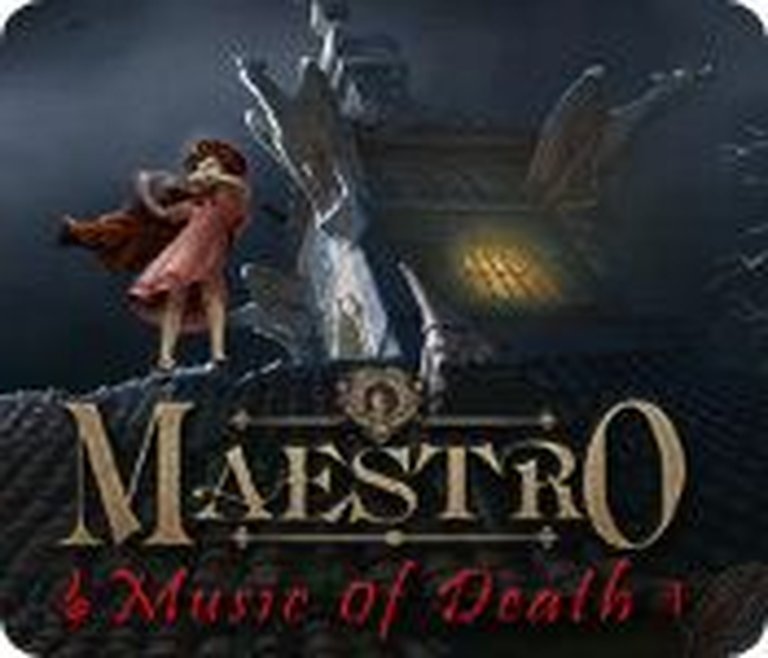
In ‘Maestro: Music of Death’, an inspector is dispatched to a quarantined town on the edge of Paris to investigate a supernatural force that rapidly ages residents. Amid threats from a mysterious old woman and a mother’s plea to find her missing daughter, the player must uncover the source of an eerie, pervasive melody tied to the girl, blending first-person adventure, hidden object searches, and puzzle-solving mechanics.
Gameplay Videos
Where to Buy Maestro: Music of Death
PC
Maestro: Music of Death Cracks & Fixes
Maestro: Music of Death Guides & Walkthroughs
Maestro: Music of Death: A Critical Examination of a Haunting Hybrid
Introduction: A Symphony of Decay
In the early 2010s, the casual “hidden object game” (HOG) market was a bustling, often formulaic, landscape dominated by cheerful mystery-themed fare. Into this environment, ERS Game Studios released Maestro: Music of Death in March 2011, a title that immediately distinguished itself through its stark, macabre premise and cohesive integration of a chilling narrative with its gameplay mechanics. More than just a collection of object hunts, Music of Death presented a complete, atmospheric adventure where every puzzle and search contributed to a mystery of supernatural horror. This review argues that Maestro: Music of Death represents a pivotal, albeit under-examined, evolution in the casual adventure genre. It successfully married the accessible, item-centric gameplay of HOGs with the environmental storytelling and puzzle-driven progression of classic graphical adventures, all wrapped in a uniquely eerie aesthetic. Its legacy is that of a sophisticated template—one that prioritized dread and discovery over mere passive searching—proving that casual games could deliver a genuinely unsettling and coherent experience.
Development History & Context: Forging a Darker Sound
Maestro: Music of Death was developed by ERS G-Studio, a Ukrainian development house now known as ERS Game Studios, and published by Big Fish Games, the dominant distributor for the casual market at the time. The studio, led by figures like Producer Rouslan Pismenniy and Game Designer Aleksandr Motylev, was prolific, churning out a high volume of titles for Big Fish’s “Daily Deals” and “Club” model. Their prior work included entries in the Dark Tales and Redemption Cemetery series, establishing a pattern of gothic, mystery-laden adventures.
The game’s development was shaped by the technological and market constraints of 2011. The casual audience primarily used mid-range PCs and Macs, dictating a 2D pre-rendered art style with limited animation. This limitation was turned into a strength; the static, beautifully painted scenes of the quarantined town possess a haunting, tableau-like quality. The business model was * Commercial, relying on a standard “try-before-you-buy” demo and a premium *Collector’s Edition (featuring a bonus chapter, strategy guide, and extras), which was the industry standard for maximizing revenue from a core audience.
The gaming landscape of early 2011 saw the HOG genre in a maturation phase. Players were growing weary of simple “list-finding” in cluttered rooms. Music of Death arrived as part of a wave (including ERS’s own Sacra Terra series) that sought to integrate hidden objects more meaningfully into a larger adventure framework. Objects were not just checklist items but crucial tools for navigating the environment, repairing machinery, and solving multi-step puzzles. This hybrid approach—a “graphical adventure with on-screen movement touch points, puzzles and hidden-object search style gameplay”—was the game’s defining design philosophy, aiming to satisfy both adventure gamers and HOG enthusiasts.
Narrative & Thematic Deep Dive: The Plague of Sound
The plot of Maestro: Music of Death is a concise but potent piece of gothic horror. The player is an unnamed “inspector” (implied to be a recurring protagonist for the series) summoned to the fictional, walled town of Villepreuse on the outskirts of Paris. The town is under quarantine due to a terrifying “plague” that doesn’t cause fever or infection, but instantaneous, lethal aging. Victimscrumble into dust within moments, all while hearing a sinister, ethereal melody.
The narrative masterfully uses environmental storytelling. The entire town is a crime scene, its streets filled with the instantaneous remains of its citizens, creating a pervasive atmosphere of tragedy and wrongness. The central mystery unfolds through journal entries, notes, and the unsettling vignettes of the aged dead. The antagonist is soon revealed to be Eva Krueger, a malevolent figure from the town’s past (later expanded in Notes of Life). Her motivation is cruelly simple: she has discovered a way to weaponize music, the “Music of Death,” a supernatural force that accelerates life until it burns out. She forces a young, trapped child prodigy, Emily, to play this cursed composition on her violin, making her the unwilling epicenter of the plague.
The core themes are powerfully drawn:
1. Music as a Double-Edged Sword: The game inverts the traditional, uplifting power of music. Here, melody is a vector for death, a parasitic force that consumes life force. Every musical instrument—violin, flute, piano, horn—is a potential key or component in the machinery of this curse.
2. Fate and Sacrifice: Emily is a classic Enfante Terrible figure, a child bearing a terrible burden she cannot control. The player’s quest is to break the cycle of sacrifice she is forced to enact.
3. The Corruption of Art: The “Maestro” of the title is a perversion of the creative genius. Eva’s desire to create or control this ultimate music has led to apocalyptic ruin, framing artistic ambition as a potentially毁灭性 force.
4. Isolation and Quarantine: The literal quarantine mirrors the emotional and supernatural isolation of the victims and Emily. The player is alone in a ghost town, pursued by the ominous old woman (Eva in disguise) and the ever-present, deadly music.
The storytelling is delivered efficiently through the Journal system, which automatically records plot points, character sketches, and clues like musical symbol mappings. This keeps the player engaged without excessive dialogue or cutscenes, a necessity for the genre’s pacing. The climax, where the player must burn the “Symphony of Life” (the antithesis to the Music of Death) in a fireplace to break the curse, is a stark, symbolic act of destruction that resolves the core conflict with satisfying finality.
Gameplay Mechanics & Systems: A Well-Oiled (If Rusty) Machine
Maestro: Music of Death employs a hybrid adventure-HOG system that was innovative for its time in its seamless integration.
Core Loop & Interface: The game uses a classic first-person point-and-click interface. The bottom of the screen houses the Inventory Tray, which scrolls to manage collected items. The Journal sits in the lower left, and the Hint button (represented by a violin, a nice thematic touch) is in the lower right. The cursor changes to a magnifying glass for inspection and a hand for interaction. This is standard for the genre, but the game uses these tools effectively.
Hidden Object Scenes (HOS): These are the game’s bread and butter, but they are contextual and purposeful. A sparkling cluster of musical notes indicates a HOS location. Completing a scene yields a key inventory item necessary for progression. Crucially, items listed in red text require an extra action—opening a drawer, moving a cloth, using a tool—to reveal. This adds a layer of interactivity beyond simple spotting. The items themselves are often thematically relevant (musical instruments, tuning tools, theatrical props), reinforcing the narrative. The major criticism, noted by reviewers like Dora at JayisGames, is the high degree of backtracking. Players must re-enter HOS locations multiple times as new red-text items become available or new searches unlock after acquiring specific tools. This can feel repetitive.
Inventory-Based Puzzles & Adventure Logic: This is where the game shines. The vast majority of progression is through “use item on hotspot” puzzles that require lateral thinking and exploration. Examples include:
* Combination: Gluing medallion fragments with a paintbrush and glue.
* Environmental: Using a rope and hook to fetch a barrel from a river, then crowbarring it open.
* Machine Operation: Repairing an oil lamp by assembling its parts (wick, shade, reservoir, oil) in a specific order, then lighting it to reveal a new area. Another example is powering up a generator with a light bulb, switch, and belt.
* Symbolic/Musical: The numerous minigames are frequently tied to the music theme: arranging tiles to form a coat of arms, sliding notes on a string to their correct pitch (using color-coded flute holes as a guide), matching musical instrument symbols to their accessories (skull for violin, valves for horn), and rotating feathers to complete a phoenix statue.
Puzzle Design & Skip Function: Puzzles vary in cleverness. The note-sliding puzzle (green/yellow/red feedback) and the statue feather-rotation are intuitive and satisfying. Some, like the “7-lock hatch” where you try seven keys in five locks, can feel like tedious trial-and-error. The game offers a Skip button for puzzles, but it requires a recharge time, encouraging players to engage with them. The Expert Mode (mentioned in walkthroughs) increases recharge times and removes visual “sparkle” hints for active zones, offering a stiffer challenge for veterans.
Progression & Pacing: The game is divided into 10 chapters, each with a distinct location (The Bridge, The Town, The Theater, Maestro Park, Underground, Workshop, Mansion, Attic, Emily’s House, The Maestro). This provides a clear sense of advancement. The pacing is generally good, with new areas and tools constantly opening up previously inaccessible paths, driven by a strong “key-and-lock” design where every item has a clear, logical purpose. The Collector’s Edition adds a bonus chapter that continues the story, involving a crypt and a music school, extending the gameplay significantly.
World-Building, Art & Sound: The Town That Sings of Death
The game’s greatest triumph is its atmosphere, built on a foundation of exceptional art and sound design.
Visual Direction & Art: The pre-rendered backgrounds are sumptuously detailed and consistently eerie. The town of Villepreuse is a masterpiece of desaturated, gloomy beauty. Cobblestone streets are overgrown, buildings are boarded up or crumbling, and a palpable sense of abandonment hangs in the air. The locations are varied and thematically rich: the decaying Theater with its lumbering wooden puppets and dusty stage; the Maestro Park with its broken statues and fog-shrouded cemetery; the claustrophobic, pipe-filled Catacombs; and the oppressive, Victorian Mansion. The character designs for the few NPCs—the gaunt, coughing townspeople frozen in their death throes, the monstrous shadowy figures, the fragile Emily—are memorable and horrifying in a subtle way. The color palette is dominated by browns, greys, and sickly greens, with occasional jarringreds (like the ruby eye) or spectral blues. This visual cohesion sells the “cursed town” concept perfectly.
Sound Design & Music: This is the game’s defining sensory element. The soundscape is a character in itself. The constant, low hum of the “Music of Death”—a discordant, wailing, theremin-like melody—pervades every scene. It is never cheerful; it is the auditory manifestation of the plague. Its volume and presence often increase near puzzle solutions or critical areas, acting as an aural cue. The ambient sounds—dripping water, creaking wood, distant wind—are crisp and immersive. The sound effects for interactions (clinking glass, turning gears, a match striking) are clear and satisfying. The voice acting (where present in the few dialogue sequences) is competent but not the focus; the game relies more on text and atmosphere. The strategic use of silence, broken only by the haunting melody, is masterful and deeply unsettling.
Synergy: The art and sound work in perfect lockstep. A HOS in the Maestro Park cemetery isn’t just a list of objects; it’s a search through mossy tombstones under a sickly green moon, with the death-music humming in the background. Repairing the lamp in the theater to cast a single, wavering beam of light in an otherwise pitch-black room is a moment of profound relief and tension. The world doesn’t just look cursed; it feels and sounds cursed.
Reception & Legacy: A Cult Classic’s Journey
Upon release in 2011, Maestro: Music of Death was commercially successful within its niche. As a Big Fish Games publication, it benefited from a massive, built-in casual audience. Its Collector’s Edition model was particularly effective, offering significant bonus content that drove sales among completionists. It did not break into mainstream gaming press but was well-regarded in casual gaming communities and review aggregators for its genre.
Critical reception was generally positive but qualified. Reviewers on sites like JayisGames (4.3/5) praised its “weird, over-the-top story,” “fantastic artwork,” and “attention to visual detail,” calling it a “genuinely top-notch game.” The primary criticisms, echoed in player feedback, were:
* Excessive Backtracking: The need to repeatedly traverse the town and re-enter HOS locations was a common pain point.
* Repetitive Sound Effects: The ghostly sighs and gasps that play in certain areas were noted as becoming irritating after repeated hearings.
* Some Superfluous Tasks: As the reviewer quipped, “I really need to get a specific item to get rid of a small pile of leaves?” Certain object-finding tasks felt artificially padded.
Its MobyScore is listed as “n/a” with only 2 player collections, a testament to its status as a cult classic within a subculture rather than a widely known title. It has not been the subject of major retrospective analysis, despite its quality.
Influence and Legacy: Maestro: Music of Death’s true impact is seen in the evolution of the hybrid adventure-HOG. It demonstrated that a casual game could support a complex, multi-location narrative with consistent internal logic. Its success cemented ERS Game Studios as a premier developer of atmospheric casual adventures, leading directly to a successful series:
* Maestro: Notes of Life (2012)
* Maestro: Music from the Void (2013)
* Maestro: Dark Talent (2015)
These sequels expanded the lore, with Notes of Life exploring Eva Krueger’s backstory and the villain Francois, and Dark Talent introducing a new supernatural threat at an opera house. The series maintained the core formula: a supernatural music-based curse, a distressed child, a mysterious villain, and a blend of HOS and intricate inventory puzzles. Furthermore, the game’s emphasis on thematic consistency (every puzzle tied to music, theater, or curses) and atmospheric dread influenced other studios to move beyond generic “haunted mansion” settings toward more narratively justified horrors in the casual space.
Conclusion: A Masterpiece of its Genre
Maestro: Music of Death is not a flawless game. Its pacing can be bogged down by backtracking, and some of its puzzle logic leans on obscurity. Yet, within the specific context of early-2010s casual adventure games, it is a remarkably accomplished and ambitious title. It transcended the “playlist” nature of many HOGs by embedding its object-finding and puzzle-solving into a coherent, chilling narrative about the corruption of art and the weight of fate. Its greatest strength is its unwavering atmosphere—a suffocating blend of beautiful, decayed art and a relentless, sinister soundtrack that makes the town feel authentimately cursed.
Historically, it stands as a high-water mark for the hybrid adventure/HOG genre. It proved that a game could be both accessible to newcomers and satisfying for adventure veterans, all while telling a story with genuine horror and emotional stakes. It gave the “Maestro” series a strong, memorable foundation that carried through multiple sequels. While it may not have the name recognition of a Mystery Case Files or a Dark Parables, Maestro: Music of Death deserves recognition as a cleverly constructed, deeply atmospheric, and influential work that pushed the boundaries of what a “casual game” could be. It is a haunting symphony of design, and its final, fiery resolution remains one of the most thematically satisfying conclusions in the genre. For anyone interested in the evolution of narrative-driven casual games, it is an essential, if quietly terrifying, piece of the canon.