
- Release Year: 2018
- Platforms: Nintendo Switch, PlayStation 4, Windows, Xbox One
- Publisher: Stormseeker Games, LLC
- Developer: Stormseeker Games, LLC
- Genre: Role-playing (RPG), Strategy, Tactics
- Perspective: 1st-person
- Game Mode: Single-player
- Gameplay: Dungeon Crawling, Procedural generation
- Setting: Fantasy
Description
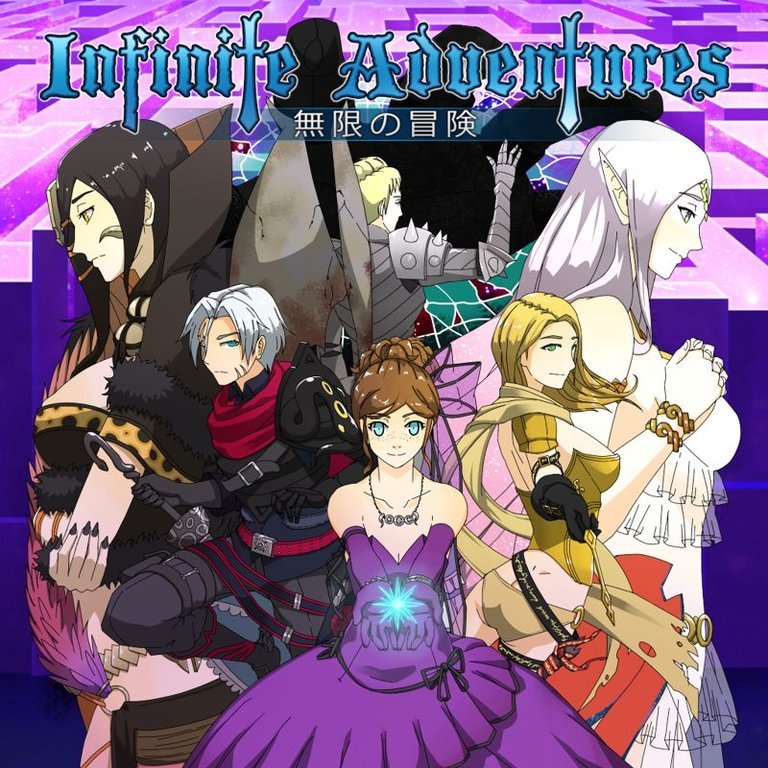
Infinite Adventures is a fantasy dungeon crawling RPG inspired by classic first-person dungeon RPGs. Players assume the role of the Traveler, an amnesiac hero who assembles a party to explore the procedurally generated Infinite Labyrinth, uncovering mysteries through fresh mechanics for exploration, combat, and progression, all presented with an anime/manga art style and strategic depth.
Gameplay Videos
Where to Buy Infinite Adventures
PC
Infinite Adventures Cracks & Fixes
Infinite Adventures Guides & Walkthroughs
Infinite Adventures Reviews & Reception
lifeisxbox.eu : Being a new and budding indie developer, you can clearly see they wanted to make a statement by creating this gem in a genre that’s tailored towards a very niche market. And ho boy, they sure did deliver.
Infinite Adventures: A Deep Dive into a Flawed but Fascinating Dungeon Crawler
Introduction: The Allure of the Labyrinth
The dungeon crawler, or DRPG (Dungeon Role-Playing Game), is a genre defined by its pact with the player: a commitment to methodical exploration, punishing combat, and profound satisfaction drawn from incremental progress. From the grid-based terror of Wizardry to the cartographic obsession of Etrian Odyssey, the formula is hallowed. Into this sacred space stepped Infinite Adventures in 2018, the debut title from the Charleston-based indie studio Stormseeker Games. It arrived with the bold promise of “fresh new mechanics” atop a classic foundation, aiming to capture the spirit of the greats while forging its own path. My thesis is this: Infinite Adventures is a game of profound and telling contradictions. It is a title where a genuinely innovative and engaging combat system collides with a disappointingly generic world and questionable design choices, resulting in an experience that is simultaneously compelling and frustrating—a flawed gem that shines brightly in moments but remains encased in rough stone. Its legacy is not one of genre-defining mastery, but of a passionate, uneven prototype that reveals both the ambitions and the harsh realities of modern indie development within a niche field.
Development History & Context: A Solo Vision in a Crowded Niche
Infinite Adventures is the brainchild of Travon Santerre, who wears every major hat on the project: producer, programmer, designer, and writer. This solo-driven vision, supported by a small but dedicated team (including composer Ryan Lee, artist Edgar Lagayada, and writer Justin Hellstrom), is the game’s foundational story. Developed over several years, it represents a classic indie struggle: a labor of love striving for parity with established franchises like Etrian Odyssey or The Legend of Grimrock.
The technological context is that of the late 2010s, an era where 2D sprite work and 3D environments could coexist (as seen in games like Labyrinth of Refrain), but where budget constraints starkly limited animation and polish. The gaming landscape for DRPGs was healthy but小众 (niche). The Nintendo Switch had revitalized interest in portable, deep RPGs, and PC retained a dedicated audience for complex, systems-driven games. Infinite Adventures launched on PC, PS4, and Xbox One in October 2018, with a Switch port following in April 2021—a move that acknowledged the platform’s affinity for the genre. The development history, as hinted by post-launch patches and developer responsiveness (notably the addition of an auto-save feature after player request), suggests a title that was finished but perhaps not polished to a AAA sheen, a common tale of scope overwhelming resources.
Narrative & Thematic Deep Dive: A World of Words, Not Weight
The game’s story positions the player as “the Traveler,” an amnesiac hero awakening in the Infinite Labyrinth beneath the city of Giamata. The premise holds potential: a mystery of identity intertwined with the mystery of a magical, multi-world dungeon. The narrative framework is ambitious, spanning six regions of four floors each, with political intrigue, fateful decisions, and permanent party member changes.
However, the execution is where the narrative falters severely. The primary failing is information density without emotional resonance. As the RPGamer review astutely notes, “a lot of time has been spent designing the game’s world and lore, each choice in the character creator containing descriptions of places and important people.” This is a double-edged sword. While it creates a veneer of depth, it comes at the cost of character. Characters discourse at length about “various lands they come from and people you’ll never meet,” leading to simplistic motivations and a failure to make the player care. The story provides “far more plot questions than answers,” but without compelling characters to anchor those questions, the mystery feels academic, not emotional.
The voice acting exacerbates this issue. The sheer volume of voiced lines—every single line of dialogue—is commendable and rare for an indie title, as highlighted by both RPGamer and LifeisXbox. Yet, the quality is consistently noted as “amateurish” (XTgamer) and “cheesy” (Metacritic’s TheXboxHub review). With a static character art style that shows no facial expression, the disconnect between the earnest vocal delivery and the lifeless visuals becomes jarring. The story’s potential is strangled by its own exposition and a presentation that cannot support its narrative ambitions. Themes of memory, identity, and political strife are introduced but never woven into the player’s emotional journey, leaving the plot as a functional, forgettable scaffold for the dungeon crawling.
Gameplay Mechanics & Systems: Where the System Shines
If the narrative is the game’s weak flank, its combat and progression systems are its armored breastplate. Infinite Adventures implements a resource diversity system that is a masterclass in tactical differentiation. Instead of a universal mana pool, each of the 10 classes utilizes a unique resource:
* Mana (Mendicant, Soul Caller): Standard regeneration.
* Rage (Warlord, Stormseeker): Fills by dealing and receiving damage.
* Focus (Ronin, Archeologist): Starts full, regenerates after skill use.
* Astral Energy (Astral Maiden): Specific to her summoning mechanics.
This design immediately makes party composition a meaningful puzzle. A Warlord must be in the thick of melee to fuel abilities, a Stormseeker requires balanced aggression, while a back-row Mage conserves mana. It injects a dynamic, class-specific rhythm into every turn.
Layered atop this is the Empower Gauge, a whole-party resource that fills slowly. It can be used for two purposes: 1) powerful, screen-filling “Kessen” special attacks, or 2) to empower individual character abilities (increasing damage, area of effect, or healing). RPGamer correctly identifies that Kessens often become obsolete mid-game, making the strategic empowerment of single-target or row-based spells the superior, more consistent choice. This creates a valuable, always-present tactical layer: do you save for a big party attack, or consistently boost your main damage dealer? The system is deep and rewarding.
The quality-of-life features are exceptionally player-friendly for the genre, as praised by RPGamer. Skill points can be reset for a nominal fee in town, eliminating build anxiety. Encounter rates are fully adjustable on the fly, from 0% for pure exploration to 200% for grinding. The base game includes a pre-made, well-balanced party for newcomers. A robust character creator with 5 races, 10 classes, and nearly 200 art pieces allows for deep customization. These features lower the barrier to entry without sacrificing the core hardcore appeal.
However, two major gameplay misfires are consistently cited:
1. The “Infinite” Wild Portals: The procedurally generated side dungeons are a universal point of contempt. Described as “infinitely boring” (XTgamer) and frustrating mazes of “tiny, empty rooms connected by a ridiculous amount of doors,” they are tedious, unrewarding chores. They embody the game’s titular promise in the worst way—endless quantity with zero qualitative substance.
2. Dungeon Layout & Puzzles: The main labyrinth’s 24 floors are largely generic corridors with minimal environmental storytelling or interesting gimmicks. Puzzles are limited to simple block-pushing, and the repetition of similar layouts and door-opening animations breeds monotony. The backtracking to town triggered by story events is also noted as a significant annoyance later in the game.
World-Building, Art & Sound: A Stark Visual Dichotomy
The game’s aesthetic exists in a state of civil war. The 2D background art is almost universally hailed as the strongest visual element. Environments in town and labyrinth are detailed, shaded, and atmospheric, successfully creating a lived-in fantasy world. This stands in stark contrast to the foreground character and monster sprites.
These sprites are 100% static. No facial expressions, no battle animations, no lip-sync beyond a generic “talking” bob. They are brightly colored, anime-styled, and often well-designed (as noted by Gamepressure.com), but their complete lack of animation makes them feel like cardboard cutouts placed against a rich painting. This dissonance is the game’s most persistent visual flaw and significantly dampens immersion during both dialogue and combat.
The sound design presents another dichotomy. The voice acting, while technically uneven, is lauded for its sheer commitment and volume. Having every line voiced is an immense undertaking for an indie studio and adds a layer of polish that is unexpected. Some performances (like those of seasoned VA Sean Chiplock) are highlights. Conversely, the soundtrack is described as “pleasing and varied” (RPGamer) but also prone to repetition on longer floors, losing its impact.
Reception & Legacy: The Critic-Player Chasm
Infinite Adventures‘ reception is a study in divergence. Critical reception was firmly negative to mixed. The sole critic on MobyGames (Digitally Downloaded) gave it 2/5, calling it “flawed on every level.” Metacritic scores for Xbox One hover around 70-73/100 (Generación Xbox, TheXboxHub), citing competent combat but weak graphics and cheesy acting. The consensus among critics is that it is a deeply flawed, unpolished product that fails to stand out in a crowded genre.
Player reception, however, tells a different story. Steam data (as of 2026) shows a “Very Positive” rating with 91% of 119 reviews being positive (Steambase). This significant gap suggests the game found a devoted niche audience. These players likely value:
* The deep, satisfying combat system and class diversity.
* The extensive customization and quality-of-life features.
* The sheer volume of content (skills, summons, side quests).
* The passion of the small development team.
They are willing to forgive the jank, the static sprites, and the weak story in exchange for a robust, mechanics-driven dungeon crawler. The game’s influence is minimal on the industry at large, but within the DRPG community, it is discussed as a curate’s oddity—a game with a brilliant core combat loop hampered by surrounding mediocrity. It likely influenced few direct successors but serves as a data point for what players in the genre truly prioritize: systems over story, mechanics over presentation.
Conclusion: The Verdict on a Labyrinthine Debut
Infinite Adventures is not a great game. Its world is forgettable, its presentation often cheap-looking, its narrative threadbare, and its signature “infinite” content a tedious grind. By conventional metrics of polish, narrative cohesion, and artistic consistency, it falls short.
Yet, to dismiss it entirely would be a mistake. In the rarefied air of first-party dungeon crawlers, its combat system is a standout achievement. The diversity of resource mechanics and the empower gauge create a tactical tapestry richer than many of its peers. The player-centric features (respecs, encounter sliders, pre-made party) show a developer who genuinely understands the genre’s pain points. For the right player—one who craves a complex party-building puzzle wrapped in a dungeon crawl and who can ignore aesthetic shortcomings—Infinite Adventures offers dozens of hours of engaged, strategic play.
Its place in history is not as a classic, but as a passionate, instructive footnote. It demonstrates that a small studio can innovate within a rigid genre structure, but also that innovation in one area cannot compensate for failure in others. It is a game that invites a split verdict: one for its ambitious, functional heart, and another for its underdeveloped, generic shell. Stormseeker Games’ debut was a statement of intent—a declaration that they understood the bones of a great DRPG. The challenge for any future title will be to give that skeleton the flesh, blood, and soul it so clearly lacked here. For now, Infinite Adventures remains a compelling, flawed exploration of what happens when a brilliant game mechanic is lost in a shallow, procedurally generated world.