
- Release Year: 2014
- Platforms: Windows
- Publisher: Shining Rock Software LLC
- Developer: Shining Rock Software LLC
- Genre: Simulation, Strategy, Tactics
- Perspective: Diagonal-down
- Game Mode: Single-player
- Gameplay: Business simulation, Managerial
- Setting: Medieval, Survival
- Average Score: 73/100
Description
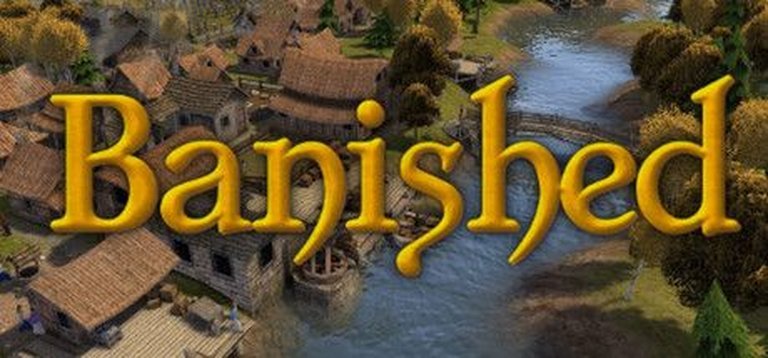
Banished is a survival city-building simulation where players start with a small group of exiled travelers and limited supplies, tasking them with establishing a sustainable settlement in a harsh, unforgiving wilderness. Through careful resource management, construction, and strategic planning against seasonal challenges like severe winters, disease, and starvation, players must guide their community to grow and thrive over time.
Gameplay Videos
Where to Buy Banished
Banished Free Download
PC
Banished Patches & Updates
Banished Mods
Banished Guides & Walkthroughs
Banished Reviews & Reception
metacritic.com (73/100): Banished reinforces the human drama with its brutal difficulty and negative feedback loops.
ign.com : First Banished teaches its systems, then it crushes you with them.
opencritic.com (74/100): New city-builder Banished is the most fun you’ll have simulating famine all year.
Banished: A Grim Masterpiece of Survival City-Building
In the pantheon of city-building simulations, most titles task players with constructing bustling metropolises, managing economies, and placating citizens through services and taxation. Banished, the 2014 debut from the unassuming Shining Rock Software, subverts this paradigm with ruthless elegance. It is not a game about growth for growth’s sake, or about achieving imperial grandeur. It is, at its core, a relentless and punishing simulation of pre-industrial survival, where every log chopped, every seed sown, and every child born is a delicate calculation against an unforgiving environment. Developed single-handedly by Luke Hodorowicz over three years, Banished emerged not as a challenger to SimCity, but as its stark, philosophical antithesis—a game that replaces financial spreadsheets with visceral, human-scale struggle. Its legacy is that of a cult classic that profoundly influenced the “survival builder” genre, proving that profound depth and emotional resonance could emerge from minimalist, brutally systematic design.
Development History & Context: The Solitary Visionary
Banished is the culmination of a fiercely independent development journey. The game was conceived and built almost entirely by Luke Hodorowicz under the Shining Rock Software banner, a true solo endeavor where he wore every hat: designer, programmer, artist, and audio engineer (with his brother Joseph composing the music). Development began in August 2011, and Hodorowicz has publicly stated he invested over 5,500 hours into the project. A critical aspect of its technical history is that the game engine was originally built for a zombie shooter project. Hodorowicz repurposed and refined this custom C++ engine for Banished, a decision that informed the game’s efficient, single-core performance and its distinctive, non-photorealistic aesthetic.
Hodorowicz’s design philosophy was clear from the start. In early interviews, he cited the Anno series as a key inspiration for its economic depth but made a deliberate, defining choice: to exclude combat entirely. This was not a technical limitation but a creative one. He wanted the conflict to stem purely from environmental and resource-based challenges—the true enemies being winter, starvation, disease, and poor planning. The release in February 2014, following a short preview period, was notably smooth for an indie title, though post-launch support was modest by major studio standards. Key updates included the addition of official mod support in November 2014 and eventual, unofficial community-driven translations into numerous languages, including Korean, as documented on community wikis. The development history is also marked by tragedy; Hodorowicz announced a sequel in 2018, but by 2022, development was effectively ceased due to “code rot,” leaving the original game as his sole, monumental legacy.
Narrative & Thematic Deep Dive: The Story of Struggle, Not Story
Banished possesses no traditional narrative. There is no campaign, no scripted events, no overarching plot. Its “story” is entirely emergent, a product of its brutal systems interacting with the player’s decisions. The thematic core is existential survival and the fragility of society. The game begins with a powerful, implicit narrative premise: a group of exiles, possessing only the supplies on their cart, must carve a life from wilderness or perish. This is the foundational drama.
The “characters” are the citizens themselves—individuals with names, ages, genders, and lifecycles. They are born, they grow, they work, they have children, and they die. Their needs are stark: food, warmth, shelter, clothing, and healthcare. The dialogue is non-existent; communication is purely through their actions and status icons. This absence of verbal narrative forces the player to project human drama onto the simulation. A family line extinguished by a harsh winter, a town wiped out by a plague introduced by accepted nomads, a booming settlement stabilized by a well-placed school—these are the tales Banished tells.
The themes are profound and unflinching:
1. Malthusian Trap: As noted in the Korean wiki analysis, the game is a simulator of this economic principle. Exponential population growth inevitably collides with finite resources (arable land, game, wood, stone, iron). Escaping this trap requires constant optimization, trade, and sustainable practices, mirroring pre-industrial societal struggles.
2. The Cost of Progress: Building a stone house is warmer but consumes immense stone. Farming depletes soil. Clearing forests reduces hunting grounds. Every step toward security has an ecological price. The game critiques, without judgment, the tension between settlement and nature.
3. Demographic Imperative: Population is the primary resource, but also the greatest threat. An aging population with insufficient young workers leads to collapse. Unchecked growth with inadequate housing causes “group child” events (mass starvation). The Town Hall’s “Homes/Families” ratio is a constant, anxious metric, making the player a demographer first and a mayor second.
4. Brutal Humanism: There is no glory, no conquest, no empire. Success is measured in generations: seeing grandchildren survive a winter their grandparents could not. The game finds poetry in the mundane cycle of seasons and labor, a “melancholic” atmosphere praised by reviewers. It is, as GameSpot observed, “a very human story divorced from the Western tropes… of imperialism.”
Gameplay Mechanics & Systems: The Elegance of Interlocking Cruelty
Banished‘s genius lies in its deceptively simple rules creating immensely complex, interconnected challenges. The core loop is perpetual: Assign jobs → Gather/Produce Resources → Distribute Resources → Survive Seasons → Manage Population.
Citizens as the Primary Resource: Unlike SimCity where citizens are an abstracted “population” number, each of Banished’s villagers is an agent with a profession, a home, an inventory, and a pathfinding grid. They have a subtle but crucial “desire” system (later expanded upon in Hodorowicz’s design blogs), where they seek food, warmth, rest, and healthcare. Buildings and resources satisfy these desires, creating the AI’s behavior. A citizen will job-hop to a closer profession, will walk to the nearest market for goods, and will prioritize heating their home over distant tasks. This creates emergent traffic jams and logistical puzzles.
The Seasonal Axe: The passing of time is structured in years, divided into four seasons with drastic mechanical impacts. Spring is for planting and building; Summer for harvesting and gathering; Autumn for final preparations and hunting; Winter is the crucible. Temperature drops require firewood for home heating. Frozen ground halts construction and farming. Snow slows movement. Crop failure means famine. This seasonal rhythm creates the game’s primary pacing and tension. The first few winters are a learning curve where most early towns fail.
Resource Cycles & Production Chains: Resources fall into categories: Food (meat, grains, vegetables, fruit, fish), Materials (wood, stone, iron, coal), Goods (clothing, tools, ale), and Luxuries (which affect happiness). Production is physically linked. A hunter must bring game to a storage barn, from which a cook can access it to make stew. A forester plants trees that, decades later, become mature forests for lumber and hunters. This physicality means inefficient storage placement cripples productivity. The game brillianty avoids a “money” resource; all value is in the raw materials and goods themselves, forcing the player to manage physical logistics, not abstract currency.
Buildings & Professions: The building list is lean but deeply functional. Each structure has a specific role and physical footprint. Key systems include:
* Housing: The critical population control mechanism. One house = one family. Too few houses limits growth; too many houses with too few families causes “group child” starvation.
* Markets & Trading Posts: The circulatory system. Markets aggregate goods from multiple storage barns, allowing citizens to fetch all needs from one location. Trading Posts are the lifeline for finite resources (iron, stone, seeds), converting surplus firewood/ale/clothing into them via river trade.
* Town Services: Schools (create educated workers), Hospitals (quarantine disease), Chapels (raise happiness), Cemeteries (mitigate death happiness penalty). These are mid-to-late game investments that address systemic risks.
* Production: Each building (Farm, Orchard, Pasture, Hunter’s Cabin, Fishery, Mine, Quarry, etc.) has a specific yield, workforce requirement, and material dependency. Over-assigning workers causes diminishing returns.
The “Flawed” Perfection: The game’s critical reception highlights a common theme: its brilliance is matched by its omissions. There is no campaign, no victory condition, no explicit end-game. You play until your town dies or you stop. As IGN noted, this lack of a “strong overarching goal” prevented it from being “top tier.” The late game, once a self-sustaining cycle is achieved, can become a Zen-like exercise in optimization or a repetitive slog without new threats. The interface, while clean, provides limited aggregated data (a gap filled by the Town Hall and mods). Critics like Eurogamer’s Paul Dean found the grid-based building placement “generic,” and many noted the difficulty curve flattens after the initial survival phase. Yet, these are often framed not as failures, but as characteristics of a pure, sandbox-focused design.
World-Building, Art & Sound: Austere Beauty
Banished‘s presentation is a masterclass in evocative minimalism. The visual style is low-poly, with muted, earthy color palettes. There are no grandiose cityscapes; the largest “city” is a dense cluster of timber and stone structures. The beauty is in the details: the seasonal change in tree foliage and ground color, the smoke puffing from chimneys, the way citizens hunch against the winter cold, the gathering of harvests in golden fields. The diagonal-down perspective creates a charming, almost storybook-like diorama.
The sound design is equally purposeful and sparse. The soundtrack, composed by Joseph Hodorowicz, is a series of gentle, melancholic piano pieces that underscore the somber, reflective tone of the game. It is not epic or stirring; it is quiet and contemplative, matching the pace of settlement life. The soundscape is populated by functional, clear audio cues: the chop of wood, the sawmill’s buzz, the market’s bell, the ominous cough of a diseased citizen. These sounds provide critical gameplay feedback, turning the audio into a functional UI layer. Together, the art and sound create an atmosphere of quiet desperation and hard-won peace, a “cozy” aesthetic that belies the brutal mechanics beneath—a tension many reviewers noted.
Reception & Legacy: The Influential Underdog
Upon release in February 2014, Banished received “mixed or average” reviews (Metacritic: 73/100), but with a fascinating bifurcation. Critics universally praised its deep, systemic design, difficulty, and the singular achievement of being a one-man project. Game Revolution called it “an unequivocal triumph,” and GameStar infamously stated it was “better than SimCity.” The praise centered on its purity of vision: a game about survival, not money; about people, not statistics.
The criticisms were equally consistent: the lack of a campaign or structured goals made it feel aimless to some (Polygon, PC Gamer). The late-game lacked compelling challenges or progression once a stable cycle was established (New Game Network, Edge). The UI, while clean, hid crucial information, creating a steep, trial-and-error learning curve (Rock, Paper, Shotgun’s famous “brutal, pure” but “not pleasant” review).
Its commercial success was strong for an indie title, sustained by word-of-mouth and a dedicated player base. More importantly, its legacy is profound and specific:
1. Defining the “Survival Builder” Genre: Banished crystallized a sub-genre that balances colony management with existential threat. It directly inspired and provided a blueprint for games like Frostpunk (which added a stark societal narrative to a similar survival equation), Ostriv, Settlement Survival, and The Banished Vault. The NamuWiki correctly notes it served as the “prototype” for this wave.
2. The “No Money” Paradigm: Its decision to remove currency as a primary mechanic, forcing players to manage physical logistics of goods and labor, was a radical and influential design choice. It emphasized cause-and-effect over abstract economic management.
3. The Solo Dev Benchmark: It stands as a towering example of what a dedicated, skilled solo developer can achieve, inspiring countless indie creators.
4. Cult Endurance: While the official sequel died in development hell (the “code rot” blog post in 2022), the community kept it alive through mods (the “Colonial Charter” mod being transformative). Rock, Paper, Shotgun included it in its 2020 top ten management games list, confirming its enduring prestige among genre connoisseurs.
Conclusion: An Imperfect, Essential Classic
Banished is not a flawless game. Its greatest strength—a pure, unadulterated focus on systemic survival—is also the source of its most common criticisms. It offers no hand-holding, no victory screen, and no guarantee that your carefully laid plans won’t be erased by a random tornado or a lingering cough. It is a game that asks you to find meaning in the diligent management of logs and loaves of bread, to feel the weight of a population’s collective fate in every decision.
Yet, this is precisely what makes it an essential, historic title. In an era of bloated, tutorial-heavy, goal-oriented strategy games, Banished is a defiantly old-fashioned and intellectually rigorous experience. It trusts the player to derive narrative and satisfaction from the interplay of its elegant, cruel systems. It is a digital ant farm, a Malthusian trap, and a quiet meditation on community and resilience. Luke Hodorowicz created not just a game, but a foundational text for a genre—a grim, beautiful, and brutally compelling masterpiece that remains a high-water mark for simulation purity. Its place in history is secure: the game that reminded us that building a city is, first and always, about keeping people alive.