
- Release Year: 2016
- Platforms: Macintosh, Windows
- Publisher: Rebellion Developments Ltd.
- Developer: Big Boat Interactive
- Genre: Action, Strategy, Tactics
- Perspective: First-person
- Game Mode: Online Co-op, Online PVP, Single-player
- Gameplay: Base management, First-person vehicle combat, Real-time strategy, Resource collection, Tactical commands, Vehicle piloting
- Setting: Futuristic, Sci-fi
- Average Score: 93/100
Description
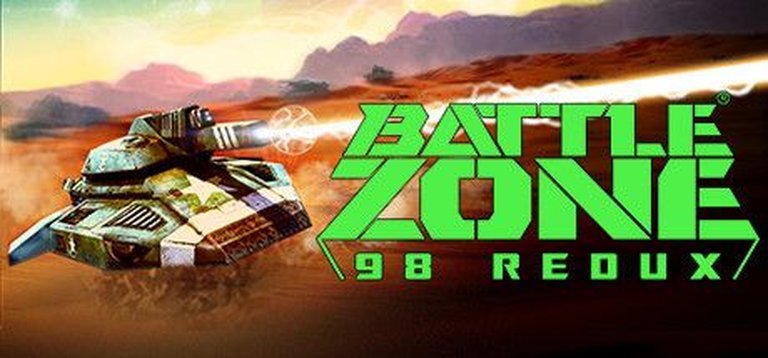
Set in an alternate history where the 1960s space race escalated into a clandestine interplanetary conflict, Battlezone 98 Redux is a hybrid real-time strategy and first-person vehicle combat game. Players assume the role of a commander, harvesting extraterrestrial bio-metal to build bases and produce hover tanks, while personally piloting these vehicles in tactical battles against the opposing superpower, blending base management with direct combat.
Gameplay Videos
Where to Buy Battlezone 98 Redux
PC
Battlezone 98 Redux Patches & Updates
Battlezone 98 Redux Mods
Battlezone 98 Redux Guides & Walkthroughs
Battlezone 98 Redux Reviews & Reception
metacritic.com (93/100): Battlezone is still a blast.
Battlezone 98 Redux Cheats & Codes
Battlezone 98 Redux
Hold Shift + Ctrl while entering cheat codes in-game. Type IAMADIRTYCHEATER at the Mission Start Screen to unlock all levels.
| Code | Effect |
|---|---|
| BZRADAR | Fully reveal the map |
| BZVIEW | Enable satellite view without powered communications tower |
| BZTNT | Unlimited Ammo |
| BZFREE | All Units and Buildings cost 0 Scrap and 0 Pilots |
| BZBODY | Unlimited Health |
| BZWINNER | Instantly Win the current mission |
| IAMADIRTYCHEATER | Unlock all levels |
| BZLOSER | Automatically lose the mission |
Battlezone 98 Redux: TheHybrid That Forged a New Battlefield
Introduction: The Genesis of a Genre-Defying Classic
In the late 1990s, the real-time strategy (RTS) and first-person shooter (FPS) genres existed in comfortable, separate realms. Command & Conquer demanded a top-down, macroeconomic view, while Quake immersed you in the visceral, moment-to-moment chaos of the trench. Into this divide stepped Activision’s Battlezone (1998), a game that audaciously asked: “What if you could do both?”Developed by Pandemic Studios, the original Battlezone was not a mere reboot of Atari’s iconic 1980 arcade tank game; it was a radical reinvention. It transported players to an alternate-history 1970s Cold War, where the Space Race masked a secret interplanetary conflict fought with hover tanks scavenged from mysterious “bio-metal.” The player was both commander, directing base construction and fleet movements from a 3D radar interface, and pilot, manning the very tanks they ordered into battle. This seamless, dual-layered gameplay was its core identity—a brilliant, if unwieldy, synthesis that few games have since dared to replicate.
Battlezone 98 Redux, released in 2016 by Big Boat Interactive and published by Rebellion Developments, is not a sequel or a remake, but a meticulous restoration and modernization of that 1998 vision. It takes the original’s groundbreaking, if dated, skeleton and reinforces it with contemporary sensibilities—improved AI, online matchmaking, visual upgrades, and mod support—while preserving the idiosyncratic spirit that made it a cult classic. This review will dissect the 1998 original through the lens of its 2016 reincarnation, arguing that Battlezone 98 Redux is not merely a nostalgia piece but a vital historical artifact that proves a powerful, enduring design truth: that the tension between strategic oversight and hands-on action can create a uniquely compelling and immersive wargame experience.
Development History & Context: Building a Bridge Between Genres
The Studio and the Vision
The project originated at Pandemic Studios, a developer known for innovative, often genre-blending titles (Dark Reign: The Future of War, Full Spectrum Warrior). Producer Mike Arkin articulated the core design philosophy succinctly: “Action alone doesn’t cut it 17 years later. But when you combine action with other genres, you get wildly fun… Action meets RPG, you get Diablo; action meets simulation, you get MechWarrior 2… We said, ‘OK, there is no action meets strategy yet’.” This was the North Star. The challenge was technical: how do you give a player both a panoramic strategic view and an immersive cockpit view without breaking the flow?
The Technical Challenge and Solution
The team’s solution was the game’s famed interface. It combined a fully three-dimensional topological radar with transparent, dropdown menus that allowed construction, unit selection, and command issuance without leaving the first-person perspective. As noted in its Wikipedia entry, this allowed players to “monitor and control the battle situation at all times.” The AI for friendly and enemy units was ported from Dark Reign, providing a solid behavioral foundation, though pathfinding and unit prioritization would become persistent points of criticism. The game was built for the burgeoning 3D acceleration market (specifically 3Dfx Voodoo cards), and its visual fidelity—detailed vehicle models, dynamic lighting, expansive planetary environments—was a major selling point, often bundled with 3D cards to reach over a million users.
The 1998 Landscape and Reception
Battlezone arrived in March 1998 to critical acclaim. It earned a 89/100 on GameRankings and won Computer Gaming World’s “Best Action Game” award. Reviewers consistently praised its genre fusion, with GameSpot highlighting the “adrenaline rush of first-person action games with the strategy and resource management of Red Alert.” Next Generation famously stated it occupied “80% of both” the Quake and Command & Conquer brain spaces. However, its commercial performance was modest, selling roughly 73,000 copies in the US by April 1999. Analysts blamed its branding (confusion with the old arcade game), marketing, and its inherently complex, learnable design. Its true legacy was secured through the OEM bundle market and a fervent modding community, which kept it alive for years.
The 2016 Restoration: Big Boat Interactive’s Mission
After Rebellion acquired the rights from Atari in 2013, they tasked Big Boat Interactive—comprised of developers with a personal affinity for the original—with the remaster. Their guiding principle was fidelity. As the MobyGames credits show, they brought in Ken Miller, the original’s “code elf,” for special help. The Redux project was built upon the foundation of the fan-made 1.5 patch, effectively canonizing years of community fixes and balance tweaks. The goals were clear: restore online multiplayer with modern Steamworks integration, rebalance AI pathing and behavior, and enhance the visuals while preserving the original’s aesthetic soul. The subsequent release of the The Red Odyssey expansion as a separate DLC completed the package for purists.
Narrative & Thematic Deep Dive: A Cold War in the Stars
Battlezone’s narrative is a masterclass in pulpy, paranoid alternate history. The year is 1970. The American National Space Defense Force (NSDF) and the Soviet Cosmos Colonist Army (CCA) are not exploring space but warring across it, using scavenged alien technology.
The Bio-Metal and the Cthonians
The MacGuffin is “bio-metal,” a programmable matter harvested from meteor fragments of the destroyed planet Icarus. It allows for the construction of vehicles with hover capabilities and rapid reconfiguration. This material is the key to understanding the deeper lore. The bio-metal was created by the “Cthonians,” an ancient, spacefaring race whose ruins dot the solar system. Their legacy is twofold: the bio-metal itself and their ultimate doomsday weapon, the “Fury.”
Campaign Structure and Thematic Resonance
The game features two parallel campaigns, with the American NSDF campaign as the primary narrative.
- NSDF Campaign (The Main Arc): Beginning on the Moon, the narrative is a classic tale of tactical retreat, regrouping, and desperate innovation. The discovery of a Cthonian factory on Mars and the subsequent race to locate and control “Fury” relics reframes the conflict from terrestrial ideology to existential survival. The Fury units are self-aware AI programmed to eradicate all organic life—a clear metaphor for the uncontrollable, mutually assured destruction of the Cold War nuclear arms race. The final mission on the fictional moon of Achilles, where the player must destroy the Fury base and escape a collapsing moon, is a powerful narrative climax. It forces a literal and figurative alliance between NSDF and CCA against a greater threat, suggesting that ideological conflict is meaningless against a common existential peril.
- CCA Campaign (The Alternative View): Shorter but more mechanically challenging, the Soviet campaign forces the player to manage the full technology tree from the start, reflecting the CCA’s more resource-scarce, improvisational struggle. It provides crucial context, showing the Soviet perspective on the Black Dogs (a rogue NSDF unit) and their own discovery of the Fury threat. Their campaign ends with the Furies turning on them, reinforcing the theme that no side can control this ultimate power.
- The Red Odyssey Expansion: Introduces the Chinese Red Army, who utilize “Portal” technology for interstellar travel and “Cloak” systems. This expands the solar system conflict into a galactic one, pitting the Chinese against both the NSDF and CCA on the moon Ganymede and the planet Elysium. It adds another layer to the Cold War allegory, introducing a third, equally ruthless power leveraging exotic technology for dominance.
Thematic Analysis: The narrative uses its sci-fi setting to explore timeless Cold War anxieties: the arms race, proxy wars, the morality of WMDs, and the possibility of unified survival against a common existential threat. The bio-metal itself is a potent symbol—a resource that grants immense power but is derived from a dead civilization, hinting that such power may inevitably lead to self-destruction. The Fury is the ultimate expression of this: a beautiful, advanced, utterly merciless tool of annihilation. The story’s resolution, with the factions briefly united, is bittersweet, acknowledging that even shared doom may not permanently erase human division.
Gameplay Mechanics & Systems: The Dual-Layer Dance
The genius and frustration of Battlezone 98 is encapsulated in its core gameplay loop, a perpetual dance between two complementary states.
The Strategic Layer: Commander Mode
From the first-person cockpit, the player accesses a transparent, heads-up display (HUD) and the iconic 3D topological radar. This is the strategic hub:
* Resource Management: The sole resource is bio-metal scrap, salvaged from destroyed units or found on the map. It is used to build all structures and units.
* Base Construction: Starting with a basic recycler (construction unit), the player expands by ordering factories (for tanks, scouts, artillery), power plants, and turrets. Construction units must physically deploy to build, tying construction to the map’s geography.
* Unit Control: Units can be selected via number keys or mouse clicks on the radar/HUD. Commands for Attack, Defend, Patrol, and Move are issued. Units have a degree of autonomy but require constant direction for effective combined-arms tactics.
* Faction Tech Trees: Both NSDF and CCA have distinct vehicle rosters (e.g., the NSDF’s versatile “Razor” scout vs. the CCA’s hard-hitting “Herc” tank). The Red Odyssey adds Chinese units with Cloak and Portal tech.
The Tactical Layer: Pilot Mode
This is where the FPS credentials come to life. The player can instantly “jump” into any vehicle under their command (or a newly built one), taking direct control.
* Vehicle Combat: Each vehicle has a primary cannon, secondary rockets/missiles, and sometimes unique abilities (e.g., the NSDF “Striker”’s rapid-fire chaingun, the CCA “Titan”’s heavy plasma cannon). Combat is fast, physics-based, and visceral. Hover mechanics allow for strafing and dodging.
* Role-Switching: The meta-strategy hinges on this switching. You might pilot a scout to harass an enemy base, then jump into an artillery unit to provide long-range fire support, then command a group of tanks in a frontal assault. You are the force multiplier and the weakest link simultaneously.
* Pilot Survival: If your piloted vehicle is destroyed, you eject as a vulnerable humanoid. You can then be killed or must quickly board a friendly (or even enemy!) vehicle to survive. This creates a constant tension between aggression and self-preservation.
The Interface: A Revolutionary但 Flawed Blueprint
The seamless integration of these layers was the innovation. As GameWatcher/Strategy Informer noted, it “comes off very well,” though they cited AI pathing issues. The 3D radar, while brilliant, could be cluttered and difficult to interpret during heated combat. The learning curve was steep, requiring players to think in two scales simultaneously. This complexity was a major barrier to mainstream success but is precisely what gave the game its deep, absorbing quality.
The Redux Refinements
Big Boat Interactive’s work primarily addressed the original’s rough edges:
* AI Overhaul: Pathfinding and unit behavior were significantly improved based on the fan-made 1.5 patch, making AI-controlled units more competent in following move/attack commands and navigating terrain.
* Single-Campaign Unification: The original separated the NSDF and CCA campaigns. Redux allows players to experience the full story from both sides in a single, cohesive campaign progression.
* Modern Multiplayer: Replaced the defunct Activision Anet server system with Steam matchmaking, supporting 2-8 players in various modes (Strategy, Deathmatch, Sniper). This revitalized the game’s competitive and cooperative scene.
* Visualtouch-ups: Enhanced textures, lighting, and particle effects while carefully preserving the original’s art direction—the clean, colorful, slightly stylized sci-fi aesthetic.
World-Building, Art & Sound: A Retro-Future Solar System
Art Direction and Visual Identity
The original Battlezone possessed a distinct visual language that has aged with a certain charm. Unlike the gritty realism of later shooters, its 1998 graphics were bright, saturated, and clear. The hover tanks had a functional, industrial design with bold faction colors (NSDF blues and silvers, CCA reds and tans). Planetary environments—the rusty plains of Mars, the cratered gray of the Moon, the sulfuric clouds of Venus—were vast and open, emphasizing the game’s scale and the loneliness of space combat.
Redux’s Visual Polish: The visual upgrades are conservative but effective. Textures are sharper, lighting is more dynamic with better shadows and bloom effects, and explosions are more impactful. The goal was never to make it look like a 2020s game, but to make the 1998 art crisp. The result is a game that looks dated in a deliberate, stylish way, much like a well-kept arcade cabinet. The iconic, almost toy-like vehicle designs remain intact, a testament to the original artists’ strong concepts.
Sound Design and Score
The sound design was functional and immersive. The hum of hover engines, the deep thump of tank cannons, and the sharp crack of smaller weapons provided crucial audio feedback. Environmental sounds—dust storms on Mars, the vacuum of space—added atmosphere.
The soundtrack, composed by Jeehun Hwang (as credited on MobyGames), is a memorable blend of period-appropriate electric guitar riffs and atmospheric, ambient tracks for exploration. It perfectly captures the late-90s “alternative” and “industrial” vibe, evoking a retro-future Cold War that feels both nostalgic and eerily plausible. Redux preserves this audio identity, a crucial part of its nostalgic appeal.
Atmosphere and Setting
The alternate-history ’70s setting is brilliantly realized through small details: vehicle designs reminiscent of period military hardware with a sci-fi twist, communications chatter with period-accurate slang, and a plot that directly references the Apollo program and historical space milestones. The sense of isolation on vast planetary surfaces, the discovery of ancient alien artifacts in stark contrast to human technology, and the ever-present threat of the Fury create a potent atmosphere of wonder and dread. It’s a universe where the “Space Race” is a literal, violent contest for survival, a powerful recontextualization of a historical period.
Reception & Legacy: From Cult Classic to Restored Gem
1998: Critical Darling, Commercial Underdog
As detailed in the Wikipedia section on reception, the original’s critical reception was stellar. Awards from Computer Gaming World and nominations from PC Gamer US (Best Action, Best Strategy, Game of the Year) cemented its reputation as a groundbreaking title. The praise consistently centered on its seamless action-strategy fusion and its brilliant interface. Complaints, however, were consistent and pointed: mission design could be repetitive (“kill everything” objectives), AI pathfinding was notoriously flaky, and the complexity of the dual-layer gameplay created a significant barrier to entry. Its commercial performance, while not a breakout hit, was saved by OEM bundling, ensuring it reached a wide audience over time and developed a dedicated fanbase.
2016: The Restoration of a Legacy
Battlezone 98 Redux was greeted with near-universal critical appreciation, holding a 78% aggregate on MobyGames from critics. Reviews highlighted its successful preservation of the original’s identity while making it accessible.
* Brash Games (80%): Praised it for keeping “the identity of the original, without alienating any modern audiences,” noting the timelessness of its core gameplay blend.
* PC Invasion (80%): Called it a “classic – and one that has now, thankfully, been restored,” a direct appeal to both veterans and newcomers.
* GameGrin (80%): Emphasized the fun and frantic gameplay, noting that “the strategy elements” were what truly elevated the experience, despite dated sound and graphics.
* 4Players.de (78%): In a detailed German review, celebrated the “sorgfältige Restauration” (meticulous restoration) that made the nearly 20-year-old graphics “erstaunlich gut gehalten” (surprisingly well-preserved), while lamenting the omission of The Red Odyssey in the base package (later rectified).
Common critical threads were: the AI was better but still not perfect; the mission design felt archaic by modern standards; and the game’s true magic—that seamless shift from commander to pilot—remained utterly compelling. The Steam Workshop integration was hailed as a massive win, unlocking the game’s full potential through community maps and mods.
Influence and Industry Place
Directly, Battlezone’s influence is subtle but profound. Its core conceit—a commander who is also a front-line unit—can be seen as a precursor to concepts in games like Company of Heroes (where officers can be directly controlled) and the “commander” roles in multiplayer shooters like Battlefield 2 and later iterations. However, its specific, fully integrated RTS/FPS hybrid has rarely been attempted on this scale. Games like Brütal Legend (which mixed RTS with action-adventure) or the vehicle-heavy RTS elements of the Sins of a Solar Empire series owe a conceptual debt, but none replicate the literal, cockpit-to-radar fluidity of Battlezone.
Its legacy is that of a cult classic design pioneer. It proved that genres could be smashed together in a way that created a new, deeper form of tactical engagement. Its community kept it alive for nearly two decades, a testament to the strength of its core loop. Battlezone 98 Redux didn’t just re-release an old game; it re-contextualized it, presenting it to a new generation with the polish and accessibility it always deserved, finally allowing its historical significance to be fully appreciated.
Conclusion: A Definitive Verdict on a Pioneering Relic
Battlezone 98 Redux is an essential experience for anyone interested in the evolution of game design. It is not the most polished, graphically advanced, or narratively complex game of its era or ours. Its mission design can feel repetitive, its AI still stumbles, and its controls demand a mental shift that modern games rarely require.
Yet, its achievement is monumental. It successfully built a working bridge between two titanic genres, creating a unique gameplay experience where strategic foresight and reflexive pilot skill are equally valued. The tension of issuing an order from your radar and then immediately climbing into the lead tank to execute it yourself remains a powerful, unmatched fantasy. The alternate-history Cold War narrative, while pulpy, is thematically rich and surprisingly prescient in its treatment of apocalyptic technology.
Big Boat Interactive’s Redux treatment is a masterclass in respectful restoration. They stabilized the foundations, opened the doors to a new audience via Steam, and equipped the community with tools to keep the universe alive indefinitely. For fans of the original, it is the definitive way to experience a beloved classic. For newcomers, it is a challenging but rewarding window into a bold design experiment that asked a simple, revolutionary question: What if you were both the general and the grunt?
Final Historical Placement: Battlezone 98 Redux stands as a cornerstone of experimental late-90s game design. It is the most successful and influential hybrid of the RTS and FPS genres ever made. While it did not spawn a legion of direct clones, its DNA—the player as a hybrid strategist/combatant—lives on in the design philosophies of countless tactical shooters and commander-focused games. Its 2016 restoration was not an act of nostalgia, but one of historical correction, ensuring that this bold, flawed, and brilliant design was not lost to time but could instead be studied and celebrated as the unique and enduring classic it truly is. It is a testament to the idea that a truly novel gameplay loop can outlive even the most dated graphics or clunky interfaces.