
- Release Year: 2010
- Platforms: iPad, iPhone, Macintosh, Windows
- Publisher: astragon Software GmbH, Big Fish Games, Inc
- Developer: JetDogs Studios Oy
- Genre: Adventure
- Perspective: 1st-person / 3rd-person
- Game Mode: Single-player
- Gameplay: Hidden object, Puzzle elements
- Setting: Inca, Jungle, Mexico
- Average Score: 100/100
Description
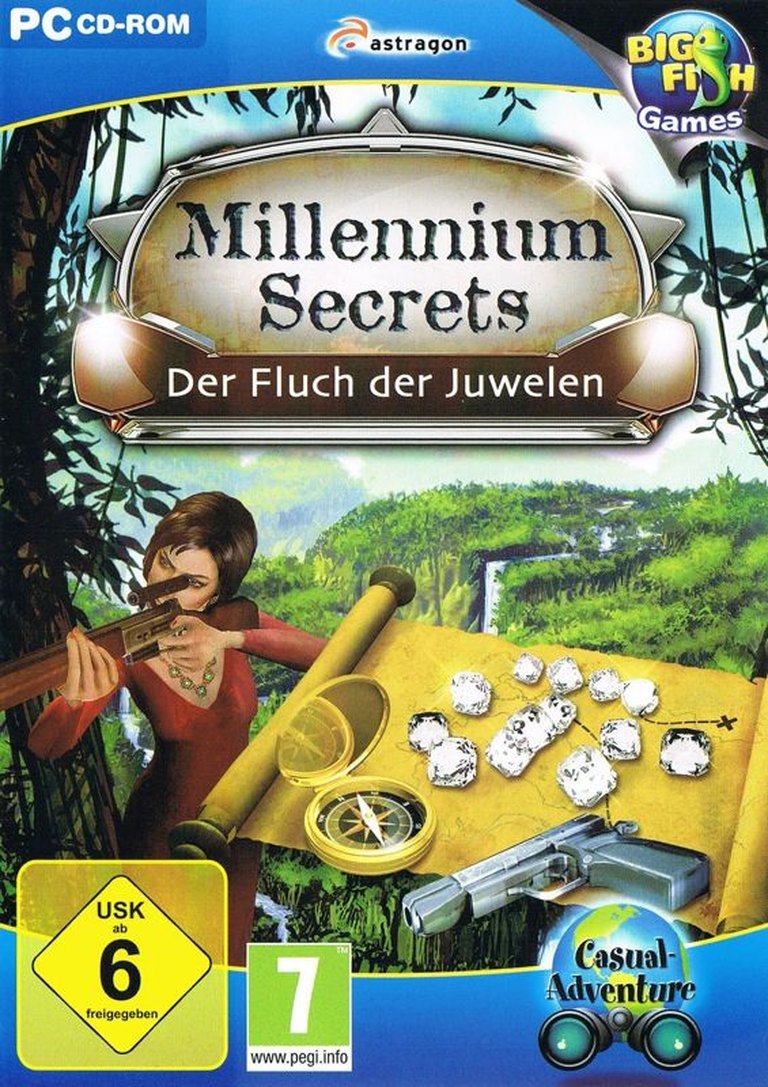
Millennium Secrets: Emerald Curse is an adventure game that casts players as detective Kate, venturing into the dense jungles of Mexico to locate her missing friend, Professor Jones. The journey is punctuated by hidden object challenges, intricate puzzles, and exploration of secret locations, all weaving a narrative of conspiracy tied to ancient Inca gold and power struggles.
Gameplay Videos
Millennium Secrets: Emerald Curse Guides & Walkthroughs
Millennium Secrets: Emerald Curse Reviews & Reception
jayisgames.com : a surprisingly enjoyable adventure game
gamezebo.com : the main problem with the story is that it suffers from a very distinct lack of detail.
game-reviews.org.uk (100/100): by far one of the best games we have played this year
Millennium Secrets: Emerald Curse: A Genre Hybrid Forged in the Casual Revolution
Introduction
In the crowded marketplace of casual adventure games circa 2010, Millennium Secrets: Emerald Curse arrived not with a whisper, but with the confident stride of a genre hybrid aware of its own conventions. Developed by the Russian studio JetDogs Studios and published by Big Fish Games, this title sought to blend the compulsive object-hunting of hidden object games (HOGs) with the environmental puzzle-solving and narrative momentum of classic point-and-click adventures. Its premise—a tough-as-nails private investigator named Kate McCormick racing to save her archaeologist friend from a conspiracy involving Inca gold and a mysterious virus—promised an “Indiana Jones-esque” escapade. Yet, the game’s true legacy lies not in revolutionary innovation, but in its competent, often enjoyable, execution of a formula that was rapidly defining the casual adventure space. This review will argue that Emerald Curse is a quintessential, if imperfect, artifact of its time: a game that prioritizes accessible, content-rich gameplay over narrative depth or graphical prowess, ultimately succeeding as a satisfying puzzle box rather than a compelling drama.
Development History & Context
JetDogs Studios & The Russian Casual Scene: Emerald Curse emerged from JetDogs Studios Oy, a Finnish-registered company with a core development team based in Russia. The credited team—Igor Minaev, Artem Kirillovsky, Alexander Zdrogov, Mikhail Kravtsov, Eugene Alekseyev, Yaroslav Abramov, and Pavel Bykov—was prolific in the casual adventure and hidden object space, having previously worked on titles like Annabel and Sinister City. Their expertise lay in creating dense, item-saturated environments and a barrage of mini-games. This was the era of the “Big Fish Games” model: low-cost, high-volume production targeting a predominantly female, older-skewing demographic seeking stress-free, cerebral entertainment on PC and, increasingly, mobile devices.
Technological Constraints & Aesthetic: Operating on a modest budget (the game requires only a 900MHz CPU and 128MB RAM), JetDogs employed a proprietary 3D engine to create pre-rendered, isometric-style backgrounds with 3D character models. The visual result is a distinct, slightly boxy “illustrated realism.” Environments are detailed and clutter-filled, but character animations are stiff, and textures are often muddy. This aesthetic was common in 2010 casual adventures—functional and atmospheric rather than cutting-edge. The game was initially released for Windows and Macintosh in March 2010, with HD ports following for iOS (iPhone/iPad) in 2013, demonstrating the rising importance of touch-screen platforms for the genre.
Gaming Landscape: Emerald Curse landed in a golden age for casual adventure games. Publishers like Big Fish, Playrix, and Alawar were churning out titles that hybridized HOG elements with adventure game structures. The standard was set by games like Mystery Case Files and Dark Parables, but Emerald Curse leaned more heavily into adventure traditions—inventory puzzles, dialogue (minimal as it is), and location traversal—than pure HOGs, positioning it closer to narrative adventures like Campfire Legends or the early Mystery Trackers series.
Narrative & Thematic Deep Dive
Plot as a Vehicle for Gameplay: The narrative of Emerald Curse is serviceable but threadbare. Private investigator Kate McCormick receives a panicked call from her old friend, Professor Archibald Jones, an expert on Mesoamerican civilizations. He begs her to retrieve a briefcase from a New York hangar and bring it to the authorities, mentioning a conspiracy involving “Inca gold” before the line cuts dead. Kate’s investigation quickly escalates from a missing person case to a globe-trotting hunt for a deadly ancient virus and a young girl named Mary. The trail leads from a New York hangar and the Professor’s cluttered apartment to the opulent James Manor, the Syndicate’s Barcelona headquarters, an Ocean Dream oceanarium, and finally a secret Mayan temple in Mexico.
Character & Dialogue: Character development is almost nonexistent. Kate is a archetype: the capable, morally upright detective. Her defining traits are her resourcefulness (she can rewire electronics and solve any lock) and a wry, occasionally sarcastic internal monologue. Professor Jones exists primarily as a MacGuffin; we learn he is absent-minded (his DVDs are everywhere) and compassionate (he’s trying to save a sick girl), but he serves only to motivate Kate’s journey. The antagonist, Lord James Scofield, is a stock evil aristocrat involved in black-market antiquities. The most memorable character moment is a clever, unsettling reveal: a painting in Scofield’s manor depicts a woman who looks strikingly like Kate, hinting at a deeper, unexplored connection that the game never pursues.
Themes and Missed Opportunities: The game touches on classic adventure themes: the hubris of colonialism (the Syndicate’s exploitation of ancient artifacts), the weight of history (the Mayan “virus” as a failed weapon against conquest), and scientific ethics (using a child for experiments). However, these themes are purely superficial, backdrop for puzzle sequences rather than integrated into the narrative. The “Emerald Curse” itself is ambiguously defined—is it the virus, the emerald-related artifacts, or the greed that spawns the conspiracy? The story’s greatest weakness is its lack of connective tissue. Kate transitions between locations based on obtuse clues (a DVD, a journal entry) without a sense of organic investigation or character-driven motive. The plot is a series of distinct “chapters” linked by a tenuous mystery, making it feel less like a novel and more like a串珠 (string of beads)—each locale a separate puzzle level.
Gameplay Mechanics & Systems
Core Loop: Hunt, Combine, Solve: Emerald Curse is a masterclass in the “object treadmill.” The core gameplay loop is: enter scene -> meticulously search for highlighted interactive objects (often hidden behind movable items, in drawers, or under rugs) -> collect and combine items in inventory -> use combined item on environment to trigger next scene or mini-game. This loop is relentless and forms the game’s primary rhythm.
The “Hidden Object” Redefinition: As noted in the Jayisgames review, this is not a traditional HOG. There are no static, cluttered screens with lists of unrelated items. Instead, all objects found are diegetic—they are tools, keys, or puzzle pieces required for immediate or near-future progression. The “hidden” aspect comes from the meticulous, often pixel-hunting nature of searching every nook, cranny, and questionable floor tile. Bonus items (like the “Spanish Coins” or “Dog Statues”) are scattered purely to extend playtime and grant extra hints, but they are not core to progression.
Inventory & Interaction System: Inventory items are color-coded: green indicates an item currently usable in the scene, red means it’s a component of a multi-part item (e.g., “Stool Parts” before they’re assembled into a usable stool). The system is logical but can be frustrating; the game often withholds the next necessary item by simply not spawning it in the current location, forcing backtracking. A robust hint system (recharging faster on “Casual” mode) points to the next critical object, mitigating frustration but also reducing challenge.
Puzzle & Mini-Game Design: The game’s true diversity lies in its mini-games, which are both its strength and its weakness.
* Environmental Puzzles: Wiring circuits (connecting same-colored plugs), slider locks (guess-and-test with feedback), gem-matching memory games, and pattern restoration (ring-rotation for the Aztec portal) are frequent and generally logical.
* Inventory-Based Puzzles: Assembling the letter from torn pieces, placing gears on a generator spindle to transfer motion, and matching pyramid weights on a scale are classic adventure tropes executed competently.
* Integrated Mini-Games: Some are diegetically integrated, like the “Mahjong” tile-matching game to decrypt a computer or the arcade “Fun Camera” game to earn hints. These feel clever and reward engagement.
* The Clichés: The review from Gamezebo astutely criticizes the overuse of stock puzzles: the “knife to slide key under door” and “torn letter reassembly” are present and accounted for. The “10 differences between two paintings” puzzle is a particular low point, feeling utterly extraneous to the narrative and solely a time-filler.
Difficulty & Pacing: The “Casual” vs. “Advanced” mode is a significant differentiator. Casual offers sparkling cursors, tutorial prompts, and faster hint/skip recharge, making the game a relaxing, guided experience. Advanced removes these aids, amplifying the pixel-hunt. However, even on Advanced, the puzzle logic is usually transparent, and the hint system is generous. The game’s length (likely 6-10 hours) comes not from difficulty, but from the sheer volume of scenes, items to find, and back-and-forth traversal. The pacing is brisk in narrative terms—Kate moves from New York to Mexico in a matter of in-game hours—but can feel sluggish in moment-to-moment play due to exhaustive searching.
World-Building, Art & Sound
Visual Design & Atmosphere: The game’s greatest asset is its environmental art. Each location has a distinct, saturated identity:
* The Port/New York: Grungy, industrial, with rusted metal, chain-link fences, and overcast skies.
* The Professor’s Apartment: A chaotic, lived-in space filled with books, DVDs, and eclectic furnishings that tell a story of an absent-minded academic.
* Lord Scofield’s Manor: Opulent and suspicious, with lavish decor, hidden panels, and an unnerving portrait of Kate.
* Syndicate HQ (Barcelona): Sterile, futuristic, and temple-like, with glowing consoles and abstract statues.
* Ocean Dream Oceanarium: Bright, aquatic-themed, with colorful tiles and playful decor, a tonal shift that feels slightly jarring but visually diverse.
* Mayan Temple (Mexico): Dank, ancient, and dangerous, with stone corridors, traps, and a palpable sense of ruin.
The 3D character models are less successful. They are detailed in their costumes (Kate’s detective attire, the butler’s livery, the Syndicate agents’ suits) but animations are robotic. Lip-syncing is nonexistent, and movements are limited to stiff gestures. This was a common compromise in casual adventures, where budget was allocated to environments over characters.
Sound Design & Music: The sound design is functional. Environmental clicks, creaks, and hums provide basic feedback. The most notable audio element is the soundtrack, composed by Alexander Machugovsky. It is a mix of ambient, mysterious synth pads and more action-oriented, rhythmic tracks that swell during puzzle-solving or chase sequences. It effectively underscores the pulp-adventure tone but is not memorable in isolation. Voice acting is absent; all narrative is delivered through text boxes and Kate’s internal monologue, a common cost-saving measure in the genre.
Reception & Legacy
Critical & Commercial Reception: Critical coverage was sparse but existent. Metacritic has no critic scores listed, reflecting a general neglect by mainstream gaming press. However, within the casual adventure review sphere, reception was mixed-to-positive. The Jayisgames review (4/5 stars) praised its “intelligently thought out” puzzles and “great storyline” despite “graphics,” while the Gamezebo review (70/100) was more critical, calling the story “unsubstantial” and the puzzles “cliché,” though it conceded the game was “a fun ride.” User comments on these sites were generally appreciative, with players like “alfred” highlighting the satisfying puzzle variety and good mix of mini-games. Commercially, as a Big Fish Games title, it was likely a steady seller in its niche, a reliable “pick-up-and-play” experience for subscription members.
Position in Genre & Series: Emerald Curse is the first entry in the planned “Millennium Secrets” series. It established JetDogs’ template: a globe-trotting conspiracy narrative, a resourceful female lead, and a relentless barrage of item hunts and diverse mini-games. Its direct predecessor in spirit was likely Flux Family Secrets: The Ripple Effect (2009), another time-traveling HOG/adventure hybrid. Its peers were Mystery Case Files: The Malgrave Incident (2010) and Dark Parables: The Red Riding Hood Sisterhood (2010). While the “Millennium Secrets” series continued with titles like Roxanne’s Necklace, it never achieved the prominence of the Mystery Case Files or Dark Parables franchises, partly due to a less distinctive central hook and a protagonist (Kate) who lacked the iconic status of a Mystery Case Files protagonist or the fairy-tale branding of Dark Parables.
Legacy: The game’s legacy is as a solid, mid-tier exemplar of the 2010 casual adventure. It demonstrates the genre’s peak formula: high content density, gentle difficulty, and a focus on wholesome, puzzle-centric gameplay over story or technical spectacle. It did not innovate, but it reliably delivered the expected experience. Its influence is indirect, in that it helped sustain the market for hybrid adventure/HOGs that publishers like Big Fish thrived on. For players, it remains a fondly remembered, if not masterpiece, entry in the “puzzle box” subgenre—a game where the joy is in the tactile act of finding and combining, not in being swept away by a epic tale.
Conclusion: A Flawed but Functional Artifact
Millennium Secrets: Emerald Curse is not a forgotten classic, nor is it a genre-defining work. It is, however, a meticulously crafted product of its time and place. Its strengths are clear: an impressive variety of well-implemented mini-games, a logical if repetitive core loop, and visually distinct, atmospheric locations that encourage exploration. Its weaknesses are equally apparent: a paper-thin plot, rudimentary characterisation, and a reliance on puzzle clichés that can induce Deja vu.
For the modern player, its value lies in understanding the DNA of the casual adventure boom. It represents a design philosophy where player agency is constantly affirmed through finding, combining, and solving, even if the narrative stakes feel inconsequential. Kate McCormick is less a character and more a avatar for the player’s own deductive prowess. The game’s ultimate success hinges on whether one values this compulsive, meditative “gamefeel” over narrative immersion. If you seek a relaxed, lengthy, and varied puzzle experience with a pulp-adventure coating, Emerald Curse delivers. If you demand a story that grips or characters that linger, it will leave you cold.
In the grand chronology of adventure games, Emerald Curse belongs to the long, productive middle chapter—the one where the genre settled into a comfortable, commercial rhythm, prioritising accessibility and content volume over artistic ambition. It is a competent, enjoyable, and ultimately ephemeral piece of interactive entertainment, a testament to the craft of puzzle design over the art of storytelling. For historians, it is a crucial data point; for players, a pleasant, if unremarkable, way to spend a rainy afternoon.