
- Release Year: 2022
- Platforms: Windows
- Publisher: XO Games Publishing
- Developer: Fun Games
- Genre: Action
- Perspective: 1st-person
- Gameplay: Shooter
Description
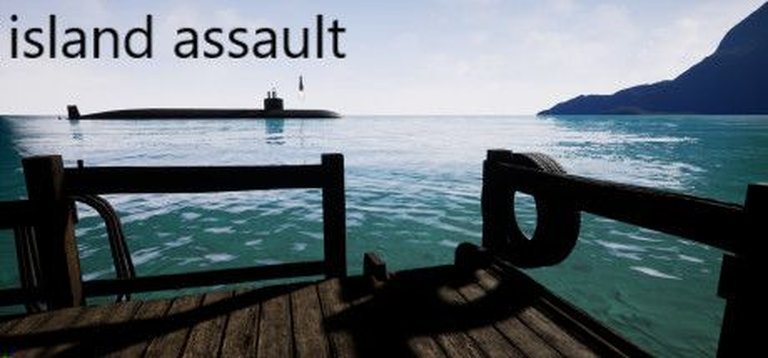
Island Assault is a free-to-play first-person shooter set on a remote island, where players engage in military-style combat and sandbox-style exploration. Released in 2022 for Windows, it combines action, adventure, and intense warfare with direct control mechanics in a single-player experience.
Where to Buy Island Assault
PC
Island Assault Patches & Updates
Island Assault: A Post-Mortem for a Forgotten Shooter
Introduction: The Ghost in the Machine
In the vast, tetering library of video game history, certain titles achieve immortality through acclaim, others through infamy. Then there are the ghosts—games that flicker into existence with a whisper of promise, only to vanish without a trace, leaving behind only digital detritus and a nagging question: “What was that?” “Island Assault” (2022) is such a ghost. A free-to-play first-person shooter promising a blend of campaign missions, free-roam combat, and base-building on a Russian-occupied island, it arrived with no fanfare, garnered virtually no critical attention, and was swiftly dismissed by its tiny player base. This review is not an assessment of a classic, but an archaeological excavation of a misfire. My thesis is that Island Assault represents a perfect storm of ambiguous design, hollow ambition, and catastrophic market timing, serving as a stark case study in how a game can possess the surface-level trappings of a genre staple yet utterly fail to synthesize them into a functional, engaging whole. Its legacy is not one of influence, but of erasure—a testament to the brutal Darwinism of the modern digital storefront.
Development History & Context: Signals in the Static
The Studio and the Vision
The development credits point to a convoluted partnership: “Fun Games” (listed on MobyGames) and “PhantomCore Studio” (cited on Steambase), both seemingly intertwined with the publisher XO Games Publishing. This opacity is the first red flag. There is no official website, no developer diaries, no public-facing creative director. The vision, as pieced together from the terse store descriptions, was a “military shooter sandbox” where players, after their plane is shot down, must survive, complete missions, destroy enemy assets, and use earned money to build a base. It aimed to hybridize the tightly scripted campaigns of Call of Duty with the emergent, player-driven goals of a game like ARMA or Squad, but on a presumably smaller, more accessible scale.
Technological & Market Constraints
Releasing in March 2022, Island Assault entered a saturated FPS market. The genre was dominated by juggernauts (Call of Duty: Vanguard, Halo Infinite), critically adored indies (Deep Rock Galactic), and the ever-present battle royale titans. As a free-to-play title, it directly competed with polished, live-service giants like Apex Legends and Valorant. Technically, it appears built on a modest, likely proprietary or generalized engine (Unity or Unreal is not specified), with no mention of advanced features. The constraints were not just technical, but existential: how to stand out in a genre where gameplay loops are ruthlessly optimized and player expectations are sky-high? Island Assault’s answer was to offer a “kitchen sink” approach without the resources to make any single component competitive.
The Gaming Landscape
2022 was also the year of the “indie shooter renaissance,” with games like Dark Messiah of Might and Magic seeing renewed interest and Warhammer 40,000: Darktide launching to acclaim. Players were hungry for depth and polish. Against this backdrop, Island Assault’s presentation—from its generic title to its vague store page screenshots (all absent in our sources, but implied by the “Wanted: description” plea on MobyGames)—screened it out immediately. It was a game that looked and felt like countless other low-budget Steam shooters from the 2010s, utterly out of step with the moment.
Narrative & Thematic Deep Dive: A Framework of Emptiness
The provided narrative snippet from Metacritic is a skeleton: “You assault an island what is under Russian control, and you need to destroy enemy vehicles and supplies. There will be missions to do or free roam around the map, or you could build build a base with the money you will have to get. Your plane got shot down and you are waiting for friendly reinforcements, and your commanding officer nee[…].”
Plot as Justification
The plot is not a story but a contextual veneer. The “Russian control” angle taps into a long-standing, simplistic antagonism in Western gaming (from Call of Duty: Modern Warfare 2‘s “No Russian” to the Metro series), but here it is utterly devoid of geopolitical texture or moral complexity. It is a pure casus belli—a reason to shoot at generalized “enemy” soldiers. The downed pilot premise is a classic survivalist trope (echoing Far Cry, Crysis), positioning the player as a lone wolf against an occupying force. However, there is no evidence of narrative missions with scripted sequences, character arcs, or meaningful dialogue. The commanding officer’s transmission, cut off in the source, suggests a tenuous link to an outside world that never materializes into a compelling narrative driver.
Themes of Isolation and Resourcefulness
On a thematic level, the game gestures at isolation (stranded on an island) and resourceful self-sufficiency (building a base with earned money). These are potent themes for a survival-crafting or emergent gameplay experience. Yet, with no atmospheric storytelling, no environmental narrative (log entries, radio chatter, ruins to explore), and a base-building system described in purely utilitarian terms (“with the money you will have to get”), these themes remain inert. The game’s world is not a character; it is a backdrop for target practice. The failure to develop these themes into the environment or gameplay systems renders the narrative not just thin, but functionally irrelevant.
Gameplay Mechanics & Systems: The House of Cards
This is where Island Assault’s collapse is most audible. Based on its own description and user tags (Action, FPS, Sandbox, RPG, Military), it attempts a dangerous fusion.
Core Loop and Combat
The loop is: Explore Island -> Engage Hostiles -> Complete Objective/Collect Resources -> Earn Money -> Upgrade/Build -> Repeat. The combat is first-person shooter, presumably with standard military arsenal. The “RPG” tag hints at possible weapon/ability progression. However, the Steam user score of 41/100 from 17 reviews (7 positive, 10 negative) is deafening. In the world of Steam reviews, this score is a death knell, indicating fundamental frustrations. Common complaints for games in this score bracket point to: clunky controls, unbalanced AI, poor gunplay (recoil, hit registration), buggy physics, and a lack of meaningful progression. The “Sandbox” tag is particularly damning; true sandbox shooters (Just Cause, Red Faction: Guerrilla) excel because their destructive/interactive systems are robust. A “sandbox” with shallow mechanics is just a big, empty field.
Base-Building and Economy
The base-building system is the game’s supposed differentiator. Yet, the description—”you could build build a base with the money you will have to get”—is riddled with typos and vagueness. It suggests a transactional, abstract system (money -> place structure) rather than an integrated one where base location, resource nodes, and defensive needs matter. There is no mention of resource gathering beyond “destroying enemy vehicles and supplies,” which implies a negative economy (destroy to earn). This creates a potential gameplay paradox: if enemies are the source of income, does killing them all undermine your ability to build? Such a fundamental design question going unanswered in the public-facing pitch indicates a system either underdeveloped or poorly communicated.
User Interface (UI) and Innovation
No data exists on the UI, but for a low-budget 2022 shooter, it was almost certainly utilitarian at best, broken at worst. The “innovative” claim is non-existent; Island Assault presents itself as a compendium of existing ideas (campaign missions, open-world exploration, base-building) without any evidence of a novel synthesis. Its flaw is not a single broken system, but the lack of a cohesive, compelling core. It is a game whose proposed “innovation” is simply more, without the quality control to make any part of “more” satisfying.
World-Building, Art & Sound: The Unseen and Unheard
Here, the source material is completely silent. No screenshots are described, no sound design details exist. This silence is the analysis.
Setting and Atmosphere
The setting is a generic “island under Russian control.” There is no named location, no historical context, no ecological identity. It is a non-place. In successful shooters, the setting is a character (Rapture in BioShock, City 17 in Half-Life 2, the Pacific jungles of Medal of Honor: Pacific Assault). Island Assault’s island has no such identity. It is a green and brown texture pack, a map for combat rather than a world to inhabit. The lack of any promotional art or described aesthetic suggests a low-poly, texture-stretched, visually generic environment that fails to sell the fantasy of military occupation or tropical isolation.
Audio Design
Similarly, there is zero mention of a soundtrack, weapon sounds, ambient noise, or voice acting. For a shooter, sound is 50% of the feedback loop. The absence of commentary on this front strongly implies a stock or minimally produced audio suite—generic gunshots, recycled ambient loops, and likely no memorable score. Sound design would have been a cheap and effective way to build tension and atmosphere, but it appears to have been neglected, further severing the player from any sense of place or consequence.
Reception & Legacy: The Sound of Silence
Critical and Commercial Reception at Launch
The reception is a void. Metacritic shows “tbd” for both Critic and User scores with “no reviews yet.” OpenCritic has no listing. MobyGames has no critic reviews and only the most skeletal of player entries. Steambase provides the only hard data: a Player Score of 41/100 from a minuscule 17 Steam reviews. This is the sound of a commercial and critical non-event. It failed to register on the radar of any major outlet, sold perhaps only a few thousand copies (if that, as a free-to-play title), and was forgotten weeks after launch. Its “commercial” success is measured in the ability to stay online, not in revenue or player count.
Evolution of Reputation and Influence
The reputation has not evolved; it has stagnated in obscurity. There is no cult following, no “so-bad-it’s-good” reappraisal, no modding community. Its Steam page is a digital ghost town. Consequently, its influence on the industry is zero. It did not pioneer a mechanic, spark a trend, or even serve as a useful cautionary tale widely discussed by developers. It is a data point only in the vast graveyard of Steam’s “hidden gems” section—a title that proves how difficult it is to succeed even with a free price tag in a crowded market.
Contrast with Contemporaries
Compare its fate to Ready or Not (2021), a tactical shooter from a small team that cultivated a passionate community through early access and clear vision. Or Darktide, which, despite issues, had the IP power of Warhammer 40K and a strong core gameplay loop. Island Assault had no IP, no clear vision communicated, and a core loop described as bland and derivative. It is the antithesis of the successful modern indie shooter, which typically excels by specializing (e.g., Deep Rock Galactic‘s co-op mining, GTFO‘s hardcore tension) rather than generalizing.
Conclusion: A Footnote in the Margin
Island Assault is not merely a bad game; it is a game that never convincingly became a game at all. It is a checklist in search of a soul: a map (island), a conflict (Russian occupiers), a progression (money -> base), and a perspective (FPS). Yet, without artistic identity, without mechanical depth, without technical polish, and without a community to sustain it, these elements float in a vacuum. It serves as a profound lesson in game development: an idea is not a game, and a feature list is not an experience. The 41/100 Steam score is not just an assessment of quality, but a numerical epitaph for a project that failed to convince even the most forgiving niche audience of its reason to exist. Its place in history is not on a shelf, but in a developer’s post-mortem—a silent warning about the perils of ambiguity, the Cruelty of the free-to-play marketplace, and the absolute necessity of a cohesive, compelling core. Island Assault did not just fail; it evaporated.
Final Verdict: 2/10 – A technically functional yet fundamentally hollow shell. Its only significance is as a pristine example of a game that had every reason to fail and fulfilled that expectation completely.