
- Release Year: 2007
- Platforms: Windows
- Publisher: JoWooD Productions Software AG, n3vrf41l Publishing
- Genre: Compilation
- Gameplay: Merchant, Trade-oriented
Description
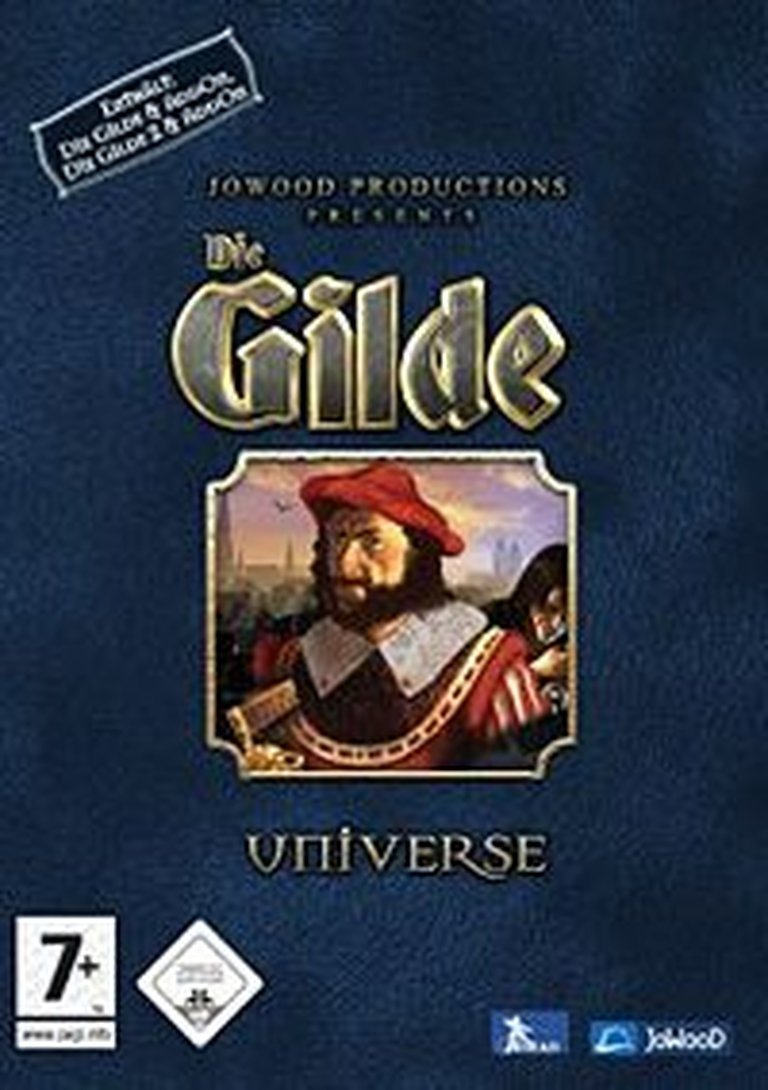
The Guild: Universe is a comprehensive compilation that bundles all main games and expansions from the The Guild series, including Europa 1400: The Guild, The Guild 2, and their add-ons. Set in fictionalized European provinces during the 15th century Renaissance, the series delivers a life simulation experience where players create and manage characters, build dynasties, engage in trade and craft, and navigate social and economic hierarchies in a historically inspired setting.
The Guild: Universe Reviews & Reception
cheatcc.com : they’re definitely worth revisiting.
retro-replay.com : The Guild: Universe delivers the ultimate medieval dynasty simulation
The Guild: Universe: Review
Introduction: A Dynasty Forged in Niche Ambition
In the crowded pantheon of historical strategy simulations, few titles have dared to weave such a complex tapestry of economic management, social role-playing, and political intrigue as the Guild series. Nowhere is this ambition more comprehensively packaged than in The Guild: Universe, the 2007 compilation that bundles the entirety of the series’ foundational era into a single, sprawling anthology. This is not merely a Greatest Hits collection; it is a meticulously curated time capsule of a specific, audacious design philosophy—one that prioritized emergent, player-driven narratives over scripted campaigns, and economic micromanagement over battlefield tactics. For the uninitiated, The Guild: Universe represents a daunting but deeply rewarding portal into a medieval world where your family’s legacy is built not on conquest, but on commerce, cunning, and calculated social climbing. Its legacy is that of a brilliant, deeply flawed pioneer, a game whose immense depth was often its own worst enemy, yet which cultivated a devoted following that refused to let its revolutionary ideas fade into obscurity.
Development History & Context: The German Response to a Genre
The story of The Guild: Universe is intrinsically linked to the story of 4HEAD Studios, a German developer seeking to carve a unique niche in the early 2000s PC strategy market dominated by giants like Civilization and Age of Empires. The progenitor, Europa 1400: The Guild (2002), was a bold declaration: a pure, unadulterated life and business simulator set in the Hanseatic League era. Its success, particularly in German-speaking territories, justified a full sequel, The Guild 2, announced in 2003 with a team swelling to over 80 developers under director Lars Mertensen.
The development context is crucial. The studio was working with the Gamebryo engine, a versatile but notoriously finicky tool (later powering Oblivion and Fallout 3). This allowed the leap from Europa 1400‘s pre-rendered isometric perspective to The Guild 2‘s fully 3D, rotatable camera and detailed cityscapes—a monumental technical achievement for a niche sim at the time. However, this technological leap came at a cost: complexity ballooned, and the infamous artificial stupidity of AI opponents (particularly their inability to effectively operate hospitals or navigate complex paths) became a series-long scar. The schedule was also fraught; logistical delays pushed The Guild 2‘s release from its initial 2005 target to September 2006.
The “Universe” branding itself was a later market-driven construct. As the Wikipedia and MobyGames entries confirm, the individual games and their expansions—Die Gilde: Gaukler, Gruften & Geschütze (2003), Pirates of the European Seas (2007), Venice (2008), and Renaissance (2010)—were gradually released. By 2007-2008, publisher JoWooD (and later n3vrf41l Publishing and DreamCatcher for regional releases) consolidated them into definitive editions: The Guild: Universe and its sibling, The Guild: Complete Collection. This was a pragmatic move, bundling a fragmented series for a broader audience, but it also cemented the compilation as the primary access point for modern players.
Narrative & Thematic Deep Dive: The Story is You Sell
Unlike narrative-heavy RPGs or RTS campaigns, the Guild series operates on emergent storytelling. There is no epic quest to save the realm. The “plot” is the biography of your dynasty, a blank parchment upon which you inscribe your own legend through mundane, repetitive, and occasionally dramatic actions.
Thematic Core: At its heart, the series explores the transition from medieval commune to Renaissance city-state. The player navigates the rigid social strata—from Commoner to Patrician to Noble—mirroring the historical tension between guild-based economies and the rise of princely power. The theme of civil society’s genesis is palpable; you can bribe your way onto the city council, fund public works to gain favor, or manipulate the legal system to crush rivals. It’s a Machiavellian sandbox where reputation (Gunst or “favor”) is a tangible currency, affecting everything from business deals to election outcomes.
Character & Dialogue: Character creation in The Guild 2 is exhaustive. You select a class (Craftsman, Patron, Rogue, Scholar), which dictates your initial building access and skills, alongside appearance, zodiac sign (granting a free talent point), and religion. This isn’t just cosmetic; a Rogue’s path to power is fundamentally different from a Scholar’s. Dialogue is text-heavy and functional, delivered through interface menus. It’s rarely witty, but it effectively communicates the cold calculus of medieval commerce and politics: “I offer you 50 gold for your vote,” or “Your inn’s ale is subpar; let’s discuss a hostile takeover.” The writing captures the period’s blunt transactional nature.
The Expansion Narratives: The expansions layer on thematic vignettes. Gaukler, Gruften & Geschütze introduces alchemy as a dark magic-adjacent craft (with the “Mages’ Guild” upgrade), court jesters as status symbols, and primitive artillery—blurring the line between civic improvement and militarization. Pirates of the European Seas adds the high seas as a Wild West frontier where the rules of the city dissolve. Here, narratives are about privateering, naval monopolies, and smuggling, framing your dynasty as a maritime power broker. These aren’t linear stories but atmospheric contexts that reshape the economic and social possibilities of your sandbox.
The Flawed线性 Ambition: Criticisms of a “lack of focus” (as noted by VideoGamer.com’s Joe Martin) are valid. The game’s desire to be an economic sim, an RPG, and a political thriller simultaneously leads to tonal whiplash. One moment you’re micromanaging wool production, the next you’re assassinating a rival via a gravedigger’s dark artifacts. This lack of a singular, driving narrative is both its greatest strength (unparalleled freedom) and its greatest weakness (a sense of aimlessness without self-imposed goals).
Gameplay Mechanics & Systems: A Symphony of Micromanagement
The gameplay of The Guild: Universe is a sprawling, interconnected web of systems that evolves dramatically between the first and second games.
Core Loop (Europa 1400): You select a profession (e.g., Blacksmith, Alchemist, Tavern Owner) and a procedurally generated town. The loop is: produce goods -> sell at market -> earn money -> upgrade workshop/home -> attract better employees -> repeat. You must manage raw material supply chains (mines, lumberjacks), employee satisfaction, and market prices, which fluctuate based on supply and demand. A unique feature is the family dynasty: you must marry and produce an heir to continue after your character’s death. The “Gaukler” expansion adds side professions like juggling troupes (for prestige) and artillery (for… neighborhood disputes).
Core Loop (The Guild 2): Here, the class-based system replaces individual professions. A Craftsman can build a smithy and a mine; a Patron can run a farm and an inn. The synergy within classes is powerful, but cross-class access is the key to empire-building. You marry into other classes or send children to different schools to unlock their building trees. Character progression is deeper: you gain XP from tasks, spend points on talents (skills), and equip weapons/armor. You have direct, third-person control of your character, allowing you to walk the streets, interact socially (flirt, bribe, spy), and even engage in duels.
The “Favor” System & Politics: This is the series’ masterstroke. Every significant interaction—a trade deal, a gift, a successful intrigue—grants or subtracts Gunst (favor) with individuals. This pools to influence their vote in town council elections. To become Mayor, you must have high favor with enough voting citizens, often requiring you to cater to their class interests (bribing priests, entertaining patricians). It’s a dynamic, relationship-driven political simulator far more nuanced than simple “prestige” meters.
Innovative & Flawed Systems:
* Innovative: The seamless blend of economic, social, and political gameplay into one continuous real-time world. The idea that your blacksmith’s product quality affects your reputation with the local guards, which in turn affects your ability to get a building permit, is a staggering level of systemic integration.
* Flawed (The AI Problem): The AI’s incompetence is legendary, as TV Tropes succinctly notes. They cannot manage hospitals effectively, often lacking a consistent supply of specific medicines, dooming their own populace. Their pathfinding is abysmal, with carts and citizens getting stuck on geometry. This breaks the intended challenge; instead of competing with clever strategists, you exploit an MMO-like bot that starves its own city.
* Flawed (Micromanagement): As CheatCC observes, The Guild 2 “ramps up the level of micromanaging required.” You are constantly directing family members, assigning tasks to employees, adjusting production sliders, and checking market prices. What was charming depth in the first game becomes tedious chore in the second, especially with the added layer of direct character control. The UI, while functional, is cluttered and antiquated (Retro Replay), with nested menus that overwhelm.
* Flawed (Combat & Intrigue): Direct combat is simplistic and tacked-on. Intrigue actions (sabotage, assassination) often feel like random chance events with insufficient tangible feedback, making them a risky, poorly understood side activity.
Multiplayer: A highlight, supporting up to 8 players in cooperative or competitive dynasties. The dynamic of players forming alliances, backstabbing each other, and manipulating the shared political landscape is where the game’s emergent narrative truly shines. However, as Retro Replay notes, “occasional desyncs” and setup complexities create a barrier.
World-Building, Art & Sound: Two Eras, One Ambition
The Universe compilation spans a graphical generational gap, which is its most jarring aesthetic element.
Visuals:
* Europa 1400: * Isometric 2D sprites with a charming, almost storybook-like aesthetic. Cities are colorful, buildings are distinct, and the zoom-to-first-person view inside buildings was a novel touch for its time. It looks dated, but purposefully so, evoking a classic feel.
* *The Guild 2: * A monumental jump to full 3D using the Gamebryo engine. Cities are alive with pedestrian traffic, dynamic day-night cycles (with flickering torches and street lights), and detailed interiors. *Pirates of the European Seas adds stunning water shaders and sailing ships with billowing sails. The world feels tangible and immersive. However, character models are stiff, animations are rudimentary, and the draw distance is limited. The visual style is more “functional simulation” than “artistic masterpiece.”
* UI/UX: A consistent weakness. Across all titles, the interface is dense with icons, overlapping windows, and tiny text. It prioritizes information density over usability, a common trait of early-2000sGerman/European strategy titles. The “cluttered and antiquated” feel is a major hurdle for modern players, though the modding community has provided essential UI scaling and organization mods.
Sound Design & Music: This is the series’ undisputed crown jewel, earning a “Best Sound Award” nomination for The Guild 2 Renaissance. Composer Bernd Ruf conducted the Thuringian Philharmonic Gotha-Suhl for a sweeping, period-evoking soundtrack that dynamically shifts between serene marketplace themes and tense intrigue cues. The sound effects—the clang of the smithy, the bustle of the market, the crash of waves—are crisp and satisfying. The inclusion of the real German medieval band Versengold (via a 2014 patch) performing in-game taverns was a brilliant, anachronistic cameo that added surprising character. The audio consistently achieves the goal of making 15th-century Europe feel “alive.”
Reception & Legacy: Cult Classic of the damned
Contemporary Reception (2006-2008): The critical response was average to mixed, perfectly encapsulated by its Metacritic score of 61/100. Reviews oscillated between praise for its ambition and condemnation of its execution.
* Praised: Deep, systemic gameplay (GameSpot, multiplayer.it), atmospheric world (GMC), excellent sound, and unparalleled freedom.
* Criticized: Crippling micromanagement, terrible AI (Hooked Gamers, GameSpot’s Brett Todd), a confusing and poorly designed UI, and a severe lack of focus (VideoGamer.com). The common refrain was: “An incredible RPG/strategy sim buried under a mountain of tedious busywork and broken systems.”
Evolution of Reputation & Legacy: The story of The Guild is post-launch survival. After JoWooD’s bankruptcy and the series’ apparent death, the community, led by figures like “Fajeth” (as cited in the Wikipedia source), took it upon themselves to patch and overhaul the game for years, addressing bugs and balance issues. This fan dedication is a testament to the core design’s latent potential.
Its legacy is significant but niche:
1. The “Dynasty Sim” Prototype: It directly inspired and was surpassed by Paradox Interactive’s Crusader Kings series. Where The Guild provided the economic and social sim of a merchant family, Crusader Kings perfected the dynastic political drama. Many mechanics—intrigue, favor, marriage alliances—feel like a direct precursor.
2. A Template for Convergence: It was an early, serious attempt to fuse life-sim (The Sims), economic strategy (Patrician), and RPG progression into one seamless experience. This design philosophy echoes in later titles like the FATE series or Mount & Blade‘s settlement management.
3. The Cult of Complexity: It established a template for a specific type of player: the patient strategist who enjoys optimizing supply chains as much as role-playing a corrupt mayor. Its community remains active, creating mods and scenarios decades later.
4. A Cautionary Tale: It serves as a classic case study in overreach. The desire to simulate everything led to a game where no single system felt fully polished. The AI’s failure to grasp its own economic rules is a famous case study in simulation AI design failures.
Conclusion: The Flawed Masterpiece of Medieval Mercantilism
The Guild: Universe is not a perfect compilation. It is a historical artifact—as much a document of early-2000s German game development ambition and its pitfalls as it is an interactive entertainment product. The graphical dissonance between its two main entries, the aggravatingly poor AI, and the Byzantine interface are not minor quibbles; they are fundamental barriers to entry.
Yet, to dismiss it is to miss its monumental achievement. In its best moments—when you successfully manipulate an election through a web of favors, when your diversified dynasty spans a craftsman, a rogue, and a scholar, when you navigate a storm-tossed sea to undercut a rival’s trade route—it offers a sense of sovereign agency unmatched in gaming. It makes you feel like the hidden architect of a living, breathing medieval society.
Its place in history is secure as the most ambitiously integrated medieval life-simulation ever attempted, a direct ancestor to the modern grand strategy genre’s focus on character and society over pure conquest. The Guild series asked, “What if your empire was built on ledgers and laws, not swords and siege engines?” and provided a deeply complex, if often frustrating, answer. For the historian and the journalist, The Guild: Universe is essential study: a brilliant, broken, and deeply human experiment in virtual world-building. It is a game that demands patience, forgiveness, and a willingness to engage with its depth, promising a unique historical simulation experience that, for all its flaws, remains hauntingly compelling. Verdict: A flawed, foundational gem for the dedicated sim enthusiast; a frustrating, dated mess for everyone else. Its value lies entirely in its unparalleled ambition and the vibrant, living sandbox that ambition sometimes, miraculously, creates.