
- Release Year: 2017
- Platforms: Linux, Macintosh, Windows
- Publisher: Dicesuki
- Developer: Dicesuki
- Genre: Adventure
- Perspective: 1st-person
- Game Mode: Single-player
- Gameplay: Visual novel
- Average Score: 73/100
Description
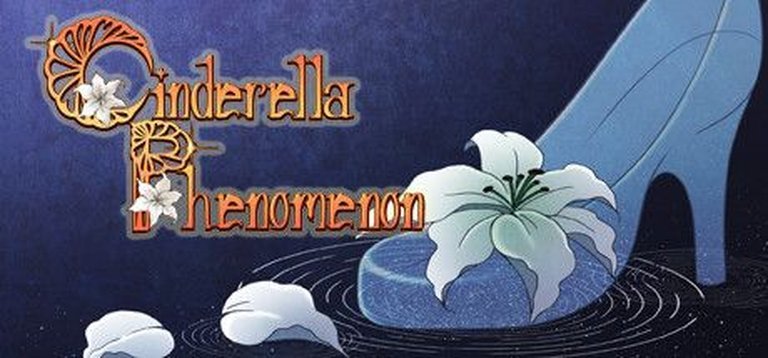
Cinderella Phenomenon is a first-person visual novel set in the fantasy kingdom of Angielle, where Princess Lucette, known as the Ice Princess for her coldness after her mother’s death, is cursed and transformed into a poor peasant girl. Shunned by her family and society, she must navigate her new life, uncover the curse’s origins, and seek redemption and romance in this anime-styled adventure.
Gameplay Videos
Where to Buy Cinderella Phenomenon
PC
Cinderella Phenomenon Guides & Walkthroughs
Cinderella Phenomenon Reviews & Reception
reddit.com : TD;LR: i want Mythros to step on my neck. Aside from that, the game was pretty good with great aspects in story and music.
Cinderella Phenomenon: A Critical Review of a Modern Otome Classic
Introduction: The Ice Princess Thaws the Genre
In the crowded landscape of romantic visual novels, few titles have managed to carve out a legacy as distinct and beloved as Cinderella Phenomenon. Released in 2017 by the tiny, three-person studio Dicesuki, this free-to-play otome game swiftly transcended its humble origins to become a cult phenomenon, praised for its fiercely independent protagonist, intricate deconstruction of fairy tale tropes, and surprisingly dense narrative tapestry. It arrived at a moment when the Western otome audience was hungry for more than just localized Japanese imports—they wanted original stories with depth, and Cinderella Phenomenon delivered in spades. My thesis is this: the game is a landmark of independent visual novel development, not merely for its accessible price point, but for its bold narrative choices that subvert the very genre it inhabits. It replaces the oft-criticized “blank slate” heroine with a complex, wounded individual whose emotional journey is the true engine of the story, all while weaving a multi-route mystery that treats its fairytale framework with both reverence and surgical precision.
Development History & Context: A Studio of Three and a Engine of Dreams
Cinderella Phenomenon is a testament to the power of accessible tools and passionate indie development. The core team at Dicesuki consisted of just three dedicated individuals: Kooriiko (director, story, art), Trissia Pelayo (credited as Sitraxis, programmer, animator, GUI), and a small circle of collaborators including writers Chelsea Abdullah (Tajina) and Jessica Rose. The game was built in Ren’Py, the quintessential open-source visual novel engine that democratized game creation. This choice was pragmatic and strategic; it allowed a micro-team to focus on writing and art without engineering a custom engine, ensuring the game could run on Windows, macOS, and Linux from day one.
The project’s origins trace back to a concept by “Akirei34,” and it was developed with the support of Kickstarter backers (listed as Nina F. and Shamax in the credits), signaling early community investment. Its release on April 5, 2017, as a free “pay-what-you-want” title on Steam and itch.io was a masterstroke. In 2017, the visual novel genre was experiencing a quiet renaissance on Steam, with titles like Doki Doki Literature Club! proving there was a mainstream appetite for narrative-driven games. Cinderella Phenomenon entered this space as a fully-featured, English-language otome—a niche still largely served by localizations—and its free model eliminated the primary barrier to entry for curious players. The technological constraints were those of Ren’Py itself: 2D sprites, static backgrounds, and a reliance on text and music. Yet, within these constraints, Dicesuki maximized impact through extensive branching, a high word count (~235,000 words), and a clever “Right Choice Indicator” system to guide players toward good endings without railroading exploration.
Narrative & Thematic Deep Dive: More Than a Simple Curse
At its surface, the plot is a clever inversion of “Cinderella.” Crown Princess Lucette Riella Britton of Angielle is a cold, bitter teenager, grieving her mother’s death in the “Great War” and resenting her kind stepmother, Ophelia, and step-siblings. Her cruelty earns her the nickname “The Ice Princess.” The inciting incident comes when her doll, revealed to be the witch Delora, curses her with a “Fairytale Curse”: she must perform three good deeds by her birthday or remain a peasant, forgotten by all. This “Riches to Rags” premise is merely the entry point into a labyrinthine conspiracy.
The narrative architecture is built on five primary routes, each focusing on a love interest afflicted by their own twisted fairy tale curse:
1. Rod Benedikt Widdensov: Lucette’s stepbrother, cursed by the Little Mermaid to be mute, communicating through his plush rabbit “Sebby.” His route delves into family dynamics, sacrifice, and the pain of unrequited love, featuring a potent Belligerent Sexual Tension as they slowly thaw their mutual dislike.
2. Karma: A flamboyant, cross-dressing prince from a neighboring kingdom, cursed by Beauty and the Beast. His curse forces women to fall in love with him, but turns him into a beast when he reciprocates. His route is about self-acceptance and the fear of genuine connection, and stands out for its LGBTQ+ representation through Karma’s identity and the canon same-sex pairing of his guards, Garlan and Jurien.
3. Rumpel: An amnesiac, flirtatious doctor, whose curse is derived from Rumpelstiltskin. He is a Chivalrous Pervert whose absurd, purple-prose flirtation masks deep-seated guilt from his past as a healer who failed his patient. His route explores the ethics of medicine and the burden of the past.
4. Fritzgerald “Fritz” Aiden Leverton: Lucette’s loyal knight, whose curse is a unique fusion of Red Riding Hood and Dr. Jekyll & Hyde. He harbors a violent, ruthless split personality named Varg, created by the curse. His route is the most Action Girl-centric, with Lucette taking up a sword, but is notoriously polarizing for its focus on Varg over Fritz and a high body count of beloved side characters.
5. Waltz Cresswell: A puppeteer trapped in a child’s body by the Peter Pan (“Neverland”) curse. He is Lucette’s Victorious Childhood Friend, their bond erased from her memory by her mother. Waltz’s route is widely considered the “Golden Ending” or true route, as it most comprehensively resolves the overarching mystery.
The thematic core is a profound deconstruction of nature vs. nurture and the nature of evil. Lucette’s initial cruelty is not innate but the direct result of emotional abuse from her biological mother, Hildyr, a witch driven to villainy by human persecution—a Self-Fulfilling Prophecy born from the fairytales that sowed fear. The game argues, powerfully, that compassion is a learned behavior, not a default state. The “Fairytale Curse” mechanism itself is a Fractured Fairy Tale system, punishing humans by forcing them to live out warped versions of the stories that damned witches. The greater conflict is the Balance Between Good and Evil, maintained by the Lucis (light) and Tenebrarum (dark) crystals, disrupted by human fear.
The narrative’s greatest strength is its escalating mystery. Each route peels back layers: Lucette’s erased memories, her true heritage as a witch and Tenebrarum heir, the identities of the antagonists (the scheming advisor Mythros, the tyrant Alcaster, and ultimately her mother Hildyr), and the full history of the Great War. The Big Bad Ensemble shifts per route, but Hildyr remains the Greater-Scope Villain. The writing excels in character development; Lucette is a Drastic Character Development protagonist, moving from tsundere ice queen to a compassionate, proactive heroine. Her growth is the consistent thread, even in routes where the romance feels secondary.
Gameplay Mechanics & Systems: A Ren’Py Masterclass in Branching
As a visual novel built on Ren’Py, the core gameplay loop is reading text, clicking to advance, and making periodic choices. The interface is clean and functional, with a “Right Choice Indicator” (a glowing, color-coded crystallum matching the love interest’s palette) that appears after a decision if it leads to a good ending. This is a brilliant accessibility feature, allowing completionists to easily hunt for all 10 endings (2 per route) without frustrating trial-and-error, while purists can disable it. The unlock structure is thoughtful: Rod, Karma, and Rumpel are available initially; completing two of their good endings unlocks Fritz and Waltz, with the developers recommending the order Rod → Karma → Rumpel → Fritz → Waltz to maximize plot Revelation.
The branching narrative is substantial. While early routes focus on the individual love interest’s curse and personal drama, later routes (especially Waltz’s) pull back to reveal the grand conspiracy. Choices matter not just for the ending, but for which side characters survive, the state of key relationships, and Lucette’s ultimate fate. The “Demoted to Extra” trope is initially in effect—unpursued love interests get cameos—but is averted in the unlockable routes where the full ensemble interacts. The game tracks choices subtly; Lucette’s behavior (cruel vs. kind) influences how other characters perceive her, though the path to a good ending is primarily tied to specific, often dialogue-based, choices aligned with building trust and empathy.
The gameplay innovation lies in how the curse mechanics are integrated. Lucette’s goal (three good deeds) provides an early-game objective, but the narrative quickly transcends it, making the “deeds” less about checklist morality and more about genuine transformation. The love interests’ curses create unique dramatic constraints: Rod’s mutism necessitates non-verbal communication, Karma’s beast form creates Inconvenient Attraction and Bittersweet Ending stakes, Waltz’s child-body form introduces Older Than They Look pathos. Where the system flaws is in Fritz’s route, where the DID-like split personality of Varg feels like a plot device that overshadow’s Fritz’s own characterization, and the route’s relentless tragedy can feel manipulative rather than earned.
World-Building, Art & Sound: A Kingdom of Stained Glass and Shadows
The world of Angielle is a fictional European-inspired kingdom with a clear medieval fantasy aesthetic, but one rooted in a specific history: the Great War between humans, fairies, and witches. This backstory is crucial, explaining the origin of the curses and the pervasive Fantastic Racism against witches. The setting is brought to life through 15+ original background artworks, many rendered in a beautiful, stained-glass inspired style with bold colors and heavy outlines. This art direction gives the kingdom a fairy tale storybook quality, even as the plot delves into darker themes. The character sprites, while sometimes criticized for inconsistent proportions or simple expressions, are serviceable and grow on the player. The “Märchen” tavern, a central hub, is a particularly well-realized space.
The sound design and music are standout elements, frequently praised in player reviews. The original soundtrack by Dasu (with vocals by Yoru Sagara for the theme song “Broken Cinderella”) is emotional and motif-driven. Piano pieces underscore melancholic moments, while more scoring enhances action and romance. The lack of voice acting is a notable omission for a visual novel of this length, but the musical themes are so effectively leitmotif’d (e.g., a theme for Waltz’s puppetry, a haunting one for Hildyr) that it compensates partly. Sound effects are minimal but used purposefully for magical effects and environmental ambiance.
Atmosphere is a careful balance of whimsy and dread. The fairy tale aesthetic of the art and some characters (like the fairy Parfait) contrasts with the grim realities of emotional abuse, magical trauma, and political assassination. This tonal duality is the game’s signature: a story about a princess who must learn kindness, shot through with the shadow of her mother’s murderous vendictiveness. The world feels cohesive because every element—from the “correct choice” sparkle to the color-coded magic (blue for Lucette, white for Hildyr, magenta for Delora)—reinforces the core theme of interconnectedness and consequence.
Reception & Legacy: From Free Indie Gem to Cult Canon
Upon its 2017 release, Cinderella Phenomenon was met with surprise and acclaim within the niche visual novel and otome communities. Its commercial model (free on Steam/itch.io, with a paid fandisk later) was hailed as generous and玩家-friendly. Critics and players alike praised the protagonist’s unconventionality. As noted in the Sweet & Spicy review and Fanlore, Lucette was a revelation: a Tsundere protagonist whose coldness stemmed from real trauma, requiring healing rather than dispensing it. This “unconventional otome protagonist” was cited as a major draw.
The critical consensus highlighted the strength of the writing, the intricate mystery, and the quality of the music. Common criticisms centered on inconsistent sprite art, the problematic execution of Fritz’s route (specifically the villainization of a mental-health-coded alter and the excessive death toll), and the absence of voice acting. The game’s length (~15-25 hours for all routes) was consistently noted as exceptional for a free title. It developed a small but fiercely dedicated fandom, with active Discord servers, Tumblr blogs (where the creators engaged directly), and a significant amount of fan labor: fanfiction on AO3 (including reader-inserts), extensive fanart, and even fan games like Sweet Sweet Fairytale.
Its legacy is multifaceted:
1. Proof of Concept for Indie Otome: It demonstrated that a small, English-language team could produce a polished, lengthy otome game with original lore, challenging the dominance of Japanese localization.
2. Narrative Influence: Its approach to integrating multiple fairy tale curses into a single, cohesive political-magical system has been referenced in later indie VNs. Its focus on a protagonist with complex trauma who must receive care influenced discussions about character design in the genre.
3. Cultural Impact: It fostered a community that crossed cultural lines, as seen in academic projects like Acadia Lee’s analysis using Uses and Gratifications theory, studying how players from different backgrounds engage with its themes.
4. Franchise Expansion: The successful release of the paid fandisk, Cinderella Phenomenon: Evermore (2020/2021), which provided epilogues for all routes, cemented its status as a sustainable IP.
5. Academic Recognition: Cited in works on intertextuality in games and otome studies, it’s become a case study for narrative design, genre subversion, and fan engagement in digital storytelling.
Conclusion: A Crown Jewel of Indie Visual Novels
Cinderella Phenomenon is a definitively important work in the history of video games, specifically within the visual novel and otome genres. It is not a flawless masterpiece—its art has rough edges, Fritz’s route remains contentious, and its lack of voice acting feels increasingly dated—but its ambition, thematic depth, and heartfelt execution far outweigh its shortcomings. It takes the familiar scaffolding of fairy tale romance and builds a complex, often brutal, story about the cost of hatred, the slow work of healing, and the many forms love can take.
The game’s greatest achievement is Lucette herself. By making the protagonist the most broken character and requiring her to be fixed by the very people she scorned, Dicesuki inverted a tired trope and created a relatable journey of growth. Coupled with a mystery plot that respects the player’s intelligence and a world where magic has tangible, tragic costs, Cinderella Phenomenon offers a richness befitting its title. It is a phenomenon indeed: a free game that feels meticulously crafted, a romance that earns its happy endings through profound loss, and an indie darling whose influence resonates in the communities it nurtured. For anyone interested in the evolution of storytelling in games, particularly the maturation of niche genres outside AAA studios, Cinderella Phenomenon is an essential, highly recommended play. It stands as a testament to the fact that a compelling story and a subversive heart can create a legacy that far outpaces its budget.