
- Release Year: 1998
- Platforms: Windows
- Publisher: Hyundai
- Developer: Family Production
- Genre: Action, RPG
- Perspective: 3rd-person (Other)
- Game Mode: Single-player
- Gameplay: Beat-em-up combat, Boomerang throwing, Experience points, Level up, Special attacks, Technique points
- Setting: Post-apocalyptic
Description
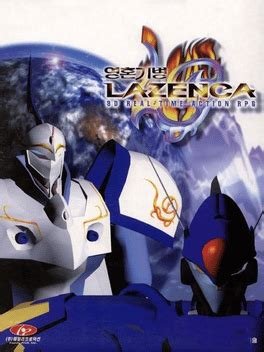
Yeonghon Gibyeong Lazenca is an action role-playing game set in a post-apocalyptic world, based on the Korean TV animated series Lazenca: Revival of a Myth. The story follows Atin, a young man who becomes an unlikely hero after escaping with a princess from an invading empire, joining a resistance to uncover the mystery of the ancient sentient machine Gairun and defeat the Empire. Gameplay features pre-rendered backgrounds with fixed camera angles, where players control Atin in beat-em-up-style combat using fists and boomerangs, gaining experience to learn special attacks with technique points.
Yeonghon Gibyeong Lazenca: The Phantom Limb of Korean Gaming’s Ambiguous Adolescence
To speak of Yeonghon Gibyeong Lazenca (영혼기병 라젠카, Revival of a Myth: Lazenca) is to speak of a ghost. It is a specter of ambition, a tangible artifact of a creative studio in transition, and a painful case study in the perils of the licensed game. It represents a moment—January 1998—where Korea’s fledgling game industry, embodied by the prolific but mercurial Family Production, attempted to grapple with the global language of the Japanese RPG, only to produce a title that feels perpetually stuck between genres, eras, and intentions. This review is not just an analysis of a game, but an excavation of a developmental fragment, a “what could have been” that serves as a crucial, if flawed, cornerstone in understanding the trajectory of Korean game development from the DOS era into the Windows age.
1. Introduction: A Licensed Artifact in a Nascent Industry
Yeonghon Gibyeong Lazenca arrives with a profound identity crisis. It is an action RPG based on a 13-episode Korean animated series, Lazenca: Revival of a Myth, itself a property that blends post-apocalyptic mecha tropes with mythic revival narratives. For Western audiences, its existence is a cryptic footnote; for Korean gaming historians, it is a symptomatic text. Its thesis is stark: this is a game born of conflicting pressures—the need to capitalize on a domestic media franchise, the desire to emulate the blockbuster prestige of Final Fantasy VII, and the harsh reality of a studio (Family Production) notorious for rapid development cycles and genre-hopping. The result is a hybrid beast: a polygonal character model moving through gorgeous, static pre-rendered backgrounds, engaging in real-time, beat-’em-up brawls, all in service of a plot lifted directly from its anime source. It is a fascinating failure, a game whose sum is less than its intriguingly mismatched parts, and whose legacy is one of rushed compromise rather than celebrated innovation.
2. Development History & Context: Family Production at the Crossroads
To understand Lazenca, one must understand its creator. Family Production was the most visible, if inconsistent, pillar of Korea’s early game scene in the mid-to-late 1990s. Their catalog is a whirlwind tour of 2D sprite-based genres: the Py & Gity platformers, the run-‘n-gun Digital Code and Crystal Map, the schmup Interrupt, and the sidescrolling mech shooter SAF: Secret Armored Force. By 1997-1998, they were in a state of frantic evolution. They released a point-and-click adventure (Adventure of Eol), educational titles, and Lazenca—all within a year. This was a studio operating at breakneck speed, often at the expense of polish, as the Hardcore Gaming 101 retrospective meticulously documents.
The technological context is critical. The worldwide success of Final Fantasy VII (1997) made pre-rendered, static backgrounds with 3D character models the aspirational standard for “next-gen” RPGs. Lazenca’s visual approach is a direct, if technically modest, mimicry of this formula. However, Family Production’s roots were in fast-paced, arcade-style action. Their solution to bridging the gap between the methodical, menu-driven combat of Square’s epic and their own heritage was to graft a real-time, beat-’em-up combat system onto the RPG exploration framework. This is not an organic synthesis but a pragmatic hack.
The licensed game pressure was immense. As Hardcore Gaming 101 notes, Lazenca suffers from problems “typical for release date critical licensed games: It feels unfinished and rushed.” The episodic nature of the anime (13 episodes) provided a narrative structure, but not the depth or length expected of a PC RPG. The game’s shortness—5-6 hours—is a direct consequence of being strictly bound to a TV series’ plot, with little room for original side-quests or expansion. The publisher, Hyundai, likely imposed a deadline aligned with the anime’s broadcast or home video release, forcing Family Production to ship a product the sources indicate was substantially patched post-launch to add enemy types, items, and balance adjustments—a telltale sign of a title reaching shelves prematurely.
3. Narrative & Thematic Deep Dive: Evangelion Meets Final Fantasy on a Korean Battlefield
The plot is a pastiche of familiar anime and RPG archetypes, filtered through a Korean production lens. The setting is a post-apocalyptic world where a generic “evil Empire” invades a peaceful kingdom. The protagonist, Atin, is a classic “jerk-to-hero” tsundere type (as described by Hardcore Gaming 101), whose life of hiding with the princess Lares forces him into the role of resistance fighter. The central MacGuffin is Gairun, an ancient, sentient mecha, pulling double duty as both a literal weapon and a mythological artifact.
Thematically, the narrative operates on two levels:
* The Mecha-as-Extension-of-Self: Directly channeling Neon Genesis Evangelion, Gairun is not just a tool but a mystical, semi-autonomous entity that “selects” its pilot. The mystery of its origins and its connection to the ancient past are the plot’s primary drivers. This introduces a layer of psychological and metaphysical intrigue sorely missing from the gameplay.
* The RPG Hero’s Journey: Simultaneously, the story follows the classic Final Fantasy template of a young man joining an underground resistance, uncovering ancient lore, and confronting a great evil. The princess is the damsel-turned-companion, the resistance base is the hub, and the empire’s forces are the recurring villains.
The dissonance is profound. The narrative promises weighty, world-ending stakes and character development, but the gameplay provides almost no vehicle for these themes to breathe. Character interaction is minimal (the sources suggest a focus on plot progression over dialogue trees), and the short runtime means the story hurtles from beat to beat without the slower, character-centric moments that defined its inspirations. It’s a plot summary of a better game, trapped in the body of a rushed action-RPG.
4. Gameplay Mechanics & Systems: A Clash of Genres
Lazenca‘s core loop is its defining and most problematic feature. It attempts to merge three distinct genres:
- Exploration (Pre-rendered Backgrounds): Players navigate static, beautifully painted environments (decaying high-tech facilities, outdoor vistas) with fixed camera angles, à la Final Fantasy VII or Resident Evil. This creates a sense of scale and atmosphere, but…
- Combat (Real-time Beat-’em-up): …the moment an enemy appears, the game switches to a real-time arena within that screen. Atin can punch/kick (a standard combo system) or throw his boomerang (a projectile with limited range/ammo). This is fundamentally a 2D fighting game mechanic transposed onto a 3D space.
- Progression (RPG Lite): Defeating enemies grants EXP and Level-Ups. Leveling up teaches * Technique Points (TP)*-based special attacks (e.g., a spinning kick, a powerful boomerang throw). Equipment seems linear (the sources mention no meaningful customization).
The Fatal Flaws of the Hybrid:
* The “Tank Control” Tax: The game uses tank-style controls (up = forward relative to character, not camera). Combined with the fixed, often confusing camera angles that fail to clearly indicate exit points (Hardcore Gaming 101‘s chief complaint), navigation becomes a chore of running along screen edges, fighting the interface as much as the enemies.
* Brawling in a Stiff World: The beat-’em-up combat lacks the impact, speed, or combo depth of true genre classics. It feels sluggish and inconsequential, especially when contrasted with the static, majestic backgrounds. There is “little to no challenge,” reducing combat to a rote chore.
* The Mecha Sequences: The much-hyped Gairun sections are relegated to a few late-game sequences. These play out on a simple 3D plane, described as a pale imitation of Virtual On—”less elaborate and much, much less fun.” They feel like a different, simplistic minigame tacked on, rather than a culmination of the pilot fantasy.
* The Illusion of Choice: The RPG elements are barren. No meaningful stat allocation, minimal equipment changes, and a single, linear path through the story. The “action” is in the moment-to-moment combat, not in strategic build crafting.
It’s a system built on contradiction: the deliberate, contemplative pace of pre-rendered exploration is violently interrupted by simplistic, repetitive brawling, all in service of a story that doesn’t have the runtime to justify the mechanics.
5. World-Building, Art & Sound: Beauty in Stillness, Confusion in Motion
Visual Direction: This is Lazenca‘s saving grace and its greatest irony. The pre-rendered backgrounds are, by all accounts, stunning for their time and place. They depict a desolate, beautiful post-apocalyptic landscape—crumbling sci-fi ruins, vast deserts, and fortress-like structures—with a painterly quality that holds a unique, melancholic charm. They successfully evoke the awe of FFVII‘s Midgar or the world of Lazenca‘s anime source. The polygonal character models, however, are crude and blocky, even by 1998 standards, creating a jarring visual disconnect. The clash between the detailed, static world and the simplistic, moving hero is the game’s primary aesthetic tension.
Sound Design: The source material is frustratingly silent on specifics. We know the game was “fully voiced” in a childish fashion for the adventure game Eol, but no such detail is given for Lazenca. The music is not discussed at all. This omission is telling; in an era where soundtracks were becoming iconic (again, think FFVII), Lazenca‘s audio seems to have been a non-factor, or at least an unmemorable one. The soundscape is likely functional but forgettable, failing to elevate the experience.
Atmosphere vs. Gameplay: The world-building exists almost entirely in the art assets, not in the interactive systems. You see the desolation, but you don’t feel it through gameplay. The atmosphere is passive, observed from a distance, while the gameplay is an immediate, often frustrating, physical interaction. This decoupling is fundamental to the game’s fractured identity.
6. Reception & Legacy: The Rushed Afterthought
Contemporary Reception: Evidence suggests it had negligible impact. It has no MobyGames score and only 6 collectors on that site. The lack of contemporary critic or player reviews on the provided pages speaks volumes. It was a domestic Korean release, likely only available in a few software stores, and quickly forgotten. The necessity of a post-launch patch is the clearest indicator of its problematic launch state.
Historical Reassessment: Today, Lazenca is not “rediscovered” as a classic. It is a curation piece, a fascinating artifact for historians of Korean game development. Its value lies in:
* Being Family Production’s only licensed title: A notable attempt to leverage domestic IP in the gaming space, a practice that would later become common but was risky for a small studio.
* A Document of Genre Anxiety: It perfectly encapsulates the Korean industry’s struggle in the late ’90s to define its own voice while chasing Western and Japanese trends. Its hybrid mechanics are a literal representation of this cultural and creative tug-of-war.
* A Precursor to Pentavision: Family Production would eventually reform as Pentavision, pivoting successfully to the rhythm game genre with the legendary DJMax series and the free-to-play hit S4 League. The creative DNA of Lazenca—ambitious genre-mashing, strong visual presentation—can be seen mutated in those later successes. Lazenca is the awkward, forgotten prototype that led, circuitously, to a more refined future.
* A Cautionary Tale: It stands as a textbook example of how not to adapt a license. Rushing a game to match a media release, failing to build a gameplay loop that serves the narrative, and neglecting core user experience (navigation, challenge) are lessons Lazenca teaches through its failures.
7. Conclusion: A Flawed Relic, Not a Lost Masterpiece
Yeonghon Gibyeong Lazenca cannot be judged by the standards of a Final Fantasy or a Devil May Cry. To call it a “good” game would be a generous misreading of its pervasive mechanical and structural flaws. The tank controls are obnoxious, the combat is shallow, the length is insulting, and the narrative delivery is botched.
Yet, to dismiss it entirely is to miss its historical texture. It is a hyper-specific artifact of a time and place: Korea, 1998, a studio in overdrive trying to prove its relevance on the global stage by aping the biggest trends. Its beauty—the static, poignant backgrounds—is a testament to an artistic sensibility that the gameplay never harnesses. Its very existence, a licensed action-RPG from a company known for sprite-based platformers, speaks to a wild, experimental era where boundaries were blurred not by design, but by desperate creativity.
Its place in history is not on a pedestal, but in a vitrine. It is the awkward, charmingly ugly cousin of the more polished Japanese and Western RPGs of its day. It is a “what if” scenario given physical form: What if Family Production had two more years? What if they had focused on one genre? As it stands, Yeonghon Gibyeong Lazenca remains a compelling, deeply flawed ghost—a phantom limb on the body of Korean game history, whose absence of quality is only matched by the peculiar strength of its lingering, nostalgic intrigue. It is a must-study, not a must-play.