
- Release Year: 2023
- Platforms: Macintosh, Windows
- Publisher: Foxdrift Studios
- Developer: Foxdrift Studios
- Genre: Adventure
- Perspective: 1st-person
- Game Mode: Single-player
- Gameplay: Visual novel
- Average Score: 80/100
Description
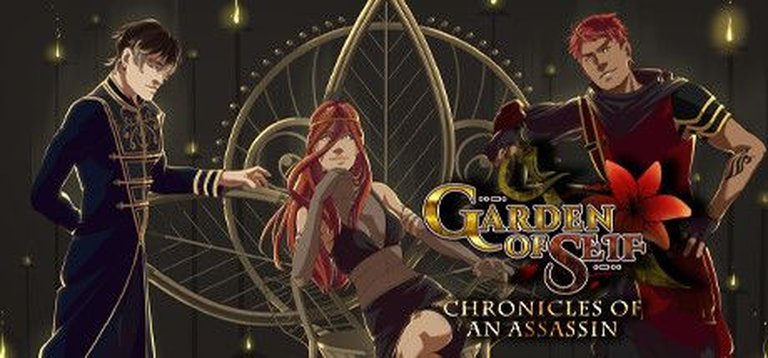
Garden of Seif: Chronicles of an Assassin is a dark fantasy otome visual novel developed by Foxdrift Studios, where players embody Iris Lapis, a fierce assassin seeking to surpass the killer of her loved one from the Battle of Seif. As a bounty threatens her life, she must navigate trust and deception with two enigmatic characters, Seth and the Dust Hunter, making choices that determine multiple routes, endings, and romantic outcomes in a visually rich, choice-driven narrative.
Gameplay Videos
Where to Buy Garden of Seif: Chronicles of an Assassin
PC
Garden of Seif: Chronicles of an Assassin Guides & Walkthroughs
Garden of Seif: Chronicles of an Assassin Reviews & Reception
metacritic.com (80/100): I enjoyed the solid worldbuilding and realistically flawed characters.
rpgfan.com : Iris is a particularly fascinating main character, too. She’s stubborn, strong-willed, opinionated, and has very realistic flaws and weaknesses.
otomelovers.com : Iris is an interesting character.
opencritic.com (80/100): Garden of Seif: Chronicles of an Assassin is a concisely dark romantic fantasy VN with an eye-catching aesthetic.
Garden of Seif: Chronicles of an Assassin: A Dark Fantasy Otome Forged in Independence
In an era dominated by sprawling AAA productions and algorithmically optimized mobile gacha games, the quiet, fervent development of Garden of Seif: Chronicles of an Assassin stands as a testament to the enduring power of niche, passion-driven storytelling. Released in October 2023 by the solitary yet prolific Foxdrift Studios, this visual novel/otome hybrid emerged not from a corporate imprint but from years of iterative development, community engagement, and a unwavering commitment to a singular, darkly romantic vision. It is a game that wears its influences—from the political intrigue of Game of Thrones to the relationship mechanics of Shall We Date?—on its sleeve, yet forges them into something distinctly its own: a tightly wound narrative about vengeance, trust, and the cost of survival in a beautifully realized, brutal fantasy desertscape. This review will argue that while Garden of Seif is a flawed gem, its significance lies not in flawless execution but in its demonstration of how independent studios can leverage focused, choice-driven narratives and striking aesthetics to carve out a meaningful space in the modern gaming landscape.
Development History & Context: The Solo Dev’s Odyssey
The story of Garden of Seif is intrinsically linked to the story of its creator, Aeriel (known online as “Duchess” or “Donut Duchess”), the sole public face of Foxdrift Studios. The project’s origins trace back to a 2020 demo released on itch.io, a common launchpad for indie visual novels. This initial demo, while brief, established the core premise, protagonist Iris Lapis, and the two central love interests, Seth and the Dust Hunter. Its reception, noted in numerous devlog comments, was immediately positive, with testers praising the “stunning” art, “awesome” soundtracks, and “intriguing” story (comments from bunny, Lila, Armyofbastards on itch.io).
This positive reception fueled an ambitious development cycle marked by transparency and community feedback. A major development update in November 2021 detailed significant enhancements: the addition of 18 expressive side-portraits for protagonist Iris (a deliberate move to create a “protagonist that went beyond the self-insert MC”), revised UI, expanded character expressions for all sprites, and crucially, the relocation of lore from dialogue dumps to an in-game journal system to improve pacing. This update also announced the side story Garden of Seif: Curse of Gravehollow Peaks, released for the 2021 Winter VN Jam, which served as both a testing ground for new mechanics and a narrative appetizer, focusing on Iris and Seth in a snowy mountain setting. This “standalone side story” approach allowed Foxdrift to release complete, tangible content while the main game continued its lengthy development.
The technological foundation was the accessible, Python-based Ren’Py engine, a standard for indie visual novels. This choice was pragmatic, allowing a solo developer to manage scripting, asset integration, and platform deployment (targeting Windows, macOS, and Linux) without a dedicated programming team. However, it also explains certain technical limitations observed in reviews, such as the flickering border issue in full-screen mode on some systems (noted by JeminiJess on Otome Lovers) and the text-loading quirk where additional text appears after a click. The development timeline stretched from the 2020 demo to the October 2023 full release, a three-year journey complicated by the global pandemic. The full launch was preceded by a Kickstarter campaign in mid-2022, which provided crucial funding for final polish, translation potential, and physical rewards, and validated the market demand for the project. The pricing strategy—$14.99 on Steam and itch.io—positions it firmly as a premium indie visual novel, a step above the typical free-to-play or low-cost VN, reflecting the volume of content (~100,000+ words) and the bespoke artwork.
Narrative & Thematic Deep Dive: Vengeance, Masks, and Morally Gray Sands
The narrative of Garden of Seif is its primary engine, a dark fantasy thriller set on the desert continent of Zalstar. The protagonist, Iris Lapis, is a woman of compelling complexity. Far from a blank-slate self-insert, she is defined by specific traits: a fierce, pragmatic drive for vengeance stemming from the murder of her boyfriend during the “fierce and ugly Battle of Seif”; a surgically precise professionalism as an assassin; and a physical vulnerability—retinitis pigmentosa, which causes her heterochromia and significantly impaired vision in her left eye. This disability is not a narrative crutch but an integrated aspect of her character, making her combat prowess and situational awareness all the more impressive and grounding her in a tangible reality.
Her mission is simple: eliminate the Imperial assassins on her hitlist, culminating in the target “Venom.” This personal quest becomes immediately complicated when her actions earn her a bounty, placing her in the crosshairs of a guild of enemy assassins. The inciting narrative conflict arrives in the form of two antagonistic yet alluring figures who offer aid:
1. Seth Salazar: An “Nohirian Wraith,” a high-ranking imperial assassin tasked with neutralizing threats to his nation—which now includes Iris. He is sarcastic, crass, and embodies a cynical, playboy pragmatism. His proposed alliance is transactional: together they can defeat Venom.
2. The Dust Hunter (Dusty): A perpetually enigmatic traveler from another region. His motivations are entirely opaque, cloaked in secrecy (he refuses to give his real name). He presents a more classical, knightly facade—quick-witted, kind, and professing a desire to protect Iris—but his hidden agendas are the core mystery of his route.
The game’s structure bifurcates into two distinct narrative routes, each approximately four hours long. The player’schoices throughout the common route and the route-specific chapters determine a “Trust” or “Betrayal” meter for the primary love interest of that path. These are not mere romance stats; they are pivotal narrative gates that lead to dramatically different story branches and multiple endings, including “killer” endings where the love interest or Iris herself may commit murder. As RPGFan’s review notes, this system creates a constant, tense atmosphere of “kill or be killed,” where the “enemies to lovers” trope is perpetually undercut by the genuine, ever-present threat of betrayal. The routes offer different thematic focuses: Seth’s route delves deeper into the political landscape of Zalstar—the tensions between the Laithen Empire and the Kingdom of Askar, the nature of the Immortals—while the Dust Hunter’s route is more intimately focused on personal secrets, hidden plans for the world, and the psychological dynamic between him and Iris. Critically, reviews identify an imbalance here; the Dust Hunter’s route is perceived as having greater narrative consequence and impact on the overarching plot, with a more impactful “true ending,” while Seth’s route serves as a better mystery setup that enhances the second playthrough. This is a notable structural flaw, potentially making one route feel like a mandatory prologue to the “main” event.
The narrative is enriched by a supporting cast with their own sprite portraits and subplots. Iris’s hometown friends—the greatsword-wielding baker Mara, the boisterous Duran, and the scholarly Malzahar—provide emotional anchors and moments of levity. The return of Zhaara from Curse of Gravehollow Peaks as a “fairy godmother” figure ties the two narratives together. However, some side characters like Malzahar are noted as being criminally underused (JeminiJess’s review), a common issue in branching narratives where scope must be tightly controlled.
Thematically, the game explores the psychology of the assassin, the ethics of vengeance, and the risk of vulnerability. Iris’s journey is one of forced introspection; her single-minded pursuit of Venom is challenged by the potential for connection (or manipulation) offered by Seth and Dusty. The dialogue is frequently praised as “entertaining” and “memorable,” with a sharp, often cynical wit that suits its world. A key philosophical line from Dust Hunter—”You are enough. Never make the mistake of thinking otherwise just because a man, or woman, is unable to love you”—encapsulates a theme of self-worth beneath the violence. However, the “constant guessing of ‘who will betray who next'” can, as RPGFan notes, become tiresome if overused, testing player patience with sustained paranoia.
Gameplay Mechanics & Systems: The Visual Novel Blueprint, With Tweaks
As a visual novel built in Ren’Py, Garden of Seif adheres to a well-established format: read text presented over static (or occasionally animated) character sprites and backgrounds, make periodic choices. Its innovations lie primarily in narrative systems rather than gameplay.
- Choice Architecture: The core mechanic is the Trust/Betrayal system. Choices are explicitly or implicitly aligned, directly impacting the story’s trajectory. This is complemented by “flavor” choices that alter Iris’s reactive dialogue, offering role-play nuance without major plot divergence. Additionally, a subset of choices can trigger “abrupt endings”—immediate game overs or bad conclusions—raising the stakes significantly. This system is praised for making choices feel weighty but criticized by JeminiJess for occasionally making “betrayal” choices feel arbitrary or unclear in motivation.
- Journal System: This is the game’s primary “lore integration” tool. Accessible from the main visual novel screen, it houses Iris’s hitlist, a bestiary/lore encyclopedia for places, events, and cultures of Zalstar (which updates as the story progresses), and a keepsakes section. It successfully externalizes worldbuilding that might otherwise bog down dialogue, though JeminiJess correctly suggests that placing a world map within it would enhance spatial understanding.
- Perspective Shifts: A notable narrative feature is the inclusion of POV chapters from Seth’s and the Dust Hunter’s perspectives. These sections, unlocked based on route progression, provide invaluable insight into their internal motivations and secret machinations, deepening the central mystery and enhancing the emotional impact of their interactions with Iris.
- Extras & Replayability: The game includes a CG gallery for unlocked illustrations and the aforementioned journal. However, it notably lacks a story flow chart or “map” of choices and branches. In a game built around multiple playthroughs to see all routes and endings, this is a significant quality-of-life omission, forcing players to rely on memory or external walkthroughs to navigate efficiently—a point of consistent criticism (RPGFan, JeminiJess). Save file management is robust, but without a visual map, pursuing specific endings becomes a tedious process of trial and error.
- Technical & UI: The interface is clean and functional. The cinematic cutscenes (noticed by both reviewers) are a standout technical feature, using camera pans, zooms, and filters to create dynamic, movie-like introductions to key scenes. Performance on handheld devices like the Steam Deck is noted as excellent by RPGFan. The main bug reported is the screen-edge flickering in full-screen mode on PC, a Ren’Py/graphics driver compatibility issue the dev attempted to troubleshoot on the itch.io comments section.
World-Building, Art & Sound: A Visually Arresting, Audibly Immersive Desert Saga
The presentation is unequivocally Garden of Seif‘s strongest asset, consistently earning the highest scores in reviews (Graphics: 82/100, Sound: 81/100 from RPGFan).
- Art Direction & Character Design: The character sprites are exceptionally expressive, with Iris’s 18 side-portraits delivering a range of emotions that sell her personality far more than text alone. The love interests have distinctive, cohesive designs: Seth’s sharp, imperial aesthetic contrasts with the Dust Hunter’s flowing, mysterious robes and striking hair. The color theory is purposeful, with name tags in dialogue usually matching a character’s primary clothing color (a detail noted by a fan reviewer), aiding quick identification. The CG illustrations (unlocked at key moments) are the game’s visual pinnacle. They possess a cinematic, fluid quality, “almost akin to animation stills” (RPGFan), with dynamic poses, impactful use of color—especially “bright bursts of color during intense moments”—and careful attention to lighting and particle effects (dust clouds, magical auras). Some minor critiques exist about occasional eye shapes in CGs and the pouty default expression for Iris initially seeming “silly” (JeminiJess), but these are minor quibbles in an overall stunning portfolio.
- Backgrounds & Setting: The backgrounds masterfully establish the desert fantasy continent of Zalstar. From the dusty, sun-bleached streets of Nohiria to the ominous, snow-capped Gravehollow Peaks (from the side story), each location feels distinct and lived-in. While some reviewers note minor inconsistencies—like photorealistic 3D objects or grass clashing with the painted style—the overall environmental art successfully conveys a harsh, beautiful, and culturally rich world.
- Sound Design & Music: The original soundtrack is widely praised as “beautiful,” “dynamic,” and perfectly attuned to scene tone. The title screen music is singled out for its memorable, “Aladdin”-evoking quality. Sound effects (clapping, crinkling paper, ambient wildlife) are used sparingly but effectively to enhance immersion. The decision to forego voice acting is a pragmatic one for an indie budget but is felt; the text and music must carry the full emotional weight, which they largely succeed in doing. A clever touch is the use of diegetic silence or ambient noise (like a “spooky and quiet” nighttime) instead of music, which can be powerfully effective.
- Atmosphere & Tone: All these elements coalesce to create a dark, romantic, and suspenseful atmosphere. The visual contrast between the warm, golden deserts and the cold, mysterious peaks mirrors the narrative’s central conflict between passion (Iris’s vengeance, potential romance) and cold, hard survival. The “flashing imagery” content warning is apt, as the vibrant CGs can be abruptly intense.
Reception & Legacy: A Cult Success Forging its Own Path
Upon its October 2023 release, Garden of Seif: Chronicles of an Assassin did not explode into the mainstream consciousness. Its “Moby Score” remains “n/a” due to insufficient aggregated critic reviews, and its Metacritic status is “tbd” pending four critic reviews. However, within its target niche—the English-language otome and visual novel community—it was met with a warm, “Mostly Positive” reception.
The critical consensus, best represented by the 80/100 score from RPGFan, identifies clear strengths (worldbuilding, art, protagonist personality) and weaknesses (route imbalance, lack of story map, occasional typos). This aligns with the broader user reception on Steam, where it holds a “Mostly Positive” rating based on 13 reviews at the time of writing (Steambase Player Score: 77/100). User feedback on Steam and itch.io is deeply engaged, with players sharing true endings, discussing character routes (with Seth and Dusty having ardent fanbases), and even reporting bugs like the flickering issue. The developer, Foxdrift Studios, is notably active and responsive in these spaces, troubleshooting issues and engaging with fan theories, fostering a dedicated community.
Its commercial performance is not publicly quantified, but its continued presence on major storefronts (Steam, itch.io), the successful prior Kickstarter, and the release of a full side story (Curse of Gravehollow Peaks) indicate it has found a sustainable audience. The side story’s existence is key to understanding its legacy: it demonstrates a “expanded universe” approach typical of successful indie VNs, allowing for deeper dives into secondary characters and locations without bloating the main narrative.
Influence on the industry is Subtle but Significant. Garden of Seif does not reinvent the otome/visual novel genre. Instead, it exemplifies a potent indie development model:
1. Start with a strong, concise demo that proves concept and artistry.
2. Engage directly and transparently with a community via devlogs and social media, incorporating feedback (like the Iris side-portraits).
3. Leverage supplemental content (side stories, Jams) to maintain momentum and explore the world.
4. Focus on a specific, passionate niche (dark romance, morally gray assassins) rather than trying to appeal to all.
5. Prioritize striking, cohesive aesthetics as a primary selling point in a text-heavy genre.
It stands in a lineage with other successful indie otome/VNs like Our Life or Cinderella Phenomenon that have proven high-quality, story-rich experiences can thrive outside major publishers. Its use of a protagonist with a disability (Iris’s visual impairment) as a normalized, non-tragic aspect of her competence is also a welcome step toward more inclusive character design in the genre.
Conclusion: An Assassin’s Mark, Solidly Made
Garden of Seif: Chronicles of an Assassin is not a flawless masterpiece. Its narrative structure suffers from a notable imbalance between its two central routes, its systemic “stat-building” is rudimentary, and its lack of a story flow chart is a baffling omission for a branching narrative. However, to focus on these flaws is to miss the forest for the beautifully rendered, dust-choked trees.
This is a game built on the profound strength of its core components: a fiercely independent and compelling female protagonist; two mesmerizing, thematically distinct love interests whose relationship with Iris is perpetually charged with danger and desire; a desert fantasy world that feels both epic and etched in sand; and a visual and auditory package that is consistently arresting. Foxdrift Studios, operating with the resources of a dedicated indie team, has crafted an experience that understands the fundamental appeal of the visual novel—the intimacy of choice in a gripping story—and delivers it with a confident, darkly romantic aesthetic.
Its place in video game history is not as a paradigm-shifting titan, but as a touchstone for independent otome development. It proves that with a clear vision, community-focused development, and a commitment to artistic quality, a small studio can create a narrative experience that resonates deeply with its intended audience, sparks meaningful discussion about its twists and characters, and establishes a world worthy of expansion. For fans of the genre seeking a protagonist with agency, a romance drenched in moral ambiguity, and an art style that pops off the screen, Garden of Seif is an essential, if imperfect, mark to hit. Iris Lapis’s journey through the sands of Zalstar is a reminder that sometimes, the most impactful games are not the ones with the biggest budgets, but the ones with the clearest, most passionate vision. It earns its place as a notable, cult-status entry in the modern visual novel canon.