
- Release Year: 2014
- Platforms: Linux, Macintosh, PlayStation 4, Windows, Xbox One
- Publisher: Krillbite Studio AS, Soedesco B.V.
- Developer: Krillbite Studio AS
- Genre: Action
- Perspective: 1st-person
- Game Mode: Single-player
- Gameplay: Puzzle elements, Stealth
- Setting: 1990s
- VR Support: Yes
Description
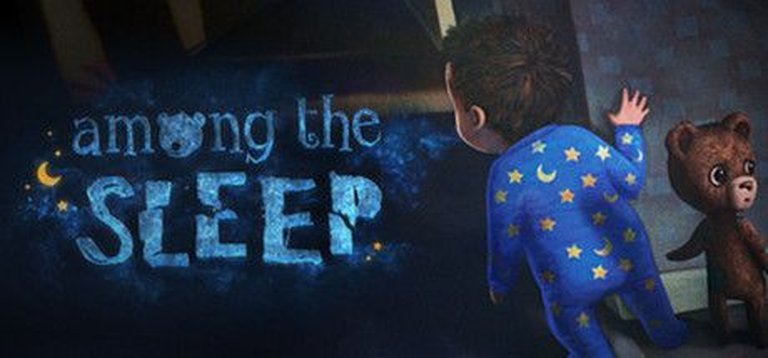
Among the Sleep is a first-person horror adventure where players experience the world through the eyes of a two-year-old child. After waking up alone at night to find his mother missing, the toddler embarks on a journey through eerie, memory-based environments, guided by a talking teddy bear. He must stealthily avoid a horrifying entity using hiding and puzzle-solving, with the game exploring themes of childhood trauma and fear.
Gameplay Videos
Where to Buy Among the Sleep
Among the Sleep Guides & Walkthroughs
Among the Sleep Reviews & Reception
ign.com : Among The Sleep is a distinctive experience
Among the Sleep: Review
Introduction
What does it feel like to be two? To navigate a world where every piece of furniture is a towering monolith, where shadows conceal unseen terrors, and where the comforting presence of a parent can vanish in an instant? Among the Sleep, the 2014 debut from Norwegian indie studio Krillbite, forces players to confront these primal fears by placing them in the tiny shoes of a toddler navigating a nightmarish dreamscape. More than a mere horror game, it is a poignant exploration of childhood trauma, parental dysfunction, and the fragile psyche of a child trying to make sense of a fractured home. Releasing amid a wave of indie horror titles that relied on jump scares and armed protagonists, Among the Sleep distinguished itself through its unwavering commitment to vulnerability—not as a narrative device, but as a literal, mechanical reality. This review will argue that Among the Sleep stands as a landmark in psychological horror, one whose artistic ambition and emotional depth far outweigh its technical and pacing flaws, and whose influence resonates in the way it reframed horror around the most defenseless of perspectives.
Development History & Context
Krillbite Studio was founded in 2011 by a collective of graduate students specializing in interactive digital art at Hedmark University College in Norway. The concept for Among the Sleep originated as a thesis project, inspired by a designer’s dream of a toddler fleeing a monster. This academic genesis shaped the game’s core ethos: to explore childhood fears through experiential design rather than conventional horror tropes.
Funding proved pivotal. The Norwegian Film Institute (NFI) awarded the fledgling studio several grants between 2011 and 2012, totaling roughly 1.6 million NOK (≈€200,000). This public arts funding enabled the team to transition from student experiment to professional production. However, to fully realize their vision, Krillbite launched a Kickstarter campaign in April 2013. With a goal of $200,000, they raised $248,358 from 8,110 backers, unlocking stretch goals that included an Oculus Rift mode, developer commentary, and additional content developed in collaboration with backers. The combination of institutional subsidies and grassroots support epitomized the early-2010s indie development model: a small, inexperienced team leveraging community belief to punch above its weight.
Technologically, the team began with a custom engine but switched to Unity 3.5 for the full build. This choice allowed rapid iteration on first-person mechanics and physics, but also introduced limitations—notably buggy interactions and occasional performance issues that would later surface in reviews. The art direction married hand-painted textures with realistic shaders, evolving from an initially bright palette to a darker, more oppressive aesthetic as the horror elements took shape. Audio design, led by sound engineer Martin Kvale, emphasized immersive, subtle cues over loud scares, with voice acting from Cia Court (the mother) and Roger Labon Jackson (Teddy, and later revealed, the father).
Among the Sleep arrived on May 29, 2014, for Windows, OS X, and Linux via Steam. Its release coincided with a golden age of indie horror—titles like Slender: The Eight Pages, Outlast, and Amnesia: The Dark Descent had redefined the genre’s accessibility and aesthetic. Yet most still featured adult protagonists with at least some capacity for resistance. Krillbite’s radical departure—a protagonist utterly incapable of fighting back—set it apart. Subsequent ports to PlayStation 4 (December 2015), Xbox One (June 2016), and Nintendo Switch (May 2019) via the Enhanced Edition (released November 2017) broadened its reach. The Enhanced Edition bundled the original with the free Prologue DLC (released November 2014) and restored a scrapped alternate ending, offering the most comprehensive version of Krillbite’s unsettling vision.
Narrative & Thematic Deep Dive
Plot in Detail
The story opens on the morning of the toddler’s second birthday. In the kitchen, mother Claire prepares a cake while the child observes. A muffled argument erupts at the front door—the implied visitor is the father, who has divorced Claire and seeks to see his child. Claire refuses, her angry tone terrifying the toddler (the screen blurs, a visual motif for the child’s distress). She returns with a gift—a teddy bear from the father—and carries the child upstairs to a sunlit bedroom. After playing briefly with a music box, a pink elephant, a storybook, and a toy train, mother and child hide in a closet filled with long coats. Claire warns the toddler to “stop hiding from me” and puts him to bed.
That night, an unseen force snatches Teddy away. The toddler pursues and finds the bear trapped in a washing machine; freeing him, Teddy announces they must find mother. Thus begins a descent through a surreal, dreamlike landscape. A slide in the basement leads to a gingerbread-house hub containing four containers for “memories.” Each memory—a pendant, the music box, the storybook, and the pink elephant—must be retrieved from increasingly nightmarish realms: an underground playground, a decaying mansion merged with a swamp, a labyrinth of endless closets, and a storm-ravaged forest. Throughout, the child is stalked by two monstrous entities: a frizzy-haired feminine shadow (the “Swamp Monster”) and a trench‑coat figure with glowing white eyes (“Heap”).
After securing the final memory, the coat monster seizes Teddy as the toddler dangles over an abyss; Teddy’s arm is ripped off. The child falls into a dark, floodlit void, follows the mother’s voice, and witnesses her drinking from a bottle while morphing into the various monsters. Returning to the hub, the toddler uses the last memory and Teddy’s detached arm to open the door, sliding back through the closet into the house. Downstairs, Claire sits drunk and weeping in the kitchen, clutching the damaged Teddy and an empty wine bottle. When the toddler reaches for the bear, she lashes out, pushing the child away and shouting, “Leave me alone!” She apologizes, whispering “It’s too much.” The player may briefly comfort her. A knock sounds at the door; Claire ignores it. The toddler opens it to a blinding white light; the father’s voice (the same actor as Teddy) remarks on the broken arm and promises to fix it. The implication: social services have intervened, and the father will now assume custody.
Prologue and Alternate Ending
The free Prologue DLC, set before the birthday, finds the toddler in a snow‑covered cabin. Windows left open freeze the interior; five dolls are encased in ice. Thawing them requires closing windows, playing music, or turning on TVs. Throughout the house, ghostly flashbacks reveal the parents’ deteriorating marriage: Claire’s alcoholism stems from feeling neglected while the father works long hours; a flashback shows the father striking Claire when she collapses—a protective act misinterpreted by the child. Monsters from the main game reappear, plus a furnace monster in the basement. After rescuing the dolls, Claire enters, takes the toddler, and departs into the snowy night, leaving one doll behind—symbolizing the child’s eventual abandonment.
The Enhanced Edition adds a hidden “bad ending” accessible via a museum level. Here, the toddler awakens in a cage‑like crib as Teddy transforms into a skeletal “Nightmare” who collects beloved items to brew a stew. He drops the child into a boiling pot, revealing a darker interpretation: the entire journey was a trap set by a malevolent entity using a toy to lure children. This ending was cut from the original release due to its extreme tone but was restored as an optional horror.
Characters and Symbolism
- The Toddler: Unnamed but often identified as David in fan discussions. He represents pure vulnerability; his limited cognition interprets adult chaos through monsters and distorted environments. His silence (only cries and baby sounds) forces the player to absorb the story through environmental clues—a design choice that reinforces the child’slack of agency.
- Mother (Claire): Her alcoholism and emotional volatility are the catalysts for the nightmare. Environmental storytelling (empty bottles, crayon drawings) and the Prologue arguments establish her decline. The three monsters are later confirmed by developer commentary as personifications of her alcoholism’s stages:
- Shadow Monster (Harald): Claire leaving to buy alcohol; a silhouette in a coat and boots, seen only at night, never directly attacking.
- Swamp Monster (Hyda): Drunken rage; Shakes the toddler violently in the game‑over animation, mirroring physical abuse. Her frizzy hair, tank top, and shorts reflect a disheveled, intoxicated state.
- Trenchcoat Monster (Heap): Hangover‑induced irritability; her eyes peer from within a long coat, and she actively hunts when the toddler makes noise (e.g., breaking bottles). The lack of a face suggests the child cannot recognize his mother beneath the coat.
- Teddy: A sentient bear given by the father. His voice matches the father’s, acting as a paternal surrogate. He provides light, guidance, and comfort (“I hope there are no monsters in here”). Critics and players have debated whether Teddy is a real guardian or a manifestation of the father’s love. From a Lacanian perspective, he embodies the “absent presence” of the paternal figure—a symbolic order that contrasts maternal chaos.
- Father: Never seen physically, only heard. His voice at the end and his gift of Teddy position him as the stable, protective force. The Prologue hints at his occasional violence (hitting Claire) perhaps to protect the child, complicating his morality. Ultimately, he represents salvation and the dismantling of the mother‑centric nightmare.
- Monsters: Beyond the alcohol‑staged monsters, the “Nightmare” in the alternate ending subverts Teddy’s role entirely, suggesting that even comforting figures can be predatory. This duality reinforces the theme that childhood trust is fragile.
Themes
Among the Sleep is a masterclass in environmental storytelling. Its central themes include:
- Childhood Trauma: The game forces players to experience the world as a toddler—literally seeing from knee‑high perspective, waddling with unsteady gait, and reacting to sounds. The horror derives not from monsters per se but from the inability to comprehend or escape adult conflict. As one Steam user noted, “Mother is god; mother is god”—the child’s entire universe is the mother, and her breakdown becomes apocalyptic.
- Parental Neglect and Alcoholism: Claire’s drinking is the engine of the plot. The Prologue explicitly shows her isolation and the father’s stress, but the narrative never excuses her behavior. The monsters are not abstract demons; they are the mother, literalized through the child’s psyche. The ending—where the toddler must “abandon” happy memories (by placing them in the memory machine) to escape—suggests a painful necessity: to survive, one must let go of the idealized parent.
- Divorce and Custody: The parents’ separation looms over every scene. The father’s arrival at the end signals a legal intervention (likely child protective services), implying Claire’s unfitness. Yet the game avoids simple villainy; Claire’s tears hint at remorse, leaving the player to feel pity as well as fear.
- The Uncanny: Freud’s concept of the unhomely pervades the game. The family home—a space of safety—becomes a place of terror when the child perceives it through a lens of anxiety. Familiar objects (coats, wells, music boxes) acquire sinister connotations. The closet, a traditional hiding spot, becomes a liminal zone both protecting and threatening.
- Memory and Forgetting: The four memory items are fragments of a happier past. By physically storing them in the hub, the toddler is literally packing away his love for his mother to move forward. This act is both heartbreaking and cathartic.
- Paternal Absence/Presence: Teddy and the father share a voice, suggesting the father’s lingering influence even when absent. Some critics (First Person Scholar) read an Oedipal subtext: the child seeks the mother but ultimately embraces the father as a savior, reinforcing a patriarchal resolution.
The alternate ending complicates these themes by implying that the entire journey is a lifeforce‑draining trap, turning Teddy from guardian into predator. This dark twist suggests that sometimes the only safe haven is a fantasy, and that fantasy itself can be monstrous.
Interpretive Debates
The game’s ambiguity fuels discussion. Key questions:
- How literal are the monsters? Developer commentary clarifies they represent Claire’s alcoholism, but players may interpret them as supernatural entities haunting the house. The Prologue confirms the monsters are tied to the mother’s behavior, yet the alternate ending introduces a genuinely demonic force. This duality allows multiple readings—psychological realism vs. gothic horror.
- Is the father abusive? The Prologue shows him striking Claire; some players argue he’s also a threat. However, the mother’s aggression (pushing the toddler) and the trenchcoat monster’s non‑violent capture (simply “taking” the child) differentiate the two. The father’s voice at the end is calm and reparative, positioning him as the solution rather than another monster.
- Does the toddler die? Some early fan theories speculated the child’s death during the fall from the slide, with the rest being a dying vision. The materials, however, indicate the events are real within the game’s magical realist framework; the fall is a symbolic breaking point (Teddy’s arm) rather than a literal death.
These debates highlight the narrative’s richness: it invites players to piece together a fragmented story from a child’s limited data, mirroring how children process trauma.
Gameplay Mechanics & Systems
Core Loop and Perspective
Among the Sleep is a first‑person exploration game where the player controls a toddler. The camera sits at approximately 24 inches high, instantly warping perception. A standard living room becomes a cavernous hall; a kitchen counter is an insurmountable barrier. This design choice is more than a gimmick—it fundamentally alters how the environment is read, turning everyday objects into obstacles (chairs to climb, tables to hide under) and threats (the gap under a sofa becomes a potential hiding spot).
Movement is deliberately cumbersome. The toddler can walk (slow, stamina‑limited; after a few seconds he tires and must crawl), crawl (faster, allows passage through tight spaces), and run (brief bursts before tripping). This system reflects a child’s physical awkwardness and creates inherent tension: running feels risky, crawling feels safer but slower, and the player must constantly weigh speed against stability.
Interaction is handled with a single button: grab. Objects can be pushed, pulled, thrown, or stored in an inventory accessed via a radial menu (console) or number keys (PC). Many puzzles revolve around physics: stacking boxes to reach a door handle, moving a chair to climb, or using a thrown object to distract a monster. The inventory is simple—typically a few items like a key, a doll, or a music box—and items can be dropped or combined in intuitive ways.
Teddy: The Companion and Tool
Teddy is the game’s most important mechanic. He is always present (except during the opening sequence and certain scripted moments). When held, he emits a warm, cone‑shaped light that illuminates dark areas—a literal beacon against the night. If the player drops Teddy (which happens automatically after sliding through a pipe to a new area), they must retrieve him before progressing, a minor chore that reinforces attachment.
Teddy can also be thrown (right‑mouse button on PC) to a distant location, both to light up a hidden path and to distract pursuing monsters. The throw is imprecise, adding tension: if you misthrow, you lose your light source and must backtrack. This duality—Teddy as comfort and as a tool—mirrors the child’s relationship with the father: a source of security that can also be used strategically.
Stealth and Evasion
There is no combat. The toddler cannot fight back. Enemies are encountered in scripted sequences where the screen blurs, ambient noise distorts, and a lullaby (“Trollmor’s Vuggesang”) may play. The feminine monster’s approach is indicated by a creeping lullaby and visual blurring; the trenchcoat monster’s arrival is more abrupt, often triggered by loud noises the toddler makes (e.g., breaking bottles). The player’s only recourse is to hide under tables, chairs, or in closets, or to flee along prescribed paths.
This design amplifies vulnerability. Hiding spots are not always obvious; the child’s low viewpoint means a table might look like a solid surface until you crouch and discover an opening beneath. The monsters have simple AI: they patrol set routes or investigate noises. If spotted, a chase ensues, ending in a quick‑time‑less game‑over animation—a monstrous hand grabbing the screen, followed by a continue screen with a dangling pacifier. These animations are notorious for their brutality: the Swamp Monster shakes the toddler violently; the Trenchcoat Monster simply scoops him away; the Shadow Monster does not attack at all, underscoring its symbolic nature.
Puzzle Design
Puzzles are intentionally straightforward, reflecting a child’s problem‑solving: find a key, use an object to reach a higher platform, activate a mechanism. Examples: lighting a candle to reveal a hidden door, stacking three boxes to climb onto a counter, nudging a rocking horse to break a barrier. The simplicity ensures accessibility but also becomes a point of criticism—many reviewers found puzzles too easy and sometimes repetitive.
The Prologue introduces a different mechanic: thawing frozen dolls using heat sources (music from a radio, TV static, fireplace). This adds a mild puzzle layer while maintaining the same core loop.
Innovative and Flawed Systems
Innovation lies in the perspective‑driven design. By making the toddler’s physical limits the core constraint, Krillbite created a horror experience that doesn’t rely on resource management or combat skills. The lack of a HUD (the only UI element is the inventory) and the immersive, diegetic lighting from Teddy enhance immersion.
Flaws are equally notable:
- Short length: The main game lasts 2‑3 hours; the Prologue adds another 30‑40 minutes. Even at its $16.99 launch price, many felt it was too brief.
- Physics and collision: Objects could get stuck, doors could trap the player, and toddlers could clip through geometry. Some hiding spots were unreliable.
- Monster AI pathfinding: Enemies occasionally glitched through walls or failed to detect the player, breaking tension.
- Stamina system: The tired‑walk mechanic was a neat idea but felt artificially restrictive, sometimes forcing crawls in open areas.
- Technical hiccups: Frame‑rate drops on lower‑end hardware, occasional audio desync.
These issues, while not game‑breaking, prevented Among the Sleep from achieving the polish expected from a commercial release. Nevertheless, they do not entirely diminish the experience, as many critics noted the strength of the atmosphere and narrative.
The Role of the Prologue and Alternate Ending
The Prologue serves both as a narrative prequel and a gameplay extension. Set in a snow‑bound cabin, it introduces environmental hazards (icy floors, blizzard‑obscured vision) and a new monster (a fireplace demon). More importantly, it explicitly depicts the parents’ conflict, confirming the mother’s alcoholism and the father’s volatile role. This content, while not mechanically divergent, enriches the story’s context.
The alternate ending, discovered in the museum level of the Enhanced Edition, offers a shocking what‑if: Teddy is a demonic entity harvesting children’s cherished items. This contradicts the main story’s psychological realism and pushes the game into full‑blown folk horror. Its inclusion as optional content respects the canon while rewarding explorers with a lurid, nightmarish payoff.
World‑Building, Art & Sound
Setting and Environments
The game begins in a mundanely rendered 1990s suburban home: pastel‑colored toddler bedroom, neutral kitchen, cozy living room. This initial normalcy is crucial—the horror lies in the transformation of the familiar into the uncanny. As night falls, the house darkens, furniture looms larger, and shadows move with sentient menace. Once the child descends into the basement, he slides into the dream‑hub—a whimsical gingerbread house surrounded by floating islands. From there, each “memory” level is a surreal reflection of the child’s psyche:
- Underground Playground: Flooded, with broken seesaws and rain barrels reflecting distorted faces. The environment feels half‑submerged, mirroring drowning fears.
- Swamp‑Mansion: A decaying Victorian house merged with a murky marsh; trees grow through walls, and the Swamp Monster lurks beneath the water’s surface. The fog and low visibility enhance dread.
- Closet Labyrinth: An endless corridor of identical doors, each backed by a coat‑wearing monster. The repetition evokes a child’s fear of being lost.
- Storm‑Ravaged Forest: Howling winds, lightning strikes, and a towering tree that morphs into a monstrous face. The Shadow Monster appears here, a silhouette against the storm.
The environments blend realism with exaggeration, using scale to make the player feel small. The hub’s circular door, the four memory containers, and the final slide back to reality create a cohesive, dream‑logic progression.
Art Direction
Krillbite employed a hand‑painted texture style with realistic lighting shaders. The result is a world that feels tangible yet slightly off‑kilter. Colors are saturated in the daytime sequences but drain to cold blues and grays at night. The low‑angle camera exaggerates perspective: a simple bookshelf becomes a towering cliff. The design of the monsters is particularly effective: the Swamp Monster’s dripping hair, the Trenchcoat’s featureless void, the Shadow’s stark silhouette—all are more suggestive than explicit, allowing the player’s imagination to fill gaps, which is scarier than any detailed model.
The Prologue cabin, with its snow‑drifted windows and flickering fireplace, adds a claustrophobic contrast to the sprawling dreamscapes. The alternate ending’s museum is a grotesque parody of a trophy room, filled with lifeless dolls and a boiling pot—its horror is more visceral and overt.
Sound Design
Sound is Among the Sleep’s greatest strength, accounting for “60‑70% of the horror,” as one developer put it. The audio landscape is a tapestry of subtle threats:
- Ambiance: Dripping water, creaking floorboards, distant wind, the hum of a refrigerator. These everyday sounds become ominous when amplified.
- Musical motifs: The Swedish lullaby “Trollmor’s Vuggesang” is associated with the Swamp Monster, its slow, off‑key hum signaling approach. The Prologue uses a music box tinkle that turns discordant.
- Monster cues: Each monster has a distinct auditory signature. The Swamp Monster emits wet, guttural growls; the Trenchcoat Monster’s footsteps are heavy and deliberate; the Shadow Monster is silent, its presence indicated only by visual distortion.
- Voice acting: Cia Court’s maternal voice shifts from soothing to angry to drunken despair, capturing Claire’s deterioration. Roger Labon Jackson’sTeddy is warm and reassuring, his voice a constant anchor. The toddler’s cries and gurgles are authentic recordings of an infant, adding a layer of realism.
- Diegetic sounds: The clatter of bottles, the crackle of a fireplace, the static of a TV—all serve as both environmental detail and potential alarms (breaking a bottle summons Heap).
The sound design excels because it doesn’t tell you everything. You hear a floorboard creak upstairs and freeze; you hear a door slam somewhere and your heart races. This ambiguity is the essence of horror—you fear what you cannot see.
Synthesis: How Art and Sound Create Atmosphere
The marriage of low‑perspective visuals and immersive audio produces an uncanny, claustrophobic experience. The world feels both familiar and alien; the player’s brain registers threats before the eyes can confirm them. The sound cues (lullaby, distortion) act as psychological triggers; the blur effect when scared mimics a child’s panic, where vision narrows and everything becomes a blur. Even the UI is minimal, avoiding any HUD that would break immersion. The result is a game that feels less like playing a level and more like being there—an achievement that earned praise from outlets like Polygon and Rock, Paper, Shotgun.
Reception & Legacy
Critical Reception at Launch
Among the Sleep debuted to a mixed but generally favorable critical response, holding a Metacritic score of 66/100 on PC (based on 40 reviews). The spread was wide:
- Praise (80‑95%): Shoost (9.5/10) called it an emotional journey that “will reach out to loving mothers and fathers,” lauding its ability to evoke universal childhood fears. German outlet 4Players (81%) highlighted its “pfl egliches Grauen” (cultivated horror) and atmospheric tension, though noted the two‑year‑old protagonist limited identification. Games Arena (8/10) passionately argued the game proves “games can send a more efficient message than any other form of communication.” HonestGamers (8/10) appreciated its “pocket of absolute uniqueness” and the way it “remembers a time before everything shifted towards action games.”
- Middle ground (70‑73%): GameStar (73%) praised the childlike fear induction but criticized the short length and simple puzzles, advising a price drop. Adventure Gamers (3/5) found the concept promising but execution lacking, recommending only for those seeking “a unique take on the horror genre.”
- Negative (50‑60%): PC Gamer (60%) derided the clunky controls, simplistic puzzles, and “under three hours” runtime. Eurogamer (4/10) called it “loud, confusing” and lacking substance. Games TM (5/10) argued the monster reveal was “hand‑heavy” and the game “forgets the strength of its core idea.” Mouse n Joypad (51%) cited FPS drops and an unfinished feel.
Common praises across the board: the toddler perspective, sound design, emotional narrative, and the Teddy companion. Common criticisms: brevity, easy puzzles, technical bugs (physics glitches, AI pathing). The gameplay was often described as more “experience” than “challenge,” which divided audiences.
Commercial Performance
Sales were modest but solid for an indie title. Krillbite announced 100,000 copies sold by March 2015 (across PC, Mac, Linux). By 2024, the studio proudly noted on Steam that the game had surpassed 1 million copies across all platforms. The Enhanced Edition and console ports (PS4, Xbox One, Switch) extended its commercial life, and frequent Steam discounts kept it visible. While exact revenue figures are unknown, conservative estimates place gross earnings around $4 million—a healthy return for a small team and a Kickstarter‑funded project.
Evolution of Reputation
In the years since release, Among the Sleep has undergone a renaissance among horror aficionados. Steam user reviews currently sit at “Very Positive” with 86% of 7,800+ reviews praising its atmosphere and emotional weight. The community often highlights how the game’s shortness is a virtue—a tightly crafted experience that doesn’t overstay its welcome. The Enhanced Edition’s graphical improvements and added content (Prologue, alternate ending) have also mitigated early criticisms about value.
Cult status is cemented by perennial Let’s Plays on YouTube, academic citations (MobyGames notes over 1,000 scholarly references), and continued discussion threads dissecting its symbolism. It is now cited alongside titles like Papers, Please and Spec Ops: The Line as an example of games delivering serious social commentary.
Influence on the Industry
Direct lineage is hard to trace, but Among the Sleep contributed to a broader trend in indie horror emphasizing vulnerability and psychological themes. It demonstrated that a game could succeed without combat, relying instead on atmosphere, sound, and narrative. Its Kickstarter success (exceeding its goal by 24%) showed a market appetite for unconventional horror concepts. The toddler perspective has since appeared in smaller experiments (e.g., Tumbleseed? not exactly), but no major AAA title has replicated it—perhaps because the mechanic is so niche.
More broadly, the game’s integration of family drama into horror helped legitimize the genre as a vehicle for exploring real‑world issues like addiction and abuse. It joined the conversation about “games as art,” earning it a place in university curricula and game studies conferences.
Awards and Recognitions
Despite mixed reviews, the game garnered several industry accolades:
- Nordic Game Awards 2015: Best Artistic Achievement.
- Nordic Indie Sensation 2014: Recognition as a breakout Scandinavian indie.
- MomoCon Indie Game Awards 2015: Best Game.
It was also nominated for Best Use of Sound at the NAVGTR Awards 2015, underscoring its audio excellence.
Conclusion
Among the Sleep is a flawed gem—a game whose ambition occasionally outstrips its execution, yet whose artistic vision remains largely unimpeded. By forcing players to experience horror through the eyes of a toddler, Krillbite created something both mechanically novel and emotionally resonant. Its strengths—the meticulously crafted soundscape, the symbolic world‑building, the raw portrayal of a child’s terror in the face of parental collapse—elevate it above its simplistic puzzles and technical hiccups. The Prologue and alternate ending add layers of depth, while the Enhanced Edition ensures modern players can enjoy a smoother, more complete version.
Historically, Among the Sleep will be remembered as a watershed moment for indie horror: a Kickstarter success that proved unconventional ideas could find an audience; a title that leveraged limited resources into a distinctive aesthetic; and a work that expanded the narrative boundaries of the medium. Its influence may be subtle, but its legacy is secure among the cult classics that continue to haunt players long after the credits roll. For anyone interested in the psychological dimensions of horror, Among the Sleep is essential—an unforgettable journey into the dark corners of childhood, where every shadow holds a memory and every creak whispers a secret. It may not be perfect, but in its imperfections it feels profoundly human.