
- Release Year: 2001
- Platforms: Windows
- Publisher: Out of the Park Developments GmbH & Co. KG
- Developer: Out of the Park Developments GmbH & Co. KG
- Genre: Simulation, Sports, Strategy, Tactics
- Game Mode: Online PVP, Single-player
- Gameplay: Business simulation, Managerial
- Average Score: 82/100
Description
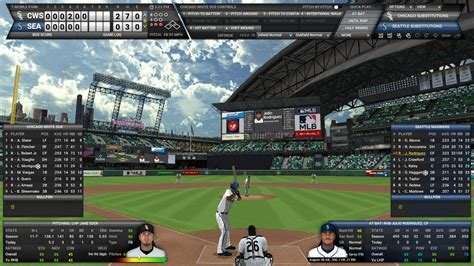
Out of the Park Baseball 3 is a comprehensive baseball management simulation where players assume control of both front office operations and on-field strategy. Gamers handle tasks like signing players, setting ticket prices, hiring scouts/coaches for major and minor leagues, and making tactical decisions. The game supports single-season or long-term career modes, with historical replayability spanning the last 100 years. Praised for its depth and realism, it remains one of the best baseball simulations despite minor interface and AI quirks.
Out of the Park Baseball 3 Guides & Walkthroughs
Out of the Park Baseball 3 Reviews & Reception
ign.com : Out of the Park Baseball 3 offers everything the serious baseball simulation fan expects.
mobygames.com (82/100): A comprehensive management simulation where players control all aspects of team operations.
Out of the Park Baseball 3: A Deep Dive into the Pinnacle of Baseball Management Simulation
1. Introduction
In the pantheon of sports management simulations, few titles have shaped a genre as profoundly as Out of the Park Baseball 3. Released in March 2001 by German developer Out of the Park Developments GmbH & Co. KG, this unassuming text-based simulator transcended its era to become the cornerstone of a 25-year legacy. While its visuals may seem antiquated by today’s standards, OOTP 3’s revolutionary blend of statistical depth, historical authenticity, and managerial breadth offered a sandbox for baseball fans unlike anything before or since. As the series’ “breakthrough release” (Wikipedia), it transformed niche baseball stat-keeping into an immersive, choice-driven experience. This review examines how OOTP 3, despite its technical limitations, pioneered systems that would redefine sports gaming—proving that true immersion lies not in polygons, but in the meticulous interplay of data and narrative.
2. Development History & Context
OOTP 3 emerged from the vision of Markus Heinsohn, a German baseball enthusiast who began coding the series’ prototype in 1998. Founded in Hollern-Twielenfleth, Out of the Park Developments operated as a scrappy indie studio, leveraging partnerships like Sean Lahman’s Baseball Database to ground its simulations in historical accuracy (Grokipedia). The 2001 release arrived amid a gaming landscape dominated by arcade-style sports titles—think MVP Baseball or World Series Baseball—which prioritized flashy animations over strategic depth. OOTP 3’s text-based interface was a deliberate counterpoint: a response to Heinsohn’s frustration with existing games’ lack of franchise management realism.
Technologically, the game operated on Windows 98/XP, constrained by early-2000s computing power. Its “minimal graphic depiction of a baseball diamond with scrolling text” (Wikipedia) allowed the simulation engine to prioritize computational rigor over visual flair. This choice was revolutionary; while competitors focused on polygonal stadiums, OOTP 3 invested resources in probabilistic algorithms and era-specific modifiers. The result was a game where every trade, draft pick, and pitch felt consequential—a rarity in an industry then preoccupied with annualized sequels and superficial spectacle.
3. Narrative & Thematic Deep Dive
OOTP 3 eschews traditional narrative in favor of emergent storytelling—a radical approach for 2001. Its “plot” is the player’s personal baseball odyssey: rebuilding the Chicago Cubs into a dynasty in the 1920s, guiding the expansion Arizona Diamondbacks to a World Series title, or crafting a fictional league from scratch. Characters are not scripted but generated by the player’s choices: a rookie phenom blossoming under a tough manager, a veteran slugger demanding a trade, or a franchise teetering on bankruptcy. These narratives emerge organically from the game’s core systems, where “successes and failures—from pennant races to hard-fought playoff series—become the chapter headings in a career” (Retro Replay).
Thematic depth lies in OOTP 3’s unflinching realism. It explores baseball’s dual identity as both sport and business: ticket prices affect fan morale, contract demands impact team chemistry, and minor-league development decisions echo across decades. The “Era Manager” feature—allowing play across any season in the last 100 years—enables poignant historical reenactments, such as managing Jackie Robinson’s Brooklyn Dodgers amid 1947’s societal tensions. Yet the game avoids melodrama; its dialogue is sparse, relegated to transactional menus and stat-line summaries. This restraint mirrors baseball itself—a sport defined by data as much as drama—and positions OOTP 3 as a tribute to the sport’s cerebral beauty.
4. Gameplay Mechanics & Systems
OOTP 3’s genius lies in its two-tiered gameplay loop: front-office strategy and on-field management. Players assume dual roles as general manager and field tactician, toggling between spreadsheets and dugout decisions.
-
Front Office Operations:
- Scouting & Development: Hire scouts to evaluate prospects, with accuracy tied to budget and reputation. The minor-league system is meticulously modeled, allowing players to nurture talent from Single-A to the majors.
- Finances: Balance budgets via ticket pricing, merchandise sales, and payroll constraints. Computer Gaming World noted this system’s “highly undeveloped” financial AI, with AI GMs prone to bankruptcy—a flaw that paradoxically added realism to economic tension.
- Personnel Management: Negotiate contracts, sign free agents, and hire coaches. The “era manager” adapts rules to historical contexts, such as dead-ball-era emphasis on pitching over hitting.
-
On-Field Simulation:
- Gameplay Engine: A text-based play-by-play engine uses probabilistic models for outcomes (e.g., BABIP for hits, pitcher fatigue algorithms). Unlike real-time sports sims, OOTP 3 favors abstraction: “scrolling text allows one to follow the game as it unfolds” (Wikipedia).
- Tactical Depth: Call intentional walks, shift defenses, or pinch-hit for a lefty. While the interface “requires numerous mouse clicks where forward arrows would be more effective” (Computer Gaming World), its granularity rewards patient strategists.
- Customization: A free downloadable baseball encyclopedia and robust editors for rosters, stadiums, and rules foster player creativity.
Innovations & Flaws:
– Strengths: The Lahman Database integration ensured historical accuracy, while the career mode’s longevity offered unparalleled replayability.
– Weaknesses: The “clunky” interface (Computer Gaming World) and lack of MLB licensing (a hurdle for mainstream appeal) limited accessibility. Yet for “true baseball fans, OOTP 3 does what it does so well that the flaws are tolerable” (Computer Gaming World).
5. World-Building, Art & Sound
OOTP 3’s “world” is one of numbers and imagination. Its art direction prioritizes function over flourish, with a “clean and intuitive interface” (Retro Replay) featuring charts, leaderboards, and player cards rendered in muted palettes. The 2D game view—a minimalist diamond with animated ball trajectories—provides tactical feedback without visual clutter. Customizability elevates this: players can adjust color schemes, font sizes, and even “era-appropriate UI skins” (Retro Replay), evoking nostalgia for vintage baseball.
Sound design is virtually absent, a reflection of the era’s technological constraints. Immersion stems instead from the game’s data-driven atmosphere: the tension of a 3-2 count in the ninth inning, conveyed through text; the roar of a crowd implied by attendance statistics. As Retro Replay notes, “the story is entirely emergent, shaped by your managerial decisions.” This abstraction is OOTP 3’s greatest strength, proving that baseball’s soul lies in its statistics and stories—not its pixelated crowds.
6. Reception & Legacy
Critical Response:
At launch, OOTP 3 earned a “solid 74% average from critics” (MobyGames), with praise balanced against caveats. Gamer’s Pulse lauded it as “heaven sent for any baseball fan,” extolling its “statistical overloading” and near-perfect simulation. Computer Gaming World awarded it 70%, calling it “easily the best baseball simulation on the market today” despite UI and AI flaws. Players rated it 4.4/5, underscoring its niche appeal.
Legacy:
OOTP 3 cemented the series’ identity as a “benchmark for sports management simulations” (Grokipedia). Its innovations—historical replay, career mode, and era-specific rules—became industry standards. The game’s success led to retail spin-offs like Season Ticket Baseball (2001) and laid groundwork for OOTP 5’s 2003 release, which marked the series’ shift to retail distribution. By 2007, OOTP 2007 would boast a Metacritic score of 96 (later removed), but OOTP 3 remains the progenitor of this dynasty.
Influence beyond baseball is equally profound: its blend of data depth and emergent narrative predated games like Football Manager. As Grokipedia notes, OOTP “pioneered a model where statistics and storytelling coexist,” inspiring a generation of management sims.
7. Conclusion
Out of the Park Baseball 3 is a relic that feels startlingly modern. Its text-based interface may evoke nostalgia for DOS-era computing, but its systems—probabilistic simulation, historical authenticity, and player-driven narratives—were decades ahead of their time. Flaws like a cumbersome UI and rudimentary AI finances are forgivable when weighed against the sheer ambition of its design: to distill the essence of baseball into a playable, evolving universe.
For contemporary players, OOTP 3 is a historical artifact—valuable not for its graphics, but for its DNA: the idea that sports gaming could be a platform for creativity, analysis, and storytelling. It stands as the genesis of a franchise that would later secure MLB licenses and reach its 26th iteration, but its soul remains in this 2001 release. As Markus Heinsohn himself would later reflect, OOTP 3 proved that “the best simulations aren’t about what you see, but what you imagine.” In an age of annualized sports titles, OOTP 3’s quiet revolution end—a testament to the power of data, history, and the unyielding love of the game.
Verdict: OOTP 3 is not merely a game; it is a time capsule of baseball’s strategic soul. Its imperfections are inseparable from its charm, and its influence echoes in every sports management title that dares to prioritize depth over dazzle. A foundational masterpiece.