
- Release Year: 1989
- Platforms: DOS, FM Towns, Genesis, MSX, Nintendo Switch, PC-88, PC-98, Sharp X68000, SNES, TurboGrafx CD, Wii, Windows
- Publisher: D4 Enterprise, Inc., Epoch Co., Ltd., Hudson Soft Company, Ltd., Nihon Falcom Corp., SEGA Corporation, SPS Co., Ltd., Tan Ton Nerw Information Co., Ltd., Turbo Technologies, Inc.
- Developer: Nihon Falcom Corp.
- Genre: Role-playing
- Perspective: First-person, Top-down
- Game Mode: Single-player
- Gameplay: RPG, Turn-based combat
- Setting: Fantasy
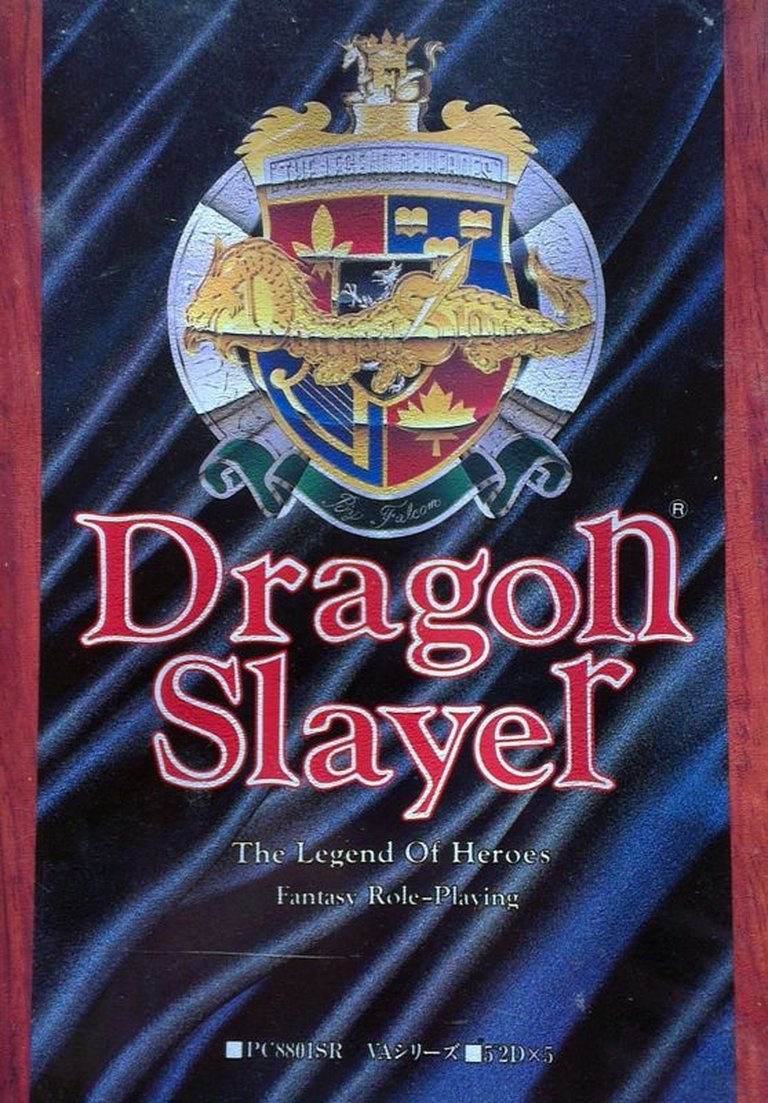
Description
Set in a medieval fantasy realm, Dragon Slayer: The Legend of Heroes follows young Prince Selios on a perilous journey after his homeland is attacked by monsters and he is betrayed by an ally. Framed as a traditional Japanese RPG with turn-based combat viewed from a first-person perspective, players must navigate the land, recruit trustworthy companions, and overcome semi-random enemy encounters that persist even during retreats to ultimately save the kingdom.
Gameplay Videos
Dragon Slayer: The Legend of Heroes Free Download
Dragon Slayer: The Legend of Heroes Patches & Updates
Dragon Slayer: The Legend of Heroes Mods
Dragon Slayer: The Legend of Heroes Guides & Walkthroughs
Dragon Slayer: The Legend of Heroes Reviews & Reception
gamesreviews2010.com : A groundbreaking role-playing game that set new standards for the genre.
Dragon Slayer: The Legend of Heroes Cheats & Codes
PC Engine CD/TurboGrafx-16
Hex codes require a cheat device. Button sequence is entered at game startup.
| Code | Effect |
|---|---|
| 0073BB?90:EA | Each battle gives many EPs |
| 0073BC?13:EA | Each battle gives many EPs |
| 0085E7?90:EA | Each enemy gives the maximum of money |
| 0085E8?0B:EA | Each enemy gives the maximum of money |
| Hold Up, Select, I, and II as the game loads | Sound test and boss preview |
Dragon Slayer: The Legend of Heroes: Review
Introduction
In the annals of Japanese RPG history, few titles embody the spirit of reinvention and legacy quite like Dragon Slayer: The Legend of Heroes. Released in December 1989 by Nihon Falcom, this sixth entry in the Dragon Slayer series was a radical pivot from its action-oriented predecessors, birthing a turn-based saga that would evolve into one of gaming’s most revered franchises. As the foundational stone of the Legend of Heroes lineage—now spanning over 30 years and interconnected epics like the Trails series—it established a blueprint for narrative depth, character-driven storytelling, and mechanical accessibility. Yet, for all its innovations, it remains a product of its era: a game that balanced the demands of PC-88 hardware with ambitious world-building, and whose legacy is as much about its influence as its gameplay. This review dissects Dragon Slayer: The Legend of Heroes through a historical lens, examining its context, narrative ambition, systems, artistry, and enduring impact to affirm its status as a cornerstone of JRPG evolution.
Development History & Context
Dragon Slayer: The Legend of Heroes emerged from Nihon Falcom’s ethos of relentless experimentation. Series creator Yoshio Kiya, known for defying genre conventions with titles like Legacy of the Wizard (1987), sought to challenge his own design philosophy. In a 1987 interview, Kiya dismissed random battles as “unfair,” yet by 1989, he reversed course, declaring a desire to explore turn-based RPGs he had never attempted. This shift was driven by both ambition and market forces: Enix’s Dragon Quest and Square’s Final Fantasy had proven the genre’s viability, and Kiya aimed to demonstrate Falcom’s mastery of it.
Developed for the NEC PC-88—a 16-bit Japanese PC famed for its superior sound hardware—the game pushed the platform’s limits. Falcom leveraged the PC-88’s programmable sound generator (PSG) to craft a layered soundtrack, while its graphics engine rendered a vast, scrollable overworld with unprecedented detail for the era. The team included composers Mieko Ishikawa and Masaaki Kawai, whose work would define Falcom’s signature orchestral chiptune style. The game’s development was swift; released in December 1989, it spawned over a dozen ports within five years, including the MSX2, FM Towns, and the pivotal TurboGrafx-CD (1991/1992) in North America. The CD version, handled by Hudson Soft, was a technological showcase: it featured full voice acting—a rarity in 1992—and Red Book Audio for enhanced music, despite the acting’s stiff, often awkward delivery.
This period was transformative for Falcom. While PC gaming dominated Japan in the late 1980s, the rise of consoles like the Super Famicom (1990) threatened the studio’s market share. Dragon Slayer: The Legend of Heroes bridged this divide, proving Falcom could adapt to new hardware while retaining its core identity. Its success directly enabled the Legend of Heroes series’ expansion, culminating in the narrative-rich Gagharv Trilogy (1994–1999) and the continent-spanning Trails saga (2004–present). Without this pivot, Falcom’s post-1990s resurgence—marked by Ys and Legend of Heroes dominance—may never have occurred.
Narrative & Thematic Deep Dive
At its surface, Dragon Slayer: The Legend of Heroes tells a familiar fantasy tale: Prince Logan, exiled after his uncle Baron Drax orchestrates his father’s murder, gathers allies to reclaim his throne. Yet, beneath this cliché lies a narrative ambitious for 1989, structured in chapters that mirror Logan’s evolution from a naive boy to a resolute leader. The game’s strength lies not in its plot, but in its execution—particularly its emphasis on world-reactive storytelling. Unlike contemporaries like Final Fantasy II (1988), where NPCs remained static, Logan’s journey dynamically reshapes the world. After liberating a town, its citizens offer new dialogue reflecting the political fallout; revisiting old locales reveals new lore, rewarding player curiosity. This “living world” approach would become a hallmark of the Legend of Heroes series, influencing later entries like the Trails games’ intricate NPC ecosystems.
Character depth further elevates the narrative. Logan’s companions are not archetypes but individuals with intersecting goals: Ethan, a monk hiding his royal bloodline, grapples with loyalty to his homeland; Giles, a thief fleeing his grandfather’s legacy, seeks redemption. Even antagonists like Drax are nuanced; his betrayal stems from a twisted sense of duty, positioning him as a tragic figure rather than a mustache-twirling villain. The game’s themes are equally sophisticated. It explores the corrupting nature of power through Drax’s tyranny and critiques humanity’s hubris via Naja, an ancient god of destruction who emerges as the final antagonist. Naja’s motives—punishing mankind’s greed—introduce an environmentalist undertone, suggesting true heroism requires confronting systemic evil, not just individual foes. This philosophical depth, rare in early JRPGs, foreshadows the Trails series’ political and social narratives.
The English localization, handled by Hudson Soft, deserves note. While the voice acting is famously stiff (critics described it as “recorded in a closet”), the script avoids the stilted phrasing common in 1990s translations. Logan’s quest for justice and the weight of his betrayal are conveyed with natural dialogue, making the story accessible to Western audiences. This balance of localization and preservation cemented the game’s cult status among retro RPG enthusiasts.
Gameplay Mechanics & Systems
Dragon Slayer: The Legend of Heroes refines the turn-based RPG template with innovations ahead of its time. Combat is viewed from a first-person perspective, similar to Dragon Warrior, but distinguishes itself with visible enemy health bars and a customizable “auto-battle” system. Players can define battle plans—e.g., “prioritize magic” or “heal below 30% HP”—allowing the AI to handle repetitive grinding while retaining manual control for crucial moments. This feature, unprecedented in 1989, streamlined the game’s often-high encounter rate without sacrificing depth.
Character progression emphasizes freedom over rigidity. All characters can learn any spell (purchased from sages), and stat points allocated at level-up are fully customizable. Want a tank-focused Logan? Dump points into Strength. Prefer a mage? Boost Intelligence. This flexibility encouraged experimentation, letting players tailor parties to playstyles—a radical departure from class-based systems in contemporaries like Phantasy Star II (1989). The “spell valve” mechanic added tactical depth: players could disable all magic in battle, forcing a shift to physical attacks—a useful counter against spell-spamming bosses.
Exploration is equally groundbreaking. The game’s overworld is vast, dotted with towns, dungeons, and secrets. Revisiting areas post-plot unlocks new dialogue and items, rewarding thoroughness. Unique to this era, enemies in dungeons are visible (unlike overworld “random” encounters), allowing players to avoid or engage at will. Fast-travel via warp spells and a “reveal invisible enemies” item further reduced tedium. These choices balanced accessibility with challenge, ensuring the 6–7-hour runtime felt substantial without bloating.
World-Building, Art & Sound
The game’s world, Isrenasa, is a tapestry of medieval kingdoms and ancient lore. Divided into five realms—Farlalyne, Wyndgard, Norland, Sordis, and Mortavia—each region boasts distinct cultures and political tensions. This geography isn’t mere backdrop; it drives the narrative, as Logan’s quest intersects with imperial ambitions and regional conflicts. The world-building extends to its lore: hints of an advanced prehistoric civilization (e.g., security keycards, a dragon “airship”) foreshadow the Legend of Heroes series’ blend of fantasy and sci-fi—a trait fully realized in later Trails titles.
Visually, the PC-88 version showcases Falcom’s technical prowess. Sprites are crisp for the era, with detailed character designs (Logan’s princely attire, Ethan’s monk robes) and vibrant environmental palettes. The TurboGrafx-CD port enhances this with animated cutscenes and CD-quality audio, though some console versions (e.g., the SNES release) suffered from downgraded graphics. The art style, while simple, excels in conveying mood: the desolate ruins of Exile, the grandeur of Drax’s castle, and the ethereal final dungeon evoke a sense of scale.
Sound design is the game’s crowning achievement. The soundtrack, composed by Ishikawa and Kawai, blends stirring orchestral chiptune with memorable melodies. The overworld theme, in particular, became iconic, its adventurous motif synonymous with the Legend of Heroes legacy. The TurboGrafx-CD’s Red Book Audio elevates this to near-CD quality, a rarity for 1991. Voice acting, though poorly executed, added a layer of immersion—players could toggle it off, preserving the game’s text-based charm. This synergy of art and sound created an atmosphere that transcended its hardware limitations.
Reception & Legacy
Upon release, Dragon Slayer: The Legend of Heroes was a critical darling in Japan, praised for its innovation and narrative depth. Famitsu scored the PC Engine CD version 29/40, while Electronic Gaming Awards nominated it for 1992’s “Multimedia Game of the Year,” hailing its “mammoth quest” and “meticulously detailed” gameplay. In North America, the TurboGrafx-CD port earned an 85/100 from Mega Fun, which lauded its “witty dialogues” and “balanced difficulty.” Hudson Soft’s localization was deemed superior to Square’s efforts of the era, with natural English text offsetting the campy voice acting.
Commercially, the game thrived in Japan, selling over 100,000 copies across platforms—impressive for a niche PC title. Its ports to consoles expanded its reach, though the North American release struggled due to the TurboGrafx-CD’s limited user base. Yet, its legacy extends beyond sales. It established Legend of Heroes as a franchise, with direct sequels (The Legend of Heroes II, 1992) and the Gagharv Trilogy (1994–1999) refining its narrative focus. The Trails series (2004–present) inherited its DNA: chapter-based storytelling, reactive NPCs, and political themes, evolving into a 13-title epic that sold 9 million units by 2025.
The game’s influence permeates the JRPG genre. Its emphasis on customizable characters and auto-battle foreshadowed Final Fantasy V (1992), while its world-reactive NPCs predated Chrono Trigger (1995). Modern Falcom titles like Trails Through Daybreak (2021) retain its hybrid combat system—blending real-time exploration with turn-based battles—a direct evolution of its design. Even its flaws, like high encounter rates, were addressed in later installments, proving the series’ capacity for growth.
Conclusion
Dragon Slayer: The Legend of Heroes is more than a relic of 1989; it is a foundational text of JRPG history. It redefined Falcom’s identity, pivoting from action RPGs to narrative-driven epics, and birthed a franchise that would dominate Japanese gaming for decades. Its innovations—customizable party systems, reactive world-building, and streamlined accessibility—were revolutionary, proving that turn-based RPGs could be both deep and approachable. While its graphics and voice acting show their age, its core narrative ambition and mechanical polish remain compelling. As the progenitor of the Trails saga—a series renowned for its intricate storytelling and world-building—this game’s legacy is etched in the DNA of modern JRPGs. It is, in essence, the legend that began it all: a testament to Falcom’s vision and a reminder that even in an era of technical constraints, bold storytelling can create timeless magic.