
- Release Year: 2019
- Platforms: Windows
- Publisher: Raiser Games, S.L.
- Developer: 34BigThings srl
- Genre: Action
- Perspective: Third-person
- Game Mode: Online PVP
- Gameplay: Shooter
- Setting: Fantasy
- Average Score: 77/100
Description
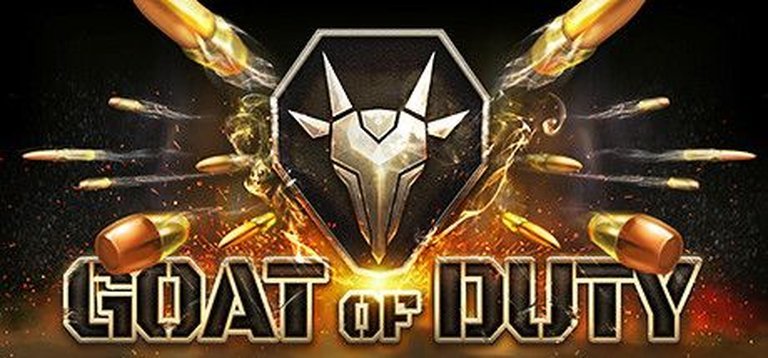
Goat of Duty is a whimsical first-person shooter that parodies military combat games like Call of Duty, casting players as goats engaging in chaotic multiplayer battles within a fantasy setting. Developed by 34BigThings srl and published by Raiser Games, it features fast-paced, cartoonish gameplay with behind-view perspective, offering a humorous take on shooter mechanics in an absurd world where goats are the unexpected soldiers.
Gameplay Videos
Where to Buy Goat of Duty
PC
Goat of Duty Guides & Walkthroughs
Goat of Duty Reviews & Reception
metacritic.com (70/100): Sold at a very low price, Goat of Duty isn’t a joke like Goat Simulator has been, and tries to get into the competitive shooter scene by taking elements from the likes of Quake and Unreal tournament. Clearly worth its 7 bucks price tag ATM.
brutalgamer.com : Goat of Duty is a third person multiplayer shooter themed around goats. Yes… Goats! The gameplay is like Quake 3 but Goat of Duty could use a lot of fine tuning to make it less janky and less chaotic. Overall I can see this as a fun yet short experience for a small groups of friends. Oh, and you can LAN the game actually!
Goat of Duty: Review
Introduction
In the pantheon of video game absurdity, few titles occupy as singular a niche as Goat of Duty. This 2019 multiplayer shooter from developer 34BigThings srl and publisher Raiser Games takes the chaotic energy of the Goat Simulator series and infuses it with the visceral, high-stakes combat of a military FPS. The result is a game that is, on its surface, a ridiculous premise: goats armed with guns, battling in deathmatches for supremacy. Yet beneath this layer of barnyard humor lies a surprisingly competent, if flawed, tribute to the golden age of arena shooters like Quake and Unreal Tournament. This review will dissect Goat of Duty‘s development, its thematic depth, mechanical systems, artistic presentation, and its complex legacy as a cult phenomenon that ultimately succumbed to the harsh realities of the indie market.
Development History & Context
Goat of Duty emerged from the Italian studio 34BigThings, best known for the high-speed anti-gravity racing series Redout. The team, led by CEO Valerio Di Donato and COO Ivano Zanchetta (who also served as “Goat Director”), envisioned a project that would channel their love of classic shooters while embracing the absurdist humor popularized by titles like Goat Simulator. The game entered Steam Early Access on July 10, 2019, with a clear vision: to deliver a fast, no-nonsense multiplayer experience stripped of the metagame complexities dominating modern shooters. Technically, it leveraged Unreal Engine 4 for its third-person perspective and physics-based chaos, though the engine’s demands sometimes clashed with the game’s intentionally silly tone.
The 2019 gaming landscape was dominated by battle royales like Fortnite and Apex Legends, but there was also a growing nostalgia for the pure skill-based combat of the ’90s. Goat of Duty positioned itself as an antidote to the tactical-heavy, progression-locked shooters of the era, promising a return to “old-school” mayhem. However, the studio faced constraints typical of smaller developers: balancing polish with rapid iteration, and competing for attention in a saturated market. The COVID-19 pandemic ultimately exacerbated these challenges, leading to the game’s abandonment in Early Access in January 2023. The developer cited “struggles” and the game’s “results” as factors halting further development, leaving it in a state of perpetual limbo.
Narrative & Thematic Deep Dive
Goat of Duty deliberately eschews traditional narrative in favor of pure gameplay satire. The “lore” is a running joke, presented in disjointed, self-aware snippets on Steam and forums. One theory posits a nuclear accident granting goats intelligence; another suggests they patiently waited for humanity to build robots before rising up; a third, more popular fan theory involves a climate cataclysm where goats survived and evolved to master science. These contradictory tales collectively underscore the game’s theme: the absurdity of war and military propaganda. By replacing soldiers with goats, Goat of Duty satirizes the glorification of conflict, reducing high-stakes battles to bleating, ramming farce.
Characters are non-existent beyond player avatars, but the game teems with pop-culture parodies through its “goatstumes.” Skins reference everything from Tracer (complete with blink effect) to Mad Max‘s Immortan Joe and Naruto‘s Uzumaki clan, blending fan service with humor. Dialogue is minimal—mostly bleats and taunts—but the game communicates through action: the Fus Ro Arena mode, where players push opponents to their doom, mocks the bombastic pronouncements of fantasy tropes. Underlying it all is a playful deconstruction of shooter tropes: when a goat dies by falling off a medieval castle, the message is clear: even in epic warfare, the stakes are hilariously trivial.
Gameplay Mechanics & Systems
At its core, Goat of Duty is a third-person arena shooter (despite the store page’s first-person label, gameplay visibly shows the goat’s head). Movement is defined by goat biology: Charge (a devastating ram attack), Bleat (a taunt with minor pushback), and Fake Death (a decoy move where the goat goes limp to fool enemies). These mechanics add layers of trolling potential, allowing players to feign defeat or launch themselves into opponents mid-air. Combat is fast-paced and twitchy, with weapons including shotguns, assault rifles, and rocket launchers—all with goat-themed names like “Hornet” SMG or “Rambo” bow.
The game offers four multiplayer modes:
– Free For All: Classic deathmatch chaos.
– Herd Wars: Team-based carnage.
– Gun DM: A linear progression where players cycle through weapons with each kill.
– Fus Ro Arena: A unique mode where the “Fus Ro Bleat” (a knockback force) is the only weapon, pushing goats off cliffs into hazards.
Progression is cosmetic: leveling unlocks over 100 goatstumes earned through headshots, kill streaks, and deaths. There are no microtransactions, a commendable choice. However, the systems are unbalanced. Weapon spawns create camper havens, and physics glitches (e.g., getting stuck in geometry during ram attacks) break immersion. LAN support was a boon for private matches, but the reliance on player-hosted sessions often led to inconsistent ping. While the core loop is undeniably fun, jank and map design flaws prevent it from reaching the polish of its inspirations.
World-Building, Art & Sound
Goat of Duty‘s world is a fever dream of mismatched environments, each map a self-contained playground for chaos. Maps range from a “Futuristic Farm” with robotic livestock to a “Horror Well” filled with jump-scare props, and a “Space Station” with zero-gravity sections. These spaces are designed for verticality, encouraging goats to climb walls, leap across chasms, and use high ground tactically. The art style is vibrant and cartoonish, with exaggerated goat models, gibs that explode into confetti, and blood rendered as pink splatters. This aesthetic aligns with the game’s tone: violent but never grim, turning gore into slapstick.
Sound design amplifies the absurdity. The bleating goats are comically loud, serving as auditory taunts. Weapons have satisfyingly exaggerated pew-pew and boom effects, while the Fus Ro Bleat mimics the iconic “Fus Ro Dah!” from The Elder Scrolls. Music is high-energy electronic, mirroring the frantic pace of combat. Together, the visuals and audio create a cohesive, if shallow, world where the only serious thing is the competitiveness of the players—not the stakes.
Reception & Legacy
Goat of Duty launched to mixed but generally positive reviews. Critics like JeuxActu praised its price point (~$7.99) and homage to classic shooters, awarding it a 70/100. On Steam, it boasts a “Very Positive” user score (85/100 from 4,000+ reviews) for its humor and chaotic fun. Players enjoyed LAN parties and short, meme-filled sessions, with one BrutalGamer reviewer calling it “entertaining in short bursts.” However, negative reviews cited technical issues, a dwindling player base, and the abandonment of Early Access.
Legacy-wise, Goat of Duty remains a cult curiosity. It exemplifies the “goat game” trend (following Goat Simulator, Goat Evolution, etc.) but failed to sustain momentum. Its influence is minimal, though its fusion of parody and pure gameplay mechanics foreshadowed the rise of indie arena shooters like Battlerite. The community still fondly remembers its absurdity, and its Steam forums are filled with lament for its “abandoned” status. Ultimately, it stands as a testament to the risks of Early Access: a passionate, flawed product that captured lightning in a bottle briefly before fading away.
Conclusion
Goat of Duty is a game of glorious contradictions: a serious shooter wrapped in goat-shaped silliness, a tribute to classics held back by jank, and a multiplayer experience that thrives in short bursts but lacks longevity. Its core gameplay—fast, physics-driven, and rich with trolling potential—is undeniably fun, offering a pure skill-based alternative to modern tactical shooters. The art and sound design successfully sell the absurd premise, while the satirical themes elevate it beyond a mere meme. Yet, its technical flaws, abandoned development status, and niche appeal prevent it from being a true classic.
For the right audience—a group of friends seeking 30 minutes of chaotic, laugh-out-loud fun—Goat of Duty is an unqualified success. It delivers on its promise of “goats with guns” in a way few games could. Historically, it occupies a unique space as a footnote in the evolution of indie shooters and the absurdism of the late 2010s. While it may never escape Early Access purgatory, its legacy as a brilliantly dumb, genuinely enjoyable experience ensures it will be remembered as the game where you truly became the GOAT—of goats.