
- Release Year: 2019
- Platforms: Windows
- Publisher: JRM Studios
- Developer: JRM Studios
- Genre: Action
- Perspective: Behind view
- Game Mode: Single-player
- Gameplay: Arcade, Auto-run, Platformer
- Average Score: 81/100
Description
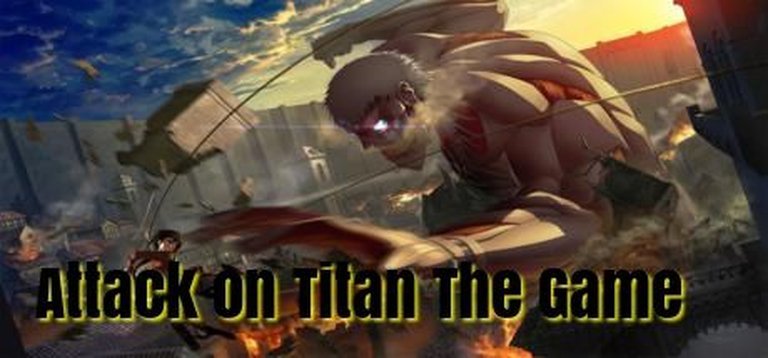
Released in April 2019 for Windows, Attack on Titan: The Game is a commercial fan-made action title that brings the popular anime/manga franchise to life as an auto-run platformer. Featuring arcade-style gameplay with behind-view perspective and anime-inspired visuals, the game offers a single-player offline experience controlled via keyboard and mouse.
Attack on Titan: The Game Cracks & Fixes
Attack on Titan: The Game Mods
Attack on Titan: The Game Reviews & Reception
metacritic.com (90/100): Omega Force has created something really special here. Between the presentation that perfectly captures the soul of the Attack on Titan anime and the action that immerses players into every scene, this is a definite home run.
opencritic.com (80/100): A chaotic and fun swing and slash experience, that has something for new and old fans of the series. High speed action, that wears after a bit, but enough mode variety to keep completionists going. The upgrade system lacks depth which detracts from the mission reward structure.
Attack on Titan: The Game: Review
Introduction
In the vast landscape of licensed video games, few properties capture the imagination like Attack on Titan. Hajime Isayama’s brutal, politically charged manga and its subsequent anime adaptation have become cultural phenomena, defining a generation of dark fantasy storytelling. Against this backdrop, Attack on Titan: The Game (2016), developed by Omega Force and published by Koei Tecmo, emerged as the first major console adaptation from a renowned studio. This review argues that the game is a fascinating, flawed passion project—a technical marvel in capturing the series’ signature vertical combat, yet hampered by repetitive design and narrative truncation. It stands as a testament to both the potential and pitfalls of adapting beloved intellectual properties, offering a visceral, albeit incomplete, reflection of the source material’s despairing grandeur.
Development History & Context
The game’s creation was steeped in both ambition and constraint. Announced at Gamescom 2015 and released in February 2016 in Japan (August in the West), it represented Koei Tecmo and Omega Force’s first major venture into the Attack on Titan universe. Omega Force, famed for the Dynasty Warriors series, brought its signature hack-and-slash expertise to the table, but faced a unique challenge: translating the anime’s hyperkinetic, three-dimensional combat—where characters zip between buildings using Omni-Directional Maneuvering (ODM) Gear—into a traditional game framework. Technologically, the game leveraged a cel-shaded art style closely mimicking the anime, but engine limitations on platforms like the PlayStation 3 and Vita constrained performance and draw distances.
The 2016 gaming landscape was dominated by licensed titles, many criticized as shallow cash-grabs. Attack on Titan had just concluded its explosive first anime season, creating unprecedented fan anticipation. However, budget constraints forced difficult choices: the English voice cast was dropped in favor of the original Japanese audio, and multiplayer modes were simplified. The game thus became a study in compromise—ambitious in scope but limited by technical and financial realities, reflecting the industry’s struggle to balance fidelity with playability.
Narrative & Thematic Deep Dive
The game’s narrative is a condensed retelling of the manga’s first 33 chapters, covering the catastrophic fall of Wall Maria, the Battle of Trost, and the early stages of humanity’s desperate counter-offensive. It faithfully adapts key moments: Eren Yeager’s childhood trauma, his transformation into a Titan, and the Survey Corps’ harrowing missions beyond the walls. New, original scenarios—supervised by Isayama—explore character dynamics, such as Levi’s squad dynamics and the psychological toll of Titan warfare. However, the narrative sacrifices depth for pace. Character arcs, like Armin’s intellectual awakening or Sasha’s comic relief, feel truncated, and thematic complexity—Isayama’s exploration of militarism, racism, and cycles of violence—is reduced to surface-level heroic struggle.
The game excels in conveying visceral despair. Trost District’s collapse, rendered with crumbling architecture and screaming civilians, evokes the source material’s nihilistic tone. Yet its portrayal of Eren’s rage and Mikasa’s loyalty lacks the nuance that made them iconic. The narrative ultimately serves as a vehicle for spectacle rather than a substantive exploration of humanity’s fragility, leaving the game as a hollow echo of the manga’s profound commentary on freedom and survival.
Gameplay Mechanics & Systems
Attack on Titan: The Game revolves around its core ODM Gear combat loop, a masterstroke of mechanical design. Players grapple between buildings, Titans, and environmental objects with fluid, physics-based movement, creating a sense of dizzying freedom. Combat emphasizes precision: targeting Titan nape joints requires timed sword strikes and gas management, evoking the anime’s tactical intensity. Ten characters are progressively unlocked (Eren, Mikasa, Levi, etc.), each with unique stats and playstyles—Levi’s speed contrasts with Erwin’s strategic depth.
However, the gameplay falters in execution. Missions repeat endlessly: defend this sector, retrieve that item. The “horde” combat, while initially impressive, devolves into button-mashing against identical Titan models. A rudimentary progression system—upgrading gear, purchasing horses, and crafting weapons—fails to mask the monotony. Multiplayer modes (Annihilation, Co-op, Predator) offer fleeting fun but suffer from lag and imbalanced mechanics. Controls, on keyboard/mouse, feel unwieldy, and camera struggles in confined spaces. The game’s systems brilliantly capture the feeling of ODM combat but lack the strategic depth to sustain engagement, turning humanity’s last stand into a grind.
World-Building, Art & Sound
The game’s world-building is its strongest asset. Recreating iconic locations—Shiganshina’s gates, Trost’s ruins, the Survey Corps HQ—with meticulous detail, the environments pulse with atmosphere. Crumbling walls, smoke-choked alleys, and towering Titans evoke the series’ hopelessness. The cel-shaded visuals, mirroring Wit Studio’s anime style, bring characters and Titans to life with expressive animations. Levi’s ODM Gear trails, Colossal Titan’s steam vents, and the grotesque细节 of Abnormal Titans are rendered with chilling fidelity.
Sound design complements the visuals effectively. The Japanese voice cast delivers earnest performances, and the soundtrack remixes Hiroyuki Sawano’s iconic themes (“Guren no Yumiya,” “Shinzō wo Sasageyo!”) for dramatic effect. However, the audio lacks subtlety; repetitive Titan roars and generic combat tracks drown out atmosphere. Despite these flaws, the game succeeds in immersing players in Attack on Titan‘s oppressive world, making each grappling hook launch and sword swing a sensory triumph.
Reception & Legacy
At launch, Attack on Titan: The Game achieved commercial success, selling 150,682 copies in its first week in Japan—outselling Street Fighter V and eventually reaching 700,000 copies worldwide. Critical reception was mixed. Famitsu awarded 34/40, praising its faithfulness to the source, while PlayStation Lifestyle (8/10) lauded it as a “passion project made right.” However, GameSpot (6/10) criticized its repetitiveness, and IGN (7.3/10) noted technical hiccups. The game polarized fans: some celebrated its combat innovation; others lamented its shallow narrative.
Its legacy is dual-edged. The 2018 sequel, Attack on Titan 2, refined its flaws, proving the foundation was viable. The game also demonstrated that licensed games could be more than cynical cash-grabs, paving the way for ambitious adaptations like Attack on Titan: Humanity in Chains. Culturally, it cemented ODM Gear as a playable icon, influencing later anime titles. Yet, it remains a cautionary tale—spectacle without substance cannot sustain a narrative as rich as Isayama’s.
Conclusion
Attack on Titan: The Game is a paradox: a masterclass in translating anime spectacle into interactive combat yet a failure in delivering narrative depth. Omega Force’s ODM Gear mechanics are undeniably exhilarating, capturing the series’ kinetic dread in a way few licensed games have. However, repetitive missions, underdeveloped characters, and technical shortcomings prevent it from reaching the heights of its inspiration. It stands as a valiant, flawed tribute—a “passion project” that prioritizes visceral thrills over thematic resonance. For fans, it offers a chance to soar beyond the walls in unprecedented ways; for newcomers, it serves as a functional but hollow entry point into the franchise. Ultimately, its place in video game history is secure: as a bold, imperfect adaptation that reminds us that even the most flawed leaps into the unknown can leave an indelible mark.