
- Release Year: 2018
- Platforms: Nintendo Switch, PlayStation 4, PlayStation 5, Windows
- Publisher: familyplay, Markt+Technik Verlag GmbH
- Developer: Independent Arts Software GmbH
- Genre: Driving, Racing
- Perspective: Behind view
- Game Mode: Co-op
- Gameplay: Driving, Racing, Vehicular
- Setting: Fantasy
Description
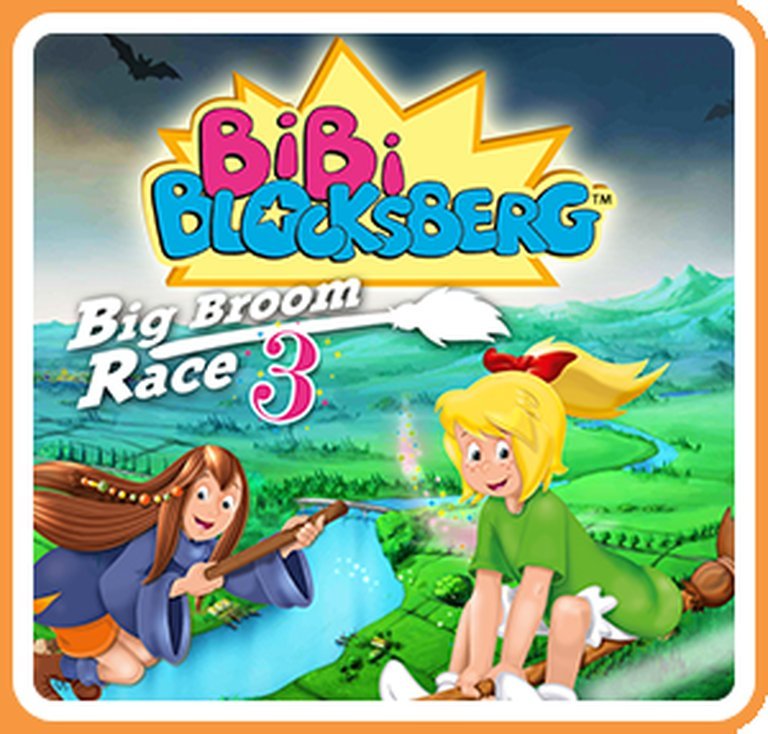
Bibi Blocksberg: Big Broom Race 3 is a fantasy racing game where players control Bibi and her friends on magical broomsticks through diverse worlds such as prehistoric dinosaur eras, the Orient, and Transylvania. Using witchcraft potions and aerial maneuvers, players engage in vibrant, accessible races with split-screen multiplayer support, all set in a colorful, family-friendly universe licensed from the Bibi Blocksberg series.
Gameplay Videos
Where to Buy Bibi Blocksberg: Big Broom Race 3
PC
Bibi Blocksberg: Big Broom Race 3 Patches & Updates
Bibi Blocksberg: Big Broom Race 3 Guides & Walkthroughs
Bibi Blocksberg: Big Broom Race 3 Reviews & Reception
fingerguns.net : Bibi Blocksberg: Big Broom Race 3 is one of the poorest kart racers on modern day consoles and will only appeal if you’re a huge fan of the source material.
deviantart.com : the game meanders all the way through. Items don’t offer much, either.
emeraldrangers.com : Is it a good time? Hopefully it was fun for the characters because it is a big bowl of bland brand for the players.
Bibi Blocksberg: Big Broom Race 3: Review
Introduction
In the whimsical world of licensed kart racers, few titles capture the niche charm of European children’s media quite like Bibi Blocksberg: Big Broom Race 3. This 2018 release from German developer Independent Arts Software transforms the beloved audio drama and animated franchise into a high-flying, potion-slinging racing adventure. As the third entry in a series (though its “3” moniker feels more aspirational than sequential), it promises a family-friendly experience on consoles and PC. Yet, beneath its colorful facade lies a product both ambitious in its scope and deeply flawed in execution. This review dissects Big Broom Race 3 as a cultural artifact and a piece of interactive media, examining its place in the kart racing genre and its fidelity to its source material. Our thesis emerges from a synthesis of critical reception and player feedback: while the game offers fleeting joy for young Bibi Blocksberg fans and casual multiplayer sessions, it ultimately stands as a technically mediocre, narratively shallow, and mechanically derivative entry in a crowded genre, redeemed only by its unbridled charm and accessibility.
Development History & Context
Big Broom Race 3 emerged from the Hamburg-based studio Independent Arts Software, a veteran developer with a history of licensed games for younger audiences, including entries in the Bibi & Tina and Bayala series. The project was a joint venture between publishers Markt+Technik Verlag GmbH (a German media company) and familyplay, signaling an intent to capitalize on the Bibi Blocksberg franchise’s significant cultural footprint in Germany and European territories. Developed on the Unity engine—a pragmatic choice given its cross-platform versatility—the game was crafted to run on modest hardware, as evidenced by its low system requirements (a mere 512MB RAM and DirectX 9.0a compatibility).
The vision was clear: create a “wild witch rally” that mirrored the lighthearted, magical adventures of the original audio dramas and animated series. However, this ambition was tempered by the practical constraints of a mid-tier budget. The gaming landscape of 2018 was dominated by titans like Mario Kart 8 Deluxe on the Nintendo Switch, setting an impossibly high bar for kart racing mechanics. In this context, Big Broom Race 3 positioned itself not as a genre contender, but as a licensed alternative—a “first kart racer” for children unprepared for the competitive depth of Nintendo’s masterpiece. The game’s release on PlayStation 4, Nintendo Switch, PC, and later PlayStation 5 (2023) reflected a deliberate strategy to penetrate family-oriented markets, though its global appeal was hampered by minimal marketing outside German-speaking regions. This context reveals a title caught between a niche franchise and an oversaturated market, forced to prioritize accessibility over innovation.
Narrative & Thematic Deep Dive
The narrative of Big Broom Race 3 is as thin as a witch’s cauldron broth. The premise is lifted directly from the source material: young witch Bibi Blocksberg and her friends face a bleak summer holiday when their families cancel vacation plans. In a moment of childlike ingenuity, Bibi proposes a broomstick race across fantastical realms—Transylvania, the Orient, and the age of dinosaurs—to stave off boredom. This setup is delivered via static comic-book cutscenes with scrolling text, a budget-friendly choice that eschews voice acting or dynamic animation entirely. The plot lacks meaningful progression; each world serves merely as a thematic backdrop for four races, with one-line introductions and farewells (“Dash through the age of the dinosaurs!” or “Scare yourself in Transylvania!“).
Character development is nonexistent beyond archetypal roles: Bibi is the enthusiastic leader, while friends like Schatti the witch or the clumsy wizard provide cosmetic variety. Dialogue is sparse and functional, limited to race-start declarations and victory quips (“Wit-Wit, off you go!“). Thematically, the game emphasizes friendship and harmless competition, aligning with the Bibi Blocksberg brand’s focus on positive values for children. Yet, the narrative fails to leverage its premise. Potential subplots—such as a “test of bravery” in Transylvania or a “genie’s wish” in the Orient—are teased but never resolved, creating a sense of missed opportunity. The complete absence of voice acting strips the characters of personality, reducing them to interchangeable racers. For fans of the franchise, this is a disservice; for newcomers, it’s a forgettable framing device for the races themselves.
Gameplay Mechanics & Systems
At its core, Big Broom Race 3 adheres to the kart racing blueprint established by Mario Kart: three-lap races on circuitous tracks, augmented by items and drift-boosts. However, its execution reveals a game struggling to balance accessibility with engagement. Players choose from eight characters (each with a unique broom) and eight broomsticks, touted to have “different flight characteristics.” In practice, these distinctions are negligible. A broom with “high speed” merely feels incrementally faster than one with “high handling,” creating a false sense of progression without meaningful impact on racing dynamics.
The twelve core tracks (plus two unlockable bonus tracks) are divided into three thematic worlds. Each track features shortcuts, ramps, speed pads, and obstacles, but their design is inconsistent. Some, like the Transylvanian “Frankenfein’s Horror Hotel” with its upside-down ceiling sections, offer clever verticality and memorable moments. Others, such as the dinosaur-level “Lava Pit,” rely on bland, linear layouts. A critical flaw is the pervasive use of invisible walls that arbitrarily halt progression, clashing with the game’s aerial freedom and causing frustrating collisions. Worse, a sandstorm hazard in the “Oriental Bazaar” track randomly strips control, allowing last-place players to vault into first—a mechanic that undermines skill-based competition.
Controls are rudimentary: acceleration is mapped to face buttons (not triggers), leading to thumb fatigue, while steering feels floaty and imprecise. Items, or “witchcraft potions,” include offensive spells (e.g., a Chain Chomp-like vortex) and defensive shields, but their effects are underwhelming. The most powerful item, an auto-driving vortex, is only available to last-place racers, further punishing skilled players. Game modes are limited to three: a short “Witch Rally” campaign (completable in under 1.5 hours), single races, and team races. The latter is particularly flawed, as teammates lack visual indicators during races, making it impossible to distinguish allies from foes. Multiplayer is restricted to local split-screen (1-4 players) on consoles, with PC requiring controllers. The absence of online multiplayer severely limits its replay value, reducing it to a niche couch-competitor.
World-Building, Art & Sound
The game’s greatest strength lies in its vibrant, thematically rich worlds. Transylvania drips with gothic charm: haunted castles, ghostly swamps, and shadowy rooftops evoke a playful spookiness. The Orient dazzles with bazaars, minarets, and waterfalls, while the dinosaur age blends prehistoric jungles with volcanic landscapes. These environments are bolstered by creative shortcuts—flying through hotel ceilings or looping over waterfalls—that inject moments of wonder. The two bonus tracks (“Cloudy Trail” and “Space Station”) unlock late, offering ethereal skies and cosmic vistas that briefly elevate the experience.
Artistically, the game employs a cel-shaded style reminiscent of early-2000s platformers, aiming for a “cute” aesthetic aligned with the Bibi Blocksberg brand. Character models, though simplistic, are expressive with exaggerated gestures and bright attire. However, technical shortcomings mar the visuals: textures are blurry, pop-in is rampant, and the frame rate plummets during complex sections (e.g., crowded races or sandstorms). The Switch version, in particular, struggles to maintain a stable 30 FPS, with dips into the teens. Sound design is a mixed bag. The broomstick’s signature whistling—intensifying with speed—becomes gratingly repetitive, akin to “sitting with a boiling kettle,” as one reviewer noted. The soundtrack is forgettable, looping a handful of jauntily generic melodies that fail to evoke the uniqueness of each world. Sound effects, from potion casts to crashes, are functional but uninspired. Together, the audio-visual presentation creates a charming yet inconsistent atmosphere—colorful enough for children but technically deficient for discerning players.
Reception & Legacy
Big Broom Race 3 launched to muted critical reception. Mainstream outlets largely ignored it, but niche reviewers were unforgiving. Finger Guns awarded it a scathing verdict, calling it “one of the poorest racers on PS4,” citing “framerate issues, uninspired track design, and audio that’ll give you a migraine.” Emerald Rangers echoed these critiques, praising the game’s accessibility for young children but lamenting its “mediocre gameplay” and “unimpressive visuals” in a 5/10 review. However, the Steam store page reveals a more nuanced picture: 72% of user reviews (from 11 total) are “Mostly Positive,” suggesting a loyal fanbase among Bibi Blocksberg enthusiasts and families seeking non-violent multiplayer. This divergence highlights the game’s target demographic: it was never intended to challenge genre giants, but rather to serve as a gentle entry point for younger players.
Commercially, the game found modest success across multiple platforms, with ports to PlayStation 5 in 2023 extending its lifespan. Its legacy is twofold. Culturally, it represents a rare instance of a German children’s IP achieving international console presence, albeit with limited reach. Within the franchise, it stands as the most ambitious Big Broom Race title, introducing 3D environments and multiplayer to a series previously confined to handhelds. However, its technical flaws and shallow gameplay have cemented it as a cautionary tale in licensed game development. Steam discussions reveal a dedicated community clamoring for a sequel (“Bibi Blocksberg Big Broom Race 4“), but no such project has been announced. Ultimately, Big Broom Race 3 is remembered more for its charming premise than its execution—a footnote in kart racing history that embodies the potential and pitfalls of licensed adaptations.
Conclusion
Bibi Blocksberg: Big Broom Race 3 is a game of stark contrasts: it offers bursts of imaginative fun yet is plagued by technical mediocrity; it embraces a beloved franchise yet fails to translate its narrative depth; it provides accessible multiplayer yet lacks the polish to sustain long-term engagement. For young fans of Bibi Blocksberg or parents seeking a non-threatening racing experience, it delivers colorful chaos and local competition at a reasonable price. However, for seasoned gamers or genre enthusiasts, it reveals itself as a derivative, undercooked product that struggles to justify its existence in a market dominated by superior alternatives.
Its place in video game history is thus defined by its niche appeal rather than its innovation. It exemplifies the challenges of adapting regional children’s media for global audiences—a labor of love constrained by budget and ambition. While it may never be remembered as a classic, it serves as a quaint artifact of 2018’s family-friendly gaming landscape, a testament to the enduring, if imperfect, magic of witchy broomstick rallies. In the end, Wit-Wit, off you go—but perhaps only if you’re already bewitched by Bibi Blocksberg’s world.