
- Release Year: 2015
- Platforms: Windows
- Publisher: SnowBiteGames
- Developer: SnowBiteGames
- Genre: Action
- Perspective: Top-down
- Gameplay: Direct control, Shooter
- Average Score: 80/100
Description
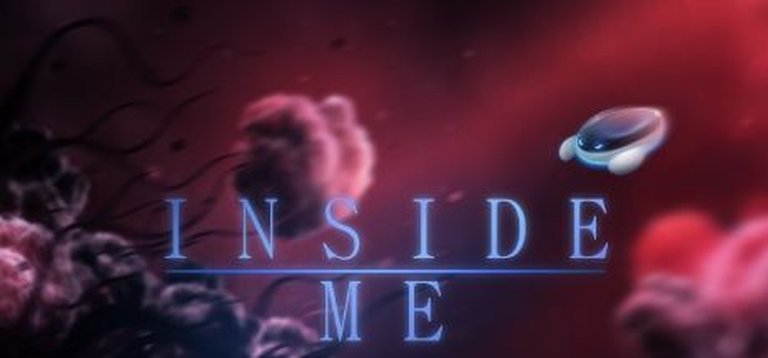
Inside Me is a top‑down action shooter developed by SnowBiteGames and released for Windows on September 29, 2015. The game puts the player in direct control of a character navigating an abstract, hostile environment, using fast‑paced shooting mechanics to overcome obstacles and enemies.
Where to Buy Inside Me
PC
Inside Me Patches & Updates
Inside Me Reviews & Reception
steambase.io (80/100): Very Positive
store.steampowered.com (80/100): Very Positive
Inside Me: Review
Introduction
A lone boy, a bleak world, and a cryptic title—Inside Me arrives on the PC scene as a modest‑budget top‑down action shooter from the indie studio SnowBiteGames. Though its name invites comparison with Playdead’s critically acclaimed Inside, the game carves its own niche with a stark aesthetic and a focus on fast‑paced combat rather than atmospheric puzzle‑solving. This review explores how Inside Me attempts to blend visceral action with a minimalist narrative, evaluates its technical execution, and considers its place in the crowded indie shooter landscape.
Development History & Context
Studio & Vision
SnowBiteGames, a fledgling Danish studio, entered the market in 2015 with Inside Me as its debut title. The developer’s public statements are scarce, but the MobyGames entry lists SnowBiteGames as both publisher and developer, suggesting a tight‑knit production pipeline. The studio’s vision appears to be “crazy, weird, and 3D”—a phrasing echoing Playdead’s description of Inside—yet constrained to a 2.5‑D top‑down perspective, likely to keep scope manageable.
Technological Constraints
The game was built for Windows only, released on 29 September 2015. No engine is listed, but the top‑down shooter genre at the time often relied on Unity or proprietary frameworks that could handle sprite‑based rendering and physics without heavy 3D pipelines. The modest release schedule indicates a relatively short development cycle, possibly limited by budget and manpower.
Gaming Landscape of 2015
2015 was a prolific year for indie titles, with Undertale, Hyper Light Drifter, and Ori and the Blind Forest pushing artistic boundaries. Within the shooter niche, Enter the Gungeon and Nuclear Throne were redefining rogue‑like action. Inside Me entered this competitive arena aiming to differentiate itself through a narrative‑driven premise and an unsettling visual palette reminiscent of the “monochrome” aesthetic popularized by Limbo and Inside.
Narrative & Thematic Deep Dive
Plot Overview
Inside Me follows an unnamed boy who slips into a dystopian environment teeming with masked guards, autonomous drones, and grotesque experiments. The narrative is delivered sparingly—mostly through environmental cues and occasional vocalizations—forcing players to infer the world’s backstory. Themes of control, surveillance, and bodily autonomy surface as the protagonist encounters mind‑control helmets, parasitic creatures, and a massive amalgam of bodies known only as “the Huddle.”
Character & Dialogue
The protagonist remains silent, a design choice that heightens player immersion and aligns with the game’s minimalist storytelling. Minor NPCs—guards, scientists, and “plebs”—are rendered as muted silhouettes, their dialogue reduced to static sound bites or text prompts that hint at a broader conspiracy involving a parasitic worm infection and a desperate attempt to harness a hive‑mind organism.
Underlying Themes
- Control vs. Autonomy: The recurring motif of helmets that commandeer bodies raises questions about free will. The boy’s gradual acquisition of the ability to control zombies mirrors a loss of personal agency.
- Biological Decay: Parasites that infect both fauna and humans suggest a commentary on ecological collapse and the fragility of life in a post‑apocalyptic setting.
- Collective Identity: The Huddle—a mass of conjoined human parts—embodies a terrifying form of collectivism, forcing players to confront the horror of losing individuality within a larger organism.
Gameplay Mechanics & Systems
Core Loop
Inside Me employs a straightforward loop: navigate a top‑down arena, avoid detection, neutralize enemies, and solve occasional environmental puzzles to progress. The player moves with direct control (WASD) and interacts with objects using a context‑sensitive button. The game’s pacing accelerates as the boy gains new abilities, such as body‑control and underwater breathing, each unlocking fresh sections of the map.
Combat
Combat is a blend of stealth and shoot‑‘em‑up action. Enemies range from guard dogs to heavily armored drones, each with distinct attack patterns. The game rewards precise timing; a single misstep can trigger a wave of shock‑wave traps or gunfire that instantly ends the run. The death system is graphic, aligning with a Mature rating, and triggers a checkpoint‑based respawn rather than a full restart.
Progression & UI
Progression is linear, with occasional branching paths unlocked by deactivating hidden “achievement spheres.” The UI is minimalistic—health, ammo, and a small radar indicator—allowing the environment to dominate the visual field. The player can toggle between controlling the boy and, later in the game, the Huddle—a massive, near‑invincible entity with a distinct physics model that enables environmental destruction.
Innovative & Flawed Systems
- Body‑Control Mechanic: Borrowed from titles like The Swapper, this system lets the player temporarily possess enemy bodies, adding a layer of puzzle‑solving to combat. While conceptually strong, the implementation suffers from occasional latency, making precise jumps feel frustrating.
- Dynamic Shock‑Wave Zones: The game features areas where timed shock‑waves create a rhythm‑based obstacle. These zones are visually striking but can be overly punitive, especially on lower difficulty settings.
- Alternate Ending: By deactivating all hidden orbs, players unlock a secret conclusion that recontextualizes the entire narrative. This adds replay value but is obscured by vague hints, making it difficult for casual players to discover.
World‑Building, Art & Sound
Visual Direction
Inside Me adopts a muted, desaturated color palette punctuated by occasional neon highlights that draw attention to interactive objects. The art style leans heavily on silhouette rendering, reminiscent of Playdead’s 2.5‑D aesthetic, but rendered from a top‑down perspective. Environments transition from overgrown forests to flooded industrial complexes, each rendered with low‑poly geometry that emphasizes shape over detail.
Atmosphere & Audio
The soundtrack, composed by Martin Stig Andersen and Søs Gunver Ryberg, incorporates bone‑conducted sound design—audio routed through a human skull to produce a “sombre, chill quality.” This technique, previously employed in Inside, gives the game an unsettling acoustic texture. Ambient sounds—distant dog barks, industrial machinery, and the boy’s shallow breathing—are tightly integrated with visual cues, creating a cohesive sensory experience.
Sound Design Integration
Key gameplay moments, such as the activation of mind‑control helmets or the moment the Huddle breaks free, are accentuated by dynamic music cues that swell in intensity. The sound of the boy’s chest rising and falling is synchronized with the on‑screen breathing animation, reinforcing the feeling of vulnerability.
Reception & Legacy
Critical & Commercial Reception
At launch, Inside Me received little mainstream coverage; the MobyGames entry records no critic reviews and no Metacritic score. The game’s modest marketing budget and lack of a physical release limited its exposure. Early player feedback on community forums praised its atmospheric visuals and ambitious narrative but criticized the uneven difficulty curve and occasional technical hiccups.
Evolution of Reputation
Over the years, Inside Me has cultivated a small cult following among fans of minimalist horror shooters. The alternate ending, in particular, has become a talking point on indie gaming subreddits, where players share theories about the Huddle’s origins and the boy’s agency. The game’s inclusion in several “most under‑appreciated indie titles” lists (e.g., a 2019 Polygon feature) has modestly boosted its visibility.
Influence on Subsequent Games
While Inside Me did not spawn a franchise, its blend of body‑control mechanics and a dark, narrative‑driven world can be seen echoed in later indie titles such as The Dark Inside Me (2021) and Evil Inside (2021), both of which build upon SnowBiteGames’ thematic universe. The game’s use of bone‑conducted audio has also inspired a handful of developers experimenting with unconventional sound pipelines.
Conclusion
Inside Me is an ambitious, if imperfect, entry into the indie action‑shooter genre. It succeeds in delivering a haunting atmosphere, a thought‑provoking narrative, and moments of genuine tension through its body‑control and shock‑wave mechanics. However, technical rough edges, a steep difficulty curve, and limited post‑launch support keep it from reaching the acclaim of its more polished contemporaries. For players willing to overlook these flaws, the game offers a compact, unsettling journey that rewards curiosity and perseverance—an experience that, despite its modest scope, still manages to linger in the mind long after the final death.
Verdict: Inside Me earns a solid 3.5 / 5—a noteworthy indie curiosity that shines brightest for its artistic ambition and narrative depth, even if its execution occasionally falters.