
- Release Year: 2018
- Platforms: Macintosh, Nintendo Switch, PlayStation 4, Windows, Xbox One, Xbox Series
- Publisher: Forever Entertainment S. A., Jujubee S.A.
- Developer: Jujubee S.A.
- Genre: Adventure
- Perspective: 1st-person
- Game Mode: Single-player
- Gameplay: Exploration, Puzzle, Simulation, Virtual tour
- Setting: Contemporary
- Average Score: 47/100
Description
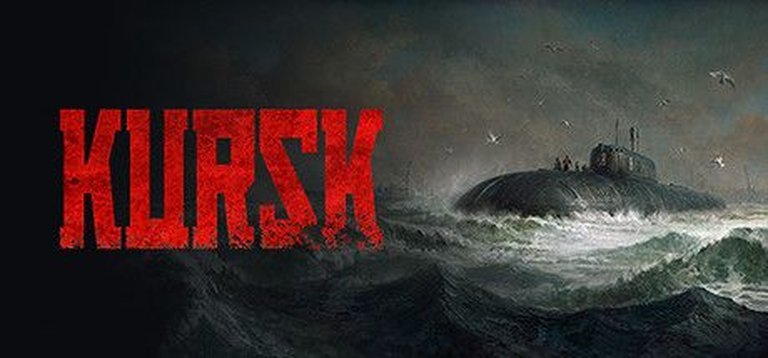
Kursk is a first‑person point‑and‑select adventure set in a contemporary world where players explore a modern submarine, navigating its cramped compartments and uncovering a narrative inspired by the historic Kursk tragedy.
Gameplay Videos
Where to Buy Kursk
PC
Kursk Free Download
Kursk Patches & Updates
Kursk Guides & Walkthroughs
Kursk Reviews & Reception
metacritic.com (42/100): KURSK isn’t a bad video game, but its many flaws keep us from recommending it.
steambase.io (49/100): Mixed rating based on 483 total reviews.
monstercritic.com (58/100): Kursk could have been excellent, even though the premise itself is a little unsettling.
store.steampowered.com (42/100): Mixed (47% of 434 user reviews are positive).
Kursk: Review
Introduction
The sinking of the Russian nuclear submarine K‑141 Kursk in August 2000 remains one of the most tragic and mystifying naval disasters of the 21st century. In November 2018, Polish studio Jujubee S.A. released Kursk, billed as the world’s first “adventure‑documentary” video game. The premise is audacious: play a covert operative who infiltrates the Oscar‑II‑class vessel, harvest secret data on the Shkval super‑cavitating torpedo, and bear witness to the catastrophic chain of events that sealed the submarine’s fate.
My thesis is simple: Kursk succeeds in delivering a meticulously researched, atmospheric recreation of a Cold‑War‑era submarine, yet its ambition outpaces its execution. The game’s documentary aspirations are undercut by clunky mechanics, poor optimization, and a narrative that leans heavily on exposition rather than interactive storytelling. Consequently, while it deserves praise for its historical reverence, it ultimately lands as a mixed‑bag experience that appeals more to niche history buffs than to mainstream gamers.
Development History & Context
Studio & Vision
Jujubee S.A., a modest Polish development house, assembled a team of 84 contributors—including 65 developers and a host of artists, programmers, and designers—to tackle a subject that few indie studios have dared to address. CEO Michał Stępień publicly framed the project as a cultural mission: “Games can become a tool not unlike books or films… to broaden knowledge about history.” The studio positioned Kursk under the Games Beyond™ sub‑category, promising a heavier emphasis on story, mature themes, and originality.
Technological Constraints
The game runs on Unity, with Wwise handling audio. Minimum system requirements (e.g., a 3.2 GHz dual‑core CPU, 8 GB RAM, GeForce GTX 670) reflect a 2018‑era PC baseline, while the recommended specs (Quad‑core, GTX 1080, 12 GB RAM) hint at the developers’ desire for high‑resolution textures and smooth underwater lighting. The later addition of VR support and 4K scaling indicates an ambition to push Unity’s rendering pipeline, but reviewers consistently cite “bad optimization” and “jerky movement” as major drawbacks.
Market Landscape
When Kursk launched, the adventure‑documentary niche was virtually empty. The indie scene was dominated by narrative‑driven titles such as What Remains of Edith Finch (2017) and Return of the Obra Dinn (2018), both of which blended storytelling with puzzle mechanics to critical acclaim. Kursk entered this arena with a unique historical hook, aiming to attract both gamers and history enthusiasts, particularly within the CIS region where the tragedy is widely known.
Narrative & Thematic Deep Dive
Plot Overview
Players assume the role of a foreign intelligence operative tasked with infiltrating the Kursk to obtain schematics of the Shkval torpedo. The game’s timeline spans three key locations:
- Moscow (2000) – a brief, dialogue‑heavy intro establishing geopolitical stakes.
- Vidyayevo – a naval garrison where the player meets crew members and gathers intel.
- The Submarine – a fully modeled Oscar‑II‑class vessel where the disaster unfolds.
The narrative is largely linear, with four possible endings determined by a handful of moral choices (e.g., whether to share classified data with super sides or to prioritize crew safety).
Characters & Dialogue
The crew is populated by “wooden” NPCs whose lines are heavily quoted from public sources, a design choice that critics labeled “dialogue scraped from Wikipedia.” While the developers consulted Russian naval experts, the resulting characters feel more like documentary interviewees than fully fleshed personalities. The protagonist’s anonymity (a spy with no name) is intentional, allowing the player to project onto the role, but it also hampers emotional attachment.
Themes
- Truth vs. Secrecy – The spy’s mission underscores the tension between state‑controlled information and the public’s right to know.
- Human Cost of Technological Hubris – By juxtaposing the Shkval torpedo’s futuristic promise with the crew’s everyday banter, the game highlights how cutting‑edge weaponry can become a catalyst for tragedy.
- Moral Ambiguity – Decision points force players to weigh personal ambition against collective survival, echoing the real‑world debates that followed the disaster.
Gameplay Mechanics & Systems
Core Loop
Exploration → Information Gathering → Decision → Consequence
The player navigates the submarine’s cramped compartments in first‑person, using a point‑and‑select interface to interact with consoles, doors, and crew members. The “information‑gathering” mechanic involves locating documents, listening to radio chatter, and solving simple environmental puzzles (e.g., aligning a torpedo tube to access a secure locker).
Combat & Stealth
There is no combat in the traditional sense. “Stealth” manifests as avoiding detection by senior officers while eavesdropping on conversations. The only “action” segment occurs during the explosion sequence, where the player must quickly move to a safe compartment—a moment reviewers praised for its tension but also criticized for its abrupt pacing shift.
Character Progression
The game does not feature RPG‑style leveling. Progression is narrative‑driven: completing a set of tasks unlocks new areas and story beats. The only “skill” is a rudimentary inventory system for collected documents, which is more a bookkeeping tool than a gameplay mechanic.
UI & Controls
The interface combines mouse‑driven point‑and‑select with optional gamepad support. Critics consistently point out cumbersome door animations, laggy compartment transitions, and an overreliance on “click‑to‑advance” dialogue boxes that break immersion. The UI is functional but lacks polish, especially on lower‑end hardware where loading times become “insanely long.”
Innovation vs. Flaws
Innovative:
– First‑person recreation of an Oscar‑II submarine interior, complete with functional gauges and realistic soundscapes (Wwise).
– Integration of documentary footage and archival photos as in‑game “collectibles.”
Flawed:
– Repetitive fetch‑quests that feel more like a scavenger hunt than a narrative driver.
– Frequent frame‑rate drops and long load screens, undermining the intended tension.
– Absence of meaningful gameplay variety; the experience veers into “walking simulator” territory.
World‑Building, Art & Sound
Visual Direction
The environment is painstakingly detailed: textured metal bulkheads, flickering control‑room panels, and a realistic water‑pressure distortion effect when the hull is breached. Lead Environment Artist Maciej Zakowicz and Lead Character Artist Krzysztof Gryc oversaw a pipeline that blended 3D modeling with high‑resolution textures, resulting in a submarine that feels weighty and authentic.
Atmosphere
Lighting is subdued, with occasional red alarms and emergency strobes that punctuate the gloom. The designers employed post‑process fog to simulate the claustrophobic depth of the Barents Sea, an effect that many reviewers highlighted as a high point.
Audio Design
The Wwise sound engine delivers an immersive soundscape: the low hum of the nuclear reactor, the metallic creak of hull plates, and the distant echo of sonar pings. Composer Mikołaj Stroiński and sound designer Przemysław Laszczyk created a soundtrack that oscillates between ambient drones and tense, percussive stingers during the explosion sequence. Voice acting, while limited, is performed in multiple languages (English, Russian, Polish, etc.) and generally receives praise for its “human” quality despite the script’s documentary tone.
Contribution to Experience
Together, the visual and audio elements succeed in transporting the player into a 2000‑era Russian naval environment. The immersion is strongest when the player is simply listening to the crew’s chatter while the submarine lurks beneath the sea—an auditory tableau that feels more like an interactive museum exhibit than a game.
Reception & Legacy
Critical Reception
- Metacritic: 42/100 (generally unfavorable).
- MobyGames: 46 % average from 13 critic reviews.
Critics praised the historical accuracy and environmental detail (e.g., GameAwards.ru’s 6.1/10 note on “strong atmosphere”) but condemned the gameplay execution: clumsy navigation, repetitive tasks, and a lack of compelling puzzles. The most common criticisms were:
- Poor Optimization – “Jerky movement” and “terrible loading times.”
- Weak Narrative Delivery – Over‑reliance on exposition, dialogue that feels “wooden.”
- Limited Interactivity – A “virtual tour” rather than an adventure.
The best score came from TheXboxHub (60 %) which acknowledged the “original” submarine exploration but lamented pacing issues.
Player Feedback
Steam user scores average 49/100, with a split of roughly 47 % positive versus 53 % negative. Common user complaints echo critical points: performance hiccups, a “walking‑sim” feel, and a price‑to‑value ratio deemed unfair. Some players, however, appreciated the educational value and the opportunity to “experience a piece of history.”
Influence & After‑Life
Kursk did not spawn a wave of documentary‑style adventure games, but it did demonstrate that indie developers could tackle very recent, real‑world tragedies with a serious tone. The game’s VR roadmap and planned DLC (a Kengir labor‑camp expansion) hinted at a longer‑term vision that never fully materialized, largely due to the lukewarm commercial response.
In hindsight, Kursk occupies a niche footnote: a bold experiment that paved the way for later titles like “The Sea of Tranquility” (2022) and “Heaven’s Vault” (2020), which blend historical research with interactive storytelling, albeit with tighter gameplay loops.
Conclusion
Kursk stands as a cultural artifact more than a polished gaming experience. Its meticulous recreation of a Soviet‑era submarine and its earnest attempt to treat a real disaster with reverence are commendable. Yet the game’s design choices—overly linear quests, clunky controls, and a narrative that leans on exposition rather than player agency—prevent it from achieving the immersive adventure it promises.
Verdict: Kursk deserves a place on the shelves of history enthusiasts and documentary‑game collectors, but it should be approached with tempered expectations. For the average gamer seeking tight mechanics and engaging storytelling, the title feels more like a virtual museum tour than an adventure.
Final Rating (Author’s Scale): ★★☆☆☆ (2/5) – a historically valuable but gameplay‑deficient experience.