
- Release Year: 1997
- Platforms: DOS, Windows
- Publisher: Mindscape, Inc., Strategic Simulations, Inc.
- Developer: Strategic Simulations, Inc.
- Genre: Strategy, Tactics
- Perspective: Top-down
- Game Mode: Single-player
- Gameplay: Hex map, Point-and-select, Tank, Turn-based, Unit control, Wargame
- Setting: Historical events, Hypothetical conflicts, Post-war era, World War II
- Average Score: 71/100
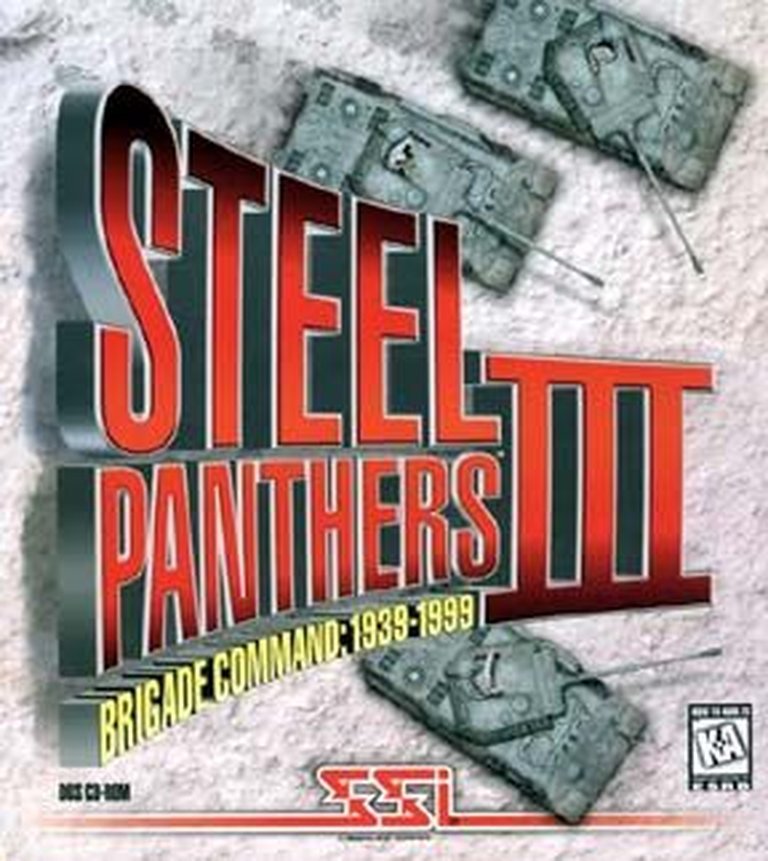
Description
Steel Panthers III: Brigade Command – 1939‑1999 is a turn‑based, top‑down hex‑grid wargame that lets players command armored units across a sprawling historical timeline. Covering World War II, the post‑war era and speculative near‑future conflicts, the game expands battlefield size and command structures while retaining detailed tank combat, leader effects, and a steep learning curve that rewards hardcore wargamers.
Steel Panthers III: Brigade Command – 1939-1999 Patches & Updates
Steel Panthers III: Brigade Command – 1939-1999 Mods
Steel Panthers III: Brigade Command – 1939-1999 Reviews & Reception
mobygames.com (68/100): Improved leaders and command interface, but otherwise not much changed.
metacritic.com : The changes to the system are for the better, but they simply make it feel more like a glorified patch than a new game.
en.wikipedia.org (79/100): One of the best war games running on any operating system.
Steel Panthers III: Brigade Command – 1939‑1999: Review
Introduction
When the strategic wargame market of the mid‑1990s was still dominated by the flashy real‑time titles that promised instant gratification, Strategic Simulations, Inc. (SSI) doubled down on the art of the turn‑based hex‑grid war‑game. Steel Panthers III: Brigade Command (1997) arrived as the third entry in the acclaimed Steel Panthers series, promising a sixty‑year sweep from the opening shots of World War II to speculative conflicts on the cusp of the new millennium. My thesis is simple: the game is a masterclass in depth and historical fidelity for the hardcore wargamer, but its reliance on an aging engine, austere presentation, and steep learning curve keep it firmly in the niche of “hard‑core only.”
Development History & Context
The Studio and Vision
SSI, a veteran of computer wargames, produced the Steel Panthers line under the design leadership of Gary Grigsby and Keith Brors. Both veterans of the genre, Grigsby and Brors had already delivered two successful titles—Steel Panthers (1995) and Steel Panthers II: Modern Battles (1996). Their stated vision for Brigade Command was to expand the tactical scope while preserving the meticulous unit data that defined the series.
Technological Constraints
Steel Panthers III re‑used the Steel Panthers II engine, a DOS‑centric codebase originally built in 1995. By 1997 the industry was transitioning to Windows‑based graphics and 3‑D acceleration; yet SSI stuck with a top‑down hex‑based, 2‑D presentation, employing the Smacker Video middleware for cut‑scenes and the AIL / Miles Sound System for audio. The decision was both pragmatic—allowing rapid development and a larger battle‑field scale (hexes now representing 200 yards instead of the tighter scales of its predecessors)—and a cost‑saving measure that limited graphical innovation.
Market Landscape
In 1997, the tactical wargame market was dominated by titles like Panzer General 3D and Civilization II. Players seeking “quick‑play” strategy gravitated toward those with richer visuals and more streamlined interfaces. SSI’s audience, however, consisted of hard‑core military historians and tabletop enthusiasts who prized depth over polish. The release date (November 26 1997) placed the game in a crowded field, and its DOS‑only nature was noted by CNET Gamecenter as “probably one of the last DOS‑only games we’ll see.”
Narrative & Thematic Deep Dive
Scope of the Campaign
Steel Panthers III spans six primary conflicts, ranging from the North African campaign to the Vietnam War, plus two speculative near‑future scenarios set in 1998‑1999. The game’s narrative is not a linear story but a collection of 40 individual scenarios and six full campaigns, each grounded in meticulous historical research.
Characters & Dialogue
Because the game is a hex‑based wargame, it lacks traditional character development or cinematic dialogue. Instead, its “characters” are unit commanders and leaders, each with a set of leadership attributes that influence morale, initiative, and command radius. The campaign script (written by Richard Donnelly) provides contextual briefings and after‑action reports, giving a sense of narrative continuity without overt storytelling.
Underlying Themes
The core theme is the evolution of armored warfare. By covering 60 years, the game showcases the transition from World War II tank doctrines to Cold‑War and post‑Cold‑War mechanized concepts, including hypothetical future armor. This thematic ambition is reinforced by the historical research teams—James Wirth (ground forces) and Jim Barbin (air forces)—who ensured each unit’s technical specifications were accurate, reinforcing the series’ reputation as a virtual “military encyclopedia.”
Gameplay Mechanics & Systems
Core Loop
- Turn‑Based Hex Movement: Players select a unit, view highlighted movement ranges, and click a destination hex.
- Combat Resolution: Once in range, the player initiates an attack; the engine calculates hit probability using a blend of unit statistics, terrain, morale, and commander skill.
- Command Hierarchy: The game introduces brigade‑level command structures, allowing players to issue orders to entire divisions rather than individual platoons—a step up from Steel Panthers II.
Unit Progression & Leadership
Each unit carries a leader rating that influences initiative, fire‑control, and morale. Leaders can be promoted or replaced, adding a light “progression” element that mirrors real‑world command development.
Interface & UI
The UI is point‑and‑select, with multiple unit control panels. While functional, the interface suffers from low‑resolution sprites and minimal animation, leading critics (e.g., PC Joker) to call it “mager animierten Grafik.” The map editor is a standout feature, allowing players to craft custom scenarios and campaigns, extending replayability.
Innovative / Flawed Systems
- Improved Command Interface: The addition of brigade‑level orders and leader attributes was praised for adding depth.
- Scale Change: Larger battlefields (200‑yard hexes) enable division‑scale engagements but also diluted the tabletop feel that fans of the earlier titles cherished (as noted by GameStar).
- Bug‑Prone Features: Reviewers reported occasional “annoying bugs” and “features” that felt like half‑finished patches rather than fresh content (Online Gaming Review).
World‑Building, Art & Sound
Visual Direction
The game uses SVGA mode (640×480, 256 colors) with static unit icons and simple terrain tiles. The hexagonal map is functional but lacks the visual flair of contemporaries. The Smacker Video middleware provides brief cut‑scenes, but these are more utilitarian than cinematic.
Audio Design
Music and sound effects were directed by Ralph Thomas and Maurice Jackson, with the Samsara Project credited for composition. The sound engine (AIL / Miles Sound System) delivers basic engine roars and gunfire, but the overall audio palette is modest, reflecting the game’s focus on data over sensory immersion.
Atmosphere & Immersion
Despite modest graphics and sound, the immense unit encyclopedia (covering ground and air forces) creates a scholarly atmosphere. Players are encouraged to peruse the in‑game reference material, turning each session into a learning experience as much as a tactical contest.
Reception & Legacy
Critical Reception
- Metacritic: No aggregate score (data missing).
- MobyGames: 68 % average from 13 critic reviews; player score 3.0/5.
- Top Scores: Electric Games (87 %), Power Play (78 %).
- Mixed to Negative: Computer Gaming World (60 %), PC Player (53 %).
Critics praised the depth of the unit database, the scenario editor, and the historical accuracy. However, many lamented the lack of substantive innovations over Steel Panthers II and the dated engine. PC Gamer US called it a “missed opportunity,” while CNET Gamecenter nominated it for “Strategy/War Game of the Year,” ultimately losing to Age of Empires.
Commercial Performance
Exact sales figures are scarce, but the game’s MobyScore (6.7) and modest ranking (≈ #18 k of 27 k games) suggest a niche commercial success—enough to sustain a dedicated fanbase but not a mainstream hit.
Influence on Subsequent Titles
The game’s brigade‑level command system and scenario editor influenced later SSI and TalonSoft titles, including the Steel Panthers IV (Windows‑95) and the Gary Grigsby’s War in Russia series. Its emphasis on historical fidelity set a benchmark for later wargames like Combat Mission and Advanced Squad Leader digital adaptations.
Community & Longevity
The Play‑by‑E‑mail (PBeM) multiplayer option and the Campaign Disk add‑on extended the game’s lifespan. Community‑driven scenario packs and the inclusion in Ultimate Wargame Collections keep the title accessible to enthusiasts today.
Conclusion
Steel Panthers III: Brigade Command stands as a paragon of tactical depth and historical rigor in the late‑90s wargame arena. Its brigade‑scale command, exhaustive unit data, and robust scenario editor make it a treasure for the dedicated strategist. Yet, its reliance on an aging DOS engine, minimalist graphics, and steep learning curve render it inaccessible to casual players and limit its broader cultural impact.
Verdict: Steel Panthers III is a must‑play for hardcore wargamers and military historians, but a hard pass for anyone seeking a polished, entry‑level strategy experience. Its place in video‑game history is secured as a bridge between classic tabletop wargaming and the emerging digital era, influencing the design of later granular tactical simulators while reminding us that depth can sometimes outweigh visual flair.