
- Release Year: 2023
- Platforms: Android, Linux, Macintosh, Windows
- Publisher: Choice of Games LLC
- Developer: Choice of Games LLC
- Genre: Adventure
- Perspective: Text-based / Spreadsheet
- Game Mode: Single-player
- Gameplay: Interactive fiction, Menu structures, Point and select, RPG elements, Text adventure
- Setting: Fantasy
Description
Escape from Death is a ChoiceScript‑powered interactive fiction adventure set in a fantastical afterlife. Players navigate a surreal, fantasy‑filled world populated by quirky animal‑human hybrids and other strange citizens, making branching choices that shape their destiny and uncover the mysteries of the realm beyond death.
Where to Buy Escape from Death
PC
Escape from Death Mods
Escape from Death Guides & Walkthroughs
Escape from Death: Review
Introduction
When Choice of Games announced Escape from Death for October 12 2023, the buzz on the studio’s forums hinted at a convergence of two of the medium’s most beloved traditions: sprawling, lore‑rich world‑building and the player‑driven freedom of interactive fiction. The premise—steal Death’s power, hide your heartbeat from the dead, and either escape the Afterlife or seize its throne—reads like a gothic‑fantasy manifesto, and the final product delivers a 256 000‑word, text‑only adventure that feels simultaneously intimate and epic. My thesis is simple: Escape from Death succeeds as a narrative experience, but its reliance on dense stat mechanics and a purely textual interface creates a steep learning curve that may alienate newcomers to the genre, while rewarding veterans with a richly layered story and a surprisingly robust RPG‑style system.
Development History & Context
Studio & Publisher
Escape from Death was both developed and published by Choice of Games LLC, a veteran of the interactive‑fiction market known for titles such as Choice of the Dragon and The Hero of Kendrickstone. The studio’s business model—commercial, download‑only releases on Windows, macOS, Linux, and Android—has cultivated a dedicated audience that values narrative depth over graphics.
Creative Vision
The game’s writer, Tova Näslund, first conceived the Afterlife setting during her teenage years, inspired by Neil Gaiman’s Anansi Boys and Holly Black’s Modern Faerie Tales. In an October 9 2023 interview on the Choice of Games forum, Näslund described the world as a “nightmarish Afterlife” where “oppression and injustice pervade under Death’s absolute control.” Her background in tabletop RPG design (notably the scenario “Acceptable Losses” for Pelgrane Press) informed the game’s hybrid structure: a text adventure with full‑blown RPG elements, including character customization, stat tracking, and multiple branching endings.
Technological Constraints
The title runs on ChoiceScript, a domain‑specific language created by Dan Fabulich (credited for the engine). ChoiceScript imposes a menu‑based, point‑and‑select UI, which limits visual presentation to text and simple menus. While this constraint preserves the “fuel of imagination” that the official description touts, it also means the game lacks any graphical or auditory cues, relying entirely on prose to convey atmosphere.
Market Landscape
In 2023, the interactive‑fiction market was crowded with both indie and studio releases, ranging from short “choose‑your‑own‑adventure” titles to massive narrative epics. Escape from Death entered a niche that had recently seen successes like A Winter’s Promise (Choice of Games) and The Lost Heir (Hosted Games). Its horror‑fantasy blend positioned it alongside titles such as Planescape: Torment (cited by community members) and The Dark Eye adaptations, appealing to players seeking a darker, more politically charged setting.
Narrative & Thematic Deep Dive
Plot Overview
The player’s physical body hovers between life and death, heart still beating, while the spirit is thrust into the Afterlife—a realm ruled by a bureaucratic Death, embodied by the charismatic Aaron. The social hierarchy is stark: Penitents (animal‑human hybrids indebted to Death) occupy the lowest rung, while the Elect enjoy luxury and entitlement. A mysterious corruption spreads: missing performers, a besieged sanctuary, and a strange sickness. The central location, Clockwork Hall, houses Death’s Court and the repository of souls. The player can pursue three overarching goals:
- Escape back to the living world.
- Overthrow Death’s regime.
- Seize the throne of the Afterlife.
Characters & Relationships
Näslund’s long‑standing attachment to the world’s inhabitants shines through the cast:
- Aaron, the “Death” figure, is a bureaucrat rather than a grim reaper, offering a nuanced antagonist.
- Gavin, a revolutionary bird‑woman, embodies the radical opposition.
- Desi, a melancholy Penitent guide, provides a personal, emotional anchor.
The game allows romance with any of these characters, regardless of gender or sexual orientation, reflecting the studio’s commitment to inclusivity. Community feedback (forum posts from October 2023) praised the depth of these relationships, noting that the four side characters feel like “old friends” to the author.
Themes
Escape from Death explores several interwoven themes:
- Power and Corruption – Death’s absolute rule mirrors authoritarian regimes, while the Clockwork Hall functions as a metaphor for institutional control.
- Identity and Hybridization – Penitents’ animal‑human forms raise questions about humanity, debt, and loss of self.
- Memory and Soul Magic – The mechanic of “capturing memories of the living” underscores the importance of personal history in a realm where the past is constantly erased.
- Political Intrigue – Factional conflict between the Penitents and the Elect mirrors real‑world class struggles, offering players moral choices that affect the Afterlife’s fate.
The horror element is subtle, manifesting more in existential dread and oppressive atmosphere than jump‑scares. The game’s description as an “interactive horror adventure novel” aligns with this psychological approach.
Gameplay Mechanics & Systems
Core Loop
The primary loop consists of reading prose → making a choice → updating stats → branching narrative. Choices are presented via a menu structure, with hidden stat checks that influence outcomes. The game’s 256 000‑word length translates into roughly 10–12 hours of reading for a single playthrough, depending on the player’s speed and the number of side paths explored.
RPG Elements
- Stat System – Players manage a suite of sliders (e.g., Courage, Charm, Soul Magic). A user review on Backloggd highlighted “stat disease”: many stats remain static early on, making early choices feel opaque. However, the system rewards careful planning; high‑impact choices (e.g., infiltrating Death’s Court) require specific stat thresholds.
- Character Customization – Gender (male, female, nonbinary) and sexuality (gay, straight, bi) are selectable at the start, influencing dialogue options and romance possibilities.
- Progression – As the player advances, new abilities (e.g., “veil sight”) unlock, granting access to hidden narrative branches.
Interface & UI
The menu‑based point‑and‑select interface is typical of ChoiceScript titles. While functional, it can feel “spreadsheet‑like” to newcomers, especially when navigating long lists of options. The lack of visual cues places the burden of immersion on the prose itself.
Innovation vs. Flaws
- Innovation – The integration of soul magic as a gameplay mechanic (capturing memories, glimpsing the veil) adds a fresh layer to the interactive‑fiction formula. The political intrigue system, with spies, alliances, and sabotage, mirrors tabletop RPG campaign dynamics.
- Flaws – The heavy reliance on hidden stat checks can lead to “choice paralysis.” Players may feel that outcomes are arbitrary unless they meticulously track their stats, a point emphasized by the Backloggd reviewer. Additionally, the pure text presentation may deter players accustomed to visual novels or graphic‑rich RPGs.
World‑Building, Art & Sound
Setting
The Afterlife is a fantasy‑horror realm divided into distinct districts: the opulent Elect’s citadel, the gritty Penitent slums, and the enigmatic Clockwork Hall. The world feels lived‑in, with references to a “luxurious entertainment center,” a “sanctuary under attack,” and a spreading “mysterious sickness.”
Visual Direction
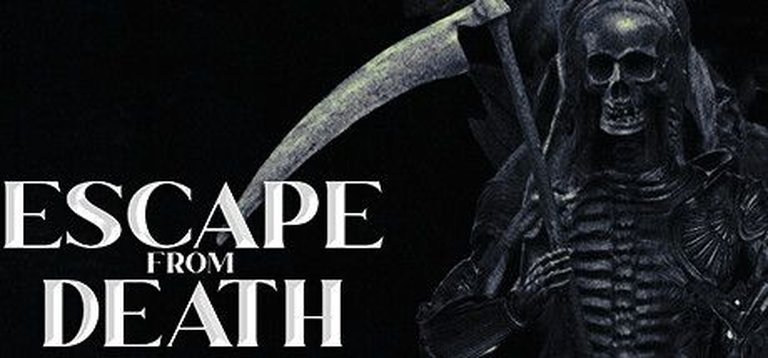
Because the game is text‑only, visual world‑building is achieved through descriptive prose and occasional art by George Cotronis (credited as “Art”). The cover art—a stylized grim reaper—sets a dark tone, though the in‑game description subverts the traditional reaper archetype, portraying Death as a bureaucrat named Aaron.
Sound Design
No sound effects or music are present; the “full audio” tag on Steam merely indicates the text is read aloud by the player’s system TTS (text‑to‑speech) if desired. This design choice reinforces the reliance on imagination, but it also means atmospheric tension must be conveyed solely through writing.
Contribution to Experience
The combination of rich, lyrical writing and intricate world details creates an immersive experience that compensates for the lack of audiovisual assets. Players who enjoy reading and visualizing their own settings will find the world compelling, while those who prefer sensory feedback may feel the experience is “dry.”
Reception & Legacy
Critical Reception
At the time of release, Escape from Death did not receive mainstream critic reviews (Metacritic and OpenCritic lists are empty), reflecting the niche nature of interactive fiction. However, the game earned 18 Steam achievements, indicating a modest but engaged player base.
Player Feedback
- Positive – Forum comments praised the “surprising overlap between interactive fiction and TTRPGs,” the “rewardingly warm” characters, and the “epic and complex” narrative. The author interview highlighted the “fantastic setting” and “well‑mapped‑out personalities.”
- Mixed – A Backloggd reviewer noted a mismatch between the horror‑themed marketing and the “strange‑lands” fantasy vibe, as well as the “stat disease” issue that made early gameplay feel opaque.
- Negative – Only one negative user review surfaced on Steam, focusing on the steep learning curve of the stat system.
Commercial Performance
MobyGames records only 2 collected players and a modest price point ($4.89–$6.99). The game’s presence on multiple platforms (Windows, macOS, Linux, Android) suggests an attempt to reach a broad audience, but the limited sales data hints at a niche commercial impact.
Influence
While Escape from Death has not yet spawned direct imitators, its blend of political intrigue, soul‑magic mechanics, and inclusive character customization may inspire future Choice of Games titles and other indie interactive‑fiction projects. The game’s ambitious word count (256 000) sets a benchmark for narrative depth within the medium.
Conclusion
Escape from Death stands as a high‑concept, narrative‑driven adventure that showcases the strengths of ChoiceScript: deep world‑building, player agency, and inclusive storytelling. Its thematic richness—examining power, identity, and memory—offers a rewarding experience for readers who relish complex plots and moral ambiguity. However, the heavy reliance on hidden stats and a purely textual interface creates a barrier for newcomers and may explain its modest commercial footprint.
Verdict: Escape from Death earns a solid place in the annals of interactive fiction, particularly as a benchmark for integrating RPG mechanics into a text‑only format. For veterans of the genre, it is a compelling, lore‑dense odyssey; for newcomers, patience and a willingness to engage with the stat system are essential. In the broader history of video games, it will be remembered as a cult‑classic that pushed the boundaries of what a text adventure can achieve.