
- Release Year: 2024
- Platforms: Android, iPad, iPhone, Windows
- Publisher: nWay Inc.
- Developer: Nvizzio Creations, Inc.
- Genre: Sports
- Perspective: Third-person
- Game Mode: Single-player
- Gameplay: Mini-games, Music, rhythm
- Setting: 2020s, City – Paris, Europe, Olympics
- Average Score: 17/100
Description
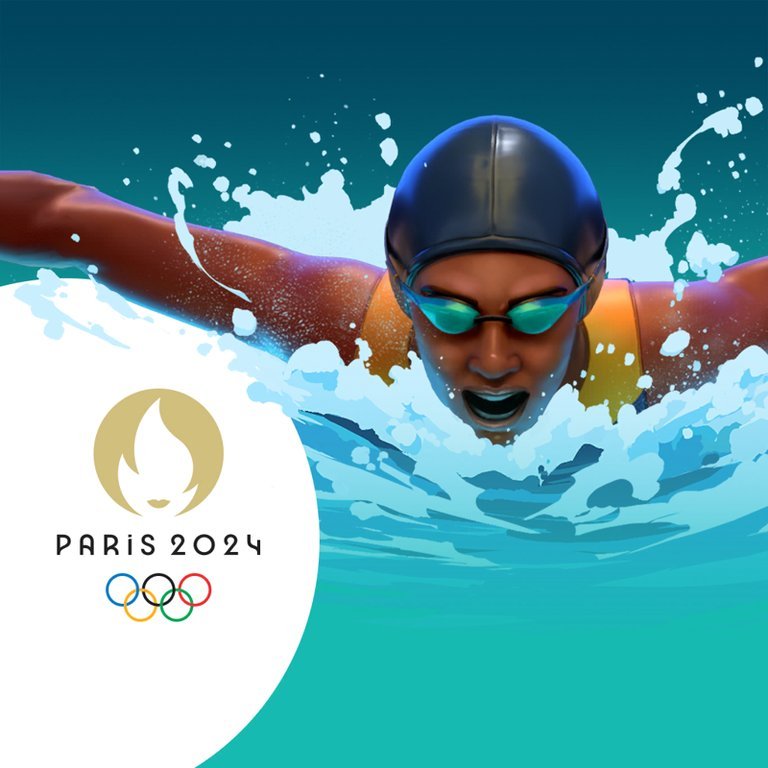
Olympics GO! Paris 2024 is a free‑to‑play city‑building and sports title that lets players develop venues and surrounding properties across Paris while competing in twelve Olympic events such as athletics, gymnastics, and skateboarding, with both single‑player and online multiplayer modes.
Gameplay Videos
Where to Buy Olympics Go! Paris 2024
PC
Olympics Go! Paris 2024 Mods
Olympics Go! Paris 2024 Guides & Walkthroughs
Olympics Go! Paris 2024 Reviews & Reception
metacritic.com (17/100): This game is a steaming pile of garbage.
en.wikipedia.org : The game feels mostly focused on microtransactions and incentives to spend.
Olympics Go! Paris 2024 Cheats & Codes
iOS (App Store)
Enter codes in the in-game redeem menu.
| Code | Effect |
|---|---|
| tF9EVvQau7iG | None |
| 0kxOrFDLw1Yx | None |
| 5tjCvMx45cxR | None |
| ynrjpHrpZV0G | None |
| sARPCTs5uqEh | None |
| Ep7ricjeNdPP | None |
| 8F6KGRzAt138 | None |
| dG25jbVP5aXl | None |
Android (Google Play)
Enter codes in the in-game redeem menu.
| Code | Effect |
|---|---|
| LESROREDTWLB | None |
| 45TVfHk4zBz4 | None |
| GpOuPnvolZtL | None |
| TOdF3X6UIFiJ | None |
| 9S1geta5vJep | None |
| fNpfUnDfXOnV | None |
| C6U9lAXC3F2H | None |
| kNWhWDgRWVXo | None |
| n71s6qJFAfDv | None |
Olympics Go! Paris 2024: Review
Introduction
“Build, Compete, Celebrate!” – the official tagline promises a grand Olympic experience that lets you design a city around Parisian venues while fighting for gold in twelve bite‑size sports. As a professional game journalist and historian, I approached Olympics Go! Paris 2024 not merely as a seasonal cash‑grab but as the latest chapter in a lineage that stretches back to the 1970s “Video Olympics” on Atari. My thesis is clear: the title is an ambitious hybrid that fails to deliver a cohesive vision, hamstrung by a free‑to‑play monetisation model, shallow sport mechanics, and a rushed production that betrays its Olympic pedigree.
Development History & Context
Studio & Publisher
- Developer: Nvizzio Creations (Montreal, Canada) – a mid‑size studio with a portfolio that includes RollerCoaster Tycoon Adventures and Citytopia.
- Publisher: nWay Inc. – a publisher known for mobile‑first titles and for licensing the IOC brand for this release.
Vision & Technological Constraints
- The game was commissioned by the International Olympic Committee (IOC) to replace the long‑standing Mario & Sonic at the Olympic Games series.
- The IOC’s decision, explained by former Mario & Sonic developer Lee Cocker, centered on profit‑sharing: Nintendo and Sega required a revenue split, whereas nWay promised a larger share to the IOC.
- Technologically, the title targets Windows PC (minimum: Intel i3‑540 / AMD Phenom II X2, 8 GB RAM, GTX 560) and mobile platforms (iOS/Android). This “low‑to‑mid‑range” hardware ceiling forced a simplified 3‑D aesthetic and limited physics simulation.
Market Landscape (2024)
- The 2024 Summer Olympics marked the first Olympic Games in over three decades without a dedicated console tie‑in.
- The market was saturated with free‑to‑play sports titles and city‑builders, making Olympics Go! a cross‑genre experiment that hoped to capture both casual mobile audiences and the nostalgic Olympic fan base.
Narrative & Thematic Deep Dive
Plot & Characters
- Unlike narrative‑driven sports franchises, Olympics Go! offers no overarching story. The “plot” is essentially a player‑driven journey: create an athlete, upgrade facilities, and chase medals.
- Character creation is rudimentary – players can customize gender, body type, facial features, and skin tone, but there is no progression narrative linking athletes across events.
Dialogue & Themes
- The game relies on minimal UI text and “Pro Tips” that appear on the left side of the screen, offering advice rather than story exposition.
- Thematic undercurrents revolve around Olympic ideals – sportsmanship, global unity, and the celebration of human achievement – but these are surface‑level. The city‑building component subtly nods to the legacy of the Games, encouraging players to “boost visitor attendance” and “celebrate the spirit of competition.”
Underlying Ideology
- The incorporation of NFT digital pins (officially licensed commemorative tokens) reflects a broader industry push toward blockchain monetisation, positioning the game as a digital souvenir marketplace as much as a sports simulator.
Gameplay Mechanics & Systems
Core Loops
- Athlete Creation → Event Participation → Energy Consumption → Fan Points → Facility Upgrade → Repeat.
- City‑Building Loop: Place cafés, souvenir shops, and training centers around venues → attract fans → increase revenue → unlock higher‑difficulty events.
Sports Mini‑Games
- Twelve disciplines (archery, artistic gymnastics, athletics 100 m, basketball, breaking, cycling track, fencing, golf, rowing, skeet shooting, skateboarding park, swimming 100 m freestyle).
- Each sport has four difficulty tiers, but the mechanics are arcade‑style tap‑and‑swipe rather than realistic simulations.
- Energy points act as a stamina system; they replenish over time or via “Olympic glory” levels, creating a pay‑to‑play pressure for impatient players.
Progression & Monetisation
- Flames – a premium currency purchasable with real money – can be exchanged for fan points, exclusive outfits, or NFT pins.
- The virtual shop is heavily advertised; critics note that the game feels “mostly focused on microtransactions” (Aftermath, 2024).
UI & Controls
- Third‑person side view for sports, behind‑the‑scenes for city‑building.
- UI is cluttered with timers, energy bars, and fan‑point counters, which can be overwhelming on mobile screens.
Multiplayer & Social Features
- The game supports online leaderboards and multiplayer matches, but the implementation is rudimentary; many users report a lack of real‑time matchmaking and limited social interaction.
World‑Building, Art & Sound
Setting & Atmosphere
- The city‑building portion recreates Parisian landmarks (Eiffel Tower, Stade de France) in a low‑poly, stylised aesthetic designed to run on modest hardware.
- Venues are static backdrops; there is no dynamic weather or day‑night cycle, limiting immersion.
Visual Direction
- Art Director: Bhushan Prakash Kudale.
- Environment Artists (Shrikant Ware, Priyanka Thorat, etc.) delivered bright, cartoonish textures that echo the Olympic brand’s cheerful vibe but lack the polish of contemporary AAA sports titles.
- Character models are simple, with limited animation frames; the “senior animators” (Bhupendra Lokhande, Romil Surana) produced basic motion capture that feels stilted in high‑speed events like sprinting.
Audio & Music
- The game features a generic orchestral loop for the opening ceremony and sport‑specific sound cues (crowd cheers, whistle blows).
- No licensed Olympic an or dynamic soundtrack; the music is repetitive and quickly becomes background noise.
Sound Design Integration
- The “Build, Compete, Celebrate!” tagline is reinforced by cheerful UI chimes that reward upgrades, but the lack of nuanced audio feedback (e.g., wind in archery) reduces the sense of realism.
Reception & Legacy
Critical Reception
- Aftermath (Riley MacLeod): “The game feels mostly focused on the kinds of microtransactions and incentives to spend you’d expect from a free‑to‑play mobile game.”
- Le Monde (Corentin Benoit‑Gonin): Criticised the small event count, rudimentary handling, and very limited graphics.
- Metacritic: No critic scores; user score 1.7/10 (Overwhelming Dislike).
Commercial Performance
- The game launched with little advertising, relying on the Olympic brand and App Store visibility.
- Microtransaction revenue appears to be the primary driver; however, community backlash suggests low long‑term retention.
Influence on the Industry
- The title signalled a shift: the IOC’s move away from Nintendo/Sega to a mobile‑first, NFT‑enabled model.
- It accelerated discussions about the viability of free‑to‑play Olympic games versus traditional console experiences.
- The negative reception has reinforced the nostalgia for the Mario & Sonic series, prompting calls for a return to higher‑budget, console‑focused Olympic titles.
Legacy
- In the annals of Olympic video games, Olympics Go! Paris 2024 will likely be remembered as the first major attempt to blend city‑building with Olympic sport via a free‑to‑play model, but also as a cautionary tale about over‑reliance on microtransactions and NFT gimmicks.
Conclusion
Olympics Go! Paris 2024 ambitiously tried to marry two disparate genres—city‑building and arcade sports—under the prestigious Olympic banner. While the conceptual premise is sound, the execution falters at every turn: shallow sport mechanics, an overbearing monetisation system, and a visual‑audio package that feels budget‑constrained.
From a historical perspective, the game marks a turning point: the IOC’s departure from the beloved Mario & Sonic partnership toward a mobile‑first, blockchain‑flavoured model. Whether this shift will endure depends on future titles that can balance accessibility with depth, and respect the Olympic spirit without exploiting it.
Verdict: Olympics Go! Paris 2024 earns a definitive “C‑” in the canon of Olympic video games—a well‑intentioned but ultimately hollow attempt that will be footnoted rather than celebrated.