
- Release Year: 2020
- Platforms: Macintosh, Nintendo Switch, PlayStation 4, Windows Apps, Windows, Xbox One
- Publisher: Humble Bundle, Inc., X.D. Network Inc.
- Developer: Sunhead Games
- Genre: Action
- Perspective: Diagonal-down
- Game Mode: Single-player
- Gameplay: Puzzle elements, RPG elements
- Setting: Fantasy
- Average Score: 81/100
Description
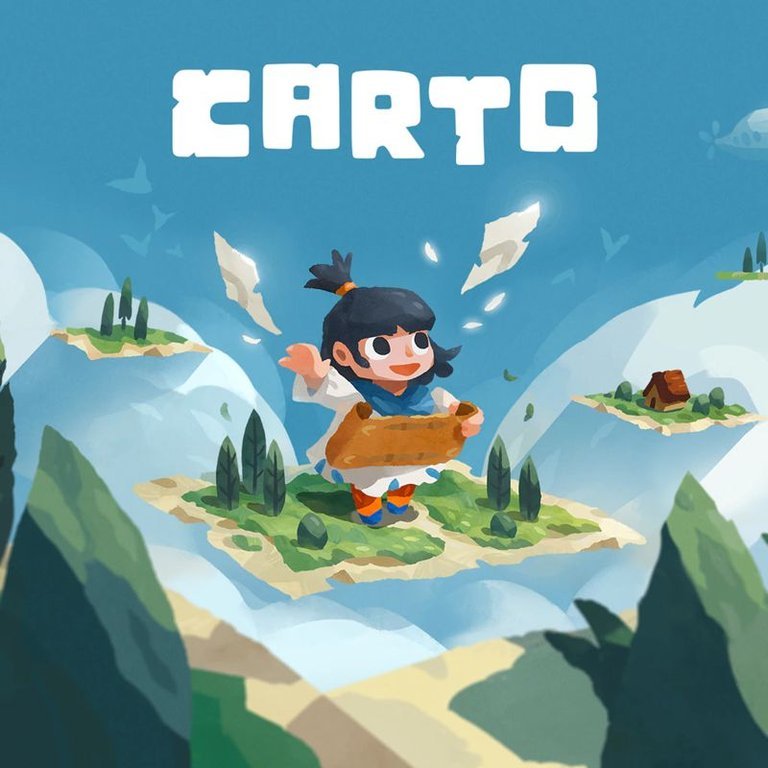
Carto is a whimsical puzzle-adventure game where players control a young girl named Carto who uses magical map-shifting mechanics to navigate a beautifully hand-drawn fantasy world. Through exploring diverse regions inspired by global cultures and listening to campfire folktales, she uncovers a heartfelt story about family, identity, and growing up, all presented with a charming art style and a soothing soundtrack that creates a relaxing, feel-good experience.
Gameplay Videos
Where to Buy Carto
Carto Guides & Walkthroughs
Carto Reviews & Reception
metacritic.com (79/100): Carto’s creativity is constantly on display in ways that surprised and delighted me essentially at every turn.
en.wikipedia.org (79/100): adorable, pleasant, and deceptively tricky game
opencritic.com (77/100): Carto’s heartwarming story is backed by its inventive (and challenging) take on puzzles and exploration
gameravenreview.com (90/100): Carto is a delightful puzzle game that is a children’s book come to life.
Carto: A Cartographic Journey Through Heart and Mechanics
1. Introduction: The Map Is Not the Territory, But the Story
In a medium often obsessed with power fantasies and combat loops, Carto emerged in 2020 as a quiet revolutionary—a game that dared to suggest that the most profound adventures lie not in conquering worlds, but in gently reshaping them. Developed by the diminutive Taiwanese studio Sunhead Games, Carto is a puzzle-adventure game that turns the very concept of a map from a static user interface into a dynamic, narrative engine. At its core, it is the story of a young girl separated from her grandmother, a cartographer, after a storm washes her ashore on a mysterious archipelago. Yet, its genius lies in how this simple premise is inextricably woven into a gameplay mechanic inspired by the board game Carcassonne, where placing tiles literally alters the landscape you traverse. This review will argue that Carto stands as a landmark in indie game design, a title that masterfully integrates its central mechanic with themes of family, cultural discovery, and personal growth. However, its brilliance is not without its fissures, as a mid-game lull and repetitive puzzle design prevent it from achieving the consistency of its most inspired moments.
2. Development History & Context: A Small Studio’s Grand Design
Carto is the product of Sunhead Games, a Taipei-based independent studio founded in 2012. The project was helmed by director and game designer Lee-Kuo Chen, with a core team of just four developers (Chen, Chia-Yu Chen, Kuan-Hung Chen, and Eddie Yu) augmented by a handful of remote contractors. Development began in September 2016 and spanned over four years before its release on October 27, 2020, for Windows, PlayStation 4, Xbox One, and Nintendo Switch.
Chen’s vision was multifaceted. Mechanically, he revisited a notebook concept outlined as “Like Carcassonne, but you are able to travel on the tile you place.” This seed grew into a game where the player’s actions on a abstract map screen have immediate, tangible consequences in the game world. Thematically, Chen sought to create a “believable world,” drawing profound inspiration from the French artbook L’Atlas des géographes d’Orbae. This influence manifests in the game’s commitment to distinct, culturally-inspired biomes and tribes, each with unique customs and aesthetics, avoiding generic fantasy tropes.
Technologically, the team utilized the Unity engine and FMOD for sound, tools accessible to a small indie team but demanding of creative ingenuity to achieve a distinctive visual and auditory identity. The game’s release in October 2020 placed it within a burgeoning “cozy game” movement, accelerated by the global pandemic’s demand for comforting, low-stress digital experiences. Published by Humble Games (now Humble Bundle, Inc.), Carto benefited from a platform holder known for curation of inventive indie titles, though its commercial performance appears modest based on MobyGames data (93 collectors, $19.99 standard price).
3. Narrative & Thematic Deep Dive: A Journey of Maps and Self
The narrative of Carto is deceptively simple but emotionally resonant. The protagonist, a young girl named Carto (a portmanteau of “cartographer” and her name), is separated from her grandmother during a violent tempest. Washed ashore on a fragmented, mystical archipelago, her goal is to reunite with her elder. This premise immediately establishes core themes: familial bonds, the anxiety of separation, and the courage required to venture into the unknown.
The plot is delivered episodically. Each “island” or biome Carto visits is home to a unique tribe—inspired by real-world cultures like the Māori, Mongolian, and various African and Pacific Islander societies—with their own folklore, problems, and ways of life. Carto’s primary interaction is helping these tribes by solving puzzles rooted in their specific cultures, such as locating a villager’s lost home or mediating a dispute. Through these interactions, the game explores community, mutual aid, and cultural appreciation. Critic Will Aickman of Adventure Gamers perfectly captured this, calling it “a warm, fuzzy journey into the not-so-wild blue yonder to discover what it means to be far from home.”
The tile-placement mechanic is not merely a gameplay gimmick; it is the narrative’s physical manifestation. To progress, Carto must literally piece together the broken world, both geographically and socially. Her ability to reshape the map parallels her emotional journey from a lost child to a confident problem-solver who understands her place in a wider world. The finale, where she must use all she has learned to finally return home, ties the mechanic to a poignant theme: leaving home to find yourself, and the bittersweet nature of return. As Edge magazine noted, the game “explores how friendships can be an anchor when we feel cast adrift, but it’s also about the joy of finding your way in the world… of summoning the will and courage to seek new adventures even when that means leaving behind places and people you hold dear.”
However, the narrative delivery is minimalist. Dialogue is sparse, and character development often occurs in short, charming vignettes. This suits the game’s contemplative pace but may leave players craving deeper connections with the tribes they assist. The writing, credited to Lee-Kuo Chen and Nick Suttner with narrative assistance from others, is serviceable and often charming, but its primary function is to scaffold the gameplay and world-building rather than drive a complex plot.
4. Gameplay Mechanics & Systems: The Genius of the Tile
The soul of Carto is its core tile-placement puzzle system, a direct descendant of Carcassonne but with a transformative twist. At any time, the player can pause to pull up Carto’s magical map, a grid of empty slots and discovered tiles depicting different terrain types (forests, rivers, deserts, villages, etc.). By dragging and rotating these tiles, the player directly alters the geography of the game world in real-time. Place a river tile connecting two previously separate bodies of water, and a boat will now appear, allowing Carto to cross. Place a forest tile next to a hunter’s path, and he can now reach his hunting grounds. The environment is not a backdrop but a responsive puzzle.
This mechanic is introduced gently. Early puzzles are straightforward: create a path, bridge a gap. However, the game’s design brilliance is in how it iterates and layers complexity. New elements are introduced per biome: wind that blows tiles in a direction, special tiles that must be placed in specific patterns, or NPCs that require multiple, sequential tile placements to solve their problem. The puzzles become “deceptively tricky,” as Game Informer’s Marcus Stewart noted, requiring spatial reasoning and an understanding of cause-and-effect across the map.
The gameplay loop is satisfying: explore a beautiful, static biome → encounter an NPC or obstacle → open the map → manipulate tiles to create a solution → watch the world change and the problem resolve → gain a new map piece or story beat → progress to the next area. This loop is the game’s primary engine of progression, replacing traditional combat or dialogue trees.
Yet, this is where Carto reveals its most significant flaw: repetition and pacing. Multiple critics, most notably Nintendo Life, identified a mid-game slog where the novelty of the tile-placing begins to feel formulaic. “It runs out of steam in the mid-game and succumbs to repetition far too swiftly,” their review states. The puzzle design, while clever, rarely evolves beyond the established formula of “connect X to Y” or “surround Z.” The lack of a secondary gameplay layer—such as a currency, skill tree, or combat—means the core mechanic must carry the entire 5-7 hour experience, and it begins to feel thin around the halfway point. The “chill” atmosphere becomes a double-edged sword; the low-stakes puzzles can feel like chores when their initial wonder fades.
The UI is clean and intuitive, with a simple radial menu for map access and clear tile indicators. The direct control scheme works well on both controller and mouse. Character progression is purely narrative-based; Carto gains no new abilities, reinforcing the theme that her wit and the map are her only tools.
5. World-Building, Art & Sound: A Cozy, Hand-Drawn Tapestry
If the gameplay is Carto’s engine, its world, art, and sound are its soul, and here the game is virtually unimpeachable. The visual style is lush, hand-drawn, and watercolor-esque, evoking the feeling of a storybook come to life. Each biome has a distinct, saturated palette and unique architectural and sartorial details for its inhabitants. The “Desert of Whispers” glows with warm oranges and purples, while the “Forest of Echoes” is a serene green expanse. The character and creature designs are adorable and expressive, supporting the game’s “impossibly cute” aesthetic, as cited by Adventure Gamers.
This art direction does heavy lifting for the world-building. The tribal cultures, while fictionalized, are rendered with clear care and aesthetic inspiration, making each new area a visual delight to discover. The animation is smooth and charming, from Carto’s bouncy run to the quirky idle animations of NPCs. Critic Sam of “Use a Potion!” succinctly summarized this triumph: “Everything about Carto’s world coming together nicely to put a big smile on player’s faces.”
The sound design and soundtrack, composed by Eddie Yu, are equally essential. The soundtrack features over 30 original tracks, each carefully matched to a biome’s mood—melancholic reeds for the marshes, playful woodwinds for the meadows, mysterious chimes for the ancient ruins. The soundscape is rich with environmental noises: crashing waves, rustling leaves, chirping birds, and the distinct, cheerful vocalizations of the various tribes (which communicate in a playful, non-linguistic gibberish). This audio-visual synergy creates a profoundly cozy and immersive atmosphere. It’s the ideal game for relaxation, as Polygon’s Julia Lee noted, “the ideal game for sitting curled up in 20 blankets and drinking tea while solving some map puzzles.”
Together, these elements forge a world that feels simultaneously foreign and welcoming, mysterious and safe—a perfect match for the game’s thematic ambitions.
6. Reception & Legacy: A cult Classic with a Divided Home
Upon release, Carto received a generally favorable but platform-dependent critical reception, as aggregated by Metacritic:
* Nintendo Switch: 79/100 (Generally Favorable)
* PlayStation 4: 75/100 (Generally Favorable)
* Windows: 72/100 (Mixed or Average)
Critics on consoles were more effusive. Use a Potion! (92%) and Gamer’s Palace (89%) praised its feel-good charm and cultural tableau. Console reviews from Siliconera, Game Informer, Video Chums, and Push Square (all 70-80%) consistently highlighted the unique, rewarding puzzle mechanic and the heartwarming story. Push Square’s Stephen Tailby offered a nuanced take, calling it “Good” but noting it has “so much potential that isn’t quite reached here,” a sentiment echoing the mid-game pacing concerns.
The Windows version, however, saw more mixed reviews. Adventure Gamers (70%) and Nintendo Life (60%) were more critical, with the latter’s harsh 6/10 review becoming a lightning rod for debate among players. The reasons for this disparity are speculative but may relate to control preferences (mouse vs. controller for tile manipulation), the diminished novelty on a desktop where “chill” games are less anomalistic, or simply a different reviewer pool more attuned to hardcore mechanics.
Commercially, the game remains a niche title, with only 93 collectors recorded on MobyGames—a testament to its cult status rather than blockbuster success.
Its legacy is secured by its audacious design. The central “travel-on-the-tile-you-place” mechanic is, as Destructoid‘s Papa Niero stated, “so clever I’m surprised it’s never been quite done like this.” It has influenced a small but notable subset of indie developers interested in spatial puzzles and world-building mechanics. More broadly, Carto stands as a high-water mark for the “cozy game” subgenre, proving that a game can be both mechanically inventive and emotionally soothing. Its accolades—including IGF honors for Visual Art and Design, a Webby nomination, and awards from Indieplay and BitSummit—cement its status as a critically esteemed, if niche, achievement.
7. Conclusion: A Flawed Gem of the Indie Renaissance
Carto is not a perfect game. Its mid-game repetition is a tangible drag on the experience, and its minimalist storytelling will leave some wanting more depth. However, to judge it solely on these flaws is to miss its monumental achievement. It is a rare game where form and function are perfectly married. The act of placing a tile is never just a puzzle; it is an act of world-building, problem-solving, and narrative progression all at once. It’s a game that asks you to think like a cartographer—to see the world as an interconnected system of relationships, both geographic and social.
Coupled with its breathtaking hand-drawn art and a soundtrack that whispers serenity, Carto creates an experience that lingers in the mind long after the final tile is placed. It captures a specific, precious feeling: the wonder of discovery, the comfort of helping others, and the bittersweet pull of home. For this, it earns its place in video game history not as a sprawling epic, but as a succinct, heartfelt, and mechanically daring indie masterpiece. It is a game that reminds us that sometimes, the most powerful adventures are the ones that help you see the world—and yourself—a little differently. Final Verdict: 8/10 – A charming, innovative, and emotionally resonant puzzle adventure held back by mid-game pacing, but its core mechanic remains a benchmark for narrative-integrated game design.