
- Release Year: 2008
- Platforms: Windows
- Publisher: iRacing.com Motorsport Simulations, LLC
- Developer: iRacing.com Motorsport Simulations, LLC
- Genre: Driving Simulation, Racing
- Perspective: 1st-person
- Game Mode: Online PVP, Single-player
- Gameplay: Online racing, Progression system, Simulation, Vehicle tuning
- Setting: Racing circuits, Real-world
- Average Score: 79/100
Description
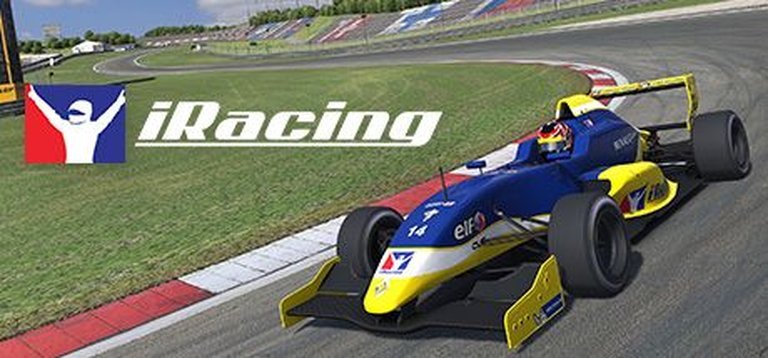
iRacing is a subscription-based online racing simulation that emphasizes extreme realism with fully licensed cars and tracks, exclusively featuring a first-person cockpit perspective and no driving assists. Players compete in structured multiplayer championships through a website race calendar, where performance-based rankings unlock advanced events, and additional content must be purchased beyond the basic subscription, requiring a steering wheel and pedals for input.
Gameplay Videos
Where to Buy iRacing
PC
iRacing Mods
iRacing Guides & Walkthroughs
iRacing Reviews & Reception
metacritic.com (79/100): An impressive game, but not one that will be to everyone’s tastes, especially not those after a quick thrill.
iRacing: The Uncompromising Titan of Sim Racing
In the sprawling landscape of video games, few titles occupy a space as singular and potent as iRacing. Launched in 2008, it is not merely a game but a persistent, evolving service—a meticulously curated digital motorsport ecosystem that has fundamentally reshaped the horizons of sim racing, competitive esports, and even real-world driver development. To review iRacing is to dissect a paradox: a product born from legacy code that became a revolutionary standard, an astronomically expensive hobby that thrives on accessibility, and a simulation so pure it often rejects the very notion of being called a “game.” This review will argue that iRacing’s historical significance lies not in its graphical fidelity or feature set, but in its unwavering commitment to a centralized, rules-enforced, and perpetually updated online racing pyramid—a vision that has made it the undisputed benchmark for competitive sim racing and a curious, enduring anomaly in the games industry.
Development History & Context: The Papyrus Legacy Forged Anew
The genesis of iRacing is a direct through-line from the golden age of PC racing sims. Its architect, Dave Kaemmer, was a co-founder of the legendary Papyrus Design Group, the studio behind seminal titles like NASCAR Racing and Grand Prix Legends. After Papyrus was dissolved by its parent company in 2004, Kaemmer retained the core physics and networking engine from NASCAR Racing 2003 Season (NR2003). He partnered with John W. Henry, principal owner of the Boston Red Sox and a co-owner of Roush Fenway Racing (now Roush Fenway Keselowski Racing), who provided the necessary capital and racing pedigree. Together, they formed FIRST.net LLC, which would become iRacing.com Motorsport Simulations.
The technological constraints of the mid-2000s are palpable in iRacing’s foundational architecture. The decision to make all sessions server-hosted was both a technical necessity for reliable multiplayer at the time and a profound philosophical stance: absolute control over the competitive environment. This choice baked integrity into the system’s DNA, allowing for the robust policing of rules and ratings that would become its hallmark. The initial release was modest, offering a small fraction of today’s library, but it was built on a bedrock of LIDAR-scanned tracks and laser-measured car models—a level of geometric fidelity that was virtually unheard of for an online-only release.
The gaming landscape of 2008 was dominated by retail boxed sims like GTR Evolution and Race Driver: Grid, and the more hardcore rFactor. iRacing’s subscription-based, live-service model was antithetical to this paradigm. It was not a product sold once but a membership to a league, a concept more familiar to MMO players than racing fans. This audacious business model, combined with its uncompromising “simulation first” ethos (mandatory wheel support, cockpit view, no driving assists in ranked play), initially carved a niche but predictably stirred controversy—a tension that has defined its reception ever since.
Narrative & Thematic Deep Dive: The Story is the Race
iRacing possesses no traditional narrative. There are no campaigns, no characters, no scripted plot. Its “narrative” is emergent, procedural, and entirely player-driven. The thematic core is the pursuit of competitive authenticity and personal mastery within a rigorously governed community.
- The Pyramid of Progression: The game’s entire structure is a narrative of ascent. Every driver begins as a Rookie, confined to a limited set of cars and tracks. Through a combination of Safety Rating (SR) and iRating (iR), they climb the license ladder: D, C, B, A, and ultimately Pro. This isn’t a simple XP bar; it’s a dual-metric morality tale. Safety Rating, calculated via a “corners per incident” (CPI) system, is a quantifiable record of your respect for other competitors. It’s a narrative of responsibility. Meanwhile, iRating—an Elo-style skill rating—is a narrative of competence. The most compelling stories are those of drivers battling to improve one metric without sacrificing the other, a constant tension between aggression and preservation.
- The Community as Protagonist: The most profound “story” in iRacing is written by its community and enforced by its code. The Sporting Code is a dense legalistic document that governs everything from incident responsibility (the infamous no-fault system) to conduct. The theme is orderly competition. The infamous “incident point” system, where all involved parties share equal blame, creates a unique social contract. It discourages blame- gaming and forces a mindset of “what can I do to avoid this?” This has birthed a community ethos often praised for its sportsmanship (as noted by GameStar), though it can also breed frustration when a driver feels unjustly penalized.
- The Real-World Specter: A powerful meta-narrative permeates iRacing: the validation by real motorsport. From its partnerships with NASCAR, IMSA, and the FIA, to the presence of pro drivers like Dale Earnhardt Jr. (now an executive director) and Scott McLaughlin, iRacing constantly asserts its legitimacy. The ultimate thematic pinnacle is the path from virtual to real—the sim racer who earns a real seat. This narrative of transference of skill is iRacing’s most potent marketing tool and its deepest ideological claim: that its simulation is so accurate it is a genuine training apparatus.
Gameplay Mechanics & Systems: The Engine of+average
iRacing’s gameplay is a masterclass in systemic design, where every feature reinforces the core loop of clean, competitive racing.
- Core Loop & Session Structure: Players do not “launch to a menu.” They navigate the iRacing website, the true hub of the service, to select official series or create/join Hosted Sessions and Leagues. The competitive heartbeat is the 13-week season, with tracks rotating weekly. The three primary session types—Practice, Qualifying (typically 2 laps), and Race—are not mere options but stages of preparation. Crucially, only official ranked races impact iRating and Safety Rating, creating a clear distinction between “meaningful” and “casual” competition.
- The Twin Pillars: iRating and Safety Rating: These are not afterthoughts but the foundational game mechanics.
- Safety Rating (SR): A no-fault system. Going off-track (1x), spinning (2x), hitting a wall (3x), or contacting another car (4x) all add “incident points.” Your SR is a moving average of your CPI over recent corners. This system punishes outcomes, not intentions, and is famously brutal for rookies. It is the primary gatekeeper to higher license classes and cleaner (often faster) split races.
- iRating (iR): An Elo system that adjusts after every ranked race with at least 6 participants. It determines your split—the skill tier of drivers you’re matched with. A high iR places you in “Top Split,” where every lap is a knife fight. This creates a self-sorting ecosystem where challenge is constant but relative.
- Licensing & Progression: The A, B, C, D, Rookie license system, specific to each of the five disciplines (Oval, Road, Dirt Oval, Dirt Road, and formerly a combined Road class), is the visible manifestation of your SR. Your license class determines which official series you can enter. The Pro license is reserved for elite eSports qualifiers, creating a glittering, aspirational peak.
- The “Hardcore” Stance: iRacing famously restricts assists. In ranked races, options like automatic transmission, traction control, ABS, and driving lines are disabled (they are available in Rookie series and private sessions). The mandatory cockpit view (with optional, less-preferred alternatives like “Hat” view) eliminates any arcade-style chase cam. This is not a difficulty slider; it is a philosophical declaration that the simulation’s value is in its unfiltered demands.
- Innovations and Flaws: iRacing pioneered the modern, centrally managed online racing season structure. The addition of AI drivers in 2020 was a monumental, late-arriving feature that finally provided a robust single-player alternative. However, its damage model has long been criticized as visually sparse (though physically consequential—aerodynamic damage is simulated). The lack of user-generated modding for cars/tracks, while ensuring quality control, is a stark exclusion in an era where Assetto Corsa and rFactor 2 thrive on community content. Its graphical engine, while updated over the years (notably with the shift to DirectX 11 in 2016 Season 2), has always prioritized performance and fidelity of track surface over cutting-edge eye candy, a trade-off acknowledged in early reviews like GameStar‘s comment about an “unfinished beta” look.
World-Building, Art & Sound: A Calculus of Fidelity
iRacing’s world is not one of fictional locales or dramatic vistas. It is a museum of real-world racing geometry.
- Tracks: The Laser-Scanned Cathedral: The service’s greatest triumph is its track library. Each circuit is meticulously laser-scanned, capturing millimeter-level imperfections—the camber changes, the bumps, the curbs, the gravel traps. This isn’t just visual; it’s physical. The feel of a specific curb at Road America or the narrowing apex at Monaco is encoded in the track mesh. This obsessive attention to surface detail is the primary source of its acclaimed “feeling.” The visuals faithfully replicate these scans, but the art direction is functional, aiming for recognition and accurate sightlines over artistic interpretation.
- Cars: The Sonic and Physical Signature: Car models are built from * manufacturer CAD data and laser scans. The focus is on *auditory and tactile authenticity. The sound engineering is exceptional, with distinct, violent crackles of gear shifts, the whine of a Porsche flat-six, the thunderous V8 rumble of a NASCAR Cup car. The force feedback (FFB) through a quality wheel is the ultimate conduit for the car’s personality—the subtle weight transfer, the tire slip, the moment of adhesion breaking. This is where the simulation “clicks” for its adherents.
- Atmosphere: The Shared Grid: The atmosphere is not crafted by AI chatter or cinematic replays. It is the tense silence of the pre-race grid, the radio silence broken only by spotter calls (if configured), the collective breath held into Turn 1. The visual presentation of races is enhanced by dynamic time-of-day cycles (added post-launch) and, most significantly, the dynamic weather system (introduced in Season 2, 2024). Rain is not a simple texture swap; it affects puddles, visibility, track temperature, and most critically, tire behavior and track grip. This systemic weather transforms a known track into a new, unpredictable challenge.
- UI/UX: The Functional Facade: The user interface has long been the service’s weakest link. The separation between the browser-based portal and the in-sim client is clunky. Navigating stats, series, and car purchases requires jumping between windows. This utilitarian design prioritizes backend functionality over front-end polish—a consistent point of criticism, even from loyalists.
Reception & Legacy: A Controversial Monarch
- Launch & Early Reception (2008-2013): Reviews were cautiously favorable but highlighted the niche appeal. The 79% Metacritic score (based on a small sample then, now ~79 from 4 critics) belies a sharp divide. PC Gamer (UK) called it “not one that will be to everyone’s taste,” praising its depth while warning of its austerity. GameStar‘s infamous 68% review ignited a firestorm not for its score but for its methodology: reviewer Benedikt Plass-Fleßenkämper admitted he subcontracted the test to a specialist and only participated in three races himself. This scandal crystallized the core debate: can a game that demands hundreds of hours to truly judge be fairly reviewed in a conventional timeframe? The subscription-plus-DLC model was branded “dreist” (brazen) by the reviewer, a criticism that would echo for years.
- Growth and Cultivation (2014-2019): Despite the grumbling, subscriber numbers grew steadily—from 16,000 in 2009 to 50,000 in 2013, and eventually over 160,000 by 2020. This growth was fueled by relentless, quarterly content updates (new cars, new tracks), the deepening of the partnership ecosystem (NASCAR, Porsche, IndyCar), and a slow but steady improvement in graphics and features (VR support, DX11). It cultivated a dedicated, skilled player base that valued its unparalleled online racing integrity.
- The COVID-19 Inflection Point (2020): The pandemic’s cancellation of real racing was iRacing’s cultural big bang. FOX Sports broadcast the eNASCAR iRacing Pro Invitational Series, bringing the service to nearly a million mainstream viewers. Dale Earnhardt Jr.’s participation and subsequent appointment as executive director was a PR coup. iRacing was no longer just a sim; it was a legitimate stopgap for real sport, a validation of its realism that was worth billions in brand credibility.
- Modern Era & Persistent Critiques: Today, iRacing is an established titan but not without its thorns. User reviews (Metacritic user score ~6.5) consistently cite:
- The Cost: The “nickel-and-dime” perception. A $9.99/month (often $99/year) subscription buys access to a base library (currently ~24 cars, ~32 tracks). 100+ additional cars and tracks cost $11.95-$14.95 each. Reaching a comprehensive library can easily exceed $1,000, though the base service allows for endless racing in popular rookie/mid-tier series.
- The Learning Curve & Community: The SR system is a brutal tutor. New players (“rookies”) face chaotic, crash-filled races that can tank their SR and lock them out of progression, creating a frustrating catch-22. The community, while often praised for its sportsmanship at higher levels, can be toxic in lower splits.
- Feature Gaps: Despite immense progress, critics point to a less-polished UI, a damage model that lacks complex visual deformation, and historically weaker AI (though 2019’s addition was a major step forward) compared to rivals like rFactor 2.
Conclusion: The Indispensable Standard
iRacing is not the best racing game for most people. It is the best organized online competitive racing service for a specific, dedicated few. Its place in video game history is secure, not as a pop-culture phenomenon, but as the architect of modern competitive sim racing.
It succeeded where others failed by understanding that the core product was not the car or the track model, but the race itself—and that to guarantee a high-quality race, you must control every variable: the physics, the rules, the matchmaking, the officiating, and the calendar. Its business model, while expensive, funds this endless, high-fidelity content pipeline and server infrastructure. Its famous harshness—the unforgiving SR, the mandatory wheel, the cockpit view—is not arbitrary difficulty but a filter, ensuring that those who stay are serious about the craft of racing.
The legacy of iRacing is visible everywhere. Its rating systems are now standard. Its seasonal, weekly-track-rotation structure is emulated. Its partnerships with real-world sanctioning bodies opened the door for the entire genre of officially licensed esports. When a real-world driver like Max Verstappen or a team like Williams F1 uses a sim to prepare, the tool of choice is increasingly iRacing.
Ultimately, iRacing is a testament to the power of a singular, unwavering vision. It is a digital racetrack operator, not a game developer in the traditional sense. It is flawed, expensive, and intimidating. But for those who overcome its steep gates, it offers something no other title can: a permanent, global, and fiercely competitive racing ecosystem where every lap matters, every incident is recorded, and the pursuit of that perfect, clean, fast lap is a never-ending, shared obsession. It is, in the purest sense, the sim racing league that happens to be a video game, and its monumental influence on both virtual and real-world motorsport is undeniable and indelible.