
- Release Year: 2024
- Platforms: Windows
- Publisher: Torn Banner Studios, Inc.
- Developer: Torn Banner Studios, Inc.
- Genre: Action
- Perspective: 1st-person
- Gameplay: Shooter
- Setting: Fantasy, North America
- Average Score: 40/100
Description
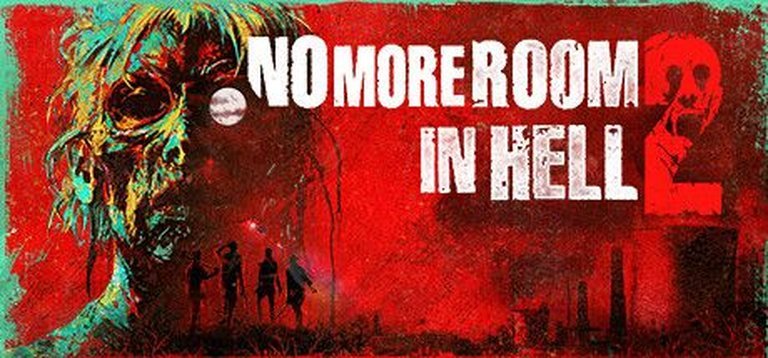
No More Room in Hell 2 is a first-person horror shooter set in a contemporary North America overrun by zombies. The outbreak originates from a prehistoric virus uncovered during an archaeological dig, possibly from a frozen neanderthal body, which spreads like a common cold and reanimates the dead, plunging the region into chaos and forcing players into a desperate fight for survival.
Gameplay Videos
Where to Buy No More Room in Hell 2
No More Room in Hell 2 Guides & Walkthroughs
No More Room in Hell 2 Reviews & Reception
opencritic.com (30/100): It’s safe to say, that No More Room in Hell 2 delivers one hell of a broken experience.
metacritic.com (50/100): If you pull back the layers of performance issues and bugs, No More Room in Hell 2 has a lot of potential.
ign.com : While No More Room in Hell 2 is technically playable, it’s not close to actually feeling Early Access-ready.
game8.co : Ah, disappointment—the cruelest companion when your hopes are high.
No More Room in Hell 2: A flawed resurrection of Romero’s dream
Introduction: The weight of legacy, the burden of expectation
In the pantheon of zombie apocalypse video games, few lineages carry as much raw, unadulterated credibility as No More Room in Hell. Born as a cult-favorite Half-Life 2 mod in 2009 before evolving into a standalone phenomenon in 2013, the original game carved its niche through sheer, brutalist design philosophy: a world where darkness was a character, every bullet was precious, and the groaning undead were not obstacles to be overcome, but an environmental hazard akin to a collapsing building. Its spiritual successor, No More Room in Hell 2 (NMRIH2), launched into Early Access on October 22, 2024, under the stewardship of Chivalry 2 developers Torn Banner Studios. It arrives not merely as a sequel but as a philosophical recalibration—a high-budget, Unreal Engine 5 reimagining of a formula that defined “hardcore” co-op horror. Yet, for every stride it makes toward realizing its vision of a Romero-esque hellscape, it stumbles with the grace of a freshly reanimated corpse. This review posits that No More Room in Hell 2 is a game of profound and glaring contradictions: a technically ambitious, lore-rich, mechanically thoughtful survival horror shooter that, at launch, was arguably one of the most broken major Early Access releases in recent memory. Its ultimate legacy will be determined not by its current state, but by whether its foundational brilliance can be excavated from beneath an avalanche of bugs, performance issues, and a content drought that at launch made its $29.99 price tag feel like a ghastly insult.
Development History & Context: From Source mod to Unreal Engine 5 nightmare
The journey of No More Room in Hell 2 is itself a story of corporate acquisition and technological upheaval. The original No More Room in Hell was the brainchild of Lever Games, a small team whose passion project distilled the essence of George A. Romero’s zombie films—particularly the social commentary and bleak atmosphere of Dawn of the Dead—into a brutally difficult cooperative experience. Its success was organic, built on word-of-mouth and a free-to-play model that celebrated its modder roots.
The sequel’s development took a sharp turn when Torn Banner Studios, the Toronto-based indie known for the multiplayer spectacle Chivalry: Medieval Warfare and its sequel, acquired the Lever Games team. This merger brought together two distinct sensibilities: Lever’s purist, survival-horror ethos and Torn Banner’s expertise in large-scale, systemic multiplayer action. The shift from the dated Source Engine to Unreal Engine 5 was non-negotiable for a modern audience, promising a generational leap in graphical fidelity, dynamic lighting, and environmental scale. However, this transition was a monumental technical undertaking, especially for a team adapting to a new engine while simultaneously rebuilding a beloved franchise’s core DNA from the ground up.
The decision to launch into Early Access was framed as a collaborative pact with the community. As stated on the Steam store page, Torn Banner explicitly hoped to “open the game’s production and growth” and source “constructive feedback.” The planned Early Access duration was initially projected until the first half of 2026, a lengthy runway acknowledging the scope of the work remaining. This context is crucial: the game was announced as a work-in-progress, but the state of its launch suggested a product far less “early” than “broken.” The vision—faithfully evoking Romero’s films with a “grounded, human horror” where zombies are “twisted and sick” remnants of people—was clear. The execution at launch was catastrophically uneven.
Narrative & Thematic Deep Dive: The Kulon Virus and the CRC’s grim duty
Where No More Room in Hell 2 shows immediate, compelling strength is in its underlying narrative framework, a lore that manages to be both simple and hauntingly expansive. Drawing directly from the spirit of Romero’s Dawn of the Dead and Day of the Dead, the game is set in the aftermath of the “Kulon” pandemic, a prehistoric virus unearthed at an archaeological dig site. The lore, pieced together from loading screen tips, community discussions, and developer intent, presents a two-stage apocalypse:
- The Initial Strain (“Common Cold” Variant): The virus, initially airborne and behaving like a severe flu, induces comas and death. The infected, upon dying, reanimate as relatively slow, “shambler”-type zombies. This first wave, while terrifying, is arguably containable.
- The Second Strain (“Runner” Variant): A mutated, more potent version of the virus gestates within the reanimated corpse. When these “runners” bite or otherwise transmit the virus, the victim’s transformation is drastically accelerated, creating a faster, more aggressive threat. This is the world of NMRIH2.
The player assumes the role of a “Responder” for the Civil Rescue Corps (CRC), a humanitarian organization formed by survivors to re-enter infested zones and conduct rescues. This premise is a masterstroke of thematic depth. Unlike Left 4 Dead‘s frantic escape or Resident Evil‘s corporate conspiracy, the CRC frames the apocalypse through a lens of desperate, organized altruism. Your mission isn’t just to escape; it’s to help, to restore infrastructure (power plants, radio stations, military checkpoints), and to fulfill objective-based scenarios that play out like vignettes from a zombie film. The narrative is not told through cutscenes but through environment, emergent gameplay, and the collective struggle toward a common extraction.
Critically, director Leif Walter confirmed NMRIH2 is a “soft reboot,” positioned as what happened to the survivors of the first game after their extraction. Canonical characters from the original, like “Roje,” have voicesets in the sequel, cementing a continuity. The world-building is also enriched by the promise of a progressing narrative across future maps, with locations explicitly inspired by Romero film set-pieces: a Night of the Living Dead-inspired farmhouse and cemetery, a Dawn of the Dead-style radio station, and a Day of the Dead-esque mine shaft. This creates a dense, intertextual universe for fans to dissect.
Gameplay Mechanics & Systems: Brilliant design founded on quicksand
The core gameplay loop of NMRIH2 is where its genius and its failures are most starkly intertwined. On paper, it is a masterclass in tension-building and cooperative design.
-
The Spawn & The Search: Up to eight players spawn completely separately at random perimeters of the map (initially “Power Plant,” a sprawling rural Pennsylvania facility). You begin with a flashlight, a melee weapon (like a pipe or crowbar), a low-caliber sidearm with scant ammo, and a profound sense of isolation. The primary, unspoken objective is find your team. This is not a suggestion; it is the game’s central, agonizing ritual. The use of proximity-based voice chat (no push-to-talk by default) is a double-edged sword of genius and frustration. It forces genuine, spatial communication—you hear a teammate’s panicked breathing or shouted warning only if they are physically near, creating a visceral sense of shared, local danger. It also means you can spend 20 minutes of a 45-minute match completely alone, your nerves frayed by every rustle in the dark.
-
Permadeath & The Infection: This is the game’s cruel, beating heart. Your “Responder” is a persistent character. You gain experience and levels only if you survive to extraction. Death means permanent loss of that character, their skills, and their progress. The narrative and mechanical weight of this cannot be overstated. Every encounter with a horde, every decision to help a teammate versus run, every moment spent searching for supplies is charged with finality. The planned Infection system (teased in early access, with a basic version active where a dead player becomes a tough “zombie” for their former team) is a fantastic narrative-mechanical fusion, directly tying your failure to your allies’ immediate peril.
-
Progression & Loadouts: Progression is tied to “Supply Items” extracted as a team. More supplies mean more XP for all survivors. Leveling up unlocks skill nodes (e.g., increased melee damage, stamina, flashlight life). However, the system is random: upon death, you choose a new Responder from three randomly generated characters with random backgrounds (e.g., “Football MVP,” “Marine Veteran”) that grant a single starting bonus. This stochastic element removes character attachment based on class fantasy but reinforces the desperate, “any survivor is a good survivor” theme of the apocalypse.
-
Combat & Scarcity: Ammo is brutally scarce, especially early. Melee is often the only safe option. The dynamic gore system allows for limb dismemberment, making each successful hit viscerally satisfying. The game discourages shootouts; sound attracts more zombies. Tactical tools like proximity bombs, car alarms, and environmental hazards (like explosive oxygen tanks on firefighter zombies) are available but rare, encouraging brains over brawn.
The Fatal Flaws: The design is consistently undermined by implementation.
* Unforgiving Randomness: The random spawn system can be brutally unfair. Spawning on the opposite side of the map from any objective or teammate, with only a pipe and six pistol bullets, can lead to 10-minute solitary marches of pure, unrewarding tension.
* Objective Inconsistency: Some puzzles (fuse boxes, generator hook-ups) are clever and tense team requirements. Others are trivial or obnoxiously obscure. The difficulty spike toward the final “Power Plant” restart sequence is often insurmountable for a duo, requiring a full, well-equipped squad that the random spawn system may never allow you to form.
* Empty Progression: With only one map at launch (Power Plant), the randomized elements (item locations, zombie horde sizes) lose novelty after 5-10 runs. The skill tree offers marginal upgrades that do little to change the fundamental, fragile nature of a Responder.
World-Building, Art & Sound: A beautiful, broken hellscape
Here, Torn Banner’s Unreal Engine 5 investment shines through the cracks of its broken foundation.
-
Art Direction & Atmosphere: The visual goal was unequivocally a “grounded, human horror” inspired by Romero. The environments—the misty rural landscapes of Power Plant, the claustrophobic suburban streets of Pottsville, the decaying urban sprawl of Lewiston—are dripping with a湿った, muted, and deeply oppressive atmosphere. The lighting engine is a character itself. Darkness is not an aesthetic choice but a fundamental mechanic, a tangible wall you peer through with your weak flashlight beam. UE5’s fidelity allows for incredible environmental storytelling: abandoned cars, personalized survivor camps, bloodstains leading to a corpse, all rendered with a grimy, photorealistic detail that the old Source mod could never achieve.
-
Sound Design: This is arguably the game’s greatest triumph. The soundscape is a symphony of dread. The constant, overlapping guttural moans, the wet crunch of a melee impact, the distant siren that might be a lure or a warning, the click of a zombie spotting you in the dark—all are masterfully implemented. The proximity chat’s potential (when it works) adds a layer of authentic, panicked human communication that few games capture. The ambient soundtrack is sparse but effective, a low hum of despair that lets the zombie sounds dominate.
-
The Fatal Flaws (Continued): This atmospheric excellence is systematically sabotaged.
- Performance & Optimization: The game is a resource hog. The pervasive darkness and detailed assets lead to inconsistent framerates, even on recommended hardware. On launch, severe stuttering, rubber-banding, and server desync were rampant, making combat a gamble of whether your hit would register.
- Bugs That Break Immersion: Floating heads, clipping through geometry into sealed rooms, objectives not triggering, zombies taking no damage—these are not just glitches; they are direct assaults on the terror the art and sound teams worked so hard to build. The infamous “stuck” bug, where a player becomes unable to interact with anything, forces teammates into macabre roleplay scenarios, trying to get a zombie to kill their permanently tethered friend.
- Visual “Clutter”: The push for realism sometimes creates visual noise. In the pitch black, distinguishing a zombie silhouette from a tree or a propane tank is difficult enough without additional graphical artifacts making matters worse.
Reception & Legacy: From disaster to cautious hope
The critical and user reception at launch was a homogenized chorus of condemnation, though with notable, nuanced dissent.
-
The Launch Catastrophe (October 2024): Aggregator sites tell the story. MobyGames recorded a single critic score of 30% (Rectify Gaming’s scathing “dumpster fire” review). Steam user reviews plummeted to “Mostly Negative” (hovering around 45% positive). MetaCritic’s user score was unavailable due to insufficient reviews, a sign of a player base actively rejecting the product. The criticisms were universal and lethal:
- Technical State: Game-breaking bugs, server instability, poor netcode (desync, hitboxes), crashes, and abysmal optimization were the primary complaints.
- Lack of Content: A single map for a $30 Early Access title was seen as indefensible, especially when that map’s design showed clear signs of being “filled out” or having unused pathways leading to nowhere.
- Broken Promises: The gap between the promising Romero-esque vision and the reality of a glitch-ridden “extraction shooter” with generic weapons left early adopters feeling deceived.
- Monetization: The price point for what was perceived as an alpha build was a constant sore point, especially compared to the original mod’s free legacy.
-
The Turning Tide (Early 2025): As documented by outlets like GamePressure, a concerted effort by Torn Banner began to shift the narrative. The “Reanimation” update (April 2025) was a pivotal moment, introducing two new maps (Broadway, Beaulieu Hospital), a revamped combat system, new zombie types (including the hinted-at “firefighter zombie” with an oxygen tank), and crucial stability fixes. This was paired with a Free Weekend, which drew over 11,000 players and generated a wave of new feedback. Crucially, recent Steam reviews shifted to “Mixed” (52% positive in the last 30 days as of the data cutoff). The discourse changed from “this game is irredeemable” to “this game has potential, but still a long way to go.”
-
Critical Divide: Even at launch, there was a schism. While IGN’s review called it a “mountain of serious bugs” requiring a “lot more time in the oven,” Eurogamer’s purchase was more sympathetic, calling it “comfortably the most engaging zombie game I’ve played since the original Dying Light” and suggesting the backlash was overblown. This divide highlights the core question: is the game’s foundation so strong that it warrants patience through a horrific launch, or are its flaws too fundamental?
-
Legacy in the Making: NMRIH2’s legacy is currently being written in its patch notes and update logs. It stands as a case study in the perils and possibilities of Early Access. It demonstrates that a compelling, even visionary, core design is not enough; a live-service game, especially one built on tension and precision, requires technical polish as its bedrock. Its influence on the genre is yet to be seen, but its stated goal—to capture the “social dynamics” and “ethical dilemmas” of Romero’s work in a multiplayer format—remains a worthy pursuit that few other games (Project Zomboid aside) are attempting with such seriousness.
Conclusion: Purgatory or paradise?
No More Room in Hell 2 is not the game it was promised to be at launch. It is a fractured, unstable, and content-starved experience that rightfully earned its scorn. Yet, to dismiss it entirely is to ignore the幽灵 of brilliance that haunts its code. Underneath the queue of game-breaking bugs and past the fog of oppressive darkness lies a game with a purer, more terrifying vision of cooperative survival than almost any of its peers. The tension of the silent search, the moral calculus of the infection meter, the desperate coordination required to restart a generator under pressure—these are not just mechanics but storytelling devices of the highest order.
The verdict, therefore, is one of absolute conditionalism. As it stands today, No More Room in Hell 2 is a hard pass for the vast majority of players. Its current $29.99 price is unjustifiable for the provided experience. However, for the die-hard survival horror historian or the patient observer willing to wade through Early Access hell, it represents one of the genre’s most fascinating “watchlist” projects. If Torn Banner Studios can achieve even 80% of the technical stability promised, fill out its map roster, and flesh out its progression systems without sacrificing its brutal ethos, it has the potential to stand shoulder-to-shoulder with the original as a defining title in the zombie apocalypse subgenre.
For now, it remains a cautionary tale: even with the purest inspiration, the most skilled developers, and the most advanced engine, a game can feel like it has “no more room in hell” for its own ambition. The hope is that the developers can perform an exorcism on their creation and let the Romero-inspired spirit within finally, truly, rise.