
- Release Year: 1995
- Platforms: Macintosh, Windows 16-bit, Windows
- Publisher: Yano Electric Co., Ltd.
- Developer: SOFTEDGE Inc.
- Genre: Adventure
- Perspective: First-person
- Game Mode: Single-player
- Gameplay: Exploration, Reincarnation
- Setting: City, Heian Period, Kyoto
Description
Cosmology of Kyoto is an adventure game set in Heiankyo (ancient Kyoto) during Japan’s Heian period (10th-11th centuries), emphasizing open exploration over puzzle-solving. Players navigate a beautifully rendered, historically rich city, interacting with period characters and experiencing cycles of death and reincarnation, while accessing educational content about the era’s culture and mythology through a blend of factual information and artistic interpretation.
Gameplay Videos
Cosmology of Kyoto Free Download
Cosmology of Kyoto Guides & Walkthroughs
Cosmology of Kyoto Reviews & Reception
criticalvideogamestudies.com : this game is many genres at once and avant-garde for its time in many different ways.
Cosmology of Kyoto: A Digital Pilgrimage Through Heian Fear and Enlightenment
Introduction: The Mirror of the Mind
In the mid-1990s, as the adventure game genre descended into the puzzle-heavy, inventory-crazed logic of Myst clones and LucasArts comedies, a quiet, unnerving CD-ROM from a tiny Japanese developer emerged with a fundamentally different proposition. Cosmology of Kyoto (京都千年物語, Kyoto Sennen Monogatari or “Kyoto Thousand-Year Story”) was not a game about winning, but about witnessing. It was not a puzzle to be solved, but a world to be absorbed—a meticulously reconstructed, spiritually fortified, and horrifically alive vision of Japan’s Heian capital circa 1000 CE. Its legacy is tethered to the singular endorsement of legendary film critic Roger Ebert, who called it “the most beguiling computer game I have encountered,” yet its true significance extends far beyond that footnote. It stands as a pioneering, deeply philosophical work of interactive art—a “software toy” and “zone of consciousness” that fused historical edutainment, Buddhist cosmology, and atmospheric horror into an experience unlike any other. This review argues that Cosmology of Kyoto is a landmark of experiential design, whose radical departure from conventional game logic and its unflinching engagement with themes of mortality, karma, and cultural otherness cement its place as a courageous, if flawed, masterpiece of 1990s multimedia storytelling.
Development History & Context: Softedge’s Cultural Archive
Studio Vision and Constraints: Developed by the obscure Tokyo-based studio Softedge and published by Yano Electric, Cosmology of Kyoto was the brainchild of producer/designer Kōichi Mori. Conceived amid Japan’s late-1980s economic bubble and developed from approximately 1991-1993, the project was driven by a preservationist impulse. Mori and his team, including supervisor Kazuhiko Komatsu and a cadre of artists (Kiyoshi Kondo, Kayoko Fujita, Masashi Imanaka, Miho Hayashi), sought to create a digital archive of Heian-period Kyoto’s spiritual and cultural landscape, fearing its erasure by rapid modernization. This was not merely a game but an act of cultural curation, a “virtual mindscape” intended to educate both Japanese and international audiences on an era often romanticized in literature (like The Tale of Genji) but less understood in its supernatural worldview.
The technological vehicle was Macromedia Director (then a revolutionary multimedia authoring tool), which allowed for the integration of pre-rendered, high-resolution panoramic backgrounds, full-motion video snippets, and CD-quality audio—a cutting-edge “CD-ROM experience” in the early 1990s. The constraints were significant: the game runs at a fixed 640×480 resolution with a 16-bit color palette, and its first-person navigation relies on static images linked by crossfades, demanding a patient, contemplative pace. The team painstakingly sourced reference material from historical sites, Heian and Kamakura period woodblock prints, and architectural texts to ensure visual authenticity. The sound design, by Atsushi Okada, Yoshinobu Asao, and composer Yūko Anzai, utilized field recordings from Kyoto temples and traditional instrumentation to build an oppressive, ambient soundscape.
Market Context: Released in Japan in 1993 for Macintosh (and later Windows), and localized for North America by Dynaware in 1994 (Mac) and 1995 (Windows), the game arrived as the “edutainment” craze peaked. Unlike the factual, dry museum software of the era, Cosmology sought immersion over instruction. It shared an exploratory, non-linear spirit with Myst (1993) but rejected its abstract, puzzle-box aesthetic for a densely specific, historically grounded setting. In Japan, it was marketed as a reference tool; in the West, it was an exotic, ” Orientalist ” curiosity. Its commercial failure was foreordained: a niche subject, a slow pace antithetical to the rising action-adventure and first-person shooter genres, a limited print run, and a hefty $98 price tag for the Mac version ensured it would find only a devoted cult, not a mass audience.
Narrative & Thematic Deep Dive: The Fragmented Cosmology
Structure as Philosophy: Cosmology of Kyoto possesses no traditional plot. Instead, it offers a fragmented, episodic narrative discovered through open exploration of Heian-kyō. The player is an anonymous “blue-haired” everyman (or everywoman, via the character creator) born into a field outside the city, immediately instructed to strip the clothes from a corpse—a stark introduction to the cycle of use and decay. The narrative is a web of vignettes drawn primarily from the Konjaku Monogatarishū, a 12th-century collection of tales, and other Heian folklore. These are not presented chronologically but as a free-form tapestry of human and supernatural drama.
Key Archetypes and Encounters: The city is populated by archetypal figures embodying Heian anxieties and Buddhist morality:
* The Historical/Literary: Figures like the poet Ono no Komachi (associated with love and vengeful ghosts), the samurai Watanabe no Tsuna (a demon-slayer with the holy sword Onikiri/”Beardcutter”), and the monk Kuya (a historical Pure Land advocate) appear as fixed points of legend.
* The Yokai and Demons: The supernatural ecology is rich. A kitsune (fox spirit) disguised as a maiden sprays urine to escape; a tsukumogami (animated tool) hits the player with a club; a * Nue* (chimera) attacks the Imperial Palace. These are not random monsters but narrative agents—the demon who plays sugoroku (backgammon) for your life, the onryō (vengeful spirit) whose hideous true face is revealed, the preta (hungry ghost) consuming its own brain in agonized hunger.
* The Banality of Cruelty: Some of the most chilling moments are human. A nobleman’s guard beheads a child for accidentally hitting a carriage with a ball. A loan shark (Madame Moneylender) exploits the desperate. These events underscore the Buddhist truth that human suffering is often self-inflicted, and violence—even in self-defense—accumulates negative karma.
Core Themes:
1. Saṃsāra and Karma: The game’s mechanical and thematic core is the Buddhist cycle of rebirth. Every action, from cheating at dice to giving alms, feeds a visible Karma Meter. Death is not failure but a transition, a cutscene to a realm of reincarnation determined by your deeds: the suffering of Naraka (Buddhist hell), the pathetic greed of the Preta, the animal realm, the arrogant but powerless Asura realm, the human realm, or the bliss of the Deva (heavenly) realm.
2. Impermanence (Mujō): The atmosphere is steeped in decay. Corpses are looted, bodies decompose (graphically, in hell), and even the “Pure Land” paradise is transient for its inhabitants, who fear falling to lower realms upon death. This reflects the Heian fascination with mono no aware (the pathos of things).
3. The City as Mandala: Heian-kyō itself is a cosmological diagram. Its grid, aligned with Chinese feng shui principles, is a protective barrier against chaos. The player navigates this sacred geometry, where temples, gates, and markets are nodes in a spiritual network. The “game world” is literally a “cosmology.”
4. The Limits of Understanding: The player is an outsider. The reference guide (the “encyclopedia mode”) is essential for deciphering the cultural and religious context of every encounter. You are not a hero; you are a witness, often a confused and doomed one. This reinforces a central, unsettling idea: the Heian worldview is alien, and its spiritual rules are inescapable.
Gameplay Mechanics & Systems: The Anti-Game
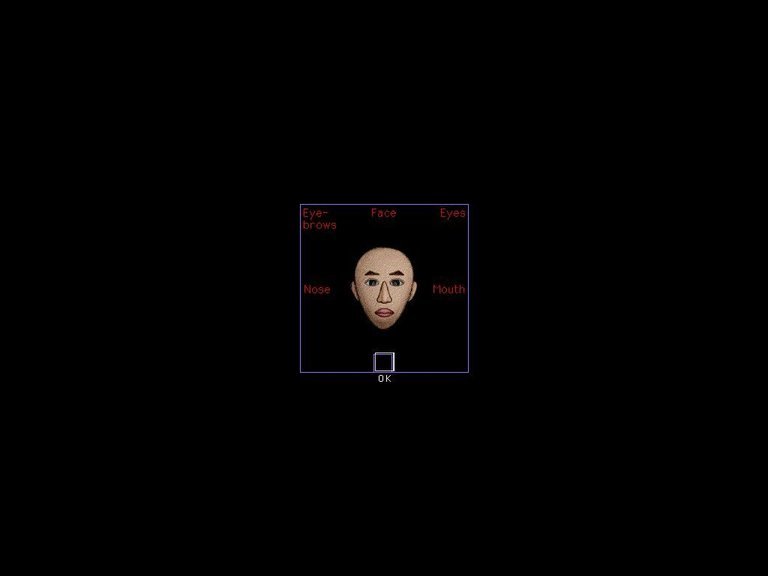
Interface and Exploration: Cosmology uses a first-person point-and-click interface. The screen is a widescreen (4:1 aspect ratio) panorama, with hotspots to click for movement or interaction. Dialogue trees occasionally require typed input, though most interaction is menu-driven. The nonlinear city is a series of interconnected still images—the streets of the capital, the Imperial Palace grounds, the Eastern Market, the red-light district, the cremation grounds at Toribeno, and the surreal landscapes of the afterlife realms.
The Karma & Reincarnation Engine: This is the game’s genius and its primary “mechanic.” There is no health bar. Death comes swiftly: a demon’s claws, a robber’s sword, a collapsing building, or even a stray arrow. Upon death, a sequence depicts your soul being judged and pulled into one of the Buddhist realms.
* The Afterlife Realms: Each realm is a short, self-contained interactive vignette. Naraka is a multi-level hell of graphic torture (flaying, boiling, impalement). Preta is a wasteland of bloated, starving ghosts. Asura is a warlike plain where you, as a shrimp-like demigod, are immediately curbstomped by the god Indra on his elephant Airavata. These are not minigames but experiential parables.
* The Loop: Escaping hell (usually by finding and clicking on a Bodhisattva statue like Jizo) reborns you as a new human in a random location, retaining your inventory but with a new appearance. If your karma is too low, you return as a dog or a fighting rooster, with severely limited agency before being killed again. This creates a core loop: explore > die > endure/realm > reborn > reclaim items from old corpse > explore. The goal is not to “end” but to accrue enough positive karma (through virtuous acts, sutra use) to eventually ascend to the Pure Land—the “Golden Ending.”
Items and Interaction: The primary tool is the sutra scroll, given by the Buddhist monk Nichizo. It wards off most yokai. Other items (money, a mirror, a bow) have situational uses. Interaction is sparse. You cannot “use” an inventory item on most things; the world presents fixed opportunities. The lack of traditional puzzles or a clear objective is the point. As designer Zeb Cook noted in Dragon magazine, it’s “frustrating, flawed, and fascinating… best viewed as less a game and more a software toy.”
The Encyclopedia: This is the game’s scholarly backbone. At any time, you can pull up a hyperlinked encyclopedia with hundreds of entries on Heian architecture, Buddhist doctrine, folklore (yōkai, kami), historical figures, and even rules for sugoroku. It contextualizes every encounter, transforming a random demon attack into a lesson on Japanese ghost taxonomy. It is seamlessly integrated, making the game a genuine hybrid of interactive fiction and historical database.
World-Building, Art & Sound: A Haunting Watercolor Hell
Visual Design: The art, by Kondo, Fujita, Imanaka, and Hayashi, is the game’s most celebrated aspect. It eschews pixel-art realism for a deliberately stylized, watercolor-meets-woodblock-print aesthetic. The 2D panoramas are muted, with a palette of browns, grays, and sickly greens, punctuated by the stark white of shrine gates or the crimson of a demon’s skin. The widescreen format is framed by a curved border resembling a traditional Japanese gate (torii or mon), reinforcing the sense of looking into another, sacred space.
Characters are rendered with “vivid facial characteristics,” as Roger Ebert noted, “a cross between the cartoons of medieval Japanese art and the exaggerations of modern Japanimation.” This gives them an eerie, expressive quality. Yokai are particularly memorable: the fleshy-nosed courtesan, the multi-eyed spider Tsuchigumo, the towering red Oni. The animation is limited, often just breathing or subtle shifts, which enhances the uncanny, static dread—more like a moving emakimono (scroll painting) than a modern game.
Soundscape: The audio is a masterclass in atmospheric dread. The minimalist soundtrack by Yūko Anzai features sparse, dissonant traditional melodies. The sound design is diegetic and oppressive: the crunch of footsteps on dirt or wood, the murmur of monks chanting nenbutsu, the distant boom of thunder, the snarling of a demon, the bone-chilling scream of a soul in hell. Voices are fully performed in Japanese (with English subtitles), delivering lines with a flat, archaic cadence that feels both ancient and intimately present. The auditory experience is as crucial to the horror as the visuals.
The Fusion of Real and Unreal: The genius lies in the seamless grafting of the supernatural onto the historically accurate. The street layout of Heian-kyō is based on real geography. The markets sell historically plausible goods (dried fish, cloth). Then, a kitsune appears in the pine forest, or a demon emerges from a well. The game doesn’t signal this shift; it presents the supernatural as an inherent, terrifying layer of reality, exactly as Heian beliefs held. This creates a profound unease—the familiar world is always seconds from dissolving into mythic horror.
Reception & Legacy: The Critic’s Darling and the Cult Classic
Contemporary Reception (1994-1996): Reviews were polarized but overwhelmingly focused on its atypical nature.
* Roger Ebert’s Canonization: His Wired review is the game’s most famous endorsement. He framed it not as a “game” but as a “travelogue” and a “mindscape,” praising its limitless resources, the sense of indefinite wandering, and its juxtaposition of the gruesome and divine. His later 2010 blog post, where he admitted Cosmology was the only video game he enjoyed (preferring it to Myst), became a landmark in the “games as art” debate, though he later clarified he still believed games were not art in the traditional sense.
* Critical Consensus: The Los Angeles Times (David Coller) called it “truly unsettling” and “cerebral,” warning Western players to “throw away your Western ideas about gameplay.” Dragon magazine’s Zeb Cook provided the most insightful review, labeling it “a unique gaming experience… part game, part history lesson, and part software toy,” accurately predicting its cult appeal as an object to “fiddle with” rather than “win.” CNET’s “Skip It” verdict was an outlier, finding its confusion outweighing its merits.
* Commercial Reality: It was a flop. Limited production, niche marketing, and a pace antithetical to the action-heavy 1990s doomed its sales. Its obscurity was compounded by platform fragmentation (Mac vs. Windows) and the rapid obsolescence of CD-ROM drives and 16-bit color standards.
Retrospective Reassessment (2000s-Present): Cosmology of Kyoto has undergone a spectacular rehabilitation, now regarded as a visionary, ahead-of-its-time work.
* Horror Revelation: Critics like Jenn Frank (2008) retroactively classified it as a survival horror game, noting its “random, sudden, inescapable” encounters and profound unfairness as core to its terrifying atmosphere. Chris Person’s 2012 Kotaku review, spurred by Ebert’s blog post, dubbed it “edu-horror” and highlighted its disturbing depictions of poverty, cruelty, and Buddhist hell.
* Artistic and Academic Recognition: Ryan McSwain at Hardcore Gaming 101 declared it “a game, an educational tool, and a work of art” that “manages to be all of these and more.” Academic papers have analyzed its representation of Buddhist cosmology and its role in digital folklore preservation. Its influence is cited in discussions on non-linear environmental storytelling (Dark Souls, Elden Ring) and philosophical game design.
* Preservation and Influence: Its extreme rarity (physical copies sell for $500-$1000+) has made it a grail for archivists. The 2025 release of its spiritual successor, TRIPITAKA, has sparked renewed interest. It has also influenced indie developers working at the intersection of mythology and horror. Guillermo del Toro naming it one of his favorite games speaks to its crossover artistic resonance.
* Cult Status: Online communities (YouTube playthroughs, Reddit’s r/creepygaming) dissect its obscure encounters and bleak worldview. It is celebrated for its uncompromising vision, its rejection of power fantasy, and its immersive, Sensory-over-Score philosophy.
Conclusion: The Unwinnable Journey
Cosmology of Kyoto is not a game for everyone. Its interface is clunky by modern standards, its pacing deliberately meditative, its hostility to player agency profound. It offers no power-ups, no boss fights, no narrative catharsis in the conventional sense. Its “ending”—ascension to the Pure Land—is undercut by the designer’s own statement that enlightenment is “waking up” and exiting the game entirely. This is a work that defines itself against the very notion of “play” as mastery.
Yet, within its rejection lies its greatness. It is a game that understands mortality not as a failure state but as the primary condition of existence. It is a digital museum that allows you to touch the artifacts, to be menaced by the ghosts, to feel the weight of a cosmology where every action echoes across lifetimes. Its educational value is not didactic but experiential; you learn about kami not by reading a definition, but by seeing a fox-woman’s true face. You understand karma not as a meter, but as the visceral consequence of your choices, played out in the tortures of Naraka.
Its legacy is two-fold. First, as a historical artifact: a unique, preserved window into a specific cultural and spiritual worldview, rendered with painstaking authenticity. Second, as a radical design document: a proof that video games can be about being rather than doing, about witnessing rather than conquering. It is a haunting, frustrating, and deeply beautiful software artifact—a mirror, as its intro promises, that reflects the depths of a mind, both ancient and player, back upon itself. Thirty years on, it remains a singular, uncompromising journey into a lost world, and a profound meditation on the hollow victory of all gaming, and all life, that ends only when we choose to walk away.